Link Copied!
Lawrence Lessig Quotes (1961-)
Director, Activist
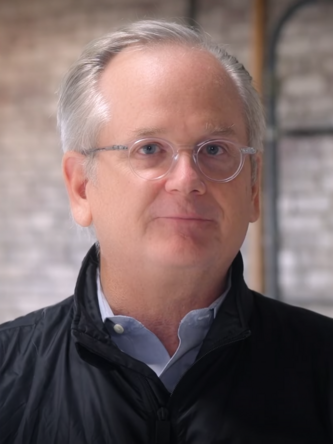

About Lawrence Lessig
Lawrence Lessig (born 3 June 1961) is an American academic and political activist. He is most famous as a proponent of reduced legal restrictions on copyright, trademark, and radio frequency spectrum, particularly in technology applications. He is a director of the Edmond J. Safra Foundation Center for Ethics at Harvard University and a professor of law at Harvard Law School. Prior to rejoining Harvard, he was a professor of law at Stanford Law School and founder of its Center for Internet and Society. Lessig is a founding board member of Creative Commons, a board member of the Software Freedom Law Center, an advisory board member of the Sunlight Foundation and a former board member of the Electronic Frontier Foundation.
Best Lawrence Lessig Quotes
Shortest
Earliest
Explore our curated collection of the most famous and impactful Lawrence Lessig quotes.

“Law and technology produce, together, a kind of regulation of creativity we've not seen before.”

“We are on the cusp of this time where I can say, "I speak as a citizen of the world" without others saying, "God, what a nut." ”
“When government disappears, it's not as if paradise will take its place. When governments are gone, other interests will take their place.”

“One thing we know about incentives is you can't incent a dead person. No matter what we do, Hawthorne will not produce any more works, [even if] we can give him all the money in the world.”
“We have a massive system to regulate creativity. A massive system of lawyers regulating creativity as copyright law has expanded in unrecognizable forms, going from a regulation of publishing to a regulation of copying.”


“We will not reclaim a free culture by individual action alone. It will also take important reforms of laws. We have a long way to go before the politicians will listen to these ideas and implement these reforms. But that also means that we have time to build awareness around the changes that we need.”

“I believe it would be right for common sense to revolt against the extreme claims made today on behalf of "intellectual property." What the law demands today is increasingly as silly as a sheriff arresting an airplane for trespass. But the consequences of this silliness will be much more profound.”

“That free culture was carried to America; that was our birth — 1790. We established a regime that left creativity unregulated. Now it was unregulated because copyright law only covered "printing." Copyright law did not control derivative work. And copyright law granted this protection for the limited time of 14 years.”

“The legal system doesn't work. Or more accurately, it doesn't work for anyone except those with the most resources. Not because the system is corrupt. I don't think our legal system (at the federal level, at least) is at all corrupt. I mean simply because the costs of our legal system are so astonishingly high that justice can practically never be done.”

“Americans have been selling this view around the world: that progress comes from perfect protection of intellectual property. Notwithstanding the fact that the most innovative and progressive space we've seen — the Internet — has been the place where intellectual property has been least respected. You know, facts don't get in the way of this ideology.”

“If you understand this refrain, you're gonna' understand everything I want to say to you today. It has four parts:
Creativity and innovation always builds on the past.
The past always tries to control the creativity that builds upon it.
Free societies enable the future by limiting this power of the past.
Ours is less and less a free society.”
Creativity and innovation always builds on the past.
The past always tries to control the creativity that builds upon it.
Free societies enable the future by limiting this power of the past.
Ours is less and less a free society.”
“While the creative works from the 16th century can still be accessed and used by others, the data in some software programs from the 1990s is already inaccessible. Once a company that produces a certain product goes out of business, it has no simple way to uncover how its product encoded data. The code is thus lost, and the software is inaccessible. Knowledge has been destroyed.”

“It might be crazy to expect a high government official to speak the truth. It might be crazy to believe that government policy will be something more than the handmaiden of the most powerful interests. It might be crazy to argue that we should preserve a tradition that has been part of our tradition for most of our history — free culture.
If this is crazy, then let there be more crazies. Soon.”
If this is crazy, then let there be more crazies. Soon.”
“'''I've told a dark story. The truth is more mixed. A technology has given us a new freedom. Slowly, some begin to understand that this freedom need not mean anarchy. We can carry a free culture into the twenty-first century, without artists losing and without the potential of digital technology being destroyed. ... Common sense must revolt. It must act to free culture. Soon, if this potential is ever to be realized.”
“The problems with software are just examples of the problems found generally with creativity. Our trend in copyright law has been to enclose as much as we can; the consequence of this enclosure is a stifling of creativity and innovation. If the Internet teaches us anything, it is that great value comes from leaving core resources in a commons, where they're free for people to build upon as they see fit.”
“We live in a world with "free" content, and this freedom is not an imperfection. We listen to the radio without paying for the songs we hear; we hear friends humming tunes that they have not licensed. We tell jokes that reference movie plots without the permission of the directors. We read our children books, borrowed from a library, without paying the original copyright holder for the performance rights.”
“It's insane. It's extreme. It's controlled by political interests. It has no justification in the traditional values that justify legal regulation. And we've done nothing about it. We're bigger than they are. We've got rights on our side. And we've done nothing about it. We let them control this debate. Here's the refrain that leads to this: They win because we've done nothing to stop it.”
“We, the most powerful democracy in the world, have developed a strong norm against talking about politics. It's fine to talk about politics with people you agree with. But it is rude to argue about politics with people you disagree with. Political discourse becomes isolated, and isolated discourse becomes more extreme. We say what our friends want to hear, and hear very little beyond what our friends say.”

“The danger in media concentration comes not from the concentration, but instead from the feudalism that this concentration, tied to the change in copyright, produces. It is not just that there are a few powerful companies that control an ever expanding slice of the media. It is that this concentration can call upon an equally bloated range of rights — property rights of a historically extreme form — that makes their bigness bad.”

“The meaning of this pattern is absolutely clear to those who pay to produce it. The meaning is: No one can do to the Disney Corporation what Walt Disney did to the Brothers Grimm. That though we had a culture where people could take and build upon what went before, that's over. There is no such thing as the public domain in the minds of those who have produced these 11 extensions these last 40 years because now culture is owned.”
Lawrence Lessig Quotes by Topic
Find exactly what you are looking for by browsing this categorized list of Lawrence Lessig quotes by topic.
Lawrence Lessig on Control 8 quotes
“There has never been a time in history when more of our "culture" was as "owned" as it is now. And yet there has never been a time when the concentration of power to control the uses of culture has been as unquestioningly accepted as it is now.”

Lawrence Lessig on Intellectual property 2 quotes
“Overregulation stifles creativity. It smothers innovation. It gives dinosaurs a veto over the future. It wastes the extraordinary opportunity for a democratic creativity that digital technology enables.”

Lawrence Lessig on Commons 2 quotes
“There has never been a time in history when more of our "culture" was as "owned" as it is now. And yet there has never been a time when the concentration of power to control the uses of culture has been as unquestioningly accepted as it is now.”

Lawrence Lessig on Art
Lawrence Lessig on Free software
“The legal system doesn't work. Or more accurately, it doesn't work for anyone except those with the most resources. Not because the system is corrupt. I don't think our legal system (at the federal level, at least) is at all corrupt. I mean simply because the costs of our legal system are so astonishingly high that justice can practically never be done.”

Lawrence Lessig on Justice
“The legal system doesn't work. Or more accurately, it doesn't work for anyone except those with the most resources. Not because the system is corrupt. I don't think our legal system (at the federal level, at least) is at all corrupt. I mean simply because the costs of our legal system are so astonishingly high that justice can practically never be done.”
Lawrence Lessig on Insanity
“It might be crazy to expect a high government official to speak the truth. It might be crazy to believe that government policy will be something more than the handmaiden of the most powerful interests. It might be crazy to argue that we should preserve a tradition that has been part of our tradition for most of our history — free culture. If this is crazy, then let there be more crazies. Soon.”
Lawrence Lessig on Extremism
“A free culture, like a free market, is filled with property. It is filled with rules of property and contract that get enforced by the state. But just as a free market is perverted if its property becomes feudal, so too can a free culture be queered by extremism in the property rights that define it. That is what I fear about our culture today. It is against that extremism that this book is written.”

Lawrence Lessig on Enclosure
“The problems with software are just examples of the problems found generally with creativity. Our trend in copyright law has been to enclose as much as we can; the consequence of this enclosure is a stifling of creativity and innovation. If the Internet teaches us anything, it is that great value comes from leaving core resources in a commons, where they're free for people to build upon as they see fit.”

Lawrence Lessig on Supreme Court of the United States
“Donald Trump is an astoundingly dangerous candidate for president. He is a pathological liar …
That fact has motivated many decent lawyers and law professors to scramble for ways to ensure that Trump is not elected. On Tuesday, the Colorado Supreme Court gave these lawyers new hope by declaring that Section 3 of the 14th Amendment bars Donald Trump from the Colorado ballot. That decision will certainly reach the United States Supreme Court as quickly as any. And if that court is to preserve its integrity, it must, unanimously, reject the Colorado Supreme Court’s judgment. Because Section 3 of the 14th Amendment does not apply to Donald Trump.”

What Lawrence Lessig Said About Others
Discover personal opinions Lawrence Lessig shared regarding contemporaries.
Lawrence Lessig on Aaron Swartz 4 quotes
“From the beginning, the government worked as hard as it could to characterize what Aaron did in the most extreme and absurd way. The “property” Aaron had “stolen,” we were told, was worth “millions of dollars” — with the hint, and then the suggestion, that his aim must have been to profit from his crime. But anyone who says that there is money to be made in a stash of ACADEMIC ARTICLES is either an idiot or a liar. It was clear what this was not, yet our government continued to push as if it had caught the 9/11 terrorists red-handed.”

Lawrence Lessig on Richard Stallman
“Every generation has its philosopher — a writer or an artist who captures the imagination of a time. Sometimes these philosophers are recognized as such; often it takes generations before the connection is made real. But recognized or not, a time gets marked by the people who speak its ideals, whether in the whisper of a poem, or the blast of a political movement. Our generation has a philosopher. He is not an artist, or a professional writer. He is a programmer. Richard Stallman began his work in the labs of MIT, as a programmer and architect building operating system software. He has built his career on a stage of public life, as a programmer and an architect founding a movement for freedom in a world increasingly defined by “code.” ... I don't know Stallman well. I know him well enough to know he is a hard man to like. He is driven, often impatient. His anger can flare at friend as easily as foe. He is uncompromising and persistent; patient in both. Yet when our world finally comes to understand the power and danger of code — when it finally sees that code, like laws, or like government, must be transparent to be free — then we will look back at this uncompromising and persistent programmer and recognize the vision he has fought to make real: the vision of a world where freedom and knowledge survives the compiler. And we will come to see that no man, through his deeds or words, has done as much to make possible the freedom that this next society could have. We have not earned that freedom yet. We may well fail in securing it. But whether we succeed or fail, in these essays is a picture of what that freedom could be. And in the life that produced these words and works, there is inspiration for anyone who would, like Stallman, fight to create this freedom.”

About Lawrence Lessig
Lawrence Lessig (born 3 June 1961) is an American academic and political activist. He is most famous as a proponent of reduced legal restrictions on copyright, trademark, and radio frequency spectrum, particularly in technology applications. He is a director of the Edmond J. Safra Foundation Center for Ethics at Harvard University and a professor of law at Harvard Law School. Prior to rejoining Harvard, he was a professor of law at Stanford Law School and founder of its Center for Internet and Society. Lessig is a founding board member of Creative Commons, a board member of the Software Freedom Law Center, an advisory board member of the Sunlight Foundation and a former board member of the Electronic Frontier Foundation.