Link Copied!
Lauretta Bender Quotes (1897-1987)
Actor, King

About Lauretta Bender
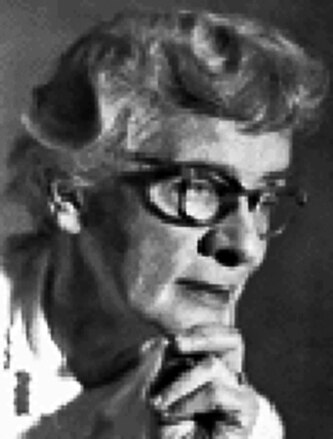
Lauretta Bender (August 9, 1897 – January 4, 1987) was an American child neuropsychiatrist known for developing the Bender-Gestalt Test in 1938, a psychological test designed to evaluate visual-motor maturation in children that was used widely used for assessing their neurological function and in screening for developmental disorders. She performed research in the areas of autism spectrum disorders in children (formerly "childhood schizophrenia"), suicide and violence, and was one of the first researchers to suggest that mental disorders in children might have a neurological basis, rather than attributing them to the child's bad behavior or poor upbringing.
Best Lauretta Bender Quotes
Shortest
Earliest
Explore our curated collection of the most famous and impactful Lauretta Bender quotes.


“She does not believe that Wonder Woman tends to masochism or sadism. Furthermore, she believes that even if it did-you can teach either perversion to children-one can only bring out what is inherent in the child. However she did make the reservation that if the woman slaves wore chains (and enjoyed them) for no purpose whatsoever, there would be no point in chaining them.”
“They said, "This is good because it is history. This is real," which is another reason why it is bad.
They also gave a picture of colonial days where the mother was being tommyhawked by the Indians, with a baby at her breast, and the baby was being dropped on the ground. Now, this was history.
Certainly it is history, but do our children today have to be exposed to such things?
This is not history. I see no excuse whatsoever for a parent magazine group or an approved group approving that sort of thing. It was quite contrary to the code which we eventually established for the comic people.”

“Superman represents an instinctive problem that we are all born and grown up with, that we can fly ─ after all, we can fly now; we couldn't before ─ and that we can carry on all kinds of scientific investigations, that we can stop crime, which Superman does, and that we can have a good influence on the world, and that we can be protected by the powerful influences in the world which may be our own parents, or may be the authorities, or what not.”

“So I advised them that in my experience children throughout the ages, long before Superman existed, tried, to fly, and also it has been my specific experience, since I have been at Bellevue Hospital, that certain children with certain emotional problems are particularly preoccupied with the problem of flying, both fascinated by it, and fearful of it.
And we frequently have on our ward at Bellevue the problem of making Superman capes in occupational therapy and then the children wearing them and fighting over them and one thing or another ─ and only about 3 months ago we had such, what we call epidemic, and a number of children were hurt because they tried to fly off the top of radiators or off the top of bookcases or what not and got bumps.”
And we frequently have on our ward at Bellevue the problem of making Superman capes in occupational therapy and then the children wearing them and fighting over them and one thing or another ─ and only about 3 months ago we had such, what we call epidemic, and a number of children were hurt because they tried to fly off the top of radiators or off the top of bookcases or what not and got bumps.”

“We do not use it as a psychoanalytic tool. Our idea was to give it as a daily drug. It is our general experience that frequently the children respond to many drugs that affect the central nervous system differently than adults. This is common knowledge; at least, to those of us using drugs with children. So we were not surprised to find, in our early initial studies, that if the children were near puberty or in puberty they responded to the first dose with anxiety and disturbance, just as the adolescent boys did. But even these children could be maintained on high doses of the drug, just as the adolescent boys were, so that the drugs can be given to these children in continuing doses. What tolerance means, I don't know. Tolerance may be established in our patients. The chemical studies suggest this, and even our psychological studies indicate a slight change later on, a leveling off of response as compared to initial reaction, but the long-term reaction is still the most valuable reaction to the drug.”
“There is another reason why Superman has had good influence. That is the years of continuity of the Superman character. The children know that Superman will always come out on the right side. On that, I can give you another story about what they wanted to do. At the end of the Second World War we had the problem of a certain number of soldiers coming home as amputees.
One of the script writers got the bright idea that we ought to prepare children for their fathers coming home as amputees by having one of the characters─ I don’t think it was Superman ─ one of the others ─ have an accident and lose his leg. They wanted to know what I thought about that idea. I said I thought it was absolutely terrible because I felt that the children loved this character and, after all, how many children were going to have to face the question of an amputee father? Certainly there are far better ways of preparing such children for such a father than to have to shock the whole comic reading children public. So I disapproved of it.”
One of the script writers got the bright idea that we ought to prepare children for their fathers coming home as amputees by having one of the characters─ I don’t think it was Superman ─ one of the others ─ have an accident and lose his leg. They wanted to know what I thought about that idea. I said I thought it was absolutely terrible because I felt that the children loved this character and, after all, how many children were going to have to face the question of an amputee father? Certainly there are far better ways of preparing such children for such a father than to have to shock the whole comic reading children public. So I disapproved of it.”
“It was hoped that these drugs might prove effective in breaking through autistic defenses, improving autonomic nervous system functioning, and modifying distorted perceptual experiences.
There were some differences in results in the various groups. In general, the younger autistic children became less anxious, less autistic and plastic, more aware and responsive, with some changes in verbalization and qualitative improvement, on the Vineland Social Maturity Scale. The girls and older autistic boys showed similar results, but much less marked and persistent. Verbal children showed improvement in general behavior, with marked changes in fantasy and bizarre ideation to more insightful, reality-oriented, though often anxious and depressive attitudes, and improved maturity and organization.
There were no major side effects, though a few patients on UML had muscular spasms and vasomotor changes in the legs, generally of a temporary nature. It is significant to note that while most of these patients had required tranquilizing or, other medications, they could all now be maintained only on the LSD or UML. A few patients received reserpine to control excessive activity, aggression, or biting.”
“We then gave LSD in the same doses to non-autistic schizophrenic boys 6 to 12 years of age. They were intelligent and verbal and could be tested psychologically and in psychiatric interviews (Bender et al., 1963). They were selected because they had typical schizophrenic psychosis, with flying fantasies and identification and body image difficulties, loose ego boundaries, introjected objects and voices and bizarre ideologies. They had obvious anxiety and labile vaso-vegetative functions. After administering LSD to these children we found results contrary to those reported in adults. These children became more insightful, more objective, more realistic; and in a short time they became frankly depressed for reality reasons. They noted they were in the hospital, that they were away from their family, and that they had had "crazy" ideas before.”
“This group of boys showed considerable: and consistent effects from medication with UML or LSD daily for two to eleven months. Their behavior, ward management, school-room adjustment and progress at home changed favorably with less acting out and less disturbed behavior. They not only needed no other tranquilizing, sedative, or antidepressant medication, but furthermore, unlike the tranquilizers which made them sleepy and groggy, they were generally cheerful and alert. Personnel and families noted the difference. Repeated psychiatric interviews revealed a change in fantasy material which was less bizarre, personalized or disturbing. Depressive, anxious and paranoid attitudes were focused on real objective problems. Insight was impressive. Intellectual changes, as seen in psychometric tests, indicated improved maturity, better organization and motivation with a rise in IQ which was reflected in improved school work. The Rorschach and drawing tests also showed increased maturity and control with clearer thinking.”
“Our own definition of childhood schizophrenia has been a clinical entity, occurring in childhood before the age of eleven years, which "reveals pathology in behavior at every level and in every area of integration or patterning within the functioning of the central nervous system, be it vegetative, motor, perceptual, intellectual, emotional, or social. Further more, this behavior pathology disturbs the patterns of every functioning field in a characteristic way. The pathology cannot therefore be thought of as a focal in the architecture of the central nervous system, but rather as striking at the substratum of integrative functioning or biologically patterned behavior" (1) At present the only concept we have of this pathology is in terms of field forces in which temporal rather than spatial factors are emphasized. Within the concept of field forces, one can accept some idea of a focal disorder, since no one integrated function is ever completely lost or inhibited, and since there are different degrees of severity of disturbance in the life history of any child and between two different children. This also differs with the period of onset.
The diagnostic criteria for the 100 schizophrenic children which make up this study have been rigid. In each child it has been possible to demonstrate characteristic disturbances in every patterned functioning field of behavior. Every schizophrenic child reacts to the psychosis in a way determined by his own total personality including the infantile experiences and the level of maturation of the personality. This reaction is usually a neurotic one determined by the anxiety stirred up by the disturbing phenomena in the vaso-vegetative, motility, perceptual, and psychological fields. Interferences in normal developmental patterns and regressive phenomena with resulting primitive reactions are related to both the essential psychosis and the reaction of the anxiety-ridden personality.
There are, of course, children in whom the differential diagnosis is very difficult. Those with some form of diffuse encephalopathy or diffuse developmental deviations in which the normally strong urges for normal development push the child into frustration and reactive anxiety may present many schizophrenic features in the motility disturbances, intellectual interferences, and psychological reactions.”
Lauretta Bender Quotes by Topic
Find exactly what you are looking for by browsing this categorized list of Lauretta Bender quotes by topic.
Lauretta Bender on Schizophrenia 2 quotes
“Rationale for Treatment with LSD and UML Our interest in these drugs was due in part to their psychotomimetic effect, hoping thereby that the autistic defenses of schizophrenic children might be broken down. Of equal interest, on a theoretical basis, is the serotonin inhibiting effect and of greater interest is their effect on the autonomic and central nervous system. Brodie has described the effects of LSD and other hallucinogenic agents as "arousal and increased responsiveness to sensory stimuli, preponderance of sympathetic activity and increased skeletal muscle tone and activity." Of particular interest is their tonic effect on the vascular bed especially of the brain, as has been shown with UML in vascular headaches. The known effects of these drugs on perception further increases¬ their interest in the treatment of schizophrenia. Such drugs were of interest to us for the treatment of childhood schizophrenia since our definition of this condition is a disorder in maturation characterized by an embryonic primitive plasticity in all areas of integrative brain functioning from which behavior subsequently arises. This includes all autonomic functions, perception, emotion, intelligence. It was hoped that 'these drugs might prove some-what specific in modifying the basic process as well as the secondary symptoms. Autism is seen as a withdrawal or denial defense against disturbing sensations arising from disturbed autonomic function and perceptual function and anxiety in the young child with lagging and atypical maturation. It was hoped that this autism might be disrupted and that more normal autonomic functions in the vascular bed, brain, intestines, skin and other organs as well as in perception would permit more normal development.”

What Lauretta Bender Said About Others
Discover personal opinions Lauretta Bender shared regarding contemporaries.
Lauretta Bender on Walt Disney
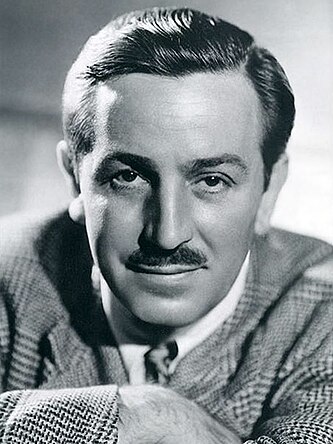
“I have seen children brought to me in terrible panics, and interestingly enough most often the Walt Disney movies which do depict very disturbing mother figures. The mothers are always killed or sent to the insane asylums in Walt Disney movies. They are among my experience for Frankenstein, the worst movies in the world for children who have had a problems of the loss of a parent.”
Quotes About Lauretta Bender
Gain deeper perspective through quotes about Lauretta Bender from others.
Joan Cook on Lauretta Bender
“Dr. Bender was known for developing, in 1923, the Bender-Gestault Visual Motor Test, a neuropsychological examination that has become a worldwide standard. She spent many years researching the cause of childhood schizophrenia and was responsible for studies on child suicides and violence.”
Robert E. Mogar on Lauretta Bender 2 quotes
“With regard to the purpose of these studies, all were to some extent exploring the therapeutic potential of psychedelic drugs rather than their psychotomimetic properties. This was least true of Freedman and his coworkers (1962) who viewed LSD primarily as a means of studying the schizophrenic process by "intensifying pre-existing symptomology." This orientation contrasted sharply with Bender's view. Noting that withdrawn children became more emotionally responsive while aggressive children became less so, she hypothesized that psychedelic drugs "tend to 'normalize' behavior rather than subdue or stimulate it." This basic difference in expectations seems at least partially responsible for Bender's extremely favorable outcomes and Freedman's rather poor results. Regarding all forms of psychotherapy, it has become a truism that " where there is no therapeutic intent, there is no therapeutic result" (Charles Savage in Abramson, 1960, p. 193).”
About Lauretta Bender
Lauretta Bender (August 9, 1897 – January 4, 1987) was an American child neuropsychiatrist known for developing the Bender-Gestalt Test in 1938, a psychological test designed to evaluate visual-motor maturation in children that was used widely used for assessing their neurological function and in screening for developmental disorders. She performed research in the areas of autism spectrum disorders in children (formerly "childhood schizophrenia"), suicide and violence, and was one of the first researchers to suggest that mental disorders in children might have a neurological basis, rather than attributing them to the child's bad behavior or poor upbringing.