Link Copied!
Langston Hughes Quotes (1902-1967)
Poet, Activist, Playwright

About Langston Hughes
Langston Hughes (1 February 1902 – 22 May 1967) was an American poet, novelist, playwright, social activist and newspaper columnist.
Best Langston Hughes Quotes
Shortest
Earliest
Explore our curated collection of the most famous and impactful Langston Hughes quotes.




“Democracy will not come
Today, this year
Nor ever
Through compromise and fear.”
Today, this year
Nor ever
Through compromise and fear.”


“Good evening, daddy
I know you’ve heard
The boogie-woogie rumble
Of a dream deferred”
I know you’ve heard
The boogie-woogie rumble
Of a dream deferred”
“Hold fast to dreams
For if dreams die
Life is a broken-winged bird
That cannot fly.”
For if dreams die
Life is a broken-winged bird
That cannot fly.”
“Why should it be my loneliness,
Why should it be my song,
Why should it be my dream
deferred
overlong?”
Why should it be my song,
Why should it be my dream
deferred
overlong?”



“
The instructor said,
Go home and write
a page tonight.
And let that page come out of you —
Then, it will be true.
Langston Hughes Quotes by Topic
Find exactly what you are looking for by browsing this categorized list of Langston Hughes quotes by topic.
Langston Hughes on Dreams 2 quotes
“Hold fast to dreams, for if dreams die, life is a broken winged bird that cannot fly.”
Langston Hughes on Mississippi River
“I heard the singing of the Mississippi when Abe Lincoln went down to New Orleans, and I’ve seen its muddy bosom turn all golden in the sunset.”

Langston Hughes on Fascism
“Of course, I am against fascism with its spread of color prejudice and race hatred and working class oppression. How could any sensible Negro be otherwise?”

Langston Hughes on Spanish Civil War
“Of course, I am against fascism with its spread of color prejudice and race hatred and working class oppression. How could any sensible Negro be otherwise?”

Langston Hughes on Tired
Langston Hughes on Freethought
“Yet the ivory gods, And the ebony gods, And the gods of diamond-jade, Sit silently on their temple shelves While the people Are afraid Yet the ivory gods, And the ebony gods, And the gods of diamond-jade Are only silly puppet gods That people themselves Have made.”
What Langston Hughes Said About Others
Discover personal opinions Langston Hughes shared regarding contemporaries.
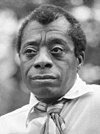
Langston Hughes on James Baldwin
“A straight-from-the-shoulder writer, writing about the troubled problems of this troubled earth with an illuminating intensity.”
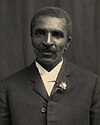
Langston Hughes on George Washington Carver
“From Carver's small laboratory at Tuskegee came formulas in agricultural chemistry that enriched the entire Southland, indeed the whole of America and the world.”
Langston Hughes on Vladimir Lenin
“Lenin walks around the world. Frontiers cannot bar him. Neither barracks nor barricades impede. Nor does barbed wire scar him. Lenin walks around the world. Black, brown, and white receive him. Language is no barrier. The strangest tongues believe him. Lenin walks around the world. The sun sets like a scar. Between the darkness and the dawn There rises a red star.”

Langston Hughes on Booker T. Washington
“Historical and contemporary judgments affirm that Washington was in reality “a great accommodator.” But to create Tuskegee in Alabama in that era he could hardly have been otherwise. He did create Tuskegee—a splendid achievement—but, in so doing, was in turn almost forced to create of himself an image of national leadership. But in time, he grew to like this image and eventually to take advantage of it, so his enemies claimed, for the exercise of power itself. As a bridge between the white and colored peoples of the United States, he sought and gained more often than not the favors of the white power structure from which came the endowments supporting Tusekegee.”

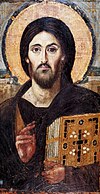
Langston Hughes on Jesus
“Listen, Christ, You did alright in your day, I reckon— But that day's gone now. They ghosted you up a swell story, too, Called it Bible— But it's dead now. The popes and the preachers've Made too much money from it. They've sold you too many Kings, generals, robbers, and killers— Even to the Czar and the Cossacks, Even to Rockefeller's church, Even to THE SATURDAY EVENING POST. You ain't no good no more. They've pawned you Till you've done wore out. Goodbye, Christ Jesus Lord God Jehova, Beat it on away from here now. Make way for a new guy with no religion at all— A real guy named Marx Communist Lenin Peasant Stalin Worker ME— I said, ME! Go Ahead on now, You're getting in the way of things, Lord. And please take Saint Ghandi [sic] with you when you go, And Saint Pope Pius,1 And Saint Aimee McPherson, And big black Saint Becton Of the Consecrated Dime. And step on the gas, Christ! Move! Don't be so slow about movin'! The world is mine from now on— And nobody's gonna sell ME To a king, or a general, Or a millionaire.”
Quotes About Langston Hughes
Gain deeper perspective through quotes about Langston Hughes from others.
Maya Angelou on Langston Hughes
“Langston Hughes' poem, "I've Known Rivers," became the rallying cry for black Americans to take pride in their color, the reverberations of that attitude reached the Africans in the then French and British colonies.”

From a on Langston Hughes 4 quotes
“[T]here have not been that many black artists that visible for black youth. There was Langston Hughes, but he was the only one and that was thirty-five to forty years ago. And men of the Negro Renaissance were not given to get outside of Harlem, really.”
James Baldwin on Langston Hughes
“Every time I read Langston Hughes I am amazed all over again by his genuine gifts-and depressed that he has done so little with them…Hughes, in his sermons, blues and prayers, has working for him the power and the beat of Negro speech and Negro music. Negro speech is vivid largely because it is private. It is a kind of emotional shorthand-or sleight-of-hand-by means of which Negroes express, not only their relationship to each other, but their judgment of the white world. And, as the white world takes over this vocabulary-without the faintest notion of what it really means the vocabulary is forced to change. The same thing is true of Negro music, which has had to become more and more complex in order to continue to express any of the private or collective experience. Hughes knows the bitter truth behind these hieroglyphics: what they are designed to protect, what they are designed to convey. But he has not forced them into the realm of art where their meaning would become clear and overwhelming. "Hey, pop!/Re-bop!/Mop!" conveys much more on Lenox Avenue than it does in this book, which is not the way it ought to be. Hughes is an American Negro poet and has no choice but to be acutely aware of it. He is not the first American Negro to find the war between his social and artistic responsibilities all but irreconcilable.”
Sandra María Esteves interview on Langston Hughes
“(At National Black Theater performance) I was in awe of the words I witnessed that day. It was the first time that I heard the works of writers like Gwendolyn Brooks, Nikki Giovanni, Langston Hughes, Amiri Baraka. I heard poetry that was about me, that was very immediate. I connected to it in a visceral way. That experience moved me so profoundly that I went home and that night I wrote my first batch of poems. It was like the floodgates opened. That reading empowered me with a voice and gave me permission to express everything that had been festering in me for years. So I just started experimenting with language and writing all kinds of things.”
Ollie Harrington on Langston Hughes 3 quotes
“About the time I was 17 and graduated from high school, I like to say that I ran away from home. I went to Harlem, and that was a most beautiful place where, fortunately for me, I came into, or rather, ran into, the hands of some wonderful people; people who formed an important part of the so-called Black Renaissance. They were people like Langston Hughes, [[w:Wallace Thurman|Wally Thurmond, Bud Fisher, all really wonderful writers.”

About Langston Hughes
Langston Hughes (1 February 1902 – 22 May 1967) was an American poet, novelist, playwright, social activist and newspaper columnist.