Link Copied!
Lafcadio Hearn Quotes (1850-1904)
Author, King
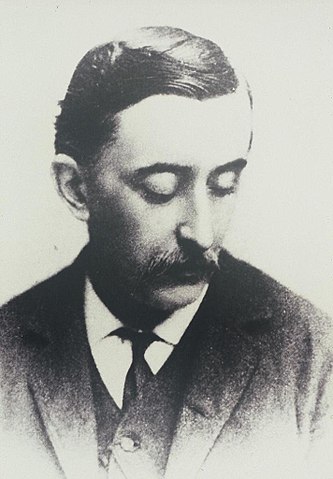


About Lafcadio Hearn
Patricio Lafcadio Carlos Hearne (27 June 1850 – 26 September 1904) was a Greek-born journalist, author and academic. He was brought up in Ireland and lived for many years in the United States before moving to Japan, taking Japanese citizenship, and adopting the name Yakumo Koizumi.
Best Lafcadio Hearn Quotes
Shortest
Earliest
Explore our curated collection of the most famous and impactful Lafcadio Hearn quotes.
“How sweet Japanese woman is! All the possibilities of the race for goodness seem to be concentrated in her.”
“Whatever doubts or vexations one has in Japan, it is only necessary to ask one's self: "Well, who are the best people to live with?"”



“My friends are much more dangerous than my enemies. These latter – with infinite subtlety – spin webs to keep me out of places where I hate to go, – and tell stories of me to people whom it would be vanity and vexation to meet; – and they help me so much by their unconscious aid that I almost love them.”
“Times are not good here. The city is crumbling into ashes. It has been buried under a lava flood of taxes and frauds and maladministrations so that it has become only a study for archaeologists. Its condition is so bad that when I write about it, as I intend to do soon, nobody will believe I am telling the truth. But it is better to live here in sackcloth and ashes than to own the whole state of Ohio.”
“They are hideous Golgothas, these old intermural cemeteries of ours. In other cities cemeteries are beautiful with all that the art of the gardener and sculptor can give....There the horror is masked. Here it glares at us with empty sockets. The tombs are fissured, or have caved in, or have crumbled down into shapeless bricks and mortar...[and] crawfish undermine the walls to feast upon what is hidden within.”
“It may remain for us to learn … that our task is only beginning; and that there will never be given to us even the ghost of any help, save the help of unutterable unthinkable Time. We may have to learn that the infinite whirl of death and birth, out of which we cannot escape, is of our own creation, of our own seeking;—that the forces integrating worlds are the errors of the Past;—that the eternal sorrow is but the eternal hunger of insatiable desire;—and that the burnt-out suns are rekindled only by the inextinguishable passions of vanished lives.”

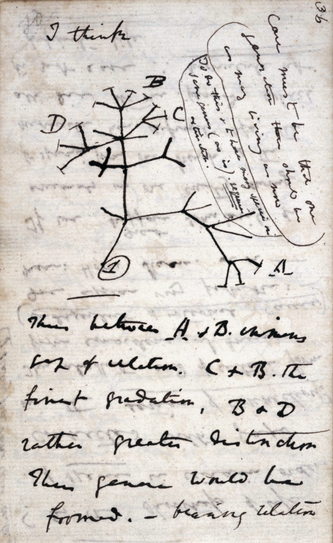
“After the first recognition even by theology of physical evolution, it was easy to predict that the recognition of psychical evolution could not be indefinitely delayed; for the barrier erected by old dogma to keep men from looking backward had been broken down. And today for the student of scientific psychology the idea of pre-existence passes out of the realm of theory into the realm of fact, proving the Buddhist explanation of the universal mystery quite as plausible as any other.
"None but very hasty thinkers," wrote the late Professor Huxley, "will reject it on the ground of inherent absurdity. Like the doctrine of evolution itself, that of transmigration has its roots in the world of reality; and it may claim such support as the great argument from analogy is capable of supplying.””
"None but very hasty thinkers," wrote the late Professor Huxley, "will reject it on the ground of inherent absurdity. Like the doctrine of evolution itself, that of transmigration has its roots in the world of reality; and it may claim such support as the great argument from analogy is capable of supplying.””
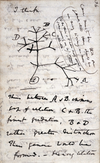
“With the acceptance of the doctrine of evolution, old forms of thought crumbled; new ideas everywhere arose to take the place of worn-out dogmas; and we now have the spectacle of a general intellectual movement in directions strangely parallel with Oriental philosophy. The unprecedented rapidity and multiformity of scientific progress during the last fifty years could not have failed to provoke an equally unprecedented intellectual quickening among the non-scientific.
That the highest and most complex organisms have been developed from the lowest and simplest; that a single physical basis of life is the substance of the whole living world; that no line of separation can be drawn between the animal and vegetable; that the difference between life and non-life is only a difference of degree, not of kind; that matter is not less incomprehensible than mind, while both are but varying manifestations of one and the same unknown reality – these have already become the commonplaces of the new philosophy.”
That the highest and most complex organisms have been developed from the lowest and simplest; that a single physical basis of life is the substance of the whole living world; that no line of separation can be drawn between the animal and vegetable; that the difference between life and non-life is only a difference of degree, not of kind; that matter is not less incomprehensible than mind, while both are but varying manifestations of one and the same unknown reality – these have already become the commonplaces of the new philosophy.”

“With the massacre of Shimabara ends the real history of the Portuguese and Spanish missions. After that event, Christianity was slowly, steadily, implacably stamped out of visible existence. It had been tolerated, or half tolerated, for only sixty-five years: the entire history of its propagation and destruction occupies a period of scarcely ninety years. People of nearly every rank, from prince to pauper, suffered for it thousands endured tortures for its sake - tortures so frightful that even three of those Jesuits who sent multitudes to useless martyrdom were forced to deny their faith under the infliction;* and tender women, sentenced to, the stake, carried their little ones with them into the fire, rather than utter the words that would have saved both mother and child. Yet this religion, for which thousands vainly died, had brought to Japan nothing but evil disorders, persecutions, revolts, political troubles, and war. Even those virtues of the people which had been evolved at unutterable cost for the protection and conservation of society, - their self-denial, their faith, their loyalty, their constancy and courage, - were by this black creed distorted, diverted, and transformed into forces directed to the destruction of that society. Could that destruction have been accomplished, and a new Roman Catholic empire have been founded upon the ruins, the forces of that empire would have been used for the further extension of priestly tyranny, the spread of the Inquisition, the perpetual Jesuit warfare against freedom of conscience and human progress. Well may we pity the victims of this pitiless faith, and justly admire their useless courage: yet who can regret that their cause was lost? ... Viewed from another standpoint than that of religious bias, and simply judged by its results, the Jesuit effort to Christianize Japan must be regarded as a crime against humanity, a labour of devastation, a calamity comparable only, - by reason of the misery and destruction which it wrought, - to an earthquake, a tidal-wave, a volcanic eruption.”

“The religion of the Jesuits could never have adapted itself to the social conditions of Japan; and by the fact of this incapacity the fate of the missions was really decided in advance. The intolerance, the intrigues, the savage persecutions carried on,~-all the treacheries and cruelties of the Jesuits may simply be considered as the manifestations of such incapacity; while the repressive measures taken by Iyéyasu and his successors signify sociologically no more than the national perception of supreme danger. It was recognized that the triumph of the foreign religion would involve the total disintegration of society, and the subjection of the empire to foreign domination.
Neither the artist nor the sociologist, at least, can regret the failure of the missions. Their extirpation, which enabled Japanese society to evolve to its type-limit, preserved for modem eyes the marvellous world of Japanese art, and the yet more marvellous world of its traditions, beliefs, and customs. Roman Catholicism, triumphant, would have swept all this out of existence. The natural antagonism of the artist to the missionary may be found in the fact that the latter is always, and must be, an unsparing destroyer. Everywhere the developments of art are associated in some sort with religion; and by so much as the art of a people reflects their beliefs, that art will be hateful to the enemies of those beliefs. Japanese art, of Buddhist origin, is especially an art of religious suggestion,—not merely as regards painting and sculpture, but likewise as regards decoration, and almost every product of aesthetic taste. There is something of religious feeling associated even with the Japanese delight in trees and flowers, the charm of gardens, the love of nature and of nature's voices,—-with all the poetry of existence, in short. Most)assuredly the Jesuits and their allies would have ended all this, every detail of it, without the slightest qualm. Even could they have understood and felt the meaning of that world of strange beauty.—result of a race-experience never to be repeated or replaced,—-they would not have hesitated a moment in the work of obliteration and effacement. To-day, indeed, that wonderful art-world is being surely and irretrievably destroyed by Western industrialism. But industrial influence, though pitiless, is not fanatic; and the destruction is not being carried on with such ferocious rapidity but that the fading story of beauty can be recorded for the future benefit of human civilization.”
Neither the artist nor the sociologist, at least, can regret the failure of the missions. Their extirpation, which enabled Japanese society to evolve to its type-limit, preserved for modem eyes the marvellous world of Japanese art, and the yet more marvellous world of its traditions, beliefs, and customs. Roman Catholicism, triumphant, would have swept all this out of existence. The natural antagonism of the artist to the missionary may be found in the fact that the latter is always, and must be, an unsparing destroyer. Everywhere the developments of art are associated in some sort with religion; and by so much as the art of a people reflects their beliefs, that art will be hateful to the enemies of those beliefs. Japanese art, of Buddhist origin, is especially an art of religious suggestion,—not merely as regards painting and sculpture, but likewise as regards decoration, and almost every product of aesthetic taste. There is something of religious feeling associated even with the Japanese delight in trees and flowers, the charm of gardens, the love of nature and of nature's voices,—-with all the poetry of existence, in short. Most)assuredly the Jesuits and their allies would have ended all this, every detail of it, without the slightest qualm. Even could they have understood and felt the meaning of that world of strange beauty.—result of a race-experience never to be repeated or replaced,—-they would not have hesitated a moment in the work of obliteration and effacement. To-day, indeed, that wonderful art-world is being surely and irretrievably destroyed by Western industrialism. But industrial influence, though pitiless, is not fanatic; and the destruction is not being carried on with such ferocious rapidity but that the fading story of beauty can be recorded for the future benefit of human civilization.”

Lafcadio Hearn Quotes by Topic
Find exactly what you are looking for by browsing this categorized list of Lafcadio Hearn quotes by topic.
Lafcadio Hearn on Evolution 2 quotes
“After the first recognition even by theology of physical evolution, it was easy to predict that the recognition of psychical evolution could not be indefinitely delayed; for the barrier erected by old dogma to keep men from looking backward had been broken down. And today for the student of scientific psychology the idea of pre-existence passes out of the realm of theory into the realm of fact, proving the Buddhist explanation of the universal mystery quite as plausible as any other. "None but very hasty thinkers," wrote the late Professor Huxley, "will reject it on the ground of inherent absurdity. Like the doctrine of evolution itself, that of transmigration has its roots in the world of reality; and it may claim such support as the great argument from analogy is capable of supplying.””
Lafcadio Hearn on Crystal
“I feel like a white granular mass of amorphous crystals—my formula appears to be isomeric with Spasmotoxin. My aurochloride precipitates into beautiful prismatic needles. My Platinochloride develops octohedron crystals,—with fine blue florescence. My physiological action is not indifferent. One millionth of a grain injected under the skin of a frog produced instantaneous death accompanied by an orange blossom odor.”

What Lafcadio Hearn Said About Others
Discover personal opinions Lafcadio Hearn shared regarding contemporaries.
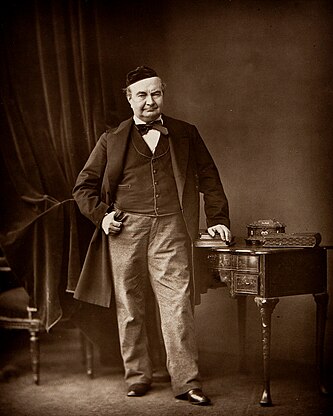
Lafcadio Hearn on Charles Augustin Sainte-Beuve
“The nearest approach to the infallible in literary judgment is represented in the colossal work of the teacher of all these three [Edmund Gosse, Edward Dowden and George Saintsbury], the greatest critic that ever lived – not an Englishman, but a Frenchman, the wonderful Sainte-Beuve.”
Lafcadio Hearn on Anatole France
“If by Realism we mean Truth, which alone gives value to any study of human nature, we have in Anatole France a very dainty realist: — if by Romanticism we understand that unconscious tendency of the artist to elevate truth itself beyond the range of the familiar, and into the emotional realm of aspiration, then Anatole France is at times a romantic. And, nevertheless, as a literary figure he stands alone; neither by his distinctly Parisian refinement of method, nor yet by any definite characteristic of style, can he be successfully attached to any special group of writers.”

Quotes About Lafcadio Hearn
Gain deeper perspective through quotes about Lafcadio Hearn from others.
Edward Wright on Lafcadio Hearn
“Mr Hearn began really to count as a writer only when his Hellenic qualities of mind, stunted at first by the conditions of life in North America, were at last developed among a people distinguished by somewhat of that instinctive feeling for beauty which formed an incomparable element in the genius of ancient Greece. His æsthetic sense luxuriated in a land where fineness of taste is still a common characteristic. Through the gate of their art he entered, not only into the ways of life of the Japanese, but into their moods and their religion.”
Yone Noguchi on Lafcadio Hearn
“To denounce Hearn is the same thing as a denunciation of Japan. Lafcadio Hearn was as Japanese as haiku.”
Malcolm Cowley on Lafcadio Hearn
Kakuzō Okakura on Lafcadio Hearn
“Your information is based on the meagre translations of our immense literature, if not on the unreliable anecdotes of passing travellers. It is rarely that the chivalrous pen of a Lafcadio Hearn or that of the author of "The Web of Indian Life" enlivens the Oriental darkness with the torch of our own sentiments.”
About Lafcadio Hearn
Patricio Lafcadio Carlos Hearne (27 June 1850 – 26 September 1904) was a Greek-born journalist, author and academic. He was brought up in Ireland and lived for many years in the United States before moving to Japan, taking Japanese citizenship, and adopting the name Yakumo Koizumi.