Link Copied!
L. P. Jacks Quotes (1860-1955)
Philosopher
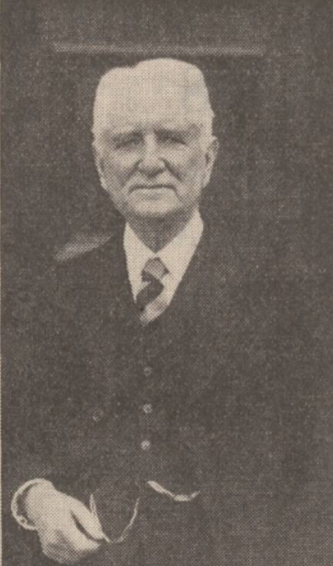

About L. P. Jacks
Lawrence Pearsall Jacks (9 October 1860 – 17 February 1955), usually cited as L. P. Jacks, was an English educator, philosopher, and Unitarian minister who rose to prominence in the period from World War I to World War II.
Best L. P. Jacks Quotes
Shortest
Earliest
Explore our curated collection of the most famous and impactful L. P. Jacks quotes.
“Our intellectual development in the field of science has outstripped our human development in the field of character.”

“Philosophy resembles poetry in being an art for enforcing meditation, for driving the mind inwards until it sinks into its Object.”
“Among the arts of expression one is suited to this purpose, another to that. It is hard to express movement in stone or rest in music. It is harder still to express permanence in speech.”

“The spiritual men of India, a great and watchful multitude whose spiritual status is unattainable, are many of them catholics in a deeper sense than we of the West have yet given to the word ....”
“Are there not many Arts which, though speechless, express their meanings with perfect adequacy, with satisfaction to the recipient, and serve at the same time as a medium of communication between soul and soul?”

“Speech is insufficient to utter the last things; and this troubles it not, because the last things may be heard speaking for themselves. At last, after long delay the wondering soul gives form to that which is stirring within it and produces its works art and song and mighty deeds.”
“I had been virtually a Unitarian (as I still am) but without knowing it. The experience of being among Unitarians who did know what they were, and attached much importance to it, was entirely novel to me, but I soon fell into their ways and found it easy to go forward on their road, the more so because the other roads became closed to me.”

“The spirit of fellowship, with its attendant cheerfulness, is in the air. It is comparatively easy to love one's neighbor when we realize that he and we are common servants and common sufferers in the same cause. A deep breath of that spirit has passed into the life of England. No doubt the same thing has happened elsewhere.”
“Of all the media of expression employed by man (and let us never forget that they are many) none are so unstable, none so quick to change their meaning, as words. Even sculpture, architecture, painting, in their noblest works, speak differently under different conditions; but these arts are relatively immortal compared with speech.”
“Is not every man familiar with situations in his own life, when the needs of self-expression cannot be satisfied by saying any thing whatsoever times and occasions when, to make his fellows understand what he means, he must straight way do something, or be something, and perhaps hold his tongue the while? And can we deny that the same holds good of the Universe?”
“A master in the art of living draws no sharp distinction between his work and his play; his labor and his leisure; his mind and his body; his education and his recreation. He hardly knows which is which. He simply pursues his vision of excellence through whatever he is doing, and leaves others to determine whether he is working or playing. To himself, he always appears to be doing both.”
“Better that the nation grow poor for a cause we can honor, than grow rich for an end that is unknown. Who can regard without deep misgiving the process of accumulating wealth unaccompanied by a corresponding growth of knowledge as to the uses to which wealth must be applied? This is what we see in normal times, and the spectacle is profoundly disturbing. Far less disturbing at all events is that process of spending the wealth which we have now to witness.”

“Would not all we mean by “communication between mind and mind” be provided for if we suppose that common knowledge comes about, not from our explaining things to one another, but from things explaining themselves in the same terms to us all? Accepting the object as its own interpreter, as its own “medium of communication,” do we not begin to understand what is utterly dark on any other view, how it comes to pass that the resulting knowledge is a common possession?”

“Though science makes no use for poetry, poetry is enriched by science. Poetry “takes up” the scientific vision and re-expresses its truths, but always in forms which compel us to look beyond them to the total object which is telling its own story and standing in its own rights. In this the poet and the philosopher are one. Using language as the lever, they lift thought above the levels where words perplex and retard its flight, and leave it, at last, standing face to face with the object which reveals itself.”
“The human mind loves the bondage of words and is apt, when freed from one form of their tyranny, to set up another more oppressive than the last.
The highest function of philosophy is to enforce the attitude of meditation and therewithal restrain the excessive volubility of the tongue. To us it seems that the reflective thinker wins his greatest victories when by what he says he compels us to recognise the relative insignificance of anything he can say. His task is not to capture Reality, but to free it from captivity.”
The highest function of philosophy is to enforce the attitude of meditation and therewithal restrain the excessive volubility of the tongue. To us it seems that the reflective thinker wins his greatest victories when by what he says he compels us to recognise the relative insignificance of anything he can say. His task is not to capture Reality, but to free it from captivity.”
“Philosophy has been called the search for the Permanent amid the changing. With this account of philosophy there is no need to quarrel. But having accepted it, a distinction remains to be observed, a distinction of capital importance, which we are in constant danger of forgetting. It is one thing to find the Permanent; it is another thing to find a form of words in which the Permanent shall stand permanently expressed. It is one thing to experience something fixed and changeless; it is another thing to fix this something by a changeless definition. The first may be possible, while the second remains impossible for ever.”
“It is only after prolonged, and often painful, self-examination that any of us can realise the extent to which our minds are in bondage to words, to phrases, to formulae. We are the children of an age which spends the best energies of its life in the discussion of life, in an atmosphere of deferred fulfillment, continually postponing the act of living to the work of mentally preparing to live. Preoccupied with these preparations, we become skeptical as to all that lies beyond; and if for a moment we pass the boundary which separates the area of discussion from the fact discussed, our minds become troubled and amazed, and we conclude, strangely enough, that we are in a land of moonshine and of dreams.”
“How can the Universe tell its own story save by making use of human speech; how convey its meanings to finite minds save by employing a thinker to declare them? So long as the story remains unspoken, unwritten, can we say it exists at all? Does not the significance of things become a story by the very process which ends in the movement of an intelligently guided pen over a sheet of paper, in the reading of printed types, in the utterance of recognised vocables; and until this process has been accomplished is not the “meaning” a mere promise or unrealized potency? Can we learn the history of the world, and of human life, otherwise than by reading, or hearing it spoken? How, then, can we receive it without the intermediation of a writer, a speaker?”

“We want philosophers, among other reasons, because the world is full of false philosophy. The way of experience is beset on every hand by a multitude of verbal judgments, of empty phrases, of word-copies, which pass themselves off as the real thing, which pretend to do duty for concrete fact and, by force of their number and importunity, capture our attention and cause the true originals to be overlooked. If it is true that philosophy must perforce fight its battles with words, is it not equally true that words are the weapons against which it must everywhere contend? The philosopher bent on the enlargement of experience perceives at once that his work cannot be done, cannot even be commenced, until he has cleared away the heaps of verbal detritus under which the bedrocks of experience lie buried.”
“Are not the richest and most significant experiences of man precisely those which are the least patient of verbal reproduction? A book, a treatise, a discourse, is the very thing that cannot contain them, that can contain at most their lower elements, their less significant aspects. Who shall transfer them to paper, write them in ink, utter them in words? And yet, though inexpressible thus, these things crave expression, for they are full of meaning and must be expressed. They have a language of their own. Art can utter some of them, and Nature, perhaps, can interpret them all. They borrow her tongues, speaking in the winds, singing in the voice of moving waters, looking down upon us in the cold shining of the stars. What they mean, we, too, can express; but we express it, not by speaking there and then, but by all that we become through their influence, by all that we are led to do, through their compelling, till life shall end.”
“The poet takes us straight into the presence of things. Not by explanation, but by indication; not by exhausting its qualities, but by suggesting its value he gives us the object, raising it from the mire where it lies trodden by the concepts of the understanding, freeing it from the entanglements of all that “the intellect perceives as if constituting its essence.” Thus exhibited, the object itself becomes the meeting-ground of the ages, a centre where millions of minds can enter together into possession of the common secret. It is true that language is here the instrument with which the fetters of language are broken. Words are the shifting detritus of the ages; and as glass is made out of the sand, so the poet makes windows for the soul out of the very substance by which it has been blinded and oppressed. In all great poetry there is a kind of “kenosis” of the understanding, a self-emptying of the tongue. Here language points away from itself to something greater than itself.”

L. P. Jacks Quotes by Topic
Find exactly what you are looking for by browsing this categorized list of L. P. Jacks quotes by topic.
L. P. Jacks on Work 3 quotes
“We are the children of an age which spends the best energies of its life in the discussion of life, in an atmosphere of deferred fulfillment, continually postponing the act of living to the work of mentally preparing to live.”

L. P. Jacks on Kenosis
“In all great poetry there is a kind of “kenosis” of the understanding, a self-emptying of the tongue. Here language points away from itself to something greater than itself.”
L. P. Jacks on Control
L. P. Jacks on Action
“The highest function of philosophy is to enforce the attitude of meditation and therewithal restrain the excessive volubility of the tongue. To us it seems that the reflective thinker wins his greatest victories when by what he says he compels us to recognise the relative insignificance of anything he can say. His task is not to capture Reality, but to free it from captivity.”

L. P. Jacks on Reticence
“The highest function of philosophy is to enforce the attitude of meditation and therewithal restrain the excessive volubility of the tongue. To us it seems that the reflective thinker wins his greatest victories when by what he says he compels us to recognise the relative insignificance of anything he can say. His task is not to capture Reality, but to free it from captivity.”

L. P. Jacks on Recreation
“A master in the art of living draws no sharp distinction between his work and his play; his labor and his leisure; his mind and his body; his education and his recreation. He hardly knows which is which. He simply pursues his vision of excellence through whatever he is doing, and leaves others to determine whether he is working or playing. To himself, he always appears to be doing both.”
L. P. Jacks on Theory
“Things and events explain themselves, and the business of thought is to brush aside the verbal and conceptual impediments which prevent them from doing so. Start with the notion that it is you who explain the Object, and not the Object that explains itself, and you are bound to end in explaining it away. It ceases to exist, its place being taken by a parcel of concepts, a string of symbols, a form of words, and you find yourself contemplating, not the thing, but your theory of the thing.”

About L. P. Jacks
Lawrence Pearsall Jacks (9 October 1860 – 17 February 1955), usually cited as L. P. Jacks, was an English educator, philosopher, and Unitarian minister who rose to prominence in the period from World War I to World War II.