Link Copied!
Léon Blum Quotes (1872-1950)
Politician, King


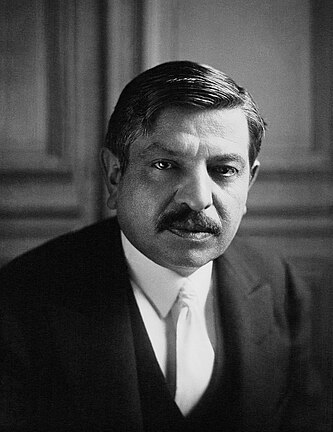
About Léon Blum
André Léon Blum (9 April 1872 – 30 March 1950) was a French politician, identified with the moderate left, and three times Prime Minister of France.
Best Léon Blum Quotes
Shortest
Earliest
Explore our curated collection of the most famous and impactful Léon Blum quotes.
“Only now do I understand the harm done our nation's best interests by the rebuff administered to Poincaré's policy in 1924.”
“Although I am not a legalist when it comes to the conquest of power, I am one when it comes to the exercise of power. If parliamentary processes result in our being called upon to exercise power within the framework of existing institutions, we should do so legally and fairly without taking advantage of our presence in government to fraudulently transform the exercise of power into the conquest of power.”

“What the Nationalists are once again trying to revive is the state of mind, or rather, the passions of 1912–13... Hitler to-day is miles away from power. He may be a little nearer it than, say, Franklin-Bouillon, but he is infinitely farther away from it than General Boulanger on the night of 27th January, 1889, or than Paul Déroulède on the day of Félix Faure's funeral.”
What Léon Blum Said About Others
Discover personal opinions Léon Blum shared regarding contemporaries.
Léon Blum on Philippe Pétain
“[Pétain is France's] noblest and most humane soldier.”

Léon Blum on Raymond Poincaré
“Only now do I understand the harm done our nation's best interests by the rebuff administered to Poincaré's policy in 1924.”

Léon Blum on Pierre Laval
“You have tried to give and to keep. You wanted to have your cake and eat it. You cancelled your words by your deeds and your deeds by your words. You have debased everything by fixing, intrigue and slickness... Not sensitive enough to the importance of great moral issues, you have reduced everything to the level of your petty methods.”

Quotes About Léon Blum
Gain deeper perspective through quotes about Léon Blum from others.
Winston Churchill on Léon Blum
“In all this rallying of the forces which stand for peaceful and tolerant solutions of world problems, M. Blum has rendered a high personal service. Indeed, it was not in the power of any other Frenchman at this particularly juncture in the life of France or of Europe to do so much for the common good.”

Niall Ferguson on Léon Blum
“By 1937 France's Prime Minister Léon Blum had embraced the notion that concessions to Germany in both Eastern Europe and overseas were necessary if peace were to be preserved. But Chamberlain had little confidence in the French and did practically nothing to make joint Anglo-French action effective. The Soviet Union was viewed with revulsion by most Conservatives, Chamberlain among them, on ideological grounds. Even Churchill found it hard to contemplate having Moscow in his grand alliance, though that was clearly a logical inference to be drawn from his own analysis of the situation. Much hope was pinned on Mussolini, who in 1934 had appeared to take a firm line against an abortive Nazi putsch in Vienna; this was to exaggerate Italy's strength and to underestimate Mussolini's desire to overturn the status quo, which he revealed when he invaded Abyssinia and ignored all inducements to negotiate a settlement. The 1935 'Stresa Front' of Britain, France and Italy proved to be just that: a front. When Italy defected, Britain and France could not agree what to do first: get Mussolini out of Abyssinia or keep Hitler out of the Rhineland. They did neither. This pattern of Anglo-French mal-coordination, not helped by the divergence of domestic politics in the two countries when France briefly had a Popular Front government, was to continue until the outbreak of war.”

Tony Judt on Léon Blum 2 quotes
“What interested me in Blum as a Jew was precisely that: the hatred he aroused. We find it hard today even to imagine the degree of overt, unapologetic prejudice and dislike that someone like Blum could inspire in those years, primarily and simply on account of his Jewish origin. On the other hand Blum himself was often deaf to the scale and implications of public anti-Semitism and its invocation against him. There was, of course, a certain ambivalence in Blum’s own identity: unashamedly and totally French, he was no less overtly and proudly Jewish. In later years he combined great sympathy for the newborn Jewish state in the Middle East with near indifference to the Zionist message itself. These ostensibly incompatible identifications and enthusiasms were perhaps not so far from my own at various times, which may explain my long-standing interest in the man.”

Lucien Romier on Léon Blum
“[H]e was converted by Jaurès to Socialism, became his most faithful disciple and succeeded him as leader. Along with his intellectual distinction, his idealism and his personal probity, Blum took over some of Jaurès' worst illusions. If anything, Blum was even more of a pacifist, more bent on disarmament; he placed an equal trust in German Social Democracy—with less reason, for there was the experience of the war and post-war Germany to learn from. He exemplified and encouraged by his leadership and his undoubted intellectual distinction all the illusions endemic in social democracy. There was no danger, he said, from the Fascists: he was badly beaten up in the streets of Paris to prove the worthlessness of his illusions. Hitler was miles away from power, he said, in 1930: Hitler was in complete possession of power in 1933. Blum and the Socialists had opposed the raising of Army service from one to two years, an indispensable measure of defence: he and they lived to regret the gap in French defences in 1940. And yet Blum was a noble man, as Jaurès had been before him.”
About Léon Blum
André Léon Blum (9 April 1872 – 30 March 1950) was a French politician, identified with the moderate left, and three times Prime Minister of France.