Link Copied!
Konrad Heiden Quotes (1901-1966)
Revolutionary
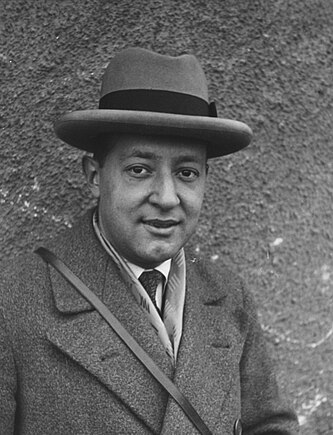
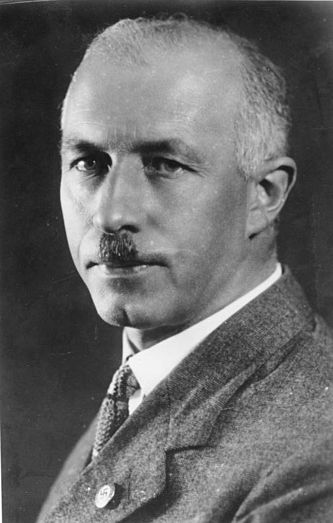
About Konrad Heiden
Konrad Heiden (7 August 1901 – 18 June 1966) was a German-American journalist and historian of the Weimar Republic and Nazi eras, most noted for the first influential biographies of Adolf Hitler. Often, he wrote under the pseudonym "Klaus Bredow."
Best Konrad Heiden Quotes
Shortest
Earliest
Explore our curated collection of the most famous and impactful Konrad Heiden quotes.
“Before the war [World War I] the anti-Semitic movement was of no political importance in Germany.”

“Karl Marx was himself an anti-Semite: that is to say, an opponent of bourgeois Jewry. Inversely, most Jews are anti-Marxist.”
“The Nazi party had been too hasty in incorporating the word ‘Socialist’ in its title, Hitler indeed wished it to be ‘Social Revolutionary.’”
“They could resign themselves to the Republic no less than the big industrialists, who did not favour the various abortive revolts and did not, for the most part, encourage National-Socialism.”

“At Munich, at the time of the Soviet Republic, he [Hitler] interceded with his comrades on behalf of the Social-Democratic Government and, in heated discussions, espoused the cause of Social Democracy against that of the Communists.”
“The great modern mass-parties, first the foremost the Fascists, have re-discovered an old historical truth which seemed long since buried: that men often and masses almost always pay service not to their interests but to their illusions.”
“He [Hitler] had learned much from Leon Trotzky, whose slogan of the permanent revolution he now adopted: ‘The German Revolution will not be concluded until the whole of the German nation is given a new form, a new organization, and a new structure.’”
“The twenty-six-year-old Baldur von Schirach, leader of the Hitler youth, who could boast of standing close to Hitler, declared bluntly in those revolutionary June weeks: ‘A socialist and anti-capitalist attitude is the most salient characteristic of the Young National Socialist Germany.’”
“At length a force of three million S.A. men was pushing on behind him [Röhm], and God knew whither they were pushing. There were large numbers of Communists and Social Democrats among them; many of the storm troopers were called ‘beefsteaks—brown and red within. Jest were retailed such as the following: one S.A. man says to another: ‘In our storm troop there are three Nazis, but we shall soon have spewed them out.”

“Röhm coined the slogan that there must be ‘second revolution’, this time, not against the Left, but against the Right; in his diary Goebbels agreed with him. On April 18 he maintained that this second revolution was being discussed ‘everywhere among the people’; in reality, he said, this only meant that first one was not yet ended. ‘Now we shall soon have to settle with the reaction. The revolution must nowhere call a halt.”
“The bourgeois, even the Nationalist Press, began to take fright and talk of Bolshevism and Hitler himself boasted: ‘In our movement the two extremes come together: the Communists from the Left and the officers and students from the Right. These two have always been the most active elements, and it was the greatest crime that they used to oppose each other in street fights.’… Our party has already succeeded in uniting these two utter extremes within the ranks of our storm troops. They will form the core of the great German liberation movement, in which all without distinction will stand together when the day comes to say: The Nation arises, the storm is breaking!’”
What Konrad Heiden Said About Others
Discover personal opinions Konrad Heiden shared regarding contemporaries.
Konrad Heiden on Gottfried Feder
“Gottfried Feder gave the Nazi Party an ideology. Its essential points were paramount State ownership of land and the prohibition of private sales of land, the substitution of German for Roman law, nationalization of the banks and the abolition of interest by an amortization service. It was he, too, who inspired the Party with its doctrine of the distinction between productive and non-productive capital and of the necessity for destroying the ‘slavery of profits.’”
About Konrad Heiden
Konrad Heiden (7 August 1901 – 18 June 1966) was a German-American journalist and historian of the Weimar Republic and Nazi eras, most noted for the first influential biographies of Adolf Hitler. Often, he wrote under the pseudonym "Klaus Bredow."