Link Copied!
Kim Kelly (journalist) Quotes (2022-)
Author, Writer, Politician
About Kim Kelly (journalist)
Kim Kelly is an journalist and writer, best known for her coverage of labor issues and heavy metal music. She is the author of Fight Like Hell: The Untold History of American Labor (2022).
Best Kim Kelly (journalist) Quotes
Shortest
Earliest
Explore our curated collection of the most famous and impactful Kim Kelly (journalist) quotes.
“The United States' labor laws are outdated, the National Labor Relations Board is still a husk of itself, understaffed and weakened after decades of neglect-and yet, there is a great and mighty wave of organizing happening regardless. (p. xxvii)”
“I love telling people about the time when a group of disabled activists got tired of waiting for the government to actually enact regulations that were part of the 1977 Rehabilitation Act and occupied a bunch of federal buildings around the country.”

“the history of labor struggles in health care, education, media, sports, and nonprofit work have shaped our world in incalculably important ways, and have been brilliantly covered by authors like Sarah Jaffe, Maximillian Alvarez, Gabriel Winant, Micah Uetricht, Britni de la Cretaz, Elizabeth Catte, Steven Greenhouse, and many others.”
“The climate crisis is the greatest threat facing humanity. Given the number of imperialistic wars, white supremacist terrorist attacks, mass extinctions, concentration camps, genocides, and brutal government repression with which we as a species are currently occupying ourselves, that is truly saying something...Right now, our future is in flames, and some of those politicians are standing on the hose.”
“(How are you feeling about the future of the labor movement?) I am so stoked, man. I am so proud of us, and I’m so certain that we’re going to win. It’s going to take struggle and time, and things aren’t where they should be yet, but they used to be way worse. We’re in a position where more people are interested in unions and organizing and taking their power back. That is nothing if not its own revolution.”
“Every worker today stands on the shoulders of giants, people you will meet here like Lucy Parsons, Cesar Chavez, Bayard Rustin, Eugene V. Debs, and Walter Reuther. But others remain unfamiliar to the average working person, and could have never envisioned the world we're in now. Some things haven't changed; bad bosses and capitalist bloodsuckers continue to do their best to keep boots on our necks and their hands in our wallets.”
“Unions still exist, and they’re an option, and they’re a great way to build power with your coworkers. On top of all that, we saw and are continuing to see workers at Amazon and Starbucks—these incredibly well-known corporations that I think a lot of people have accepted as being part of the fabric of their daily lives—go up against the bosses and say, “We need more from you, because you are literally hanging out in space while we’re trying to pay our rent.””

“None of us is an island, and every labor story is also a disability story, a queer story, a Black story, a women’s story. We’re all in this together because ultimately everyone either is a worker or was a worker or will be a worker at some point in their life. There have been efforts over the decades and centuries to separate workers on the basis of race, gender, nationality, or ability, and that’s always been bullshit. It’s just a boss’s tactic to keep us apart because when we come together, we’re strong.”

“Sex workers have always been a vital part of the labor movement and are often left out of the conversation just because of what their job is or where they came from or where they’re living. There’s so much that organized labor can learn from sex-worker organizers because they’ve had to deal with all the same bullshit that any other worker deals with—horrible wages, bad bosses, unsafe working conditions, labor laws that don’t work for them—on top of the stigma and the whore phobia and ignorance and prejudice around their work. If we’re going to stand up for workers and cover workers’ stories and say, “We care about workers,” we need to care about all workers. An injury to one needs to be an injury to all.”

“Earlier on in the pandemic, there was such a contrast between the workers who had to keep going to work even before we had vaccines [and those who didn’t]; they had to keep going out and delivering food or making food or cleaning streets or doing all this essential labor that was momentarily recognized as essential work. We had a hot minute where some people got a couple extra dollars that they badly needed and some people got cheered on from the window—all that weird appreciation theater. And then all that went away, and the workers still had to keep going to work. I think there’s been that shift in the way a lot of workers see their lives, their labor, the value they are bringing to society and their employers, and what they’re getting back in return—and the math ain’t math-ing there.”
“So many of these workers newly recognized as "essential" toiled in industries that lack labor protections, were not and still have not been paid a livable wage, still cannot access affordable health care, and are still disenfranchised by a deeply flawed system that places people of color and undocumented workers at increased risk, whether there's a pandemic raging or not. People incarcerated in jails and prisons were forced to manufacture masks, gowns, and hand sanitizer for use outside the walls, even as the virus turned these grim facilities into death traps, and many there have had to dig graves for those who were lost to its grip. Those in the medical field-doctors, nurses, hospital technicians, hospital janitors and laundry workers, funeral home owners and morticians-were placed in extreme danger by personal protective equipment shortages. The entire affair exposed the rotten, hazardous conditions that have been allowed to fester thanks to capitalist cruelty and federal malfeasance, and by hitting the streets and raising the alarm, workers are now fighting back. (p. xxvi)”
Kim Kelly (journalist) Quotes by Topic
Find exactly what you are looking for by browsing this categorized list of Kim Kelly (journalist) quotes by topic.
Kim Kelly (journalist) on Industrial Workers of the World 2 quotes
“In 1905, when she was invited to appear at the founding convention of a new radical industrial union christened the Industrial Workers of the World, Lucy Parsons thought she'd found her niche once again. Unfortunately, she realized that the other founders saw her as more of a mascot than a comrade.”

Kim Kelly (journalist) on Green New Deal
“The Green New Deal, a proposal introduced by Democratic lawmakers Representative Alexandria Ocasio-Cortez and Sen. Ed Markey and galvanized by an engaged youth movement, is perhaps the U.S. government's most robust attempt to make a dent in the country's outsized carbon emissions and end its reliance on fossil fuels, both of which propel the ongoing climate disaster when in use (burning them releases harmful chemicals into the atmosphere) and during extraction (via methods like oil drilling and coal mining, which cause irreparable damage to the environment). The Green New Deal also seeks to address the dire income inequality that has existed since European colonizers stepped foot on this native land, and has only been exacerbated by climate change, both here and on global terms. This policy proposal isn't a fix-all, but it is an ambitious program that, if implemented, has the potential to enact real, much-needed change, especially if other entities (for example, New York City, whose city council recently passed a Climate Mobilization Act) are inspired to take action on a local level.”
What Kim Kelly (journalist) Said About Others
Discover personal opinions Kim Kelly (journalist) shared regarding contemporaries.
Kim Kelly (journalist) on Mother Jones 3 quotes
View all 3 quotes on Mother Jones →
Kim Kelly (journalist) on Elizabeth Gurley Flynn 2 quotes
“In Flynn's words, it was "a day without parallel in American labor history... a reign of terror prevailed in Lawrence which literally shook America."”

Kim Kelly (journalist) on Ida B. Wells 2 quotes
“"It was a Declaration of Economic Independence, and the first united blow for economic liberty struck by the Negroes of the South!" Wells later wrote of the landowners' reaction to Black sharecroppers' efforts to unionize and bargain for higher prices. "That was their crime and it had to be avenged." Her masterful report on her findings in Elaine, The Arkansas Race Riot, helped cement the massacre and its legacy in the public consciousness, but the work of properly commemorating the Elaine Twelve themselves continues to this day.”

Kim Kelly (journalist) on Lucy Parsons 2 quotes
“The nineteenth century allowed little room for women of color to find their voices-let alone share them with the masses-and the few who did manage to break their silence often became figures of mixed curiosity and revulsion. There are few greater examples of that than Lucy Parsons...Her enthralling demeanor, sophisticated oratory skills, and blistering anti-capitalist rhetoric also made her a star to live crowds, defying the nineteenth-century social convention against women addressing mixed crowds...Her impassioned entreaties on behalf of suffering laborers earned her both awe and scorn from the press, which would call her a "red-mouthed anarchist" in one line and then breathlessly wax on about her beauty and fashionable dresses in the next.”

Kim Kelly (journalist) on Dianne Feinstein
“anti-porn crusader turned senator Dianne Feinstein”

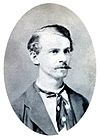
Kim Kelly (journalist) on Albert Parsons
“Albert Parsons, a former Confederate soldier turned anarchist firebrand”
Kim Kelly (journalist) on Martin Luther King Jr.

Kim Kelly (journalist) on Walter Reuther
“Every worker today stands on the shoulders of giants, people like Lucy Parsons, Cesar Chavez, Bayard Rustin, Eugene V. Debs, and Walter Reuther.”

Kim Kelly (journalist) on Richard Nixon
“As President Nixon repeatedly shot down the Rehabilitation Act of 1973, DIA mobilized, and eighty activists shut down Madison Avenue to protest his veto.”

Kim Kelly (journalist) on Bayard Rustin
“Every worker today stands on the shoulders of giants, people you will meet here like Lucy Parsons, Cesar Chavez, Bayard Rustin, Eugene V. Debs, and Walter Reuther.”

Kim Kelly (journalist) on Frederick Douglass
“As Frederick Douglass observed in his autobiography, under this system of modified serfdom, the Black sharecropper was "free from the individual master," but was now "the slave of society."”

Kim Kelly (journalist) on Luisa Moreno
“Luisa Moreno spent her storied career advocating for Latino workers' rights, organizing thousands of Louisiana sugarcane workers, Texas pecan shellers, Colorado sugarbeet workers, and a multiethnic union of thirteen thousand cigar makers in Florida.”

Kim Kelly (journalist) on Fannie Lou Hamer
“In 1961, civil rights icon Fannie Lou Hamer, a disabled Black woman, was forcibly sterilized without her knowledge; the procedure was so common at the time that it had its own nickname, the "Mississippi appendectomy." Buck v. Bell has never been overturned.”

Kim Kelly (journalist) on John L. Lewis

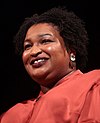
Kim Kelly (journalist) on Stacey Abrams
“Dorothy Lee Bolden's emphasis on voting rights and equality was also heard loud and clear by another generation of community-minded Black leaders like voting rights activist and politician Stacey Abrams, whose 2018 gubernatorial campaign was strongly supported in Atlanta by the National Domestic Workers Alliance.”
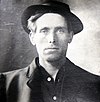
Kim Kelly (journalist) on Joe Hill
“During his short life, he penned some of the Wobblies' most beloved labor songs, including labor movement mainstays like "There Is Power in a Union" and "Rebel Girl," which he dedicated to Elizabeth Gurley Flynn, and his last words to Big Bill Haywood have since been taken up as a rallying cry-"Don't waste any time in mourning. Organize!"”
Kim Kelly (journalist) on Lyndon B. Johnson
“The 1964 Civil Rights Act, which outlawed employment discrimination on the basis of race, color, religion, sex, or national origin, and President Johnson's 1967 Executive Order 11375, which strengthened enforcement of the policy barring hiring discrimination on the basis of sex, removed the last major legal hurdles for women who wanted to work in the mines.”

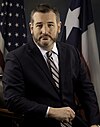
Kim Kelly (journalist) on Ted Cruz
“Opposing unions-public sector and otherwise-has since become utterly entrenched in the Republican Party's policies and public image, even as it continues to attempt to paint itself as representing "hardworking blue-collar men and women," as Texas senator Ted Cruz (himself a millionaire married to an heiress) phrased it in one especially disingenuous 2021 tweet.”
Kim Kelly (journalist) on Clara Lemlich
“A Ukrainian immigrant and lifelong radical, Lemlich had moved to New York City in 1903 and led her coworkers at various factories out on strikes between 1906 and 1909. She, like Rose Schneiderman and many others of her time, was one of the early U.S. labor movement's revolutionary "fiery Jewish girls" who would soon leave a mark in their new homeland's history books.”

Kim Kelly (journalist) on Booker T. Washington
“Before embarking on his illustrious career as an educator and activist, Booker T. Washington, the son of enslaved parents, spent part of his childhood working in the salt furnaces of the Kanawha Salines. "Though I was a mere child, my stepfather put me and my brother at work in one of the furnaces," he explained in his autobiography. "Often I began work as early as four o'clock in the morning." At the time, Washington was nine years old.”

Kim Kelly (journalist) on Emma Tenayuca
“Communist Mexican-American labor activist Emma Tenayuca, "the Passionflower of Texas," led protests, walkouts, and demonstrations to protest the deplorable working and living conditions that Latino workers faced in her native San Antonio...Like many labor activists of her generation, Tenayuca was later blacklisted for her political affiliations, but there was no erasing the impact she'd made on San Antonio and the labor movement as a whole.”

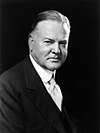
Kim Kelly (journalist) on Herbert Hoover
“During the 1930s, President Herbert Hoover enacted a massive deportation raid on people of Mexican descent, in which up to 1.8 million Latinos-nearly 60 percent of whom were U.S. citizens-were forcibly removed to Mexico. (President Eisenhower would reprise this racist campaign in 1954, when more than 1 million more Latino people were violently rounded up and deported.) As all this state-sponsored chaos played out, the AFL-CIO finally began to warm up to the idea of organizing Latino workers again.”
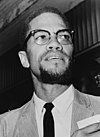
Kim Kelly (journalist) on Malcolm X
“Malcolm X spent time on the railroads as a youth selling sandwiches and washing dishes, but lasted only about a day with Pullman. He undoubtedly found Pullman's well-padded rule book and demand for obsequious service intolerable. But while he was there, the revolutionary observed, "We were in that world of Negroes who were both servants and psychologists, aware that white people are so obsessed with their own importance that they will pay liberally, even dearly, for the impression of being catered to and entertained."”
Quotes About Kim Kelly (journalist)
Gain deeper perspective through quotes about Kim Kelly (journalist) from others.
Shane Burley blurb for on Kim Kelly (journalist)
“Kim Kelly has written the most important book on labor published in a generation”
Sarah Jaffe blurb for on Kim Kelly (journalist)
“No one is more passionate about workers' struggles than Kim Kelly, and it shows.”
Tom Morello blurb for on Kim Kelly (journalist)
“Kim Kelly vibrantly brings struggles and sacrifices of badass working-classs heroes to life and we need to hear these voices now more than ever”
Sara Nelson on Kim Kelly (journalist)
“From the moment I read Kim's work the first time, I knew Mother Jones would have loved her...By the time Kim made waves in the labor movement with her piece "Everything You Need to Know about General Strikes," I was hooked...She has a writer's intellectual curiosity and a reporter's nose for the truth, and it shows in this book...While there are many who wish we would forget, Kim's thrilling and incisive look at our history reminds us of a fundamental truth: the labor movement belongs to all of us.”
Liz Shuler blurb for on Kim Kelly (journalist)
“Fight Like Hell establishes Kim Kelly as a true champion for the working class.”
About Kim Kelly (journalist)
Kim Kelly is an journalist and writer, best known for her coverage of labor issues and heavy metal music. She is the author of Fight Like Hell: The Untold History of American Labor (2022).