Link Copied!
Khafi Khan Quotes (1664-1732)
Author
About Khafi Khan
Muhammad Hashim (c. 1664-1732), better known by his title Khafi Khan, was a civil servant and historian of Mughal India. He is notable for authoring Muntakhab-al Lubab, a Persian language book about the history of India.
Best Khafi Khan Quotes
Shortest
Earliest
Explore our curated collection of the most famous and impactful Khafi Khan quotes.
“From day to day, Emperor Aurangzeb strove to enforce the rules of the Sharia and the orders and prohibitions of God …..‛”

“'The fall and capture of Bijapur was similarly solemnized though here the destruction of temples was delayed for several years, probably till 1698.”

“'The fall and capture of Bijapur was similarly solemnized though here the destruction of temples was delayed for several years, probably till 1698.”
“After describing the destruction of temples in Benares and Gujarat, this author stated that “The materials of some of the Hindu temples were used for building mosques.””
“'Aurangzeb ordered the temples of the Sikhs to be destroyed and the guru's agents (masands) for collecting the tithes and presents of the faithful to be expelled from the cities.”
“'Aurangzeb ordered the temples of the Sikhs to be destroyed and the guru's agents (masands) for collecting the tithes and presents of the faithful to be expelled from the cities.”
“The violence (of the Sikhs) passed all bounds. The injuries and indignities they inflicted on Musulmans, and the destruction of mosques and tombs, were looked upon by them as righteous meritorious acts.”
““In AD 1630-31 (AH 1040) when Abdal, the Hindu chief of Hargaon in the province of Allahabad, rebelled, most of the temples in the state were either demolished or converted into mosques. Idols were burnt.””
““In AD 1630-31 (AH 1040) when Abdal, the Hindu chief of Hargaon in the province of Allahabad, rebelled, most of the temples in the state were either demolished or converted into mosques. Idols were burnt.””
“On the capture of Golkonda, the Emperor appointed Abdur Rahim Khan as Censor of the city of Haiderabad with orders to put down infidel practices and (heretical) innovations and destroy the temples and build mosques on their sites.”
“[the Emperor Aurangzeb] ‚abolished rÁhdÁri and pÁndÁri which brought lacs of revenue to the government every year …. and forbade the collection of proceeds from the bÁzÁrs held during Urs and JÁtrÁ of infidels who used to congregate in lacs once a year at their temples and used to sell and purchase goods …‛”

“Ajit Singh… sent a message humbly asking that Khan Zaman and the Kaziu’I-Kuzat might come into Jodhpur, to rebuild the mosques, destroy idol-temples, enforce the provisions of the law about the summons to prayer and the killing of cows, to appoint magistrates and to commission officers to collect the jizya. His submission was graciously accepted, and his requests granted…”
“In one of his letters Aurangzeb himself writes: “The fate of Dara Shukoh excited the passions of the misguided citizens of Delhi. They wept in sympathy with him and pelted the loyal Malik Jiwan who had brought him to justice with pots full of urine and excreta.” Royal troops went into action and according to Khafi Khan, “several persons were knocked down and killed and many were wounded… If the Kotwal had not come forward with his policemen, not one of Malik Jiwan’s followers would have escaped with life.””
““Maharaja Ajit Singh took back the Maharani, his daughter who had been married to Farrukh Siyar, with all her Jewels… he made her throw off her Musalman dress, dismissed her Muhammadan attendants and sent her to her native country… In the reign of no former Emperor had any Raja been so presumptuous as to take his daughter after she had been married to a king and admitted to the honour of Islam.””
“[Khafi Khan mentions one such mass protest by the people of Burhanpur and the neighobouring towns and qasbas. He writes that after Aurangzeb had reached Burhanpur (14 Zilqada 1092 Q.V. / 1681)] ‚The infidel inhabitants (Hindus) of the city and the country around made great opposition to the payment of the Jizya. There was not a (single) district where the people, with the help of the faujdars and muqaddams, did not make disturbances and (offered) resistance. Mir Abdul Karim, an excellent and honest man, now received orders to collect the Jizya in Burhanpur. A suitable force of horsemen and foot was appointed to support him, and the Kotwal was directed to punish everyone who resisted payment‛.”

“Distinguished and well-known musicians (kalawantan) and reciters of mystics’ verses (qawwals), who were in the service of the court, were ordered to desist from music and their mansabs increased. General orders were given for the prohibition of music and dancing. It is said that one day musicians collected together in a large crowd with great noise and tumult, prepared a bier with great dignity and carried it to the foot of the Jaroka Darshan, wailing in front of and behind the bier. When the matter was reported to Aurangzeb, he inquired about the funeral. The musicians said ‘Music (rag) is dead; we are going to bury it.’ ‘Bury it so deep under the earth’ Aurangzeb remarked, ‘that no sound or echo of it may rise again.”

“On the publication of this order (reimposing the Jiziyah) by Aurangzeb in 1679, the Hindus all round Delhi assembled in vast numbers under the jharokha of the Emperor… to represent their inability to pay and pray for the recall of the edict… But the Emperor would not listen to their complaints. One day, when he went to public prayer in the great mosque on the sabbath, a vast multitude of the Hindus thronged the road from the palace to the mosque, with the object of seeking relief. Money changers and drapers, all kinds of shopkeepers from the Urdu bazar mechanics, and workmen of all kinds, left off work and business and pressed into the way… Every moment the crowd increased, and the emperor’s equippage was brought to a stand-still. At length an order was given to bring out the elephants and direct them against the mob. Many fell trodden to death under the feet of elephants and horses. For some days the Hindus continued to assemble, in great numbers and complain, but at length they submitted to pay the Jiziyah.”

“On the publication of this order (reimposing the Jiziyah) by Aurangzeb in 1679, the Hindus all round Delhi assembled in vast numbers under the jharokha of the Emperor… to represent their inability to pay and pray for the recall of the edict… But the Emperor would not listen to their complaints. One day, when he went to public prayer in the great mosque on the sabbath, a vast multitude of the Hindus thronged the road from the palace to the mosque, with the object of seeking relief. Money changers and drapers, all kinds of shopkeepers from the Urdu bazar mechanics, and workmen of all kinds, left off work and business and pressed into the way… Every moment the crowd increased, and the emperor’s equippage was brought to a stand-still. At length an order was given to bring out the elephants and direct them against the mob. Many fell trodden to death under the feet of elephants and horses. For some days the Hindus continued to assemble, in great numbers and complain, but at length they submitted to pay the Jiziyah.”
“The violence (of the Sikhs) passed all bounds. The injuries and indignities they inflicted on Musulmans, and the destruction of mosques and tombs, were looked upon by them as righteous meritorious acts. They had built a fort at Gurdaspur in the Panjab, ten or twelve days’ journey from Dehli, and extended its limits so that fifty or sixty thousand horse and foot could find [p. 68] protection. They strengthened the towers and walls of the place, took possession of all the cultivated land around and ravaged the country from Lahore to Sihrind, otherwise called Sirhind. ‘Abdu-s Samad Khan Diler Jang was appointed subadar of Lahore, and was sent thither with a select army and artillery. ‘Abdu-s Samad engaged the vast army of the Guru near his fort. The infidels fought so fiercely that the army of Islam was nearly overpowered; and they over and over again showed the greatest daring. Great numbers were killed on both sides; but Mughal valour at length prevailed, and the Infidels were defeated and driven to their stronghold. The infidels on several occasions showed the greatest boldness and daring, and made nocturnal attacks upon the Imperial forces. ‘Abdu-s Samad Diler Jang, while lying in front of their Poor fortress, was obliged to throw up an intrenchment for the defence of his force. He raised batteries; and pushed forward his approaches. The siege lasted a long time, and the enemy exhibited great courage and daring. They frequently made sallies into the trenches, and killed many of the besiegers. To relate all the struggles and exertions of ‘Abdu-s Samad and his companions in armies would exceed our bounds. Suffice it to say that the royal army in course of time succeeded in cutting off from the enemy his supplies of corn and fodder, and the stores in the fort were exhausted.
Being reduced to the last extremity, and despairing of life the Sikhs offered to Surrender on condition of their lives being spared. Diler Jang at first refused to grant quarter; but at length he advised them to beg pardon of their crimes and offences from the Emperor. Their Chief Guru2 with his son of seven or eight Years old, his diwan, and three or four thousand persons, became prisoners, and received the pre-destined recompense for their deeds. [p. 69] ‘Abdu-s Samad had three or four thousand of them put to the sword, and he filled that extensive plain with blood as if it had been a dish. Their heads were stuffed with hay and stuck upon spears. Those who escaped the sword were sent in collars and chains to the Emperor … ‘Abdu-s Samad sent nearly two thousand heads stuffed with hay and a thousand persons bound with iron chains in charge of his son, Zakariya Khan, and others to the Emperor .
In the month of Muharram, the prisoners and the stuffed heads arrived at Delhi. The Bakhshi I’timadu-d daula Muhammad Amin Khan received orders to go out of the city, to blacken the faces and put wooden caps on the heads of the prisoners; to ride himself upon an elephant, place the prisoners on camels, and the heads on spears, and thus enter the city, to give a warning to all spectators. After they had entered the city, and passed before the Emperor, orders were given for confining the Guru, his son and two or three of his principal companions, in the fort. As to the lest of the prisoners it was ordered that two or three hundred of the miserable wretches should be put to death every day before the kotwal’s office and in the streets of the bazar. The men of the Khatri caste, who were secretly members of the sect, and followers of the Guru sought by the offer of large sums of money to Muhammad Amin Khan and other mediators to save the life of the Guru, but they were unsuccessful. After all the Guru’s companions had been killed, an order was given that his son should be slain in his presence, or rather that the boy should be killed by his own hands, in requital of the cruelty which that accursed one had shown in the slaughter of the sons of others. Afterwards he himself was killed.”
“Mahbub Khan, otherwise called ‘Abdu-n Nabi Kashmiri, had a long-standing enmity [p. 103] against the Hindus in Kashmir. He had gathered round him many restless Muhammadans, with whom he went to the deputy of the subadar and to the kazi, and, presenting certain legal opinions, he demanded that the Hindus should be interdicted from riding on horses, from wearing coats (jama), from putting on turbans and arm our (chira o yarak), from going out for excursions in the fields and gardens, and from bathing on certain days. Upon this matter he was very virulent. The officials, in answer, said that they would act upon the rules laid down by the Emperor, and by the chief lawyers, in respect of the treatment of zimmis (protected unbelievers) throughout the provinces of the empire. Mahbub Khan was greatly offended, and, being supported by a party of Musulmans, he annoyed and insulted Hindus wherever he met them. A Hindu could not pass through any market or street without being subjected to indignity.
One day Majlis Rai, a respected Hindu of Kashmir, went out with a party to ramble in the fields and gardens, and they feasted Brahmans. Mahbub Khan collected ten or twelve thousand Musulmans, came upon them unawares, and began to beat, bind and kill them. Majlis Rai escaped, and fled with some others to Ahmad Khan. Mahbub Khan, with all his followers, went to the house of Majlis Rai and the Hindu quarter, and began to plunder and to fire the houses. The Hindus and Musulmans who interfered to prevent this were killed and wounded. After that they proceeded to the house of Mir Ahmad Khan, where they set to work beating, throwing stones and bricks, and shooting arrows and bullets. Every man they found they detained and subjected to various indignities. Some they killed, others they wounded and plundered. Mir Ahmad Khan for a day and night was unable to drive them from his house or to stop their violence, but had to employ many artifices to escape from them. Next day he got together a force, and, with Mir Shahur Khan Bakhshi and other officials, they took horse and went against Mahbub Khan. The rioters collected, as on the preceding day, and resisted Ahmad Khan. A party got in his rear and burnt the [p. 104] bridge over which he had crossed. They set fire to both sides of the street through which he had passed, and from in front and from the roofs and walls of the houses, they discharged arrows and muskets and cast stones and bricks. Women and children flung filth, dirt, and whatever they could lay hands on. A fierce fight continued, in which…. and several others were killed or wounded. Mir Ahmad Khan was in a great strait, for he could neither retire no advance; so he was obliged to ask for mercy, and escaped from his dangerous position amid volleys of gibes and insults.
Mahbub Khan proceeded to the Hindu quarter, and burnt and gutted the houses which remained. Again he proceeded to the house of Mir Ahmad Khan, and dragged out of it with insult Majlis Rai and a number of other persons who had taken refuge there. He and his follower cut off their ears and noses, circumcised them, and in some instances cut off the organ of generation. Another day they went tumultuously to the great mosque, degraded Mir Ahmad Khan from his office of deputy of the subadar, and having given the prime cause of the disturbance the title of Dindar Khan, they appointed him to act as ruler of the Musulmans, and to enforce the commands of the law, and the decisions of the kazis until a new deputy subadar should come from the Court. For five months Mir Ahmad Khan was deprived of power, and remained in retirement. Dindar Khan acted as ruler, and, taking his seat in the mosque, discharged the government business.
Upon intelligence of this outbreak reaching Court, Mumin Khan was sent to act as deputy of ‘Inayatu-llah Khan, the subadar…. At the end of Shawwal he halted three kos from Kashmir. Mahbub Khan was ashamed of his unrighteous deeds, so he went to Khwaja ‘Abdu-llah who was highly respected in Kashmir, and begged him to go out with a number of the principal and most respectable Muhammadans to meet the new deputy, and bring him into the city with honour…. Khwaja ‘Abdu-llah advised him in a friendly way to go to Mir Shahur Khan Bakhshi and apologise for what had passed. If he did so, they would [p. 105] go out with him to meet the deputy. In accordance with this advice, Mahbub Khan went to the house of Shahur Khan, and having made a statement to him, rose to depart, alleging he had some necessary business to attend to. The bakhshi, acting on the Khwaja’s advice, had called a number of people from the Charbeli and Kahkaran quarters of the city, and concealed them about his house. They watched for Mahbub Khan, and fell upon him unawares. First, before his eyes, they ripped up the bellies of his two young boys, who always accompanied him, and they killed him with great cruelty.
Next day the Musulmans went to the Charbeli quarter, to exact retaliation for blood. This quarter was inhabited by Shi’as. There they began to beat, to bind, to kill, and to burn the houses. For two days the fight was kept up, but the assailants then prevailed. Two or three thousand people who were in that quarter, including a large number of Mughal travelers, were killed with their wives and families. Property to the value of lacs was plundered, and the war raged for two or three days. It is impossible to commit to writing all that I have heard about this outbreak. After this destruction, the rioters went to the houses of the kazi nd the bakshi. Shahur Khan concealed himself and the kazi escaped in disguise. They pulled down the kazi’s house to the foundations, and carried the bricks of it away in their hands. Mumin Khan, after entering the city, sent Mir Ahmad Khan under an escort to Imanabad, and then had to take severe measures with the people of Kashmir.”
Khafi Khan Quotes by Topic
Find exactly what you are looking for by browsing this categorized list of Khafi Khan quotes by topic.
Khafi Khan on Islam and Sikhism 2 quotes
“Aurangzib ordered the temples of the Sikhs to be destroyed and the guru’s agents (masanda) for collecting the tithes and presents of the faithful to be expelled from the cities.”

What Khafi Khan Said About Others
Discover personal opinions Khafi Khan shared regarding contemporaries.
Khafi Khan on Shivaji
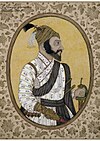
“But he (Shivaji) made it a rule that whenever his followers were plundering, they should not do harm to the mosques, the Book of God (Quran), or the women of anyone.”
Khafi Khan on Sidi Yaqub
“Sidi Yaqut of Janjira or Zanjira, once took a Maratha fort and seven hundred persons came out. Notwithstanding his word to grant quarter to the garrison “he made the children and pretty women slaves, and forcibly converted them to Islam… but the men he put to death.””
Khafi Khan on Dara Shukoh
“In one of his letters Aurangzeb himself writes: “The fate of Dara Shukoh excited the passions of the misguided citizens of Delhi. They wept in sympathy with him and pelted the loyal Malik Jiwan who had brought him to justice with pots full of urine and excreta.” Royal troops went into action and according to Khafi Khan, “several persons were knocked down and killed and many were wounded… If the Kotwal had not come forward with his policemen, not one of Malik Jiwan’s followers would have escaped with life.””
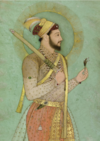
Khafi Khan on Aurangzeb
“On the publication of this order (reimposing the Jiziyah) by Aurangzeb in 1679, the Hindus all round Delhi assembled in vast numbers under the jharokha of the Emperor… to represent their inability to pay and pray for the recall of the edict… But the Emperor would not listen to their complaints. One day, when he went to public prayer in the great mosque on the sabbath, a vast multitude of the Hindus thronged the road from the palace to the mosque, with the object of seeking relief. Money changers and drapers, all kinds of shopkeepers from the Urdu bazar mechanics, and workmen of all kinds, left off work and business and pressed into the way… Every moment the crowd increased, and the emperor’s equippage was brought to a stand-still. At length an order was given to bring out the elephants and direct them against the mob. Many fell trodden to death under the feet of elephants and horses. For some days the Hindus continued to assemble, in great numbers and complain, but at length they submitted to pay the Jiziyah.”
Quotes About Khafi Khan
Gain deeper perspective through quotes about Khafi Khan from others.
Tariq Rahman - Interpretations of Jihad on Khafi Khan
“In Aurangzeb ‘Ālamgīr’s (r.1658–1707) time we are back with a vengeance with the vocabularly of jihad which is used in the campaigns of the emperor against the Assamese and against the Marhattas as Khafī Khān’s history of his rule Muntakhabāt al-Lubāb (1722) testifies. In short, the recourse to the vocabulary of jihad was part of seeking legitimacy through religion if the occasion demanded. The frequency of its use might increase or decrease according to the ruler’s known preferences but it remained a handy resource for most part of Muslim political ascendancy in India.”
About Khafi Khan
Muhammad Hashim (c. 1664-1732), better known by his title Khafi Khan, was a civil servant and historian of Mughal India. He is notable for authoring Muntakhab-al Lubab, a Persian language book about the history of India.