Link Copied!
Kenneth Grahame Quotes (1859-1932)
Writer
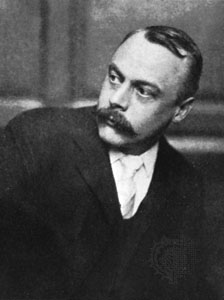


About Kenneth Grahame
Kenneth Grahame (8 March 1859 – 6 July 1932) was a British writer best remembered for The Wind in the Willows (1908), one of the classics of children's literature. He also wrote The Reluctant Dragon, which was later adapted into a Disney movie.
Best Kenneth Grahame Quotes
Shortest
Earliest
Explore our curated collection of the most famous and impactful Kenneth Grahame quotes.
“Monkeys, who very sensibly refrain from speech lest they should be set to earn their livings.”
“There's a misunderstanding somewhere, and I want to put it right. The fact is, this is a good dragon.”
“As a rule, indeed, grown-up people are fairly correct on matters of fact; it is in the higher gift of imagination that they are so sadly to seek.”
“"Wonder if it's all true?" said Charlotte, as we hurried up the path. "Sounded dreadfully like nonsense, in parts!"
"P'raps its true for all that," I replied encouragingly.”
"P'raps its true for all that," I replied encouragingly.”
“There's nobody in the world I'd sooner oblige than you and this young gentleman here. But the whole thing's nonsense, and conventionality, and popular thick-headedness. There's absolutely nothing to fight about, from beginning to end. And anyhow I'm not going to, so that settles it!”
“"O deary, deary me," moaned the dragon; "this is too awful. I won't see him, and that's flat. I don't want to know the fellow at all. I'm sure he's not nice. You must tell him to go away at once, please. Say he can write if he likes, but I can't give him an interview. I'm not seeing anybody at present."”
“The most modest and retiring dragon in the world, if he's as big as four cart-horses and covered with blue scales, cannot keep altogether out of the public view. And so in the village tavern of nights the fact that a real live dragon sat brooding in the cave on the Downs was naturally a subject for talk.”
“The Boy made his way back to the village in a state of great despondency. First of all, there wasn't going to be any fight; next, his dear and honoured friend the dragon hadn't shown up in quite such a heroic light as he would have liked; and lastly, whether the dragon was a hero at heart or not, it made no difference, for St. George would most undoubtedly cut his head off.”
“"My dear little man," said the dragon solemnly, "just understand, once for all, that I can't fight and I won't fight. I've never fought in my life, and I'm not going to begin now, just to give you a Roman holiday. In old days I always let the other fellows — the earnest fellows — do all the fighting, and no doubt that's why I have the pleasure of being here now."”
“So they set off up the hill arm-in-arm, the Saint, the Dragon, and the Boy. The lights in the little village began to go out; but there were stars, and a late moon, as they climbed to the Downs together. And, as they turned the last corner and disappeared from view, snatches of an old song were borne back on the night-breeze. I can't be certain which of them was singing, but I think it was the Dragon!”
“After refreshment St. George made a speech, in which he informed his audience that he had removed their direful scourge, at a great deal of trouble and inconvenience to himself, and now they weren't to go about grumbling and fancying they'd got grievances, because they hadn't. And they shouldn't be so fond of fights, because next time they might have to do the fighting themselves, which would not be the same thing at all.”
“"But this would be a beautiful place for a fight," he began again persuasively. "These great bare rolling Downs for the arena, — and me in my golden armour showing up against your big blue scaly coils! Think what a picture it would make!"
"Now you're trying to get at me through my artistic sensibilities," said the dragon. "But it won't work. Not but what it would make a very pretty picture, as you say," he added, wavering a little.”
"Now you're trying to get at me through my artistic sensibilities," said the dragon. "But it won't work. Not but what it would make a very pretty picture, as you say," he added, wavering a little.”
“Look here, father, you know we've each of us got our line. You know about sheep, and weather, and things; I know about dragons. I always said, you know, that that cave up there was a dragon-cave. I always said it must have belonged to a dragon some time, and ought to belong to a dragon now, if rules count for anything. Well, now you tell me it has got a dragon, and so that's all right. I'm not half as much surprised as when you told me it hadn't got a dragon. Rules always come right if you wait quietly.”
“Oh dear, oh dear, how stupid men are when they get an idea into their heads! I tell you he's a good dragon, and a friend of mine, and tells me the most beautiful stories you ever heard, all about old times and when he was little. And he's been so kind to mother, and mother'd do anything for him. And father likes him too, though father doesn't hold with art and poetry much, and always falls asleep when the dragon starts talking about style. But the fact is, nobody can help liking him when once they know him. He's so engaging and so trustful, and as simple as a child!”
“The dreadful beast must be exterminated, the country-side must be freed from this pest, this terror, this destroying scourge. The fact that not even a hen roost was the worse for the dragon's arrival wasn't allowed to have anything to do with it. He was a dragon, and he couldn't deny it, and if he didn't choose to behave as such that was his own lookout. But in spite of much valiant talk no hero was found willing to take sword and spear and free the suffering village and win deathless fame; and each night's heated discussion always ended in nothing. Meanwhile the dragon, a happy Bohemian, lolled on the turf, enjoyed the sunsets, told antediluvian anecdotes to the Boy, and polished his old verses while meditating on fresh ones.”
“"Our villagers are the biggest story-tellers in all the country round. It's a known fact. You're a stranger in these parts, or else you'd have heard it already. All they want is a fight. They're the most awful beggars for getting up fights — it's meat and drink to them. … I've no doubt they've been telling you what a hero you were, and how you were bound to win, in the cause of right and justice, and so on; but let me tell you, I came down the street just now, and they were betting six to four on the dragon freely!"
"Six to four on the dragon!" murmured St. George sadly, resting his cheek on his hand. "This is an evil world, and sometimes I begin to think that all the wickedness in it is not entirely bottled up inside the dragons..."”
"Six to four on the dragon!" murmured St. George sadly, resting his cheek on his hand. "This is an evil world, and sometimes I begin to think that all the wickedness in it is not entirely bottled up inside the dragons..."”
“Banquets are always pleasant things, consisting mostly, as they do, of eating and drinking; but the specially nice thing about a banquet is, that it comes when something's over, and there's nothing more to worry about, and to-morrow seems a long way off. St George was happy because there had been a fight and he hadn't had to kill anybody; for he didn't really like killing, though he generally had to do it. The dragon was happy because there had been a fight, and so far from being hurt in it he had won popularity and a sure footing in society. The Boy was happy because there had been a fight, and in spite of it all his two friends were on the best of terms. And all the others were happy because there had been a fight, and — well, they didn't require any other reasons for their happiness.”
“St. George paced slowly up the street. The Boy's heart stood still and he breathed with sobs, the beauty and the grace of the hero were so far beyond anything he had yet seen. His fluted armour was inlaid with gold, his plumed helmet hung at his saddle-bow, and his thick fair hair framed a face gracious and gentle beyond expression till you caught the sternness in his eyes. He drew rein in front of the little inn, and the villagers crowded round with greetings and thanks and voluble statements of their wrongs and grievances and oppressions. The Boy heard the grave gentle voice of the Saint, assuring them that all would be well now, and that he would stand by them and see them righted and free them from their foe; then he dismounted and passed through the doorway and the crowd poured in after him. But the Boy made off up the hill as fast as he could lay his legs to the ground.”

“The dramatic possibilities of the thing had tickled the dragon immensely, and he had been up from an early hour, preparing for his first public appearance with as much heartiness as if the years had run backwards, and he had been again a little dragonlet, playing with his sisters on the floor of their mother's cave, at the game of saints-and-dragons, in which the dragon was bound to win.
A low muttering, mingled with snorts, now made itself heard; rising to a bellowing roar that seemed to fill the plain. Then a cloud of smoke obscured the mouth of the cave, and out of the midst of it the dragon himself, shining, sea-blue, magnificent, pranced splendidly forth; and everybody said, "Oo-oo-oo!" as if he had been a mighty rocket! His scales were glittering, his long spiky tail lashed his sides, his claws tore up the turf and sent it flying high over his back, and smoke and fire incessantly jetted from his angry nostrils. "Oh, well done, dragon!" cried the Boy, excitedly. "Didn't think he had it in him!" he added to himself.”
A low muttering, mingled with snorts, now made itself heard; rising to a bellowing roar that seemed to fill the plain. Then a cloud of smoke obscured the mouth of the cave, and out of the midst of it the dragon himself, shining, sea-blue, magnificent, pranced splendidly forth; and everybody said, "Oo-oo-oo!" as if he had been a mighty rocket! His scales were glittering, his long spiky tail lashed his sides, his claws tore up the turf and sent it flying high over his back, and smoke and fire incessantly jetted from his angry nostrils. "Oh, well done, dragon!" cried the Boy, excitedly. "Didn't think he had it in him!" he added to himself.”
Kenneth Grahame Quotes by Topic
Find exactly what you are looking for by browsing this categorized list of Kenneth Grahame quotes by topic.
Kenneth Grahame on Picnic 3 quotes
“There he got out the luncheon-basket and packed a simple meal, in which, remembering the stranger’s origin and preferences, he took care to include a yard of long French bread, a sausage out of which the garlic sang, some cheese which lay down and cried, and a long-necked straw-covered flask wherein lay bottled sunshine shed and garnered on far Southern slopes.”

Kenneth Grahame on Snow 2 quotes
“The snow was getting so deep they could hardly drag their little legs through it, and the trees were thicker and more like each other than ever. There seemed to be no end to this wood, and no beginning, and no difference in it, and worst of all, no way out.”
Kenneth Grahame on Simians
“Monkeys, who very sensibly refrain from speech lest they should be set to earn their livings.”

Kenneth Grahame on Astronomy
Kenneth Grahame on University of Oxford
“The clever men at Oxford
Know all that there is to be knowed.
But they none of them know one half as much
As intelligent Mr Toad!”

Kenneth Grahame on Animals
Kenneth Grahame on Winter
“On that winter day when Nature was deep in her annual slumber and seemed to have kicked the clothes off. Copses, dells, quarries and all hidden places, which had been mysterious mines for exploration in leafy summer, now exposed themselves and their secrets.”
Kenneth Grahame on Weasels
““Weasels—and stoats—and foxes—and so on. They’re all right in a way—I’m very good friends with them—pass the time of day when we meet, and all that—but they break out sometimes, there’s no denying it, and then—well, you can’t really trust them, and that’s the fact.””
Kenneth Grahame on Sausage
“There he got out the luncheon-basket and packed a simple meal, in which, remembering the stranger’s origin and preferences, he took care to include a yard of long French bread, a sausage out of which the garlic sang, some cheese which lay down and cried, and a long-necked straw-covered flask wherein lay bottled sunshine shed and garnered on far Southern slopes.”

Kenneth Grahame on Bread
“There he got out the luncheon-basket and packed a simple meal, in which, remembering the stranger's origin and preferences, he took care to include a yard of long French bread, a sausage out of which the garlic sang, some cheese which lay down and cried, and a long-necked straw-covered flask wherein lay bottled sunshine shed and garnered on far Southern slopes.””

Kenneth Grahame on Duck
“All along the backwater, Through the rushes tall, Ducks are a-dabbling, Up tails all!Ducks’ tails, drakes’ tails, Yellow feet a-quiver, Yellow bills all out of sight Busy in the river!Slushy green undergrowth Where the roach swim— Here we keep our larder, Cool and full and dim.Everyone for what he likes! We like to be Heads down, tails up, Dabbling free!High in the blue above Swifts whirl and call— We are down a-dabbling Up tails all!”
Kenneth Grahame on Home
“Now, with a rush of old memories, how clearly it stood up before him, in the darkness! Shabby indeed, and small and poorly furnished, and yet his, the home he had made for himself, the home he had been so happy to get back to after his day's work. And the home had been happy with him, too, evidently, and was missing him, and wanted him back, and was telling him so, through his nose, sorrowfully, reproachfully, but with no bitterness or anger; only with plaintive reminder that it was there, and wanted him.”

Kenneth Grahame on June
“Purple loosestrife arrived early, shaking luxuriant locks along the edge of the mirror whence its own face laughed back at it. Willow-herb, tender and wistful, like a pink sunset-cloud was not slow to follow. Comfrey, the purple hand-in-hand with the white, crept forth to take its place in the line; and at last one morning the diffident and delaying dog-rose stepped delicately on the stage, and one knew, as if string music has announced it in stately chords that strayed into a gavotte, that June at last was here.”

Kenneth Grahame on June 1
“The pageant of the river bank had marched steadily along, unfolding itself in scene-pictures that succeeded each other in stately procession. Purple loosestrife arrived early, shaking luxuriant tangled locks along the edge of the mirror whence its own face laughed back at it. Willow-herb, tender and wistful, like a pink sunset cloud, was not slow to follow. Comfrey, the purple hand-in-hand with the white, crept forth to take its place in the line; and at last one morning the diffident and delaying dog-rose stepped delicately on the stage, and one knew, as if string-music had announced it in stately chords that strayed into a gavotte, that June at last was here.”
Quotes About Kenneth Grahame
Gain deeper perspective through quotes about Kenneth Grahame from others.
Epitaph on Kenneth Grahame
Madeleine L'Engle on Kenneth Grahame
“In Kenneth Grahame's beautiful book, The Wind In The Willows, Mole and Rat go to the holy island of the great god, Pan. It is a superb piece of religious writing, but because it has gone beyond fact, it is deeply upsetting and untruthful to some people. If a story is not specified as being Christian, it is not Christian. But that is not so. I think that this scene is upsetting because it calls us beyond fact into the vast world of imagination, and imagination is a word of many dimensions.”
Nicole Krauss on Kenneth Grahame
“My mother is English, and as she was the one who read to us, my early world was A. A. Milne, Beatrix Potter, Kenneth Grahame, Lewis Carroll and Roald Dahl. None of them thought it necessary to protect children from darkness. On the contrary, they guided their readers right toward it. This gives one an enormous sense of being respected as a child. Not just of being trusted to handle things as they are, but to be accepted as not entirely good. To be recognized as having darkness within oneself, too. I don’t think I’ve trusted any author since who doesn’t address me with that assumption.”

About Kenneth Grahame
Kenneth Grahame (8 March 1859 – 6 July 1932) was a British writer best remembered for The Wind in the Willows (1908), one of the classics of children's literature. He also wrote The Reluctant Dragon, which was later adapted into a Disney movie.