Link Copied!
Kenneth Boulding Quotes (1910-1993)
Philosopher, Poet, King

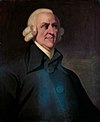
About Kenneth Boulding
Kenneth Ewart Boulding (18 January 1910 – 18 March 1993) was an economist, educator, poet, religious mystic, devoted Quaker, systems scientist and interdisciplinary philosopher. He was cofounder of General Systems Theory and founder of numerous ongoing intellectual projects in economics and social science. He was married to Elise M. Boulding.
Best Kenneth Boulding Quotes
Shortest
Earliest
Explore our curated collection of the most famous and impactful Kenneth Boulding quotes.


“Communication can only take place among equals.”

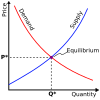
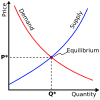
“Equilibrium is a figment of the human imagination.”

“The only religion that still demands human sacrifice is nationalism.”


“Theories without facts may be barren, but facts without theories are meaningless.”
“We should always bear in mind that numbers represent a simplification of reality.”
“The basic bond of any society, culture, subculture, or organization is 'a public image.”

“One reason why the progressive state is 'cheerful' is that social conflict is diminished by it.”

“[The law of evolution states that] complexity increases in terms of differentiation and structure.”

“The use of isoquants to describe the production function did not develop to any great extent until the thirties.”

“Production functions involving only land, labor and capital... never work and never explain economic development.”

“Economists and technologists bring the "bits", but it requires the social scientists and humanists to bring the "wits."”
“There is something, however humble, which can properly be called skill among those who recognise themselves as economists.”
“We all, or nearly all, consent If wages rise by ten per cent It puts a choice before the nation Of unemployment or inflation.”

“Anyone who believes exponential growth can go on forever in a finite world is either a madman or an economist.”
“[if the automobile is replaced by public trans port] the social structure of cities will revert to the ecological pattern of 1880.”
Kenneth Boulding Quotes by Topic
Find exactly what you are looking for by browsing this categorized list of Kenneth Boulding quotes by topic.
Kenneth Boulding on Equilibrium 2 quotes
“Equilibrium is a figment of the human imagination.”
Kenneth Boulding on Conversation
“Communication can only take place among equals.”

Kenneth Boulding on Economic growth
“Anyone who believes exponential growth can go on forever in a finite world is either a madman or an economist.”
Kenneth Boulding on Accounting
“Accounting for the most part, remains a legalistic and traditional practice, almost immune to self-criticism by scientific methods.”

Kenneth Boulding on Organization
“Almost every organization... exhibits two faces — a smiling face which it turns toward its members and a frowning face which it turns to the world outside.”
Kenneth Boulding on Circular flow of income
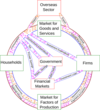
“If the society toward which we are developing is not to be a nightmare of exhaustion, we must use the interlude of the present era to develop a new technology which is based on a circular flow of materials such that the only sources of man's provisions will be his own waste products.”
Kenneth Boulding on Evolution
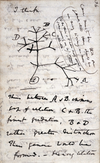
“The evolutionary vision is agnostic in regard to systems in the universe of greater complexity than those of which human beings have clear knowledge. It recognizes aesthetic, moral, and religious ideas and experiences as a species, in this case of mental structures or of images, which clearly interacts with other species in the world's great ecosystem.”
Kenneth Boulding on Microeconomics
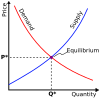
“One of the most important skills of the economist, therefore, is that of simplification of the model. Two important methods of simplification have been developed by economists. One is the method of partial equilibrium analysis (or microeconomics), generally associated with the name of Alfred Marshall and the other is the method of aggregation (or macro-economics), associated with the name of John Maynard Keynes.”
Kenneth Boulding on Teleology
“A second possible approach to general systems theory is through the arrangement of theoretical systems and constructs in a hierarchy of complexity, roughly corresponding to the complexity of the "individuals" of the various empirical fields... leading towards a "system of systems."… I suggest below a possible arrangement of "levels" of theoretical discourse. ...(vi) ...the "animal" level, characterized by increased mobility, teleological behavior and self-awareness...”

Kenneth Boulding on Systems theory
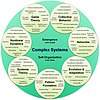
“General Systems Theory is a name which has come into use to describe a level of theoretical model-building which lies somewhere between the highly generalized constructions of pure mathematics and the specific theories of the specialized disciplines. Mathematics attempts to organize highly general relationships into a coherent system, a system however which does not have any necessary connections with the "real" world around us. It studies all thinkable relationships abstracted from any concrete situation or body of empirical knowledge.”
Kenneth Boulding on Approach
“I seem to have come to much of the same conclusion as you have reached, though approaching it from the direction of economics and the social sciences rather than from biology - that there is a body of what have been calling "general empirical theory," or "general system theory" in your excellent terminology, which is of wide applicability in many different disciplines. I am sure there are many people all over the world who have come to essentially the same position that we have, but we are widely scattered and do not know each other, so difficult is it to cross the boundaries of the disciplines.”

Kenneth Boulding on Theory of the firm
“It is probable that when future historians of economic thought look back over this century, the thirties will appear as an era of rapid development in economic theory. Not only has there been unusual activity in monetary theory, theory of value. but extensive transformations have also been made in the basic theory of value. The outstanding publications in this field are, of course, Joan Robinson's Theory of Imperfect Competition and Chamberlin's Theory of Monopolistic Competition, the first produced in Cambridge, England, and the second in Cambridge, Massachusetts. These volumes mark the explicit recognition of the theory of the firm as an integral division of economic analysis upon which rests the whole fabric of equilibrium theory. General equilibrium is nothing more than the problem of the interaction of individual economic organisms, under various conditions and assumptions; as a necessary preliminary to its solution, an adequate theory of the individual organism itself is necessary.”

What Kenneth Boulding Said About Others
Discover personal opinions Kenneth Boulding shared regarding contemporaries.
Kenneth Boulding on Marshall McLuhan
“It is perhaps typical of very creative minds that they hit very large nails not quite on the head.”
Kenneth Boulding on Economist
“Anyone who believes exponential growth can go on forever in a finite world is either a madman or an economist.”
Kenneth Boulding on Adam Smith
Kenneth Boulding on Alfred Marshall
“One of the most important skills of the economist, therefore, is that of simplification of the model. Two important methods of simplification have been developed by economists. One is the method of partial equilibrium analysis (or microeconomics), generally associated with the name of Alfred Marshall and the other is the method of aggregation (or macro-economics), associated with the name of John Maynard Keynes.”

Kenneth Boulding on Fred Polak
“My first acquaintance with the work of Dr. Fred Polak came in the year 1954—5, when we were both fellows at the new Center for Advanced Study in the Behavioral Sciences at Stanford. Dr. and Mrs. Polak lived in a little house at the back of the garden of the house that the Bouldings rented and participated very cheerfully in the life of the Bouldings and their four young children. Many exciting things came out of that year at Stanford, such as the Society for General Systems Research and the Journal of Conflict Resolution. But looking back on the expérience after nearly twenty years, I think the most important impact on the thought of both Elise Boulding and myself were the many conversations that we had with the Polaks around the dining table and in the garden.”

Quotes About Kenneth Boulding
Gain deeper perspective through quotes about Kenneth Boulding from others.
George Klir cited in on Kenneth Boulding
“General systems theory is considered as a formal theory (Mesarovic, Wymore), a methodology (Ashby, Klir), a way of thinking (Bertalanffy, Churchman), a way of looking at the world (Weinberg), a search for an optimal simplification (Ashby, Weinberg), didactic method (Boulding, Klir, Weinberg), metalanguage (Logren), and profession (Klir).”
David Latzko on Kenneth Boulding
“Kenneth E. Boulding was a most extraordinary economist. The narrow bounds of the economics discipline could not contain his interests and talents. In addition to economics, Professor Boulding made important contributions to the fields of political science, sociology, philosophy, and social psychology. His forays into subjects outside the usual concerns of economists were not an intellectual dilettantism; rather, they were a result of his conviction that an understanding of human behavior can only be accomplished by studying man in his totality. Much of Boulding's work was an attempt to move beyond the narrow economic view of humans as self-interested, rational utility maximizers to a general social science exploiting the full range of our rational, instinctual, and mystical knowledge.”
Stuart A. Umpleby on Kenneth Boulding
“Kenneth Boulding, a well-known economist and widely-read author. Boulding used an ecological model for understanding corporations and individuals as actors within a social system. His 1956 book, The Image is an early discussion of mental models. His 1978 book, Ecodynamics: A New Theory of Societal Evolution summarizes much of his earlier work.”

John B. Davis on Kenneth Boulding
“Boulding was not left-wing in his politics nor involved in the radical economics of the time. In fact he was always hostile to Marx’s theory of capitalism and its emphasis on class conflict. What he did feel strongly about was the cause of peace, having become a Quaker early in life, and having been active throughout his career in a variety of ways in the cause of peace. Moreover, he himself saw peace and conflict research as his largest area of work (Boulding, 1989), and regarded his involvement in the founding of the Journal of Conflict Resolution and the International Peace Research Association as important lifetime achievements.”
About Kenneth Boulding
Kenneth Ewart Boulding (18 January 1910 – 18 March 1993) was an economist, educator, poet, religious mystic, devoted Quaker, systems scientist and interdisciplinary philosopher. He was cofounder of General Systems Theory and founder of numerous ongoing intellectual projects in economics and social science. He was married to Elise M. Boulding.