Link Copied!
Kenneth A. R. Kennedy Quotes (1930-2014)
About Kenneth A. R. Kennedy
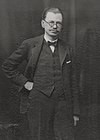
Kenneth Adrian Raine Kennedy (June 26, 1930 – April 23, 2014) was an anthropologist who studied at the University of California, Berkeley. He was Professor Emeritus of Ecology and Evolutionary Biology, Anthropology and Asian Studies in the Division of Biological Sciences at Cornell University. Among his areas of interest have been forensic anthropology and human skeletal biology. He died in Ithaca, New York on April 23, 2014.
Best Kenneth A. R. Kennedy Quotes
Shortest
Earliest
Explore our curated collection of the most famous and impactful Kenneth A. R. Kennedy quotes.
“A recent study by Hemphill, Lukacs and Kennedy (1991) supports the thesis that ancient Gandhärans and Harappans share significant similarities in craniometric, odontometric and discrete trait variables.”
“Both Gobineau and Chamberlain transformed the Aryan concept, which had its humble origins in philological research conducted by Jones in Calcutta at the end of the eighteenth century, into the political and racial doctrines of Adolf Hitler's Third Reich.”
“Kennedy also refers to a “biological continuum [... with] the modern populations of Punjab and Sind,” agreeing in this with earlier skeletal studies by several Indian experts, who had found little difference between Harappan skeletons and present-day populations in those regions (also in Gujarat).”
“Affirmations as emphatic as those voiced by the Allchins ensure that the search for the Aryan presence in linguistic and archaeological sources will survive for some time to come. However, biological anthropologists remain unable to lend support to any o f the theories concerning an Aryan biological or demographic entity within the contexts o f linguistics and archaeology.”

“These developments in the biological sciences are o f little interest to our colleagues in other research areas for whom the Aryan presence remains a vital issue. A t best, the skeletal biologist familiar with the record of human remains from South A sia can respond by asking “How could one recognize an Aryan, living or dead, when the biological criteria for Aryanness are non-existent?””
“[The ancient Harappans] are not markedly different in their skeletal biology from the present-day inhabitants of Northwestern India and Pakistan"... Of the Aryans, we must defer to literary and linguistic scholars in whose province lies the determination of the arrival and nature of the linguistic phenomenon we call the Aryans... But archaeological evidence of Aryan-speaking peoples is questionable and the skeletal evidence is nil.”

“If invasions o f exotic races had taken place by Aryan hordes, we should encounter obvious discontinuities in the prehistoric skeletal record that correspond with a period around 1500 B.C., the proposed time for the disruptive demographic event. Discontinuities are indicated in our skeletal data for early Neolithic populations in Baluchistan and for early Iron A ge populations in the Northwest Frontier region, events too early and too late, respectively, to fit into the classic scenario o f a mid-second m illennium B.C. Aryan invasion.”
“[Kennedy also notes the anthropological continuity between the Harappan population and that of the contemporaneous Gandhara (eastern Afghanistan)101 culture, which in an Aryan invasion scenario should be the Indo-Aryan settlement just prior to the Aryan invasion of India:] “Our multivariate approach does not define the biological identity of an ancient Aryan population, but it does indicate that the Indus Valley and Gandhara peoples shared a number of craniometric, odontometric and discrete traits that point to a high degree of biological affinity.””
“[Kennedy also notes the anthropological continuity between the Harappan population and that of the contemporaneous Gandhara (eastern Afghanistan)101 culture, which in an Aryan invasion scenario should be the Indo-Aryan settlement just prior to the Aryan invasion of India:] “Our multivariate approach does not define the biological identity of an ancient Aryan population, but it does indicate that the Indus Valley and Gandhara peoples shared a number of craniometric, odontometric and discrete traits that point to a high degree of biological affinity.””
“How could one recognize an Aryan, living or dead, when the biological criteria for Aryanness are non- existent? (Kennedy 1995: 61)... Biological anthropologists remain unable to lend support to any of the theories concerning an Aryan biological or demographic entity.... What the biological data demonstrate is that no exotic races are apparent from laboratory studies of human remains excavated from any archaeological sites.... All prehistoric human remains recovered thus far from the Indian subcontinent are phenotypically identifiable as ancient South Asians.... In short, there is no evidence of demographic disruptions in the north-western sector of the subcontinent during and immediately after the decline of the Harappan culture. (Kennedy 1995: 60, 54)”
“With closest biological affinities outside the Indus Valley to the inhabitants of Tepe Hissar 3 (3000–2000 BC), these biological data can be interpreted to suggest that peoples to the west interacted with those in the Indus Valley during this and the preceding proto-Elamite period and thus may have influenced the development of the Harappan civilization. The second biological discontinuity exists between the inhabitants of Harappa, Chalcolithic Mehrgarh, and post-Harappa Timarghara on one hand and the Early Iron Age inhabitants of Sarai Khola on the other... The Harappan Civilization does indeed represent an indigenous development within the Indus Valley, but this does not indicate isolation extending back to Neolithic times. Rather, this development represents internal continuity for only 2000 years, combined with interactions with the West and specifically with the Iranian Plateau.”
“[Kenneth A.R. Kennedy reaches similar conclusions from his physical-anthropological data:] “Evidence of demographic discontinuities is present in our study, but the first occurs between 6000 and 4500 BC (a separation of the Neolithic and Chalcolithic populations of Mehrgarh) and the second is after 800 BC, the discontinuity being between the peoples of Harappa, Chalcolithic Mehrgarh and post-Harappan Timargarha on the one hand and the late Bronze Age and early Iron Age inhabitants of Sarai Khola on the other. In short, there is no evidence of demographic disruptions in the northwestern sector of the subcontinent during and immediately after the decline of the Harappan culture. If Vedic Aryans were a biological entity represented by the skeletons from Timargarha, then their biological features of cranial and dental anatomy were not distinct to a marked degree from what we encountered in the ancient Harappans.””
“[Kenneth A.R. Kennedy reaches similar conclusions from his physical-anthropological data:] “Evidence of demographic discontinuities is present in our study, but the first occurs between 6000 and 4500 BC (a separation of the Neolithic and Chalcolithic populations of Mehrgarh) and the second is after 800 BC, the discontinuity being between the peoples of Harappa, Chalcolithic Mehrgarh and post-Harappan Timargarha on the one hand and the late Bronze Age and early Iron Age inhabitants of Sarai Khola on the other. In short, there is no evidence of demographic disruptions in the northwestern sector of the subcontinent during and immediately after the decline of the Harappan culture. If Vedic Aryans were a biological entity represented by the skeletons from Timargarha, then their biological features of cranial and dental anatomy were not distinct to a marked degree from what we encountered in the ancient Harappans.””
“The presence o f Indo-European languages in South Asia is a fact. Vedic texts are indisputable sources o f Indian culture history. W hat is not certain is that: 1) specific prehistoric cultures and their geographical regions are identifiable as Aryan; and 2) that the human skeletal remains discovered from reputed Aryan burial deposits are distinctive in their possession o f a unique phenotypic pattern marking them apart from non-Aryan skeletal series. What the biological data demonstrate is that no exotic races are apparent from laboratory studies of human remains excavated from any archaeological site, including those accorded Aryan status. All prehistoric human remains recovered thus far from the Indian subcontinent are phenotypically identifiable as ancient South Asians. Further more their biological continuity with living peoples of India, Pakistan, Sri Lanka and the border regions is well established across time and space.”
“Not only is the skeletal evidence nil, but "if invasions of exotic races had taken place by Aryan hordes, we should encounter obvious discontinuities in the prehistoric skeletal record that correspond with a period around 1500 BC." Whatever discontinuities do occur in the record are either far too late or far too early (Kennedy 1995, 58). These discontinuities were taken from a further study undertaken on the skeletal remains in the Harappan phase "Cemetery R37" (Hemphill et al. 1991). The results of this survey showed two periods of discontinuities: the first occurs during the period between 6000 and 4500 B.C.E. between the Neolithic and Chalcolithic inhabitants of Mehrgarh, and the second at some point before 200 B.C.E. (but after 800 B.C.E.), which is visible in the remains at Sarai Khola (200 B.C.E.). Clearly, neither of these biological discontinuities corresponds with the commonly accepted period for Indo-Aryan intrusions. The Aryans have not been located in the skeletal record.”
“Our multivariate approach does not define the biological identity of an ancient Aryan population, but it does indicate that the Indus Valley and Gandhara peoples shared a number of craniometric, odontometric and discrete traits that point to a high degree of biological affinity...
Evidence of demographic discontinuities is present in our study, but the first occurs between 6000 and 4500 BC (a separation of the Neolithic and Chalcolithic populations of Mehrgarh) and the second is after 800 BC... In short, there is no evidence of demographic disruptions in the northwestern sector of the subcontinent during and immediately after the decline of the Harappan culture. If Vedic Aryans were a biological entity represented by the skeletons from Timargarha, then their biological features of cranial and dental anatomy were not distinct to a marked degree from what we encountered in the ancient Harappans...
All prehistoric human remains recovered thus far from the Indian subcontinent are phenotypically identifiable as ancient South Asians.”
“Our multivariate approach does not define the biological identity of an ancient Aryan population, but it does indicate that the Indus Valley and Gandhära peoples shared a number of craniometric, odontometric and discrete traits that point to a high degree of biological affinity. Evidence of demographic discontinuities is present in our study, but the first occurs between 6000 and 4500 B.C. (a separation between the Neolithic and Chalcolithic populations of Mehrgarh) and the second is after 800 B.C., the discontinuity being between the peoples of Harappa, Chalcolithic Mehrgarh and post-Harappan Timargarha on the one hand and the late Bronze Age and early Iron Age inhabitants of Sarai Khola on the other. In short, there is no evidence o f demographic disruptions in the north western sector o f the subcontinent during and immediately after the decline of the Harappan culture. If Vedic Aryans were a biological entity represented by the skeletons from Timargarha, then their biological features of cranial and dental anatomy were not distinct to a marked degree from what we encountered in the ancient Harappans.”
“K. Kennedy (1984), however, who was able to examine all three hundred skeletons that had been retrieved from the Indus Valley Civilization, found that the ancient Harappans "are not markedly different in their skeletal biology from the present-day inhabitants of Northwestern India and Pakistan" (102). He considers any physical variations in the skeletal record to be perfectly normal for a metropolitan setting and consistent with any urban population past or present (103). As far as he is concerned, the polytypism in the South Asian record represents an "overlap of relatively homogeneous tribal and outcaste groups and their penetration into villages, then into urban environments of more heterogeneous people." There is no need to defer to intruding aliens for any of this: "This dynamic rather than mass migration and invasions of nomadic and warlike peoples better accounts for the biological constitutions of those earlier urban populations in the Indus valley." Here, again, we encounter the same objections raised repeatedly by South Asian archaeologists: "Of the Aryans, we must defer to literary and linguistic scholars in whose province lies the determination of the arrival and nature of the linguistic phenomenon we call the Aryans. . . . But archaeological evidence of Aryan- speaking peoples is questionable and the skeletal evidence is nil" (104).”
Kenneth A. R. Kennedy Quotes by Topic
Find exactly what you are looking for by browsing this categorized list of Kenneth A. R. Kennedy quotes by topic.
Kenneth A. R. Kennedy on Aryan race
“How could one recognize an Aryan, living or dead, when the biological criteria for Aryanness are non-existent?”

Kenneth A. R. Kennedy on Gandhara
“[Kennedy also notes the anthropological continuity between the Harappan population and that of the contemporaneous Gandhara (eastern Afghanistan) culture, which in an Aryan invasion scenario should be the Indo-Aryan settlement just prior to the Aryan invasion of India:] “Our multivariate approach does not define the biological identity of an ancient Aryan population, but it does indicate that the Indus Valley and Gandhara peoples shared a number of craniometric, odontometric and discrete traits that point to a high degree of biological affinity.””
What Kenneth A. R. Kennedy Said About Others
Discover personal opinions Kenneth A. R. Kennedy shared regarding contemporaries.
Kenneth A. R. Kennedy on Jim G. Shaffer
“Did Aryans exist? This is a question posed by James Shaffer (1984b). He begins his analysis with a review of the idea of Aryans in both western and Indian sources, but concentrates upon evaluation of the claims that the Aryan presence is to be found in the Harappan and/or PGW cultures. He finds several problems in the argument that the ancient Harappans were Aryans. Shaffer notes that the discovery of extensive nonceramic occupations associated with early domestication of animals at Mehrgarh, Baluchistan, date to before 6000 B.C., thereby establishing the antiquity of human occupation of the Indus Valley region and giving strong support to the idea that civilisation arose indigenously in this part of the world. In short, no invasion of more highly endowed populations is called for.”
Kenneth A. R. Kennedy on V. Gordon Childe
“The archaeologist who was most influential in this century on the question of Aryan origins was V. Gordon Childe, author o f The Aryans: a Study of Indo-European Origins, published in 1926. Childe was influenced by linguistic data in his effort to establish a homeland of the ancient people whose Indo-Euro pean languages formed a philological bond between his British countrymen and their colonial subjects in India. He was influenced, too, by the “Four Empires” concept which lent a mystical quality to the shift of civilisation from the Near East to northwestern Europe. Gustav Klemm's idea of creative and passive races appealed to Childe, the people of the Orient being characterised as stagnant and degenerate while Europeans were held to be superior in the qualities o f energy, inventiveness and independence. In his biography of Childe Bruce Trigger (1980) observes that national character rather than history and geography were held by Childe to be the causes o f these ethnic differences, prehistoric peoples being ascribed the same qualities as their living descendants. Thus racial identity could be discovered from a philological approach, and these data could be employed by the archaeologists to identify the races o f the people whose sites were excavated. Even while admitting that the early developments of agriculture, metallurgy and the sciences came from the speakers of the Semitic languages o f the N ear East, Childe held that when these inventions were adopted by Indo-European populations they were brought to their highest development and into the realm of true civilisation. The Indo-European speakers achieved this not because o f superior intelligence or culture, but because o f the higher qualities of their language which was the hallmark of a more competent mentality.”
About Kenneth A. R. Kennedy
Kenneth Adrian Raine Kennedy (June 26, 1930 – April 23, 2014) was an anthropologist who studied at the University of California, Berkeley. He was Professor Emeritus of Ecology and Evolutionary Biology, Anthropology and Asian Studies in the Division of Biological Sciences at Cornell University. Among his areas of interest have been forensic anthropology and human skeletal biology. He died in Ithaca, New York on April 23, 2014.