Link Copied!
Ken Loach Quotes (1936-)
Writer, Director
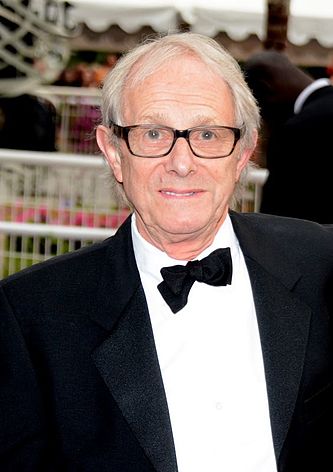


About Ken Loach
Kenneth Charles Loach (born 17 June 1936) is a British film director and screenwriter. His films, which commentators consider socially aware and to display socialist ideals, are themed around issues such as poverty (Poor Cow, 1967), homelessness (Cathy Come Home, 1966), and labour rights (Riff-Raff, 1991, and The Navigators, 2001).
Best Ken Loach Quotes
Shortest
Earliest
Explore our curated collection of the most famous and impactful Ken Loach quotes.
“You can't treat mental health on an assembly line, which is the way it is now organised.”
“If there has been a rise [in antisemitism in Europe] I am not surprised. In fact, it is perfectly understandable because Israel feeds feelings of antisemitism.”

“[N]othing has been a greater instigator of antisemitism than the self-proclaimed Jewish state itself... Until we deal with that, until that is acknowledged, then racism, I'm afraid, will be with us.”
“[On antisemitism in the Labour Party] It's funny these stories suddenly appeared when Jeremy Corbyn became leader, isn't it?”
“[Screenings of Loach's work suffered during this period] You are only part of a process of communication with a lot of people who have no chance to be heard at all. [...] The suppression of that is much more important than the problems of individual filmmakers.”

“If you have a society where a large section believe they are not part of the political discourse, that is a situation for trouble. The Labour election of 1945 was a tremendous victory for democratic ownership of the economy. We need to remember and learn from the lessons.”
“We had won the war together [...] Together we could win the peace. If we could collectively plan to wage military campaigns, could we not plan to build houses, create a health service and make goods needed for reconstruction? The spirit of the age was to be our brother's and our sister's keeper.”
“Unless we get Labour MPs who believe in that manifesto last year we won't get in power.
If they've been going to the demonstration against him outside Westminster... those are the ones we need to kick out.”
If they've been going to the demonstration against him outside Westminster... those are the ones we need to kick out.”
“I don't think people exist outside of their social situation. You can't abstract people from their environment. It always baffles me when people ask why I don't direct a comedy or a thriller. I think they would be much more artificial fields in which to work. The great expanse of people is really rather interesting.”
“The whole antisemitism issue has been substantially revealed as a campaign that is not based on fact.
It's based on political determination to do a number of things, to remove people from the left, to protect the state of Israel, which many people, many Jewish people in the Labour Party, oppose, oppose this campaign.”
It's based on political determination to do a number of things, to remove people from the left, to protect the state of Israel, which many people, many Jewish people in the Labour Party, oppose, oppose this campaign.”
“Labour HQ finally decided I'm not fit to be a member of their party, as I will not disown those already expelled.
Well, I am proud to stand with the good friends and comrades victimised by the purge.
There is indeed a witch-hunt.
Starmer and his clique will never lead a party of the people.
We are many, they are few. Solidarity.”
Well, I am proud to stand with the good friends and comrades victimised by the purge.
There is indeed a witch-hunt.
Starmer and his clique will never lead a party of the people.
We are many, they are few. Solidarity.”
“People talk about Thatcherism all the time [...] I felt it was important to record the memories of those almost written out of history who upheld the spirit of '45. Today, the market penetrates everywhere. It's time to put back on the agenda the importance of public ownership and public good, the value of working together collaboratively, not in competition.”
“Left Unity was formed a few months ago to work towards such co-operation. The task is considerable. We are used to working and campaigning within our own small organisations. The proliferation of radical newspapers is witness to that. But the need is urgent. If we don't act together, the poverty, exploitation and alienation will get worse.”
“[On politics in the 1960s] There was a feeling that there was a great possibility of political change. Obviously, no one knew in what form it would come, but there was a sense that the working class was getting politically conscious, particularly those involved in occupations and industrial disputes.
The quality of political discussion was higher. People understood die analysis even if they disagreed with it.”
The quality of political discussion was higher. People understood die analysis even if they disagreed with it.”
“[On where he fits on the left] I would have thought if you want to align yourself to any left current, the one to follow would be the one that fought Stalinism at the outset, and that was the left opposition and [Leon] Trotsky. So I think that socialist current is the one I care to be identified with.”
“Labour's rhetoric may be softer than the Tories', but its fundamental stance is limited by the same imperative: profit comes before all else. Can the Labour party be reclaimed? Or, rather, made anew into one that will represent the interests of the people?
History suggests it cannot. The high-water mark of 1945 is long gone. The many great achievements of that government have largely been dismantled, either with the collusion of Labour or directly by the party when it has been in power.”
History suggests it cannot. The high-water mark of 1945 is long gone. The many great achievements of that government have largely been dismantled, either with the collusion of Labour or directly by the party when it has been in power.”
“Kes is really about the colossal wastages of kids, whose lives and abilities are written off before they're even in their teens. We chose to make it in Barnsley, we chose a Secondary modern school on a new estate that's becoming shabby. But it could have been one of hundreds of schools or estates. We didn't happen to unearth one child star, there were several kids in that one school who could have done the main part, [Billy Casper].”
“Perdition was stopped because it criticised Zionist leaders in Budapest for co-operating with the Nazis in sending half a million Jews to the camps. Today, we are wary of criticising Israel, because of our feelings of horror and guilt at the atrocities committed against the Jews. If the Hungarian incident is examined, that inhibition may be lessened.
With a few honourable exceptions, the establishment liberals, who rightly support Salman Rushdie, ignored the political censorship on their own doorstep. Ken Loach. London”
With a few honourable exceptions, the establishment liberals, who rightly support Salman Rushdie, ignored the political censorship on their own doorstep. Ken Loach. London”
“[On film executive Nat Cohen, then responsible (according to his rivals) for about 50% of film production in the UK] I found Nat very kind and helpful. [...] [A] lot of things went wrong in those films and I realise it now. I saw this but he didn't say a word and allowed me to finish.
That's on a personal level. On a different level I find Nat's position in the film industry very disturbing. He has too much control over it. Do you know how he works? Every morning he studies the box office receipts and sees which films are making money and concentrates on those. So, slowly, the spectrum is becoming narrower and narrower.”
That's on a personal level. On a different level I find Nat's position in the film industry very disturbing. He has too much control over it. Do you know how he works? Every morning he studies the box office receipts and sees which films are making money and concentrates on those. So, slowly, the spectrum is becoming narrower and narrower.”
“Jo Coburn: There was a fringe meeting yesterday that we talked about at the beginning of the show where there was a discussion about the Holocaust, did it happen or didn't it ... would you say that was unacceptable?
Loach: I think history is for us all to discuss, wouldn't you?
Coburn: Say that again, sorry, I missed that.
Loach: History is for all of us to discuss. All history is our common heritage to discuss and analyze. The founding of the state of Israel, for example, based on ethnic cleansing is there for us all to discuss. The role of Israel now is there for us to discuss. So don't try to subvert that by false stories of anti-Semitism.”

“MAX STAFFORD-CLARK claims that the decision to ban Perdition from the Royal Court was his alone (Letters, March 3).
Nonsense. It was clearly a response to the massive campaign mounted by Zionist groups in the weeks before the production.
The unprincipled, mendacious and consciously distorting articles, the meetings between Zionist campaigners and members of the Royal Court board, the threats about the future of the Court this was the pressure that caused Stafford-Clark to cave in. Or is he now saying that [the] orchestrated furore was just a coincidence? Remember, his objection was not to the acting or direction, but to the text.”
Ken Loach Quotes by Topic
Find exactly what you are looking for by browsing this categorized list of Ken Loach quotes by topic.

What Ken Loach Said About Others
Discover personal opinions Ken Loach shared regarding contemporaries.
Ken Loach on Death and funeral of Margaret Thatcher
“How should we honour her? Let's privatise her funeral. Put it out to competitive tender and accept the cheapest bid. It's what she would have wanted.”

Quotes About Ken Loach
Gain deeper perspective through quotes about Ken Loach from others.
From an interview with Trevor Griffiths for on Ken Loach
“If Loach could make a film without a camera he would. He wants the actors to just be themselves so that everything looks as though it has just happened.”
Source on Ken Loach 2 quotes
“Inspired by the Italian neo-realists, who also used non-professionals, Loach says that his biggest influence is probably the sixties Czech cinema of Jiri Menzel, Milos Forman and Ivan Passer. "It just allowed something to unfold and had a quality of observation: the sense of tuning, unhurried rhythm, framing of the shots, and relaxed humour." He also sensed a democracy in the film-making. "Maybe it was just because they were shot in eastern Europe in black and white, but you felt that the people were very proletarian. It was a bit like saying working-class people are worthy subjects of a film. There wasn't the sense that you needed vast production values, you didn't have to wind everything up with a lot of art direction or a lot of music; you just had to have confidence in the people front of the camera."”
Simon Hattenstone on Ken Loach 2 quotes
“When Loach selects his actors, whether professional or not, there are certain givens. He will not cast against class: "You carry your class with you in how you talk, how you behave, how you pick up a fork. You can't really act it, and you can't act a dialect." But he stresses that while a professional's training can be a handicap, equally there are parts usually when they are precisely scripted and information has to be revealed in a certain way that could not be handled by non-actors. Loach has used many good non-professionals, but Crissy Rock is phenomenal. He says he auditioned 300 people for the part, two-thirds professionals, but she was the best. Watching the film, you have to believe him.”
James Saynor on Ken Loach
“[Sydney] Newman and [James] MacTaggart saw no problem with running a new wave of Paddy Chayefskyan problem plays out of the electronic studio, but [Tony] Garnett and Ken Loach were soon rejecting this whole classical notion of "the play"’. They had seen the future of television drama, and it was A bout de souffle mated with World in Action. While MacTaggart was away, they booked up as much off-base filming as they could for a television version of Nell Dunn's book, Up the Junction, a mouthy compendium of South London lower-class lore. "At that time, you were allowed about four days filming |with cumbersome 35mm equipment] just to show a car pulling up or driving away," says Loach. "So we used those four days to whizz round and shoot half the script with a hand-held 16mm camera - about 35 to 40 minutes of screen time." The remaining studio scenes were dubbed from tape on to film so that the whole thing could be collaged together in the cutting room, with Loach deploying all manner of neo-Godardian time leaps and wild-track effects.”
From an interview with Michael Winner for on Ken Loach
“I'm a great friend of Ken's, and Perdition does not change that, [...] [b]ut when I think of the man who made Kes which tells us more movingly about the disinherited than any other film I've seen, I wonder what has happened. Poor Cow, Up the Junction and Cathy Come Home were all films of great humanity and were probably political films in their own way, but the compassion conquered all. He seems to be moving away from that and becoming more politically motivated and less interesting. It's a great pity.”
Hadley Freeman on Ken Loach
“"The aim is to destabilise Jeremy's leadership," Loach said, apparently unaware that suggesting Jews make allegations about antisemitism for their political or personal benefit is, in fact, one of the oldest antisemitic tropes there is.”
Elliot Levey on Ken Loach
“I will not speak about Ken Loach because he's a man of love. He has been an extraordinary father, and is a compassionate, wonderful, loving, brilliant grandfather to three Jewish boys. ["Then Levey looks [interviewer Kate Maltby] straight in the eye"] But I will reiterate, as a rule of thumb, maybe don’t say antisemitic things, if you’re worried about that being a slur. It's probably best to keep shtoom. [...] If you’re worried about people continually calling you antisemitic, maybe don’t say antisemitic things?”
About Ken Loach
Kenneth Charles Loach (born 17 June 1936) is a British film director and screenwriter. His films, which commentators consider socially aware and to display socialist ideals, are themed around issues such as poverty (Poor Cow, 1967), homelessness (Cathy Come Home, 1966), and labour rights (Riff-Raff, 1991, and The Navigators, 2001).