Link Copied!
Keith Joseph Quotes (1918-1994)
Politician



About Keith Joseph
Sir Keith Sinjohn Joseph, Baron Joseph, Bt, CH, PC (17 January 1918 – 10 December 1994), known as Sir Keith Joseph, 2nd Baronet, for most of his political life, was a British politician, intellectual and barrister. A member of the Conservative Party, he served as a minister under four prime ministers: Harold Macmillan, Sir Alec Douglas-Home, Edward Heath and Margaret Thatcher. He was a key influence in the creation of what came to be known as "Thatcherism". He was the first to introduce the concept of the social market economy into Britain, an economic and social system inspired by Christian democracy.
Best Keith Joseph Quotes
Shortest
Earliest
Explore our curated collection of the most famous and impactful Keith Joseph quotes.
“Monetarism is not enough.”

“Keynes was certainly not a Keynesian.”

“We are over-governed, over-spent, over-taxed, over-borrowed and over-manned.”
“We found it hard to avoid the feeling that somehow the lean and tight-lipped mufflered men in the 1930s dole queue were at least partly our fault.”
“It was only in April 1974 that I was converted to Conservatism. (I had thought I was a Conservative but I now see that I was not really one at all.)”

“Perhaps there is at work here a process, apparent in many situations but imperfectly understood, by which problems reproduce themselves from generation to generation. If I refer to this as a cycle of deprivation.”

“It was not long ago that we thought utopia was within reach... What has happened to all this optimism? Has it really crumbled under the weight of rising crime, social decay and the decline of traditional values? Have we really become a nation of hooligans and vandals, bullies and child-batterers, criminals and inadequates?”
“The entrepreneur is the person who seeks to identify what consumers, at home or abroad or both, want and would be willing to buy at a profitable price. These entrepreneurs are the job-creators because it is they who gather the men and women, the material, the machinery, and the money to turn the vision of a market into a reality.”
“Making the rich poorer does not make the poor richer, but it does make the state stronger—and it does increase the power of officials and politicians, power more menacing, more permanent and less useful than market power within the rule of law. Inequality of income can only be eliminated at the cost of freedom. The pursuit of income equality will turn this country into a totalitarian slum.”

“There is moreover a commercial exploitation of brutality in print and in film which further debases the moral climate. And how is it that a generation that rejects the exploitation of man by man and promises the liberation of women can accept the exploitation of women by pornography? The left, usually so opposed to profitable commerce in trades beneficial to the public, systematically defends the blatant commercialism of the pornographic industry.”

“Low output a man, which is what overmanning comes to, means low pay a man. Overmanning does not protect British jobs except in the short-term. The jobs protected by it are German and Japanese jobs. Overmanning is a large part of the British disease and the Labour Government actually encourages it. The industrial strategy, a verbal smokescreen, may blather on about being competitive but nearly every action taken under it involves a subsidy from the taxpayer to overmanning.”
“We need to develop within our children and young people the capacity to respect the cultures and beliefs of the different groups that make up our society; and we need to develop the resolve to treat each other justly. Secondly, we must eliminate, so far as any society can, the under-achievement of many of our children and young people from all sections of the community. We need to raise the performance of all pupils and to tackle the obstacles to higher achievement which are common to all. But we also need to tackle those special factors which additionally may contribute to the under-achievement of many members of our ethnic minorities.”

“We are now more Socialist in many ways than any other developed country outside the Communist bloc—in the size of the public sector, the range of controls and the telescoping of net income. And what is the result? Compare our position today with that of our neighbours in north west Europe—Germany, Sweden, Holland, France. They are no more talented than we are. Yet, compared with them, we have the longest working hours, the lowest pay and the lowest production per head. We have the highest taxes and the lowest investment. We have the least prosperity, the most poor and the lowest pensions. We have the largest nationalized sector and the worst labour troubles.”
“The old virtues of patriotism and national pride have been denigrated in the name of internationalism, love of all our fellow-men. But no one can love mankind if he does not love his own countrymen. It was the radical Socialist writer and patriot, the late George Orwell, who described the left-wing intellectuals as men motivated primarily by hatred of their own country. Socialists who spoke most about brotherhood of man could not bear their fellow-Englishmen, he complained. Their well-orchestrated sneers from their strongpoint in the educational system and media have weakened the national will to transmit to future generations those values, standards and aspirations which made England admired the world over.”

“The totalitarian antics of the far left, if not firmly handled by the Government of the day, produce a reaction in the far Right. I am a member of a minority with every reason to abominate the attitudes of the National Front. But I warn the House that if the excesses of the far Left are not curbed—of course, within the rule of law—we fuel the National Front; and the tragedy of that movement is that it contains not only some very nasty people but also some frustrated decent people, too, many of them trade unionists who see the far Left in action every day.”
“The question we must all ask ourselves is how Mr. Benn was able to come within striking distance of the very heart of our economic life in the first place... an important part of the answer must be that our industry, economic life and society have been so debilitated by 30 years of Socialistic fashions that their very weakness tempts further inroads. The path to Benn is paved with 30 years of interventions: 30 years of good intentions: 30 years of disappointments. These have led the collectivists to say that we are failing only because we are taking half measures. The reality is that for 30 years the private sector of our economy has been forced to work with one hand tied behind its back by government and unions. Socialist measures and Socialist legacies have weakened free enterprise.”
“If we are to retain the freedom of our society, we in this House must try to understand the many forces at work, the excessive permissiveness in some schools which has led to lack of self-discipline, the attitudes and the management at some secondary schools, the deliberate subversion that goes on at some schools, the exploitation and glamorisation of violence in many films and on television, and the licensed obscenities permitted, very wrongly, some years ago by the BBC. I am reminded of the poignant words of Caliban to Prospero: "You taught me language and my profit on't is I know how to curse." That seems, alas, appropriate to some of our school children. Behind all these manifestations there is a mindless fashion for revolution.”
“[ Rousseau's educational theories had persuaded teachers] to dispense with the structured systems of learning which have been so successful in the past. [The result is] the belief, taught by Mr Roy Jenkins, that a permissive is a civilised society... A facile rhetoric of total liberty and of costless, superficial universal protest has really been a cover for irresponsibility. Our loud talk about the community overlies the fact that we have no community. We talk about neighbourhoods and all too often we have no neighbours. We go on about the home when we only have dwelling places containing television sets. It is the absence of a frame of rules and community, place and belonging, responsibility and neighbourliness that makes it possible for people to be more lonely than in any previous stage in our history. Vast factories, huge schools, sprawling estates, sky-scraping apartment blocks; all these work against our community and our common involvement one with another.”

“There is in this country an even more insidious attack on the law than the crime we are experiencing—as no doubt there is in every country—and that is the pervasive attack upon the free society. Many separate and distinct trends are being experienced, some from outside, some from within. There are armed groups, some with specific purposes, some with apocalytic purposes. A wide range of political forces, using anything from subversion to ordinary lobbying, seek to swing our society away from freedom. Violence is condoned and is very near the surface. The far Left with totalitarian purpose is widely active in factories, schools, universities and communications. There are deliberate destroyers at large pursuing various ideologies to seek to provoke and discredit the police in order to advance their aim of eroding our liberties. These extreme movements can mobilise shifting but substantial support from the naive, and can, and do, exploit every sort of resentment, frustration and grievance.”

“The balance of our population, our human stock is threatened. A recent article in Poverty, published by the Child Poverty Action Group, showed that a high and rising proportion of children are being born to mothers least fitted to bring children into the world and to bring them up. They are born to mothers who were first pregnant in adolescence in socio-economic classes IV and V. Many of these girls are unmarried, many are deserted or divorced or soon will be. Some are of low intelligence, most of low educational attainment. They are unlikely to be able to give children the stable emotional background, the consistent combination of love and firmness which are more important than riches. They are producing problem children, the future unmarried mothers, delinquents, denizens of our borstals, sub-normal educational establishments, prisons, hostels for drifters. Yet these mothers, the under-twenties in many cases, single parents, from classes 4 and 5, are now producing a third of all births. A high proportion of these births are a tragedy for the mother, the child and for us.
Yet what shall we do? If we do nothing, the nation moves towards degeneration, however much resources we pour into preventative work and the over-burdened educational system. It is all the more serious when we think of the loss of people with talent and initiative through emigration as our semi-socialism deprives them of adequate opportunities, rewards and satisfactions.
Yet proposals to extend birth-control facilities to these classes of people, particularly the young unmarried girls, the potential young unmarried mothers, evokes entirely understandable moral opposition. Is it not condoning immorality? I suppose it is. But which is the lesser evil, until we are able to remoralise whole groups and classes of people, undoing the harm done when already weak restraints on strong instincts are further weakened by permissiveness in television, in films, on bookstalls?”

Keith Joseph Quotes by Topic
Find exactly what you are looking for by browsing this categorized list of Keith Joseph quotes by topic.
Keith Joseph on Entrepreneurs
“The entrepreneur is the person who seeks to identify what consumers, at home or abroad or both, want and would be willing to buy at a profitable price. These entrepreneurs are the job-creators because it is they who gather the men and women, the material, the machinery, and the money to turn the vision of a market into a reality.”
What Keith Joseph Said About Others
Discover personal opinions Keith Joseph shared regarding contemporaries.
Keith Joseph on Correlli Barnett
“It's easy with hindsight to see all those years before and after the war as wasted. I'm a Correlli Barnett supporter. I believe that managements, helped by trade unions and helped by governments, were not nearly effective enough.”
Keith Joseph on Margaret Thatcher
“She seems to me to have been gripped since before she won the leadership of the Tory party by a clear understanding, a passionately clear understanding, of the interacting causes of our relative economic decline. She saw it, as it seems to me, partly stemming from successive governments which by increasing the money supply kept on rescuing managements and labour from having to become more competitive. She saw it therefore as primarily a failure of government in creating the climate which enabled inefficiencies to continue to the point where all our neighbours soared past us in competitiveness, in prosperity, in social services, in standard of living and in purchasing power for all their people. She saw it infecting management which was allowed to be flabby. And she saw it as intensified or made worse and more difficult by the uncomprehending approach of trade unions who don't seem to realise where their members' interests lie.”

Keith Joseph on Roy Jenkins
“Rousseau's educational theories had persuaded teachers] to dispense with the structured systems of learning which have been so successful in the past. [The result is] the belief, taught by Mr Roy Jenkins, that a permissive is a civilised society... A facile rhetoric of total liberty and of costless, superficial universal protest has really been a cover for irresponsibility. Our loud talk about the community overlies the fact that we have no community. We talk about neighbourhoods and all too often we have no neighbours. We go on about the home when we only have dwelling places containing television sets. It is the absence of a frame of rules and community, place and belonging, responsibility and neighbourliness that makes it possible for people to be more lonely than in any previous stage in our history. Vast factories, huge schools, sprawling estates, sky-scraping apartment blocks; all these work against our community and our common involvement one with another.”
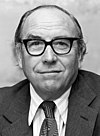
Keith Joseph on Mary Whitehouse
“Let us take inspiration from that admirable woman, Mary Whitehouse. I do not accept all her ideas, she will not accept all mine. Yet we can see in her a shining example of what one person can do single-handedly when inspired by faith and compassion. An unknown middle-aged woman, a schoolteacher in the Midlands, set out to protect adolescents against the permissiveness of our time. Look at the scale of the opposing forces. On the one side, the whole of the new establishment, with their sharp words and sneers poised. Against them stood this one middle-aged woman. Today, her name is a household word, made famous by the very assaults on her by her enemies. She has mobilised and given fresh hearts to many who see where this current fashion is leading. Her book, Who Does She Think She Is? took its title from the outraged cry of an acolyte of the new hierarchy, who asked how an unknown woman dare speak up against the BBC, the educators and false shepherds. We too can take courage from her, and dedicate ourselves to fighting back on issues which will decide the nation's future far more than economics, however important it remains.”

Quotes About Keith Joseph
Gain deeper perspective through quotes about Keith Joseph from others.
Peter Clarke on Keith Joseph
“It was apparently Chris Patten, as director of the Conservative Research Department in the late 1970s, who came up with the 'Mad Monk' epithet which stuck to Joseph for the reason that makes some nicknames and caricatures irresistible: immediate recognition. It was not the whole truth; it was not simply a hostile slur (Joseph saw the joke himself); it was, even so, a way of tagging a major politician whose driving ambition was not focused simply on his own advancement.”
Frank Field on Keith Joseph
“The speech is deeply disturbing in that it attempts to cast the poor as the villains who are undermining society. For a nation which has successfully fought against Nazism, it is worrying that any attempt should be made to find scapegoats... Although in the cool of the evening he will probably choose to deny it, the speech bore all the marks of whipping up a campaign against the poor. It put forward family planning as a remedy without stating that the primary way to help these mothers was to give them money and education as an incentive to limit their families.”
Denis Healey on Keith Joseph
“A wonderful mixture of Rasputin and Tommy Cooper.”
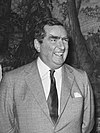
Roy Lewis on Keith Joseph
“[In September 1974] Sir Keith Joseph broke the Heath line with a speech on Tory economic mistakes which Powell described as "an admirable anthology from my speeches on the subject in recent years." Sir Keith made no acknowledgements; powellism without Powell suddenly offered big political rewards, and Sir Keith set up, soon afterwards, an institute to depowellise the alternative Conservatism with which he proposed to transform the Party, and perhaps his own position in it.”
Reginald Maudling on Keith Joseph 2 quotes
“From the start, there was a tendency in the Shadow Cabinet to move away from the Heath line of policy further to the Right: to this I was totally opposed. In particular, I could not support the arguments of Keith Joseph, who was inclined to say that all we had done in the Government of 1970–74 was wrong and not true Conservatism. I totally disagreed with this, because it seemed to me that Keith was fully entitled to measure himself for a hair shirt if he wanted to, but I was blowed if I could see why he should measure me and Ted at the same time. I could not help recalling Selsdon Park, and the swing to the Right in our policies which occurred then, and how long it had taken in Government to get back to the realities of life. I feared that the same thing was beginning to happen again. In particular there was the argument about Incomes Policy and Money Supply, and which was the right way to deal with inflation. I stuck to the view that an Incomes Policy was essential and had been a necessary part of the policies of Conservative Governments since it was first introduced by Peter Thorneycroft when he was Chancellor of the Exchequer. The other doctrine, the monetarist doctrine of which Keith Joseph was the most articulate and intellectual exponent, said that Incomes Policy was unnecessary and unworkable, and that inflation could best be contained by restricting the money supply. This doctrine, based on the teachings of Professor Friedman, seemed to me to be totally divorced from reality. In so far as it was a guide to action at all, it merely was a restatement in new phraseology of the old doctrine of a credit squeeze. But the tide was running strongly in the monetarist direction at that time.”

Enoch Powell on Keith Joseph
“His offence does not consist in discovering and confessing past error. If he had been elected in 1970 on a policy of price and wage controls to cure inflation, I would have no complaint if subsequent experience and reflection led him to conclude that the policy was unsound. That is not what happened. He was elected "utterly rejecting the philosophy of compulsory wage control". As an intelligent man, he knew why such a strong assertion could safely be made – namely, the irrelevance of such control to inflation, which therefore had other causes. That policy was suddenly reversed in the third quarter of 1972 by the government to which Joseph belonged; and he was not so immersed in the social services as not to know. He held his peace, however, until he no longer had cabinet office, salary, car and chauffeur to sacrifice and could expect to gain rather than lose personally by re-affirming what he had always been aware of.”

Arthur Salter on Keith Joseph
“[He is] a very fine person, of deep and strong convictions and an unmistakable sincerity which adds to [the] force and persuasiveness of his arguments.”
Mary Whitehouse on Keith Joseph
“I am tremendously grateful to him, not personally but for the lead he has given the country—it is what has been needed for a very long time. One thing that Sir Keith spelt out very clearly was the way that the extreme left had cashed in on permissiveness. I believe passionately that you cannot separate our economic ills from our present moral decadence. Until this speech, the people of Britain have been like sheep without a shepherd. But now they have found one.”
About Keith Joseph
Sir Keith Sinjohn Joseph, Baron Joseph, Bt, CH, PC (17 January 1918 – 10 December 1994), known as Sir Keith Joseph, 2nd Baronet, for most of his political life, was a British politician, intellectual and barrister. A member of the Conservative Party, he served as a minister under four prime ministers: Harold Macmillan, Sir Alec Douglas-Home, Edward Heath and Margaret Thatcher. He was a key influence in the creation of what came to be known as "Thatcherism". He was the first to introduce the concept of the social market economy into Britain, an economic and social system inspired by Christian democracy.