Link Copied!
Kazimierz Ajdukiewicz Quotes (1890-1963)
Philosopher


About Kazimierz Ajdukiewicz
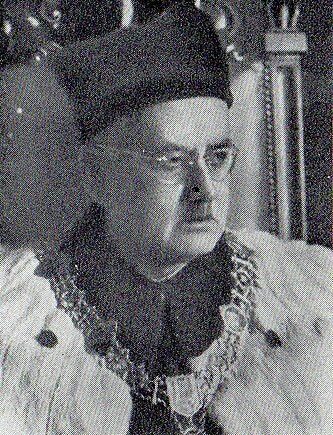
Kazimierz Ajdukiewicz (Dec. 12, 1890 – April 12, 1963) was a Polish philosopher and logician, a prominent figure in the Lwów–Warsaw school of logic. He originated many novel ideas in semantics. Among these was categorial grammar, a highly flexible framework for the analysis of natural language syntax and (indirectly) semantics that remains a major influence on work in formal linguistics. Ajdukiewicz's fields of research were model theory and the philosophy of science.
Best Kazimierz Ajdukiewicz Quotes
Shortest
Earliest
Explore our curated collection of the most famous and impactful Kazimierz Ajdukiewicz quotes.
“By spreading logical culture, we prepare the foundation for a scientific world-view and by doing this we enable development.”

“If he [the metaphysician] takes an empiricist position in regard to the source of knowledge and a realist one in regard to the limits of knowledge, he will see no need or even possibility of seeking a world-view other than that provided by science as based on experience. If he inclines towards an aprioristic position, or even more, if he is convinced by the arguments of irrationalists, he will seek his world-view in an aprioristic way, or he will appeal to intuition or mystical experience”

“However, the voice of the rationalist is a sound social reaction, it is an act of self-defense by society against the dangers of being dominated by uncontrollable forces such as a saint proclaiming a revelation or a madman affirming the products of his sick imagination, and finally a fraud who wants to convert others to his views for the sake of his egoistic and unworthy purposes. It is better to rely on the safe but modest nourishment of reason than, in fear of missing the voice of ‘Truth’, to let oneself be fed with all sorts of uncontrollable nourishment which may more often be poisonous than healthy and beneficial.”

“According to Husserl, that 'act of meaning', or the use of a given phrase as an expression of a certain language, consists in the fact that a sensory content appears in consciousness, by means of which one might think visually about that phrase, should that content be joined by an appropriate intention directed to that phrase. But when a given phrase is used as an expression belonging to a certain language, then that sensory content is joined by another intention, not necessarily a representative one, which is however in principle directed to something other than that phrase itself. Together with the sensory content in question, that intention makes up a uniform experience, but neither the experiencing of that sensory content, nor that intention is a complete, independent experience. Both the one and the other are non-independent parts of the experience as a whole. The meaning of a given expression (as a type) would be, according to Husserl, the type under which that intention joined to the sensory content must fall if the given phrase is to be used as an expression belonging precisely to that language”

“The fundamental thesis of ordinary conventionalism, represented for instance by Poincare, states that there are problems which cannot be solved by appeal to experience unless one introduces a certain convention, since only such a convention, together with experimental data, makes it possible to solve the problem in question. The judgements which combine to make up such a solution are thus not forced on us by empirical data alone, but their adoption depends partly on our recognition, since the said convention which co-determines the solution of the problem can be arbitrarily changed by us so that as a result we obtain different judgements.
In the present paper it is my intention to make that thesis of ordinary conventionalism more general and more radical. Namely, we want to formulate and to prove the theorem that not only some, but all the judgements which we accept and which combine to make up our image of the world are not univocally determined by empirical data, but depend on the choice of the conceptual apparatus by means of which we make mappings of those empirical data. We can, however, choose this or that conceptual apparatus, which will change our whole image of the world.”
In the present paper it is my intention to make that thesis of ordinary conventionalism more general and more radical. Namely, we want to formulate and to prove the theorem that not only some, but all the judgements which we accept and which combine to make up our image of the world are not univocally determined by empirical data, but depend on the choice of the conceptual apparatus by means of which we make mappings of those empirical data. We can, however, choose this or that conceptual apparatus, which will change our whole image of the world.”
Kazimierz Ajdukiewicz Quotes by Topic
Find exactly what you are looking for by browsing this categorized list of Kazimierz Ajdukiewicz quotes by topic.
Kazimierz Ajdukiewicz on World view
“By spreading logical culture, we prepare the foundation for a scientific world-view and by doing this we enable development.”

Kazimierz Ajdukiewicz on Meaning
“According to Husserl, that 'act of meaning', or the use of a given phrase as an expression of a certain language, consists in the fact that a sensory content appears in consciousness, by means of which one might think visually about that phrase, should that content be joined by an appropriate intention directed to that phrase. But when a given phrase is used as an expression belonging to a certain language, then that sensory content is joined by another intention, not necessarily a representative one, which is however in principle directed to something other than that phrase itself. Together with the sensory content in question, that intention makes up a uniform experience, but neither the experiencing of that sensory content, nor that intention is a complete, independent experience. Both the one and the other are non-independent parts of the experience as a whole. The meaning of a given expression (as a type) would be, according to Husserl, the type under which that intention joined to the sensory content must fall if the given phrase is to be used as an expression belonging precisely to that language”
Kazimierz Ajdukiewicz on Intention
“According to Husserl, that 'act of meaning', or the use of a given phrase as an expression of a certain language, consists in the fact that a sensory content appears in consciousness, by means of which one might think visually about that phrase, should that content be joined by an appropriate intention directed to that phrase. But when a given phrase is used as an expression belonging to a certain language, then that sensory content is joined by another intention, not necessarily a representative one, which is however in principle directed to something other than that phrase itself. Together with the sensory content in question, that intention makes up a uniform experience, but neither the experiencing of that sensory content, nor that intention is a complete, independent experience. Both the one and the other are non-independent parts of the experience as a whole. The meaning of a given expression (as a type) would be, according to Husserl, the type under which that intention joined to the sensory content must fall if the given phrase is to be used as an expression belonging precisely to that language”
Quotes About Kazimierz Ajdukiewicz
Gain deeper perspective through quotes about Kazimierz Ajdukiewicz from others.
Adam Schaff on Kazimierz Ajdukiewicz
“Ajdukiewicz's view, published in the Erkenntnis, certainly did not fail to influence the opinions held by the neo-positivist supporters of semantic philosophy. But Ajdukiewicz was not alone in his opinions which fitted Carnap's principle of tolerance and, e.g., the theories of C. G. Hempel.”

Vito Sinisi on Kazimierz Ajdukiewicz
“Ajdukiewicz was one of the most distinguished and important philosophers of the contemporary Poland. He produced important ideas in logic, epistemology, philosophy of language, and ontology. He influenced Polish analytic philosophy very much.”
Dariusz Łukasiewicz on Kazimierz Ajdukiewicz
“Ajdukiewicz’s philosophy was strongly inspired by the rationalism of Kazimierz Twardowski as well as by some ideas of the Vienna Circle. However, in contrast to the latter's logical empiricism, Ajdukiewicz could be interpreted as holding that beliefs constituting our world-view have both logical value and cognitive content—they cannot be construed as mere expression of some emotions.”
About Kazimierz Ajdukiewicz
Kazimierz Ajdukiewicz (Dec. 12, 1890 – April 12, 1963) was a Polish philosopher and logician, a prominent figure in the Lwów–Warsaw school of logic. He originated many novel ideas in semantics. Among these was categorial grammar, a highly flexible framework for the analysis of natural language syntax and (indirectly) semantics that remains a major influence on work in formal linguistics. Ajdukiewicz's fields of research were model theory and the philosophy of science.