Link Copied!
Karl Shapiro Quotes (1913-2000)
Poet
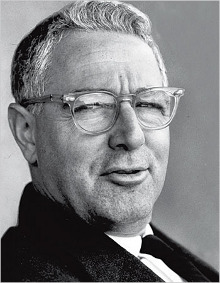
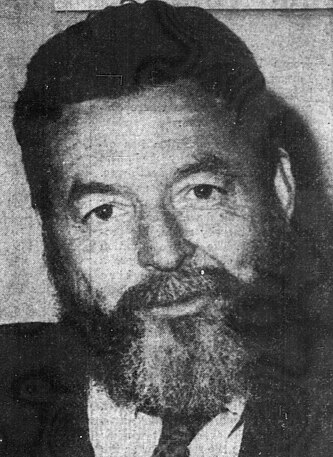

About Karl Shapiro
Karl Jay Shapiro (10 November 1913 – 14 May 2000) was an American poet, appointed as the fifth Poet Laureate Consultant in Poetry to the Library of Congress in 1946.
Best Karl Shapiro Quotes
Shortest
Earliest
Explore our curated collection of the most famous and impactful Karl Shapiro quotes.
“The public has an unusual relationship to the poet: It doesn't even know that he is there.”
“A leg I noticed next, fine as a mote,
"And on this frail eyelash he walked," I said,
"And climbed and walked like any mountain-goat."”
"And on this frail eyelash he walked," I said,
"And climbed and walked like any mountain-goat."”
“As a third generation American I grew up with the obsessive idea of personal liberty which engrosses all Americans except the oldest and richest families.”
“Then in my heart a fear
Cried out, "A life — why, beautiful, why dead!"
Cried out, "A life — why, beautiful, why dead!"
It was a mite that held itself most dear,
So small I could have drowned it with a tear.”
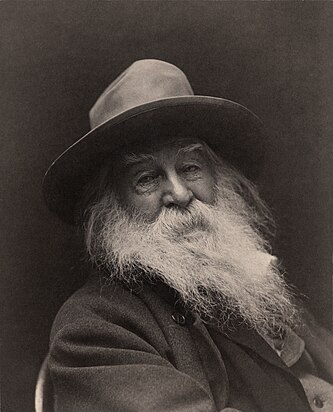
“Influence is strange. Because one can be influenced powerfully in every way but technique. For instance, I would think Walt Whitman probably had more influence on my whole poetic thinking than anybody, but I never dreamed of trying to write in the Whitman manner.”

“I feel that after working a long time, I’ve really learned how to do what I do. I enjoy it. I don’t think there’s anything more satisfying than turning out a good stanza or a good piece of prose. And when you’re satisfied enough, you want to show it to other people. That’s called publication.”
“I was at Notre Dame just a few years ago, and one of the professors there said to me, “You don’t know what effect In Defense of Ignorance had. It ripped the whole academic community in half!” I’m glad I wrote the book. I like it, and I still stand by my observations, although I wouldn’t write it so violently now. I guess I really am in the Whitman tradition.”
“I had never met a poet in my life before winning the Pulitzer in 1945. Well, that’s not strictly true; when I went to Johns Hopkins in 1939, W. H. Auden gave a private reading to a group of special literature students, and I was one. I shook hands with him. As it happened, at that time he was my idol, above all others as a modern poet, and that experience was a very sustaining one. But I could hardly say I “knew” him.”

“Words like “spokesman” and “touchstone” took me completely by surprise. For very real reasons. Not only had I been out of the country when my first two books were published, but I have always been “out of the country” in the sense that I never had what ordinarily is thought of as a literary life, or been part of a literary group. What psychiatrists nowadays call a support system. I never had any of that and still don’t.”

“I always had this feeling — I’ve heard other Jews say — that when you can’t find any other explanation for Jews, you say, “Well, they are poets.” There are a great many similarities. This is a theme running all through my stuff from the very beginning. The poet is in exile whether he is or he is not. Because of what everybody knows about society’s idea of the artist as a peripheral character and a potential bum. Or troublemaker. Well, the Jews began their career of troublemaking by inventing the God whom Wallace Stevens considers the ultimate poetic idea. And so I always thought of myself as being both in and out of society at the same time. Like the way most artists probably feel in order to survive — you have to at least pretend that you are “seriously” in the world. Or actually perform in it while you know that in your own soul you are not in it at all. You are outside observing it.”
“Whitman to me is the most fascinating of American poets. Whitman started to write the great poetry from scratch after he had written all that junk for newspapers, the sentimental lyrical poems. All of a sudden he wrote Leaves of Grass. When I was teaching at the University of Nebraska, my friend James Miller was chairman of the English Department. He wrote the first book attempting to make a parallel between the structure of Leaves of Grass and the steps of the mystical experience as in St. John of the Cross. I was completely bowled over by this, not having been able to explain how Whitman came to write “Song of Myself,” which is unlike anything not only in American literature, but unique in all the world. The parallels to it are mystical literature. Miller tried to show that there was actual evidence for this kind of experience, which evidently happens at a particular moment in someone’s life. … When I saw the negative reaction to Whitman with the great ruling critics of the time, I couldn’t believe it. Eliot never really gave up hammering away on Whitman, neither did Pound. Although Pound makes little concessions. Whitman, you know, didn’t have any influence in this country until Allen Ginsberg came along.”

What Karl Shapiro Said About Others
Discover personal opinions Karl Shapiro shared regarding contemporaries.
Karl Shapiro on Walt Whitman 2 quotes
“I would think Walt Whitman probably had more influence on my whole poetic thinking than anybody, but I never dreamed of trying to write in the Whitman manner.”

Karl Shapiro on Randall Jarrell
“Your tenderness and terrorization, your prose sentences — like Bernini graves, staggeringly expensive, Italianate, warm, sentences once-and-for-all.”
Karl Shapiro on W. H. Auden
“In terms of English and American poets, it would be quite just to call this The Age of Auden. Not only because Auden was such a dominant and successful poet, but because he went through all the contradictory ideological phases, from Marx to God. He really is representative in that sense.”

Quotes About Karl Shapiro
Gain deeper perspective through quotes about Karl Shapiro from others.
Marian Janssen on Karl Shapiro
“Shapiro is back where he started half a century ago: on the outside, looking in. If the canon has changed drastically, Shapiro has not. At almost age eighty, he still heroically, if sometimes quixotically, wields his verbal weapons against real and imagined enemies, still using for his motto Thoreau's "If I have anything to regret, it is my good behavior."”
Randall Jarrell on Karl Shapiro 2 quotes
“Karl Shapiro's poems are fresh and young and rash and live; their hard clear outlines, their flat bold colors create a world like that of a knowing and skillful neoprimitive painting, without any of the confusion or profundity of atmosphere, of aerial perspective, but with notable visual and satiric force. The poet early perfected a style, derived from Auden but decidedly individual, which he has not developed in later life but has temporarily replaced with the clear Rilke-like rhetoric of his Adam and Eve poems, the frankly Whitmanesque convolutions of his latest work. His best poem — poems like "The Leg," "Waitress," "Scyros," "Going to School," "Cadillac" — have a real precision, a memorable exactness of realization, yet they plainly come out of life's raw hubbub, out of the disgraceful foundations, the exciting and disgraceful surfaces of existence.”
Diederik Oostdijk on Karl Shapiro
“Like Jarell, Shapiro was a poet who felt like "stating his opinion or expressing his pleasure or disdain for something that had occurred [or] which should not have occurred" … As editor of Poetry Shapiro was faithful to this approach. Instead of asking professional critics to review or write articles for Poetry, he mainly evaluate their peers. … On several occasions Shapiro had made it seem as if these literary rows just befell him, as if he were accidentally stuck in the middle of two opposing camps that each had an ax to grind. However, he was not quite that innocent.”
Adrienne Rich on Karl Shapiro
“It was only in college, when I read a poem by Karl Shapiro beginning "To hate the Negro and avoid the Jew/ is the curriculum," that it flashed on me that there was an untold side to my father's story of his student years.”

About Karl Shapiro
Karl Jay Shapiro (10 November 1913 – 14 May 2000) was an American poet, appointed as the fifth Poet Laureate Consultant in Poetry to the Library of Congress in 1946.