Link Copied!
Kanan Makiya Quotes (1949-)
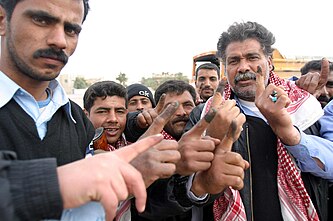

About Kanan Makiya
Kanan Makiya (born 1949) is an Iraqi-American academic and a professor of Islamic and Middle Eastern Studies at Brandeis University.
Best Kanan Makiya Quotes
Shortest
Earliest
Explore our curated collection of the most famous and impactful Kanan Makiya quotes.
“Someone has to keep dreaming.”
“I want to look into myself, look at myself, delve into the assumptions I had before the war.”

“The removal of Saddam Hussein and the toppling of a whole succession of other Arab dictators in 2011 were closely connected - a fact that has been overlooked largely because of the hostility that the Iraq war engendered.”

“Nothing was inevitable. People made choices. Everything was in flux. It could have gone so many different ways. The real tragedy that we are facing now is why Iraqis are not making the right choices, why we are missing all the opportunities.”
“Suggesting evil is human doesn't mean we can always understand it, or doesn't mean there's only one way of understanding it. It's sort of like a great work of art. You can never fully absorb it. It's got many dimensions. It lives on through time, in different ways.”
“Mr. Hussein used sectarianism and nationalism as tools against his internal enemies when he was weak. Today's Iraqi Shiite parties are doing worse: they are legitimizing their rule on a sectarian basis. The idea of Iraq as a multiethnic country is being abandoned, and the same dynamic is at work in Syria.”
“Evil is something that, when you see it, when you know it, it's intimate. It's almost sensual. That is why people who have been tortured know it by instinct. They don't need to be told what it is, and they may have a very hard time putting it into words. ... That's the nature of the phenomenon. It's hard to put into words.”

“Washington is right to be chastened after its scathing experience in Iraq this past decade. But it also ought to be motivated by that earlier disaster in Iraq, in which so many innocent Iraqis perished while the United States stood by and watched. Syria in 2012 is another Iraq of 1991 just waiting to happen. No one can say he did not know.”

“What makes people enter into cults? I think that kind of certainty about something is not necessarily just religious. It was seen in secular organizations, secular ideologues, ideological organizations of one kind or another. I've experienced it among people I used to know in the 1960s and 1970s. It's a terrifying thing when you see it at work.”
“The Muslim idea of God is, in many ways, more abstract, more remote and less human, certainly, than the Christian and the God of the Old Testament, who has passions and has angers and often behaves very much like a human being in the various stories. The Muslim is more remote, aloof, distant, and has to be obeyed. He has many, many different facets.”
“I ran into a whole number of people for whom bodies did not count. You know: the historical process, the victory for the working class. The great big idea that could take place at the expense of any number of bodies because ultimately, in the very, very long run, lives would be saved. I would not make that argument anymore. It is utterly repugnant to me.”
“Millions upon millions of words have been written about the destruction of hundreds of Palestinian villages in order to bring about the creation of the Israeli state. And rightly so. Yet many of the very intellectuals who wrote those words chose silence when it came to the elimination of thousands of Kurdish villages by an Arab state.”
“Freedom is a heady thing. To an Iraqi, it is like being awakened from a 30-year nightmare by a blinding blaze of bright white light. When a young man steals a television set from the Ministry of Education, he thinks he is striking a blow against the Ba'ath Party. He has not yet become aware that he is in fact stealing it from a building that now belongs to him and is about to start serving his needs, and not those of his tormentors.”

“I don’t really think there is any kind of a reasonable argument against intervention in Syria. Quite the opposite: There is a moral and a human imperative to act that is larger than any nation’s interests and larger than any strategic calculation. That is so obvious it is an embarrassment to have to say it. This is how I thought about intervention in Iraq 20 years ago and it is how I think about what needs to be done in Syria today.”

“Ba'athism died in Iraq last week. The sight of the oversized bronze head of Saddam rolling in the dust and being beaten with shoes by exuberant Iraqis is perhaps the most important image of Iraqi politics of the last 50 years. It was the end of the republic of fear. Two Iraqis with whom I was camping out in Washington, D.C., woke me up at 5 a.m. that day so we could watch the images of a free Iraq. Tears rolled down our cheeks uncontrollably.”
“Generations of Arabs have paid with their lives and their futures because of a set of illusions that had nothing to do with Israel; these illusions come from deep within the world that we Arabs have constructed for ourselves, a world built upon denial, bombast and imagined past glories, ideas that have since been exposed as bankrupt and dangerous to the future of young Arab men and women who set out in 2011, against all odds, to build a new order.”

“No Arab Spring protester, however much he or she might identify with the plight of the Palestinians or decry the cruel policies of Israeli occupation (as I do), would think today to attribute all the ills of Arab polities to empty abstractions like "imperialism" and "Zionism". They understand in their bones that those phrases were tools of a language designed to prop up nasty regimes and distract people like them from the struggle for a better life.”

“The defensiveness of Islam is its crucial feature today. It's what, by the way, is in such contrast to the most interesting period of Islamic history, when Islam was an open, absorbing religion, constantly taking in outside influences, as opposed to its current hedgehog-like posture, prickly to the outside ... always looking backward. This is not how it was in the creative moment, in the first four, six, eight centuries of Islam, where it was constantly seeking out and absorbing.”

“The Western societies have had hundreds of years of reformation behind them. Islam has never had its reformation, and that is part of the problem. If you look back to the 16th and 17th centuries when men were killing one another in the name of religion throughout Europe, that's where we're at more or less, historically speaking, in terms of the level of debate and discourse. The Quran is considered an untouchable text, not a historical document. ... This is the literal word of God, and it is very dangerous to play with that in the Middle East today.”
“... Assad’s survival—if Saddam Hussein’s murderous rampage in 1991 is any indication—will without a shadow of a doubt translate into hundreds of thousands of Syrian dead, mostly butchered after his victory has been assured. The comparison comes to mind because the two Ba’thi regimes of Saddam Hussein and Bashar Assad bear an unmistakable resemblance—they are mirror images of one another, one might say. Both are minority dominated, single party regimes originating in the same quasi-fascist pan-Arab ideology built on the principle that any form of disagreement is an act of “betrayal” to the “revolution.””
“...I would suggest that the removal of the regime of Saddam Husain presents the US with a historic opportunity that is as large as anything that has happened in the Middle East since the fall of the Ottoman Empire and the entry of British troops into Iraq in 1917. Iraq is not Afghanistan. It is rich enough and developed enough and has the human resources to become as great a force for democracy and economic reconstruction in the Arab and Muslim world as it has been a force for autocracy and destruction. But for the world to be able to see the challenge in this way, it is necessary to change the terms of the debate over this coming war with Iraq.”
Kanan Makiya Quotes by Topic
Find exactly what you are looking for by browsing this categorized list of Kanan Makiya quotes by topic.
Kanan Makiya on Politics of Iraq 2 quotes
“People say to me, "Kanan, this is ridiculous, democracy in Iraq, a complete pipe dream," ... That's realism. You know, in a way, the realists are right, they are always right. Even when they are morally wrong.”

Kanan Makiya on Reality
“[R]ealism. You know, in a way, the realists are right, they are always right. Even when they are morally wrong.”

Kanan Makiya on Politics
Kanan Makiya on Syrian civil war
“I don’t really think there is any kind of a reasonable argument against intervention in Syria. Quite the opposite: There is a moral and a human imperative to act that is larger than any nation’s interests and larger than any strategic calculation. That is so obvious it is an embarrassment to have to say it. This is how I thought about intervention in Iraq 20 years ago and it is how I think about what needs to be done in Syria today.”

What Kanan Makiya Said About Others
Discover personal opinions Kanan Makiya shared regarding contemporaries.
Kanan Makiya on Saddam Hussein
“The US has not committed atrocities in Iraq that are even remotely comparable to what Saddam did.”
Kanan Makiya on Bashar al-Assad
“... Assad’s survival—if Saddam Hussein’s murderous rampage in 1991 is any indication—will without a shadow of a doubt translate into hundreds of thousands of Syrian dead, mostly butchered after his victory has been assured. The comparison comes to mind because the two Ba’thi regimes of Saddam Hussein and Bashar Assad bear an unmistakable resemblance—they are mirror images of one another, one might say. Both are minority dominated, single party regimes originating in the same quasi-fascist pan-Arab ideology built on the principle that any form of disagreement is an act of “betrayal” to the “revolution.””
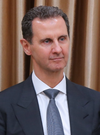
Quotes About Kanan Makiya
Gain deeper perspective through quotes about Kanan Makiya from others.
Ali Allawi on Kanan Makiya
“Kanan will always come down for taking a risk for freedom, for liberation, for emancipation because I think he basically thinks that people are decent and good.”
About Kanan Makiya
Kanan Makiya (born 1949) is an Iraqi-American academic and a professor of Islamic and Middle Eastern Studies at Brandeis University.