Link Copied!
K. R. Narayanan Quotes (1920-2005)
President



About K. R. Narayanan
Kocheril Raman Narayanan (October 27, 1920 – November 9, 2005) was the tenth President of India.
Best K. R. Narayanan Quotes
Shortest
Earliest
Explore our curated collection of the most famous and impactful K. R. Narayanan quotes.


“Communal mobilisation in the long run will not succeed in India because Indian society cannot be mobilized communally. Even the last elections have shown that communities, religious communities, castes did not vote solidly for one party.”
“...the Indian public are weighed down by their problems, and becoming rather insular in their outlook because of their preoccupation with their own problems. We have to rouse them and make them conscious that we can progress only as a part of the world and as a part of Asia.”
“...education is the key to health and to social progress. The fact is that the average expectation of life of an Indian has doubled since Independence. In fact, it is 61 years now as against 28 or 30 years at the time of Independence.”

“There is an over-informing force which ultimately brings all the ideas together, and does not allow one idea alone to run away with India. And, that has been demonstrated again and again in terms of conflicting ideologies, conflicting social systems, political systems, all these somehow have been contained in an overall framework.”
“India has been a cauldron of dreams, ideas and aspirations of the humankind and this is a distinctive character of India, and India in that sense represents the world in miniature. If a system can succeed in India, it will indicate the possibility of such success in the world as a whole.”

“As the President of India, I had lots of experiences that were full of pain and helplessness. There were occasions when I could do nothing for people and for the nation. These experiences have pained me a lot. They have depressed me a lot. I have agonised because of the limitations of power. Power and the helplessness surrounding it are a peculiar tragedy, in fact.”

“India had entertained throughout its history a world vision. Our sages and seers had thought in terms of the happiness of the whole of humanity. And Jawaharlal Nehru had designed a foreign policy for India with a world outlook. We have a role to play in the world and a message to give to the world. We can do that effectively only if we are united and strong and in peace and friendship with our neighbours.”

“I see and understand both the symbolic as well as the substantive elements of my life. Sometimes I visualise it as a journey of an individual from a remote village on the sidelines of society to the hub of social standing. But at the same time I also realise that my life encapsulates the ability of the democratic system to accommodate and empower marginalised sections of society.”

“There are many serious political scientists who have argued that the age of sovereignty is over. They want a frontier less, borderless world, and that is a very dangerous philosophy which may suit the most developed and powerful countries of the world, and not those who are small and developing. That is why we are rather cautious in our liberalisation policy. We went ahead in certain sectors. We went rather slowly in other sectors. And, this has helped us.”
“Relations between India and China have been founded on solid understanding of the affinities of the cultures and the civilizations of the two countries, and the imperatives of peaceful co-existence and close co-operation between them in the post-cold war world. I believe that India-China friendship and co-operation could be a shining example of concord and harmonious relations between two ancient civilizations and the foundation for a just, stable and peaceful world order.”

“It is the slow, but steady movement of the lower classes along the scale of the class system. But it has been very very slow. It took 2000 years. But it is something which is going on, and something which is almost spectacular in certain sectors today -assertion of the backward classes, of scheduled castes, of women.”
“That the nation has found a consensus for its highest office in some one who has sprung from the grass-roots of our society and grown up in the dust and heat of this sacred land is symbolic of the fact that the concerns of the common man have now moved to the centre stage of our social and political life. It is this larger significance of my election rather than any personal sense of honour that makes me rejoice on this occasion.”

“At the time of Indian independence, I was a student in London and we the students, Indian students, celebrated the moment with great joy. I was exhilarated, no doubt, but the shadow of two events fell upon the jollifications. First, a sense of disappointment that the imperialist objective of dividing India has been achieved. And second, the communal carnage which took place in India cast another shadow on it.”

“Many in India fought against some of the ideas of changing our patent system. And we have signed the World Trade Organisation Treaty but still we have to safeguard ourselves because, many of the developed countries are, though they have signed the same WTO, but they are not practising it; anti-dumping measures they are adopting very liberally, as also tariff, non-tariff barriers. So we have to carefully argue within the WTO system our case.”

“The Nehruvian dream [the ending of poverty and ignorance and inequality of opportunity.] today has become a pungent necessity, inescapable necessity. In 1947, one could say that it was a dream, it was Gandhi's dream also. But now it has become an inescapable necessity for us to translate that dream into practice. And I think that dream cannot be abandoned. We have to pursue it and pursue it in realistic terms. I see that India can do it. And India must do it.”
“Strength of our culture to some extent has compensated the lack of formal education. That is how people could vote wisely in these massive elections. After all, it was the ordinary, illiterate people who exercised the votes in the general elections we have had. And they seem to have voted with sufficient knowledge of affairs, of their interests, and this is remarkable indeed. But that is no substitute for education, and we have to have a full formal education for all our people and what I find sad is that it is an eminently practicable thing to do; in a matter of 5 years, India could be made literate.”
“Economic liberalisation is a world phenomenon. Socialist countries, capitalist countries, all of them, have to take to liberalisation. The liberalisation took place first in Britain, then in the United States under President Reagan, these were not liberalising from a socialist system. I think it is because of the stage of economy which the world has reached at present and the stage of technology. At every historical and technological and economic age there are policies which would be suitable for that period and countries. We have to adopt policies, dictated by the circumstances and the necessities of the time.”

“Democracy, I think, has established itself firmly [In India] and, there is no doubt that, it is one of the irremovable things which we have achieved. But it is facing problems at every stage. I don't think that we can rest on our oars in the maintenance of democracy. Critical times are facing us. There are, there will be, crises, that we will have to face. So constant adjustments of even democracy to changing times, is necessary. But one thing is clear. The idea of democracy and institutions of democracy that we have built up, have survived the test of critical situations.”

“Indian civilization has had the unique honour of demonstrating to the world that man does not live by bread alone. Cultural, moral and spiritual values have always formed the fundamental underpinning of our society. To-day there are signs of the weakening of the moral and spiritual fibre in our public life with evils of communalism, Casteismcasteism, violence and corruption bedevilling our society.”
“By some mysterious reason, there is no difficulty for a man in illtreating a woman, and this is something amazing. Everybody loves his mother, sisters and relatives etc, but still, with all this there is this callous attitude and ill-treatment of women. So women's movements are necessary. One thing which is forgotten in India is the transformation of the attitude of men. It is in this field that active work has to be done. We all preach to women that they should assert themselves. But on the other hand we don't tell sufficient early, strongly, to the male that they should behave well, their attitude should change. I have no doubt that even the women's reservation [bill] will be finally adopted.”

“...when we became independent and Nehru spelt out his vision, we appeared to be the leader, we are the only country which articulated the aspirations of Asia as a whole for the first time. Then other countries, small countries, big countries have come up asserting themselves, and, but still we are, because of our economic development, everybody knows that India is geographically a big central chunk of Asia and that it is an expanding economy. It is a technologically progressing society and in every field it is making a mark. And everybody recognises this role of India, but I think we have to articulate our position in Asia, in a new way, in a new set of circumstances that would appeal to everybody.”
K. R. Narayanan Quotes by Topic
Find exactly what you are looking for by browsing this categorized list of K. R. Narayanan quotes by topic.
K. R. Narayanan on Miniature
“India has been a cauldron of dreams, ideas and aspirations of the humankind and this is a distinctive character of India, and Indian in that sense represents the world in miniature. If a system can succeed in India, it will indicate the possibility of success in the world as a whole.”

K. R. Narayanan on Arabic
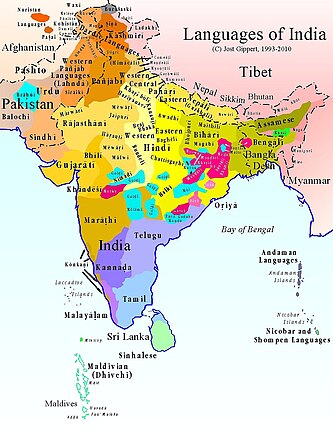
“Further, in the Devanagari script, there exists a possible common script for other Indian languages, though one cannot be too optimistic about the practicability of adopting it in view of the tenacious attachment of people to their own particular scripts. Another link language which flourished in India was Persian which in its interplay with Sanskrit and Arabic produced the great modern language, Urdu. Here again, beginning as a court or camp language, it blossomed into a modern tongue of the people, linking India linguistically with the Arab world.”

K. R. Narayanan on Languages of India
“I am not suggesting that Sanskrit be pushed aggressively, but only that the advantage of this great classical language, which is understood by more people in India than Greek and Latin in modern Europe, must be appreciated and utilized. Further, in the Devanagari script, there exists a possible common script for other Indian languages, though one cannot be too optimistic about the practicability of adopting it in view of the tenacious attachment of people to their own particular scripts. Another link language which flourished in India was Persian which in its interplay with Sanskrit and Arabic produced the great modern language, Urdu. Here again, beginning as a court or camp language, it blossomed into a modern tongue of the people, linking India linguistically with the Arab world.”
Quotes About K. R. Narayanan
Gain deeper perspective through quotes about K. R. Narayanan from others.
Haresh Pandya in on K. R. Narayanan
“In 1949, he joined the Indian Foreign Service at the suggestion of Jawaharlal Nehru. His ambassadorships in China (1976-78, the first since the 1962 Sino-Indian war) and the US (1980-83) led to better understanding. Serving in Rangoon, Burma, in the early 1950s, he married Daw Tint Tint, who later adopted the name Usha and became an Indian citizen, the only woman of foreign origin to have become first lady of India.”
The Hindu Editor in on K. R. Narayanan 2 quotes
“In place of the mechanical approach adopted by his predecessors, he established principles [as President of the Republic] and procedures that were transparent and based on sound constitutional reasoning.”
Venkitesh Ramakrishnan in on K. R. Narayanan 2 quotes
“When he stood in queues to vote in general elections, a few people criticised this practice, saying that a head of state should not be seen taking sides in an election. But the overwhelming response was that the President had done a service to democracy.”
Source on K. R. Narayanan 4 quotes
“Logic - was a tool in his intellectual armoury but it was not a cold, calculating logic. There was space in it for something beyond the algebraic piling of reason upon reason.”
About K. R. Narayanan
Kocheril Raman Narayanan (October 27, 1920 – November 9, 2005) was the tenth President of India.