Link Copied!
K. C. Aryan Quotes (1919-2002)
Painter
About K. C. Aryan
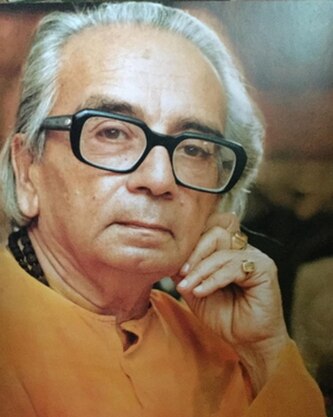
K. C. Aryan (1919-2002) was a painter, sculptor, art historian and a pioneer-collector of folk and tribal art objects; and founder of the Museum of Folk and Tribal Art, better known as K.C. Aryan's Home of Folk Art, founded in 1984 in Gurgaon.
Quotes About K. C. Aryan
Gain deeper perspective through quotes about K. C. Aryan from others.
KC Aryan Aryan quoted on K. C. Aryan
“Aryan points out how his father, the late painter KC Aryan, was the first to preserve and promote these unknown paintings from Jodhpur. He says, “Nobody knew of their existence. These large-size paintings were done by pujaris from Jodhpur, and not by painters in a conventional manner. They are so vibrant and have now become extinct.”
Elst K. on K. C. Aryan 3 quotes
“K.C. Aryan was a productive painter himself. Twice his paintings drew attention from the authorities. A few years before independence, during a communal riot in the North-West Frontier Province, Muslims paraded a group of Hindu women naked. He depicted the scene. The British authorities feared it would stoke resentment among the Hindus, so he had to abscond from their searchlight for a while. Come independence, his community of Lahore Hindus was partly massacred and partly had to flee for their lives. In Delhi, near Kashmiri gate, they had to live as refugees. Aryan’s painting of the refugee camp was titled: “Freedom comes for us.” Prime Minister Jawaharlal Nehru was not amused.”
Elst on K. C. Aryan
“K.C. Aryan (born 11 August 1919, died 2002), a Partition refugee from West Panjab, was an accomplished painter. He founded the Museum for Tribal and Folk Art in Gurgaon, still functioning today. He saved plenty of old paintings, sculptures and other arts & crafts objects for posterity by collecting them in his museum or donating them to more established institutions. In 1970, he presented to the publishing unit of Punjabi University Patiala a manuscript with illustrations for a book, 100 Years Survey of Panjab Painting (1841-1941). It was eventually published by the PUP in 1975, but only in mutilated form. The Senate Board of the University objected to the inclusion of one particular painting, and threatened that if it were published, the grant for the whole publishing unit would be stopped. The contentious painting, executed by a Pahari painter in the mid-19th century (whose name, as often in folk art, remains unknown), shows a topi-wearing Guru Nanak praying to Lord Vishnu. The Board took the Sikh-separatist line that that Sikhism has nothing to do with Hinduism, and that the Gurus are above the “Brahminical” gods. It is the same line that keeps the Sikh establishment from calling their central shrine, the Hari Mandir (“Vishnu temple”), by its proper name, hiding it behind the superficial designation “Golden Temple” or the Moghul term “Darbar Sahib”. It is also why in 1922 they threw out from the Hari Mandir the murti-s that had been worshipped there ever since Arjan Dev inaugurated it in 1604. Sikh identity as a separate religion, rather than as one of the many panth-s in the Hindu commonwealth, is based on a denial of history, and this requires a constant censoring of unwilling historical data: names changed, scriptures doctored, murti-s thrown away, the publication of a painting suppressed.”
Dr. Subhasini Aryan on K. C. Aryan
““Greater preference is accorded to sculptures and paintings created by artists attached to the royal courts over the centuries. Artefacts from rural and tribal India were outrightly dismissed as everyday objects, completely unfit for display in a museum. No one, with the sole exception of K.C. Aryan, realised that the illiterate and unknown craftsmen living and working in the countryside had nurtured our artistic and cultural heritage since hoary antiquity, and preserved it from getting lost for good.””
BN Aryan on K. C. Aryan 2 quotes
““This long neglect and wanton destruction of our folk and tribal heritage has been compounded by the unsavoury process of pseudo-intellectual distinction between ‘arts’ and ‘crafts’, or ‘fine arts’ and ‘decorative arts’. This led to a profound loss of repositories of rich ethnographic material bearing centuries-old expression and symbolism.””
About K. C. Aryan
K. C. Aryan (1919-2002) was a painter, sculptor, art historian and a pioneer-collector of folk and tribal art objects; and founder of the Museum of Folk and Tribal Art, better known as K.C. Aryan's Home of Folk Art, founded in 1984 in Gurgaon.