Henrik Ibsen's depiction of Julian in Emperor and Galilean (1873)
“
That power which circumstances placed in my hands, and which is an emanation of divinity, I am conscious of having used to the best of my skill. I have never wittingly wronged any one. For this campaign there were good and sufficient reasons; and if some should think that I have not fulfilled all expectations, they ought in justice to reflect that there is a mysterious power without us, which in a great measure governs the issue of human undertakings.
— Henrik Ibsen
What It Means
This is a placeholder explanation generated by the low-overhead model. It interprets "That power which circumstances placed in my hands, and which is an emanation of divinity, I am conscious of having used to the best of my skill. I have never wittingly wronged any one. For this campaign there were good and sufficient reasons; and if some should think that I have not fulfilled all expectations, they ought in justice to reflect that there is a mysterious power without us, which in a great measure governs the issue of human undertakings." in the context of "Henrik Ibsen's depiction of Julian in Emperor and Galilean (1873)" to mean that wisdom is timeless.
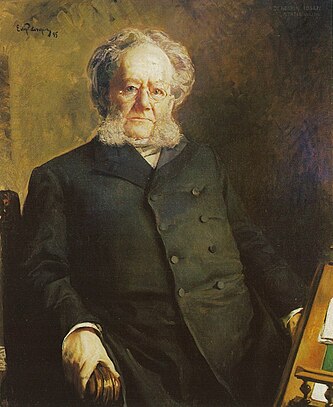
Source: Wikiquote: "Julian (emperor)" (Quotes about Julian)
The 'What it means' explanation text was generated by Google Gemini Flash (accessed January 18, 2026). https://gemini.google.com/app
Tags
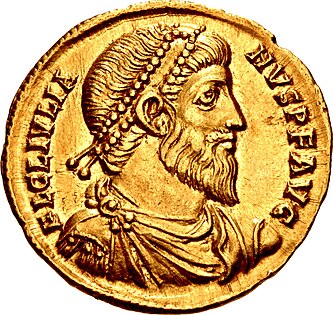
About Julian (emperor)
Flavius Claudius Julianus (c. 331 – 26 June 363) was a Hellenistic philosopher, military leader, Roman emperor, and satirist, often referred to as Julian the Apostate because of his rejection of formal Christian doctrines, and opposition to their spread, and sometimes as Julian II, to distinguish him from Didius Julianus. Sometimes now referred to as Julian the Philosopher, he was the last pagan Augustus of the Roman Empire.
View all quotes →