Julian is without question one of antiquity's most enigmatic and compelling figures. He attempted the impossible by restoring for a moment the pagan gods to their former primacy, a feat which horrified the Christians and probably perplexed rather than inspired the majority of surviving pagans. Julian was a man of action and at the same time a man whose spiritual life brought him close to many of the most extreme wonder-workers of his age. … Anyone who believes that he can write an authoritative biography of Julian, with everything tidily in place from beginning to end, is deluding himself. The historian can only grope toward the facts about the man and his reign, but the groping is its own reward.
What It Means
This is a placeholder explanation generated by the low-overhead model. It interprets "Julian is without question one of antiquity's most enigmatic and compelling figures. He attempted the impossible by restoring for a moment the pagan gods to their former primacy, a feat which horrified the Christians and probably perplexed rather than inspired the majority of surviving pagans. Julian was a man of action and at the same time a man whose spiritual life brought him close to many of the most extreme wonder-workers of his age. … Anyone who believes that he can write an authoritative biography of Julian, with everything tidily in place from beginning to end, is deluding himself. The historian can only grope toward the facts about the man and his reign, but the groping is its own reward." in the context of "G. W. Bowersock, in Julian the Apostate (1978), Prologue, p. xi" to mean that wisdom is timeless.
Tags
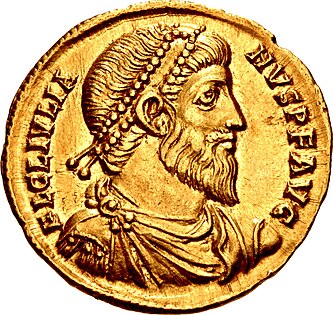
About Julian (emperor)