“
I too am not one to despise myths, and I am far from rejecting those that have the right tendency; indeed I am of the same opinion as you and your admired, or rather the universally admired, Plato. He also often conveyed a serious lesson in his myths.
— Julian (emperor)
What It Means
This is a placeholder explanation generated by the low-overhead model. It interprets "I too am not one to despise myths, and I am far from rejecting those that have the right tendency; indeed I am of the same opinion as you and your admired, or rather the universally admired, Plato. He also often conveyed a serious lesson in his myths." in the context of "" to mean that wisdom is timeless.
Source:
The 'What it means' explanation text was generated by Google Gemini Flash (accessed January 18, 2026). https://gemini.google.com/app
Tags
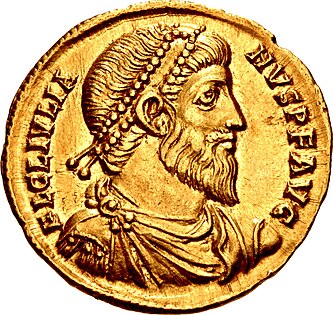
About Julian (emperor)
Flavius Claudius Julianus (c. 331 – 26 June 363) was a Hellenistic philosopher, military leader, Roman emperor, and satirist, often referred to as Julian the Apostate because of his rejection of formal Christian doctrines, and opposition to their spread, and sometimes as Julian II, to distinguish him from Didius Julianus. Sometimes now referred to as Julian the Philosopher, he was the last pagan Augustus of the Roman Empire.
View all quotes →