Link Copied!
Julia Ward Howe Quotes (1819-1910)
Writer, Poet, Activist


About Julia Ward Howe
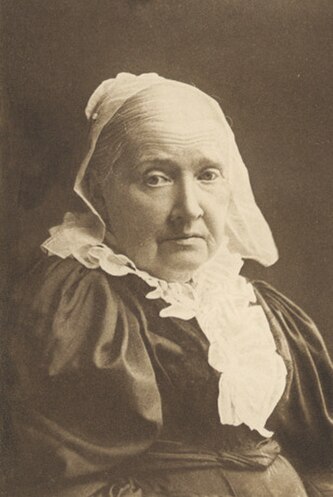
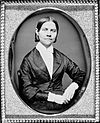
Julia Ward Howe (27 May 1819 – 17 October 1910) was an American writer, poet, and social activist.
Best Julia Ward Howe Quotes
Shortest
Earliest
Explore our curated collection of the most famous and impactful Julia Ward Howe quotes.
“Arise then... women of this day!
Arise, all women who have hearts!”
Arise, all women who have hearts!”

“The strokes of the pen need deliberation as much as the sword needs swiftness.”

“We, the women of one country,
Will be too tender of those of another country
To allow our sons to be trained to injure theirs.”
Will be too tender of those of another country
To allow our sons to be trained to injure theirs.”
“Weave no more silks, ye Lyons looms,
To deck our girls for gay delights!
The crimson flower of battle blooms,
And solemn marches fill the nights.”
To deck our girls for gay delights!
The crimson flower of battle blooms,
And solemn marches fill the nights.”
“I have seen him in the watchfires of a hundred circling camps
They have builded him an altar in the evening dews and damps,
I have read His righteous sentence by the dim and flaring lamps,
His Day is marching on.”
They have builded him an altar in the evening dews and damps,
I have read His righteous sentence by the dim and flaring lamps,
His Day is marching on.”
“I have read a fiery gospel writ in burnished rows of steel:
"As ye deal with my contemners, so with you my grace shall deal;
Let the Hero, born of woman, crush the serpent with his heel,
Since God is marching on."”
"As ye deal with my contemners, so with you my grace shall deal;
Let the Hero, born of woman, crush the serpent with his heel,
Since God is marching on."”
“In the beauty of the lilies Christ was born across the sea,
With a glory in his bosom that transfigures you and me:
As he died to make men holy, let us die to make men free,
While God is marching on.”
With a glory in his bosom that transfigures you and me:
As he died to make men holy, let us die to make men free,
While God is marching on.”
“He has sounded forth the trumpet that shall never call retreat;
He is sifting out the hearts of men before His judgment-seat.
Oh! be swift my soul to answer him, be jubilant my feet!
Our God is marching on.”
He is sifting out the hearts of men before His judgment-seat.
Oh! be swift my soul to answer him, be jubilant my feet!
Our God is marching on.”

“"What is the harvest of thy saints,
O God! who dost abide?
Where grow the garlands of thy chiefs
In blood and sorrow dyed?
What have thy servants for their pains?"
"This only — to have tried."”
O God! who dost abide?
Where grow the garlands of thy chiefs
In blood and sorrow dyed?
What have thy servants for their pains?"
"This only — to have tried."”
“I need not stand here to repeat any definition of what religion is. I think you will all say that it is aspiration, the pursuit of the divine in the human; the sacrifice of everything to duty for the sake of God and of humanity and of our own individual dignity.”

“There is no hell like that of a selfish heart, and there is no misfortune so great as that of not being able to make a sacrifice. These two thoughts come to me strongly this morning. It is something to have learned these truths so that we can never again doubt them.”
“The flag of our stately battles, not struggles of wrath and greed,
Its stripes were a holy lesson, its spangles a deathless creed:
'T was red with the blood of freemen and white with the fear of the foe;
And the stars that fight in their courses 'gainst tyrants its symbols know.”
Its stripes were a holy lesson, its spangles a deathless creed:
'T was red with the blood of freemen and white with the fear of the foe;
And the stars that fight in their courses 'gainst tyrants its symbols know.”
“From this Parliament let some valorous, new, strong, and courageous influence go forth, and let us have here an agreement of all faiths for one good end, for one good thing— really for the glory of God, really for the sake of humanity from all that is low and animal and unworthy and undivine.”

“Here I am, in Quaker surroundings, whose restful simplicity is most congenial to me. I feel here the earnest desire for genuine growth and culture which founds a slow but sure success. I am confirmed in my division of human energies. Ambitious people climb, but faithful people build.”

“In the name of womanhood and humanity, I earnestly ask
That a general congress of women without limit of nationality,
May be appointed and held at someplace deemed most convenient
And the earliest period consistent with its objects,
To promote the alliance of the different nationalities,
The amicable settlement of international questions,
The great and general interests of peace.”
“"We can teach no virtues we do not practice," occurred to me this afternoon; for without learning by experience how a virtue is acquired, how can we teach any one to acquire it? I thought of this in connection with the experience of undutiful children. By the working of this natural cause, they will not make their own children dutiful. Read in Luke of the angel which appeared to Christ in Gethsemane, strengthening Him. We all see this angel when we say truly, "Thy will, not mine, be done."”

“From the bosom of a devastated Earth a voice goes up with
Our own. It says: "Disarm! Disarm!
The sword of murder is not the balance of justice."
Blood does not wipe our dishonor,
Nor violence indicate possession.
As men have often forsaken the plough and the anvil
At the summons of war,
Let women now leave all that may be left of home
For a great and earnest day of counsel.
Let them meet first, as women, to bewail and commemorate the dead.
Let them solemnly take counsel with each other as to the means
Whereby the great human family can live in peace...”
“I feel that I must attack this creed of blood, which does much to keep up the cruel and sanguinary views of barbarous ages about God and man. Will take text, "Flesh and blood cannot inherit the kingdom of heaven." Show that Christ brought a new interest into the world; a new vision of God, the loving one; a new view of man, the hopeful and universal one; his death in its character the seal to his perfect life. But we are saved by his doctrine, by the same spirit which animated his life, — we are saved by his life, not by his death, except as it was the necessary moral sequence of his life.”

“I think nothing is religion which puts one individual absolutely above others, and surely nothing is religion which puts one sex above another. Religion is primarily our relation to the Supreme, to God himself. It is for him to judge; it is for him to say where we belong, who is highest and who is not; of that we know nothing. And any religion which will sacrifice a certain set of human beings for the enjoyment or aggrandizement or advantage of another is no religion. It is a thing which may be allowed, but it is against true religion. Any religion which sacrifices women to the brutality of men is no religion.”

“While the war was still in progress, I was visited by a sudden feeling of the cruel and unnecessary character of the contest. It seemed to me a return to barbarism, the issue having been one which might easily have been settled without bloodshed. The question forced itself upon me, "Why do not the mothers of mankind interfere in these matters, to prevent the waste of that human life of which they alone bear and know the cost?" I had never thought of this before. The august dignity of motherhood and its terrible responsibilities now appeared to me in a new aspect, and I could think of no better way of expressing my sense of these than that of sending forth an appeal to womanhood throughout the world, which I then and there composed.”
“Before I say anything on my own account, I want to take the word Christianity back to Christ himself, back to that mighty heart whose pulse seems to throb through the world to-day, that endless fountain of charity out of which I believe has come all true progress and all civilization that deserves the name. As a woman I do not wish to dwell upon any trait of exclusiveness in the letter which belongs to a time when such exclusiveness perhaps could not be helped, and which may have been put in where it was not expressed. I go back to that great Spirit which contemplated a sacrifice for the whole of humanity. That sacrifice is not one of exclusion, but of an infinite and endless and joyous inclusion. And I thank God for it.”
Julia Ward Howe Quotes by Topic
Find exactly what you are looking for by browsing this categorized list of Julia Ward Howe quotes by topic.
Julia Ward Howe on Deliberation
“The strokes of the pen need deliberation as much as the sword needs swiftness.”
Julia Ward Howe on Metamorphosis
“In the nature of things, I must soon lose sight of this sense of constant metamorphosis whose limits bound our human life.”
Julia Ward Howe on Freedom
Julia Ward Howe on War
What Julia Ward Howe Said About Others
Discover personal opinions Julia Ward Howe shared regarding contemporaries.
Julia Ward Howe on Lucy Stone
“In all action taken under her supervision, Mrs. Stone was most careful that the main issue should be constantly presented and kept in view. While welcoming every reform which gave evidence of the ethical progress of the community, she yet held to woman suffrage, pure and simple, as the first condition upon which the new womanhood should base itself. Efforts were often made to entangle suffrage with the promise of endless reforms in various directions, but firm as Cato, who always repeated his words that Carthage should be destroyed, Lucy Stone always asked for suffrage because it is right and just that women should have it...What had she to work with? A silver voice, a winning smile, the great gift of a persuasive utterance. What had she to work from? A deep and abiding faith in divine justice and in man’s ability to follow its laws and to execute its decrees...Here she was still debarred the right to cast her ballot at the polls, but lo, in the blue urn of heaven her life was received, one glowing and perfect vote for the rights of women, for the good of humanity, for the Kingdom of god on earth.”
Quotes About Julia Ward Howe
Gain deeper perspective through quotes about Julia Ward Howe from others.
Catherine Breshkovsky April on Julia Ward Howe
“see how long Julia Ward Howe lived, and many other old ladies of whom I have read with delight in the American papers. How beautiful it is to see and hear an old woman of eighty or ninety addressing words of love and reason to the young generation!”
Michael Bronski on Julia Ward Howe
“Julia Ward Howe, although this was only discovered about ten years ago, wrote a novel about a hermaphrodite--a man/woman who loves both men and women--that most critics now think was her own meditation on her husband's bisexuality.”

About Julia Ward Howe
Julia Ward Howe (27 May 1819 – 17 October 1910) was an American writer, poet, and social activist.