Judith Butler on Nonviolence
← Back to Judith Butler Profile
“Nonviolence is not an absolute principle, but an open-ended struggle with violence and its countervailing forces.”
“Nonviolence does not necessarily emerge from a pacific or calm part of the soul. Very often it is an expression of rage, indignation, and aggression.”
“We must fight those who are committed to destruction, without replicating their destructiveness. Understanding how to fight in this way is the task and the bind of a nonviolent ethics and politics.”
“There is no practice of nonviolence that does not negotiate fundamental ethical and political ambiguities, which means that “nonviolence” is not an absolute principle, but the name of an ongoing struggle.”
“If nonviolence is to make sense as an ethical and political position, it cannot simply repress aggression or do away with its reality; rather, nonviolence emerges as a meaningful concept precisely when destruction is most likely or seems most certain.”
“When the world presents as a force field of violence, the task of nonviolence is to find ways of living and acting in that world such that violence is checked or ameliorated, or its direction turned, precisely at moments when it seems to saturate that world and offer no way out.”
“The ethical stand of nonviolence has to be linked to a commitment to radical equality. And more specifically, the practice of nonviolence requires an opposition to biopolitical forms of racism and war logics that regularly distinguish lives worth safeguarding from those that are not—populations conceived as collateral damage, or as obstructions to policy and military aims.”
“Nonviolence has now to be understood less as a moral position adopted by individuals in relation to a field of possible action than as a social and political practice undertaken in concert, culminating in a form of resistance to systemic forms of destruction coupled with a commitment to world building that honors global interdependency of the kind that embodies ideals of economic, social, and political freedom and equality.”
“Nonviolence is an ideal that cannot always be fully honored in the practice. To the degree that those who practice nonviolent resistance put their body in the way of an external power, they make physical contact, presenting a force against force in the process. Nonviolence does not imply the absence of force or of aggression. It is, as it were, an ethical stylization of embodiment, replete with gestures and modes of non-action, ways of becoming an obstacle, of using the solidity of the body and its proprioceptive object field to block or derail a further exercise of violence.”
“The ethical and political practice of nonviolence can rely neither exclusively on the dyadic encounter, nor on the bolstering of a prohibition; it requires a political opposition to the biopolitical forms of racism and war logics that rely on phantasmagoric inversions that occlude the binding and interdependent character of the social bond. It requires, as well, an account of why, and under what conditions, the frameworks for understanding violence and nonviolence, or violence and self-defense, seem to invert into one another, causing confusion about how best to pin down those terms.”
“Nonviolence is perhaps best described as a practice of resistance that becomes possible, if not mandatory, precisely at the moment when doing violence seems most justified and obvious. In this way, it can be understood as a practice that not only stops a violent act, or a violent process, but requires a form of sustained action, sometimes aggressively pursued. So, one suggestion I will make is that we can think of nonviolence not simply as the absence of violence, or as the act of refraining from committing violence, but as a sustained commitment, even a way of rerouting aggression for the purposes of affirming ideals of equality and freedom.”
“It is precisely because we can destroy that we are under an obligation to know why we ought not to do it, and to summon those countervailing powers that curb our destructive capacity. Nonviolence becomes an ethical obligation by which we are bound precisely because we are bound to one another; it may well be an obligation against which we rail, in which ambivalent swings of the psyche make themselves known, but the obligation to preserve the social bond can be resolved upon without precisely resolving that ambivalence. The obligation not to destroy each other emerges from, and reflects, the vexed social form of our lives, and it leads us to reconsider whether self-preservation is not linked to preserving the lives of others.”
“Nonviolence does not make sense without a commitment to equality. The reason why nonviolence requires a commitment to equality can best be understood by considering that in this world some lives are more clearly valued than others, and that this inequality implies that certain lives will be more tenaciously defended than others. If one opposes the violence done to human lives—or, indeed, to other living beings—this presumes that it is because those lives are valuable. Our opposition affirms those lives as valuable. If they were to be lost as a result of violence, that loss would be registered as a loss only because those lives were affirmed as having a living value, and that, in turn, means we regard those lives as worthy of grief.”
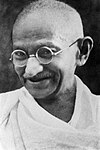
“Nonviolent forms of resistance can and must be aggressively pursued. A practice of aggressive nonviolence is, therefore, not a contradiction in terms. Mahatma Gandhi insisted that satyagraha, or “soul force,” his name for a practice and politics of nonviolence, is a nonviolent force, one that consists at once of an “insistence on truth … that arms the votary with matchless power.” To understand this force or strength, there can be no simple reduction to physical strength. At the same time, “soul force” takes an embodied form. The practice of “going limp” before political power is, on the one hand, a passive posture, and is thought to belong to the tradition of passive resistance; at the same time, it is a deliberate way of exposing the body to police power, of entering the field of violence, and of exercising an adamant and embodied form of political agency. It requires suffering, yes, but for the purposes of transforming both oneself and social reality.”
“Nonviolence is less a failure of action than a physical assertion of the claims of life, a living assertion, a claim that is made by speech, gesture, and action, through networks, encampments, and assemblies; all of these seek to recast the living as worthy of value, as potentially grievable, precisely under conditions in which they are either erased from view or cast into irreversible forms of precarity. When the precarious expose their living status to those powers that threaten their very lives, they engage a form of persistence that holds the potential to defeat one of the guiding aims of violent power—namely, to cast those on the margins as dispensable, to push them beyond the margins into the zone of non-being, to use Fanon’s phrase. When nonviolent movements work within the ideals of radical egalitarianism, it is the equal claim to a livable and grievable life that serves as a guiding social ideal, one that is fundamental to an ethics and politics of nonviolence that moves beyond the legacy of individualism. It opens up a new consideration of social freedom as defined in part by our constitutive interdependency. An egalitarian imaginary is required for such a struggle—one that reckons with the potential for destruction in every living bond. Violence against the other is, in this sense, violence against oneself, something that becomes clear when we recognize that violence assaults the living interdependency that is, or should be, our social world.”