Josiah Royce on John Bunyan
← Back to Josiah Royce Profile
“The case to which I wish to call attention is... that of the author of the Pilgrim's Progress. The principal document concerned is John Bunyan's remarkable confession, entitled Grace Abounding to the Chief of Sinners, an autobiographical statement which Bunyan wrote... "for the support of the weak and tempted people of God." This little book... ranking... second only to the great Pilgrim's Progress itself. As a record of human experience, the Grace Abounding will never lose its charm, both for lovers of religious biography, and for admirers of honesty, of sincerity, and of simple pathos. Nothing that can be said as to the psychological significance... will ever detract from the worth of the book, even when viewed... as a "support" for the "weak and tempted."”
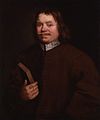
“Bunyan... had at one time a decidedly heavy and morbid burden to bear. But, like many another nervous sufferer of the "strong type" (Koch's starker Typus), Bunyan carried this burden with heroic perseverance, and in the end won the mastery over it by a most instructive kind of self-discipline. In view of this fact, a clearer recognition of the nature of the burden, from the psychological point of view, rather helps than hinders our admiration for the author's genius, and our respect for his unconquerable manhood. It is this sort of case, in fact, that renders the study of the nervous disorders so frequently associated with genius, a pursuit adapted, in very many instances, not to cheapen our sense of the dignity of genius, but to heighten our reverence for the strength that could contend, as some men of genius have done, with their disorders, and that could conquer the nervous "Apollyon" on his own chosen battle-ground.”
“This is unquestionably a fairly typical case of a now often described mental disorder. The peculiarities of this special case lie largely in the powers of the genius who here suffered from the malady. A man of sensitive and probably somewhat burdened nervous constitution... is beset in childhood with frequent nocturnal and even diurnal terrors of a well-known sort. In youth, after an early marriage, under the strain of a life of poverty and of many religious anxieties, he develops elementary insistent dreads of a conscientious sort, and later a collection of habits of questioning and of doubt which... pass the limits of the normal. His general physical condition meanwhile failing, in a fashion that... appears to be of some neurasthenic type, there now appears a highly systematized mass of [painful] insistent motor-speech functions... accompanied with still more of the same fears, doubts, and questions. After [an] extended period, after one remission, and also after a decided change in the... insistent elements, the malady... rapidly approaches a dramatic crisis, which leaves the sufferer... in [an extended, but somewhat benign] condition of secondary melancholic depression... a depression from which, owing to a deep change of... mental habits, and [improved] physical condition, he... emerges cured, although with... his greatest enemy—systematized insistent impulses. This entire morbid experience has lasted some four years. Henceforth, under a skillful self-imposed mental regimen, this man, although always a prey to elementary insistent temptations and to fits of deep depression of mood, has no return of his more systematized disorders, and endures heavy burdens of work and of fortune with excellent success. Such is the psychological aspect of a story whose human and spiritual interest is and remains of the very highest.”