Link Copied!
Joseph Strutt Quotes (1749-1802)
Poet
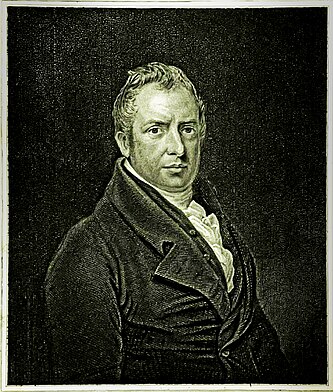

About Joseph Strutt
Joseph Strutt (October 27, 1749 – October 16, 1802) was an English poet, antiquarian, and engraver. Among his publications was an 1801 guide, The Sports and Pastimes of the People of England.
Best Joseph Strutt Quotes
Shortest
Earliest
Explore our curated collection of the most famous and impactful Joseph Strutt quotes.

“When the bow and the sling were laid aside in favour of the gun, prudence naturally forbade the putting an instrument of so dangerous a nature into the hands of children; they however provided themselves a substitute for the gun...”

“The Norman minstrel Tallefer, before the commencement of the battle at Hastings, cast his lance into the air three times, and caught it by the head in such a surprising manner, that the English thought it was done by the power of enchantment.”
“The pipe-call, mentioned by Burton, is noticed under a different denomination by Chaucer; "Lo," says he, "the birde is begyled with the merry voice of the foulers' whistle, when it is closed in your nette," --alluding to the deceptive art of the bird-catchers in his time.”

“According to the ritual of the Romish church, the bells were not only blessed and exorcised, but baptized as those above mentioned, and anointed with holy oil. After these ceremonies had passed it was believed that the evil spirits lurking in the air might be driven away by their sound.”
“Dio Nicæus, an ancient author, speaking of the inhabitants of the northern parts of this island, tells us, they were a fierce and barbarous people, who tilled no ground, but lived upon the depredations they committed in the southern districts, or upon the food they procured by hunting.”
“I have seen a man in London, who I believe is now living, ring twelve bells at one time; two of them were placed upon his head, he held two in each hand, one was affixed to each of his knees, and two upon each foot; all of which he managed with great adroitness, and performed a vast variety of tunes.”
“The discontinuation of bodily exercises afforded a proportionable quantity of leisure time for the cultivation of the mind; so that the manners of mankind were softened by degrees, and learning, which had been so long neglected, became fashionable, and was esteemed an indispensable mark of a polite education.”
“The romantic notions of chivalry appear to have lost their vigour towards the conclusion of the fifteenth century, especially in this country, where a continued series of intestine commotions employed the exertions of every man of property, and real battles afforded but little leisure to exercise the mockery of war.”
“One great part of the joculator's profession was the teaching of bears, apes, horses, dogs, and other animals, to imitate the actions of men, to tumble, to dance, and to perform a variety of tricks, contrary to their nature; and sometimes he learned himself to counterfeit the gestures and articulations of the brutes.”
“Shove-groat, named also Slyp-groat, and Slide-thrift, are sports occasionally mentioned by the writers of the sixteenth and seventeenth centuries, and probably were analogous to the modern pastime called Justice Jervis, or Jarvis, which is confined to common pot-houses, and only practiced by such as frequent the tap-rooms.”
“The "time of grace" begins at Midsummer, and lasteth to Holyrood-day. The fox may be hunted from the Nativity to the Annunciation of our Lady; the roebuck from Easter to Michaelmas; the roe from Michaelmas to Candlemas; the hare from Michaelmas to Midsummer; the wolf as the fox; and the boar from the Nativity to the Purification of our Lady.”
“It is indeed said that Edmund, king of the East Angles, was shot to death with arrows by the Danes; but, if this piece of history be correct, it is no proof that they used the bow as a weapon of war. The action itself might be nothing more than a wanton piece of cruelty; and cruelty seems to have been a prominent feature in the character of those lawless plunderers.”

“The chimney-sweepers of London have also singled out the first of May for their festival; at which time they parade the streets in companies, disguised in various manners. Their dresses are usually decorated with gilt paper, and other mock fineries; they have their shovels and brushes in their hands, which they rattle one upon the other; and to this rough music they jump about in imitation of dancing.”

“If a gentleman, or an inferior thane, killed a stag in the king's forests, he was degraded from his rank; if a ceorl, or husbandman, committed the same offence, he was reduced to slavery; and if a slave killed one, he suffered death. Magistrates were appointed, in every county, or shire, to put these laws in execution, and under them were appointed inferior officers or gamekeepers, whose province it was to apprehend the offenders.”
“It has before been observed that this author is very severe upon most of the popular sports; but in justice to him I may add, that similar complaints have been exhibited against the church-ales and wakes in times greatly anterior to his existence. And, indeed, if we look at the wakes and fairs as they are conducted in the present day, I trust we shall not hesitate to own that they are by no means proper schools for the improvement of the public morals.”

“The grand fauconnier of France was an officer of great eminence; his annual salary was four thousand florins; he was attended by fifty gentlemen, and fifty assistant falconers; he was allowed to keep three hundred hawks, he licensed every vender of hawks in France, and received a tax upon every bird sold in that kingdom, and even within the verge of the court; and the king never rode out upon any occasion of consequence without this officer attending upon him.”

“The universality of card-playing in the reign of this monarch is evident from a prohibitory statute being necessary to prevent apprentices from using cards except in the Christmas holidays, and then only in their masters' houses…But this moderation, I apprehend, was by no means general, for several contemporary writers are exceedingly severe in their reflections upon the usage of cards, which they rank with dice, and consider both as destructive to morality and good order.”
“Bull and bear-baiting is not encouraged by persons of rank and opulence in the present day; and when practiced, which rarely happens, it is attended only by the lowest and most despicable part of the people; which plainly indicates a general refinement of manners and prevalency of humanity among the moderns; on the contrary, this barbarous pastime was highly relished by the nobility in former ages, and countenanced by persons of the most exalted rank, without exception even of the fair sex.”
“The laws of chivalry required that every knight should pass through two offices: the first was a page; and, at the age of fourteen, he was admitted an esquire. The office of the esquire consisted of several departments; the esquire for the body, the esquire of the chamber, the esquire of the stable, and the carving esquire; the latter stood in the hall at dinner, carved the different dishes, and distributed them to the guests. Several of the inferior officers had also their respective esquires.”

“Chaucer, in his Canterbury Tales, makes the monk much better skilled in riding and hunting, than in divinity. The same poit, afterwards, in the Ploughman's Tale, takes occasion to accuse the monks of pride, because they rode on coursers like knights, having their hawks and hounds with them. In the same tale he severely reproaches the priests for their dissolute manners, saying, that many of them thought more upon hunting with their dogs, and blowing the horn, than of the service they owed to God.”

“If it be granted that the Britons, generally speaking, were expert in hunting, it is still uncertain what animals were obnoxious to the chase; we know however, at least, that the hare was not anciently included; for Cæser tells us, "the Britons did not eat the flesh of hares, notwithstanding the island abounded with them." And this abstinence, he adds, arose from a principle of religion; which principle, no doubt, prevented them from being worried to death: a cruelty reserved for more enlightened ages.”
What Joseph Strutt Said About Others
Discover personal opinions Joseph Strutt shared regarding contemporaries.
Joseph Strutt on Henry VIII of England
“Henry VIII not only countenanced the practice of military pastimes by permitting them to be exercised without restraint but also endeavoured to make them fashionable by his own example. Hall assures us, that, even after his accession to the throne, he continued daily to amuse himself in archery, casting of the bar, wrestling, or dancing, and frequently in tilting, tourneying, fighting at the barriers with swords, and battle-axes, and such like martial recreations, in most of which there were few that could excel him. His leisure time he spent in playing at the recorders, flute, and virginals, in a setting of songs, singing and making of ballads. He was also exceedingly fond of hunting, hawking, and other sports of the field; and indeed his example so far prevailed, that hunting, hawking, riding the great horse, charging dexterously with the lance at the tilt, leaping, and running, were necessary accomplishments for a man of fashion.”

About Joseph Strutt
Joseph Strutt (October 27, 1749 – October 16, 1802) was an English poet, antiquarian, and engraver. Among his publications was an 1801 guide, The Sports and Pastimes of the People of England.