Link Copied!
Joseph Louis Lagrange Quotes (1736-1813)
Mathematician

About Joseph Louis Lagrange
Joseph-Louis Lagrange, comte de l'Empire (January 25, 1736 – April 10, 1813) was an Italian-French mathematician and astronomer who made important contributions to all fields of analysis and number theory and to classical and celestial mechanics.
Best Joseph Louis Lagrange Quotes
Shortest
Earliest
Explore our curated collection of the most famous and impactful Joseph Louis Lagrange quotes.
“It took them only an instant to cut off that head, but France may not produce another like it in a century.”
“Newton was the greatest genius that ever existed, and the most fortunate, for we cannot find more than once a system of the world to establish.”
“As long as algebra and geometry proceeded along separate paths, their advance was slow and their applications limited. But when these sciences joined company, they drew from each other fresh vitality and thenceforward marched on at a rapid pace toward perfection.”
“I cannot say whether I will still be doing geometry ten years from now. It also seems to me that the mine has maybe already become too deep and unless one finds new veins it might have to be abandoned. Physics and chemistry now offer a much more glowing richness and much easier exploitation. Also, the general taste has turned entirely in this direction, and it is not impossible that the place of Geometry in the Academies will someday become what the role of the Chairs of Arabic at the universities is now.”
“An ancient writer said that arithmetic and geometry are the wings of mathematics; I believe one can say without speaking metaphorically that these two sciences are the foundation and essence of all the sciences which deal with quantity. Not only are they the foundation, they are also, as it were, the capstones; for, whenever a result has been arrived at, in order to use that result, it is necessary to translate it into numbers or into lines; to translate it into numbers requires the aid of arithmetic, to translate it into lines necessitates the use of geometry.”
“We have already various treatises on Mechanics, but the plan of this one is entirely new. I intend to reduce the theory of this Science, and the art of solving problems relating to it, to general formulae, the simple development of which provides all the equations necessary for the solution of each problem. I hope that the manner in which I have tried to attain this object will leave nothing to be desired. No diagrams will be found in this work. The methods that I explain require neither geometrical, nor mechanical, constructions or reasoning, but only algebraical operations in accordance with regular and uniform procedure. Those who love Analysis will see with pleasure that Mechanics has become a branch of it, and will be grateful to me for having thus extended its domain.”
Joseph Louis Lagrange Quotes by Topic
Find exactly what you are looking for by browsing this categorized list of Joseph Louis Lagrange quotes by topic.
Joseph Louis Lagrange on History of calculus 2 quotes
“That method [of infinitesimals] has the great inconvenience of considering quantities in the state in which they cease, so to speak, to be quantities; for though we can always well conceive the ratio of two quantities, as long as they remain finite, that ratio offers the to mind no clear and precise idea, as soon as its terms become, the one and the other, nothing at the same time.”

Joseph Louis Lagrange on Unification in science and mathematics
“As long as algebra and geometry travelled separate paths their advance was slow and their applications limited. But when these two sciences joined company, they drew from each other fresh vitality and thenceforward marched on at a rapid pace towards perfection. It is to Descartes that we owe the application of algebra to geometry,—an application which has furnished the key to the greatest discoveries in all branches of mathematics.”
Joseph Louis Lagrange on Arithmetic
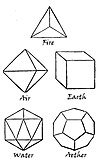
“An ancient writer said that arithmetic and geometry are the wings of mathematics; I believe one can say without speaking metaphorically that these two sciences are the foundation and essence of all the sciences which deal with quantity. Not only are they the foundation, they are also, as it were, the capstones; for, whenever a result has been arrived at, in order to use that result, it is necessary to translate it into numbers or into lines; to translate it into numbers requires the aid of arithmetic, to translate it into lines necessitates the use of geometry.”
What Joseph Louis Lagrange Said About Others
Discover personal opinions Joseph Louis Lagrange shared regarding contemporaries.
Joseph Louis Lagrange on Isaac Newton
“Newton was the greatest genius that ever existed, and the most fortunate, for we cannot find more than once a system of the world to establish.”

Joseph Louis Lagrange on René Descartes
“As long as algebra and geometry travelled separate paths their advance was slow and their applications limited. But when these two sciences joined company, they drew from each other fresh vitality and thenceforward marched on at a rapid pace towards perfection. It is to Descartes that we owe the application of algebra to geometry,—an application which has furnished the key to the greatest discoveries in all branches of mathematics.”

Quotes About Joseph Louis Lagrange
Gain deeper perspective through quotes about Joseph Louis Lagrange from others.
W. W. Rouse Ball on Joseph Louis Lagrange
“The great masters of modern analysis are Lagrange, Laplace, and Gauss, who were contemporaries. It is interesting to note the marked contrast in their styles. Lagrange is perfect both in form and matter, he is careful to explain his procedure, and though his arguments are general they are easy to follow. Laplace on the other hand explains nothing, is indifferent to style, and, if satisfied that his results are correct, is content to leave them either with no proof or with a faulty one. Gauss is as exact and elegant as Lagrange, but even more difficult to follow than Laplace, for he removes every trace of the analysis by which he reached his results, and studies to give a proof which while rigorous shall be as concise and synthetical as possible.”
Augustus De Morgan on Joseph Louis Lagrange
“Lagrange, in one of the later years of his life, imagined that he had overcome the difficulty [of the parallel axiom]. He went so far as to write a paper, which he took with him to the Institute, and began to read it. But in the first paragraph something struck him which he had not observed : he muttered II faut que fy songe encore, and put the paper in his pocket.”

Johann Wolfgang von Goethe on Joseph Louis Lagrange
“The mathematician is perfect only in so far as he is a perfect being, in so far as he perceives the beauty of truth; only then will his work be thorough, transparent, comprehensive, pure, clear, attractive and even elegant. All this is necessary to resemble Lagrange.”

John Mason Good on Joseph Louis Lagrange
“Lagrange, struck with the circumstance that the calculus had never given any inequalities but such as were periodical, applied himself to the investigation of a general question, from which he found by a method peculiar to himself and independent of any approximation, that the inequalities produced by the mutual action of the planets must in effect be all periodical; that the periodical changes are confined within narrow limits; that none of the planets ever has been or ever can be a comet moving in a very eccentric orbit; but that the planetary system oscillates as it were round a medium state from which it never deviates far: that amid all the changes which arise from the mutual actions of the planets, two things remain perpetually the same, viz. the length of the greater axis of the ellipse which the planet describes, and its periodical time round the sun; or, which is the same thing, the mean distance of each planet from the sun and its mean motion remain constant. The plane of the orbit varies, the species of the ellipse and its eccentricity change, but never, by any means whatever, the greater axis of the ellipse, or the time of the entire revolution of the planet. The discovery of this great principle, which we may consider as the bulwark that secures the stability of our system, and excludes all access to confusion and disorder, must render the name of Lagrange for ever memorable in science, and ever revered by those who delight in the contemplation of whatever is excellent and sublime. After Newton's discovery of the elliptic orbits of the planets from gravitation, Langrange's discovery of their periodical inequalities is, without doubt, the noblest truth in physical astronomy, and in respect of the doctrine of final causes, it may truly be regarded as the greatest of all.”
E. W. Hobson on Joseph Louis Lagrange
“Who has studied the works of such men as Euler, Lagrange, Cauchy, Riemann, Sophus Lie, and Weierstrass, can doubt that a great mathematician is a great artist? The faculties possessed by such men, varying greatly in kind and degree with the individual, are analogous with those requisite for constructive art. Not every mathematician possesses in a specially high degree that critical faculty which finds its employment in the perfection of form, hi conformity with the ideal of logical completeness; but every great mathematician possesses the rarer faculty of constructive imagination.”

About Joseph Louis Lagrange
Joseph-Louis Lagrange, comte de l'Empire (January 25, 1736 – April 10, 1813) was an Italian-French mathematician and astronomer who made important contributions to all fields of analysis and number theory and to classical and celestial mechanics.