Link Copied!
Joseph de Maistre Quotes (1753-1821)
Philosopher, Writer, King


































About Joseph de Maistre
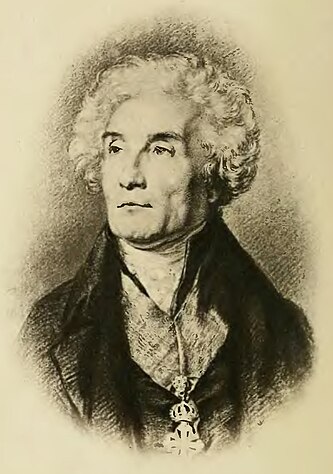
Joseph de Maistre (1 April 1753 – 26 February 1821) was a Savoyard philosopher, writer, lawyer and diplomat who advocated social hierarchy and monarchy in the period immediately following the French Revolution. Despite his close personal and intellectual ties with France, Maistre was throughout his life a subject of the Kingdom of Sardinia, which he served as a member of the Savoy Senate (1787–1792), ambassador to Russia (1803–1817) and minister of state to the court in Turin (1817–1821).
Best Joseph de Maistre Quotes
Shortest
Earliest
Explore our curated collection of the most famous and impactful Joseph de Maistre quotes.
“Nothing great has great beginnings.”
“Every nation gets the government it deserves.”

“If Providence erases, it is no doubt in order to write.”

“Men gather the clouds, and then they complain of the tempests that follow.”
“Creating difficulties for himself for the pleasure of resolving them is a strange human mania.”
“The eighteenth century, which distrusted itself in nothing, as a matter of course, hesitated in nothing.”
“A woman can only be superior as a woman; as soon as she wants to emulate man, she is nothing but an ape.”

“There is no chastisement that does not purify; there is no disorder that eternal love does not turn against the principle of evil.”

“Providence has already begun the punishment of the guilty; more than sixty regicides, the most guilty among them, have already died a violent death.”
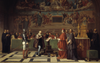
“During the last three centuries, there has been, by virtue of the Inquisition, a greater enjoyment of peace, and happiness, in Spain, than in the other nations of Europe.”
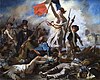
“This makes me think that the French Revolution is a great epoch and that its consequences, in all kinds of ways, will be felt far beyond the time of its explosion and the limits of its birthplace.”
“Unhappily, history proves that war is, in a certain sense, the habitual state of mankind, which is to say that human blood must flow without interruption somewhere or other on the globe, and that for every nation, peace is only a respite.”
“There is nothing but violence in the universe; but we are spoiled by a modern philosophy that tells us all is good, whereas evil has tainted everything, and in a very real sense, all is evil, since nothing is in its place.”

“Providence has given the French nation precisely two instruments, two arms, so to speak, with which it stirs up the world – the French language and the spirit of proselytism that forms the essence of the nation's character.”

“Now the real fruits of human nature – the arts, sciences, great enterprises, lofty conceptions, manly virtues – are due especially to the state of war. […] In a word, we can say that blood is the manure of the plant we call genius.”
“When we reflect, that the Inquisition, by its restrictions, and authority, would have prevented the French revolution,—it is hard to say, whether the Sovereign, who, wholly, and without reserve, gave up this instrument, would not, in reality, be doing an injury to humanity.”

Joseph de Maistre Quotes by Topic
Find exactly what you are looking for by browsing this categorized list of Joseph de Maistre quotes by topic.
Joseph de Maistre on French Revolution 5 quotes
“What distinguishes the French Revolution and makes it an event unique in history is that it is radically bad. No element of good disturbs the eye of the observer; it is the highest degree of corruption ever known; it is pure impurity.”

Joseph de Maistre on War 4 quotes
“Now the real fruits of human nature – the arts, sciences, great enterprises, lofty conceptions, manly virtues – are due especially to the state of war. […] In a word, we can say that blood is the manure of the plant we call genius.”

Joseph de Maistre on Legislators 3 quotes
“The art of the legislator is not to make a people free, but free enough.”

Joseph de Maistre on Government 2 quotes
“Every nation gets the government it deserves.”
Joseph de Maistre on Punishment 2 quotes
“All pain is a punishment, and every punishment is inflicted for love as much as for justice.”

Joseph de Maistre on Genius 2 quotes
“Genius does not seem to derive any great support from syllogisms. Its carriage is free; its manner has a touch of inspiration. We see it come, but we never see it walk.”
Joseph de Maistre on Inquisition 2 quotes
“During the last three centuries, there has been, by virtue of the Inquisition, a greater enjoyment of peace, and happiness, in Spain, than in the other nations of Europe.”
Joseph de Maistre on King 2 quotes
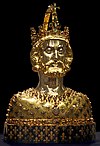
“'Long live the king,' cry the loving and the loyal, beside themselves with joy. 'Long live the king,' responds the republican hypocrite in dire terror. What does it matter? There is only one cry. And the king is crowned.”
Joseph de Maistre on Monarchy 2 quotes
“Monarchy is a centralized aristocracy. At all times and in all places, the aristocracy commands. Whatever form is given to governments, birth and wealth always obtain the first rank, and nowhere do they rule more harshly than where their dominion is not founded on law. But in a monarchy, the king is the centre of this aristocracy; it is true that the aristocracy rules as elsewhere; but it rules in the king’s name, or if you will, the king is guided by the knowledge of the aristocracy.”

Joseph de Maistre on Beginnings
“Nothing great has great beginnings.”
What Joseph de Maistre Said About Others
Discover personal opinions Joseph de Maistre shared regarding contemporaries.
Joseph de Maistre on Veil
Joseph de Maistre on Women
“A woman can only be superior as a woman; as soon as she wants to emulate man, she is nothing but an ape.”

Joseph de Maistre on Louis XIV of France
Joseph de Maistre on Ignatius of Loyola
“[Friends of order] are often heard to say that the Jesuits must be reestablished. Without disputing the merits of this order, one must say that this suggestion for their reestablishment indicates a lack of deep reflection. Do they mean that St Ignatius is at hand ready to serve our purposes? If the order were destroyed, perhaps it could be reestablished by some lay brother with the same inspiration that created it originally, but all the sovereigns in the world would never succeed.”

Joseph de Maistre on Jean-Jacques Rousseau
“The sentiment that dominates all Rousseau’s works is a certain plebeian anger that excites him against every kind of superiority. The energetic submission of the wise man bends nobly under the indispensable empire of social distinctions, and never does be appear greater than when he bows; but Rousseau has nothing at all of this loftiness. Weak and surly, he spent his life spouting insults to the great, as he would have offered the same to the people if he had been born a great lord.
His character explains his political heresies; it is not the truth that inspires him, it is ill humour. Whenever he sees greatness and especially hereditary greatness, he fumes and loses his faculty of reason; this happens to him especially when he is talking about aristocratic government.”

Quotes About Joseph de Maistre
Gain deeper perspective through quotes about Joseph de Maistre from others.
Carolina Armenteros on Joseph de Maistre
“Maistre attached the highest importance to the ‘philosophy of style,’ and averred that he who knew not how to write was incapable of metaphysics. The violence that pervades his thought and rhetoric is a response to the primal experience of the ‘terrible truth of evil,’ while his style incarnates his sense of the mystery of history. By conveying his thought in what Baudelaire called ‘rockets,’ Maistre provoked his readers into a state of fascination and shock.”
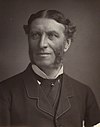
Matthew Arnold on Joseph de Maistre
“Joseph de Maistre is another of those men whose word, like that of Burke, has vitality. In imaginative power he is altogether inferior to Burke. On the other hand his thought moves in closer order than Burke's, more rapidly, more directly; he has fewer superfluities. Burke is a great writer, but Joseph de Maistre's use of the French language is more powerful, more thoroughly satisfactory, than Burke's use of the English. It is masterly; it shows us to perfection of what that admirable instrument, the French language, is capable.”
Charles Baudelaire on Joseph de Maistre
“De Maistre and Edgar Poe taught me how to think.”

Isaiah Berlin on Joseph de Maistre
“Behind the classical mask, behind the classical façade, behind the air of the Grand Seigneur, behind the orthodox Thomism, behind the official complete subservience to the monarchy of his day, which was nothing very splendid or impressive, there is in Maistre something much wilder, much more romantic, much more terrifying. He reminds one of someone like d'Annunzio or Nietzsche – not to seek for later examples. In that way he resembled Rousseau. Just as Rousseau imposed a kind of Calvinist logical strait-jacket upon what was really a kind of burning private lunacy, so Maistre imposes an official legitimist Catholic framework upon what is really a deeply violent, deeply revolutionary inner passion.”

George Bertrin on Joseph de Maistre
“[Maistre's] style is strong, lively, picturesque; animation and good humour temper his dogmatic tone, and he might even be deemed eloquent. It is true he does not disdain paradox in his thinking or violence in his language: he has neither the moderation nor the serenity of Bossuet. But he possesses a wonderful facility in exposition, precision of doctrine, breadth of learning, and dialectical power. He influenced the age that followed him: he dealt Gallicanism such decisive blows that it never rose again. In a word, he was a great and virtuous man, a profound thinker, and one of the finest writers of that French language of which his works are a distinguished ornament.”
John Bowle on Joseph de Maistre
“The very tension increased his imaginative power, infused his nervous and brilliant style. Here is no Hobbesian materialism, but something far more sensitive. For de Maistre is at heart a romantic, shuddering at the collapse of the aristocratic order to which he belonged, horrified at the blasphemy of philosophers who believed that man could make himself. […] Of all the figures who have contributed to the colourful tapestry of political ideas he is one of the most singular.”
Emil Cioran on Joseph de Maistre
“[Maistre] fulminated as a littérateur, even as a grammarian, and his frenzies not only failed to diminish his passion for the correct and elegant formulation but augmented it even more. An epileptic temperament infatuated with the trifles of the Word: trances and boutades, convulsions and bagatelles, grace and a foaming mouth – everything combined to compose a pamphleteering universe at whose heart he harried ‘error’ with blows of invective, those ultimatums of impotence.”

About Joseph de Maistre
Joseph de Maistre (1 April 1753 – 26 February 1821) was a Savoyard philosopher, writer, lawyer and diplomat who advocated social hierarchy and monarchy in the period immediately following the French Revolution. Despite his close personal and intellectual ties with France, Maistre was throughout his life a subject of the Kingdom of Sardinia, which he served as a member of the Savoy Senate (1787–1792), ambassador to Russia (1803–1817) and minister of state to the court in Turin (1817–1821).