Link Copied!
John Wyndham Quotes (1903-1969)
Writer
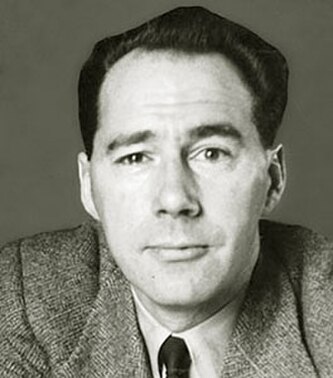
About John Wyndham
John Wyndham Parkes Lucas Beynon Harris (/ˈwɪndəm/; 10 July 1903 – 11 March 1969) was an English science fiction writer best known for his works published under the pen name John Wyndham, although he also used other combinations of his names, such as John Beynon and Lucas Parkes. Some of his works were set in post-apocalyptic landscapes. His best known works include The Day of the Triffids (1951) and The Midwich Cuckoos (1957), the latter filmed twice as Village of the Damned.
Best John Wyndham Quotes
Shortest
Earliest
Explore our curated collection of the most famous and impactful John Wyndham quotes.


“Everybody ought to be able to swim.”

“One man's trash is another's souvenir.”
“the vitriol throwers and smilers with knives”
“"There's nothing more egocentric than a cat."”
“"Most births are painful, and none are pretty."”
“"Doubtless the first arrow did not kill a lion."”
“Primitive man would see every one of us as a magician.”

“Keeping to an unnecessary programme requires resolution.”


“'The dove is not a coward to fear the hawk; it is simply wise.'”
“"We shan't get homo superior without any birth-pangs."”
“I don't understand women. Nobody does. Least of all themselves.”
“Unfortunately there were certain persons with elastic principles.”

“You owe it to your self-respect to spend a lot of money on yourself.”
“"Dying," observed the doctor, "is such a very ordinary thing to do."”
John Wyndham Quotes by Topic
Find exactly what you are looking for by browsing this categorized list of John Wyndham quotes by topic.
John Wyndham on Vegetable
“And now, folks, get a load of what our cameraman found in Ecuador. Vegetables on vacation! You've only seen this kind of thing after a party, but down in sunny Ecuador they see it any time—and no hangover to follow! Monster plants on the march! Say, now, that's given me a big idea! Maybe if we can educate our potatoes right we can fix it so they'll walk right into the pot.”

John Wyndham on Pregnancy
“It's all very well for a man. He doesn't have to go through this sort of thing, and he knows he never will have to. How can he understand? He may mean as well as a saint, but he's always on the outside. He can never know what it's like, even in a normal way — so what sort of an idea can he have of this? Of how it feels to lie awake at night with the humiliating knowledge that one is simply being used? — As if one were not a person at all, but just a kind of mechanism, a sort of incubator.”

John Wyndham on Nature
“I wonder if a sillier and more ignorant catachresis than "Mother Nature" was ever perpetrated? It is because Nature is ruthless, hideous, and cruel beyond belief that it was necessary to invent civilisation. One thinks of wild animals as savage, but the fiercest of them begins to look almost domesticated when one considers the viciousness required of a survivor in the sea; as for the insects, their lives are sustained only by intricate processes of fantastic horror. There is no conception more fallacious than the sense of cosiness implied by 'Mother Nature.' Each species must strive to survive, and that will do, by every means in its power, however foul—unless the instinct to survive is weakened by conflict with another instinct.”
John Wyndham on Wild animal suffering
“I wonder if a sillier and more ignorant catachresis than "Mother Nature" was ever perpetrated? It is because Nature is ruthless, hideous, and cruel beyond belief that it was necessary to invent civilisation. One thinks of wild animals as savage, but the fiercest of them begins to look almost domesticated when one considers the viciousness required of a survivor in the sea; as for the insects, their lives are sustained only by intricate processes of fantastic horror. There is no conception more fallacious than the sense of cosiness implied by 'Mother Nature.' Each species must strive to survive, and that will do, by every means in its power, however foul—unless the instinct to survive is weakened by conflict with another instinct.”
John Wyndham on Insect suffering
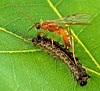
“I wonder if a sillier and more ignorant catachresis than "Mother Nature" was ever perpetrated? It is because Nature is ruthless, hideous, and cruel beyond belief that it was necessary to invent civilisation. One thinks of wild animals as savage, but the fiercest of them begins to look almost domesticated when one considers the viciousness required of a survivor in the sea; as for the insects, their lives are sustained only by intricate processes of fantastic horror. There is no conception more fallacious than the sense of cosiness implied by 'Mother Nature.' Each species must strive to survive, and that will do, by every means in its power, however foul—unless the instinct to survive is weakened by conflict with another instinct.”
What John Wyndham Said About Others
Discover personal opinions John Wyndham shared regarding contemporaries.
John Wyndham on Mother Nature
“I wonder if a sillier and more ignorant catachresis than "Mother Nature" was ever perpetrated? It is because Nature is ruthless, hideous, and cruel beyond belief that it was necessary to invent civilisation. One thinks of wild animals as savage, but the fiercest of them begins to look almost domesticated when one considers the viciousness required of a survivor in the sea; as for the insects, their lives are sustained only by intricate processes of fantastic horror. There is no conception more fallacious than the sense of cosiness implied by 'Mother Nature.' Each species must strive to survive, and that will do, by every means in its power, however foul—unless the instinct to survive is weakened by conflict with another instinct.”

About John Wyndham
John Wyndham Parkes Lucas Beynon Harris (/ˈwɪndəm/; 10 July 1903 – 11 March 1969) was an English science fiction writer best known for his works published under the pen name John Wyndham, although he also used other combinations of his names, such as John Beynon and Lucas Parkes. Some of his works were set in post-apocalyptic landscapes. His best known works include The Day of the Triffids (1951) and The Midwich Cuckoos (1957), the latter filmed twice as Village of the Damned.