Link Copied!
John Wesley Quotes (1703-1791)
Leader, Theologian








About John Wesley
John Wesley (28 June 1703 – 2 March 1791) was a British cleric, theologian, and evangelist, who was a leader of a revival movement within the Church of England known as Methodism. The societies he founded became the dominant form of the independent Methodist movement that continues to this day.
Best John Wesley Quotes
Shortest
Earliest
Explore our curated collection of the most famous and impactful John Wesley quotes.





“The greater the share the people have in government, the less liberty, civil or religious, does a nation enjoy.”

“I would do anything that is in my power toward the extirpation of that trade which is a scandal not only to Christianity but humanity.”

“In returning I read a very different book, published by an honest Quaker, on that execrable sum of all villanies, commonly called the Slave-trade.”

“Let us put away our sins; the real ground of all our calamities! Which never will or can be thoroughly removed, till we fear God and honour the King.”
“When Poetry thus keeps its place as the handmaiden of piety, it shall attain not a poor perishable wreath, but a crown that fadeth not away.”

“The longer I live, the larger allowances I make for human infirmities. I exact more from myself, and less from others. Go thou and do likewise!”
“Passion and prejudice govern the world; only under the name of reason. It is our part, by religion and reason joined, to counteract them all we can.”

“That if the best of Kings—the most virtuous of Queens—and the most perfect Constitution, could make any nation happy, the people of this country had every reason to think themselves so.”
“... We now come to a numerous tribe, that seem to make approaches even to humanity; that bear an awkward resemblance to the human form, and discover the same faint efforts at intellectual sagacity.”

“Let it be observed, that slovenliness is no part of religion; that neither this, nor any text of Scripture, condemns neatness of apparel. Certainly this is a duty, not a sin. Cleanliness is indeed next to godliness.”

“Every one, though born of God in an instant, yet undoubtedly grows by slow degrees.
• Variant: Every one, though born of God in an instant, yea, and sanctified in an instant, yet undoubtedly grows by slow degrees.”
• Variant: Every one, though born of God in an instant, yea, and sanctified in an instant, yet undoubtedly grows by slow degrees.”
“I believe that He was made man, joining the human nature with the divine in one person; being conceived by the singular operation of the Holy Ghost, and born of the blessed Virgin Mary, who, as well after as before she brought Him forth, continued a pure and unspotted virgin.”
“Reading this morning a tract wrote by a poor African, I was particularly struck by that circumstance, that a man who has a black skin, being wronged or outraged by a white man, can have no redress; it being a law in all our Colonies that the oath of a black against a white goes for nothing. What villany is this!”
“I observed, "Love is the fulfilling of the law, the end of the commandment." It is not only "the first and great" command, but all the commandments in one. "Whatsoever things are just, whatsoever things are pure, if there be any virtue, if there be any praise," they are all comprised in this one word, love.”

“Animals of the MONKEY class are furnished with hands instead of paws; their ears, eyes, eye-lids, lips, and breasts, are like those of mankind; their internal conformation also bears some distant likeness; and the whole offers a picture that may mortify the pride of such as make their persons the principal objects of their admiration.”

“I can by no means approve the scurrility and contempt with which the Romanists have often been treated. I dare not rail at, or despise, any man: much less those who profess to believe in the same Master. But I pity them much; having the same assurance, that Jesus is the Christ, and that no Romanist can expect to be saved, according to the terms of his covenant.”
“I believe there is no liturgy in the World, either in ancient or modern language, which breathes more of a solid, scriptural, rational Piety, than the Common Prayer of the Church of England. And though the main of it was compiled considerably more than two hundred years ago, yet is the language of it, not only pure, but strong and elegant in the highest degree.”

“The whole matter is this. I have without the least bitterness advanced three reasons why I conceive it is not safe to tolerate the Roman Catholics. But still, I would not have them persecuted; I wish them to enjoy the same liberty, civil and religious, which they enjoyed in England before the late Act was repealed. Meantime I would not have a sword put into their hands; I would not give them liberty to hurt others.”

“Permit me, sir, to give you one piece of advice. Be not so positive; especially with regard to things which are neither easy nor necessary to be determined. When I was young I was sure of everything. In a few years, having been mistaken a thousand times, I was not half so sure of most things as I was before. At present, I am hardly sure of anything but what God has revealed to man.”
“You must immediately drop any preacher that gives any countenance to Nathaniel Ward. While I live I will bear the most public testimony I can to the reality of witchcraft. Your denial of this springs originally from the Deists; and simple Christians lick their spittle. I heartily set them at open defiance.”

“His Majesty's character, then, after all the pains which have been taken to make him odious as well as contemptible remains unimpeached; and therefore cannot be in any degree the cause of the present commotions. His whole conduct both in public and private ever since he began his reign, the uniform tenor of his behaviour, the general course both of his words and actions, has been worthy of an Englishman, worthy of a Christian, and worthy of a King.”
“Beware you are not a fiery, persecuting enthusiast. Do not imagine that God has called you (just contrary to the spirit of Him you style your Master) to destroy men’s lives, and not to save them. Never dream of forcing men into the ways of God. Think yourself, and let think. Use no constraint in matters of religion. Even those who are farthest out of the way never compel to come in by any other means than reason, truth, and love.”

“I deny that villany is ever necessary. It is impossible that it should ever be necessary for any reasonable creature to violate all the laws of justice, mercy, and truth. No circumstances can make it necessary for a man to burst in sunder all the ties of humanity. It can never be necessary for a rational being to sink himself below a brute. A man can be under no necessity of degrading himself into a wolf. The absurdity of the supposition is so glaring, that one would wonder any one can help seeing it.”
“Will any dare to speak against loving the Lord our God with all our heart, and our neighbour as ourselves? against a renewal of heart, not only in part, but in the whole image of God? Who is he that will open his mouth against being cleansed from all pollution both of flesh and spirit; or against having all the mind that was in Christ, and walking in all things as Christ walked? What man, who calls himself a Christian, has the hardiness to object to the devoting, not a part, but all our soul, body, and substance to God?”
“Most of those who gave him this title did not distinguish between a Jacobite and a Tory; whereby I mean ‘one that believes God, not the people, to be the origin of all civil power.’ In this sense he was a Tory; so was my father; so am I. But I am no more a Jacobite than I am a Turk; neither was my brother. I have heard him over and over disclaim that character.”
“Unless the divine power has raised you up to be as Athanasius contra mundum, I see not how you can go through your glorious enterprise in opposing that execrable villany, which is the scandal of religion, of England, and of human nature. Unless God has raised you up for this very thing, you will be worn out by the opposition of men and devils. But if God be for you, who can be against you? Are all of them together stronger than God? O be not weary of well doing! Go on, in the name of God and in the power of His might, till even American slavery (the vilest that ever saw the sun) shall vanish away before it.”
“I do not intend to enter upon the question whether the Americans are in the right or in the wrong. Here all my prejudices are against the Americans; for I am an High Churchman, the son of an High Churchman, bred up from my childhood in the highest notions of passive obedience and non-resistance. And yet, in spite of my long-rooted prejudices, I cannot avoid thinking, if I think at all, these, an oppressed people, asked for nothing more than their legal rights, and that in the most modest and inoffensive manner that the nature of the thing would allow.”
“I plead for the safety of my country—yea, for the children that are yet unborn. ‘But cannot your country be safe unless the Roman Catholics are persecuted for their religion?’ Hold! Religion is out of the question. But I would not have them persecuted at all; I would only have them hindered from doing hurt. I would not put it in their power (and I do not wish that others should) to cut the throats of their quiet neighbours. ‘But they will give security for their peaceable behaviour.’ They cannot while they continue Roman Catholics; they cannot while they are members of that Church which receives the decrees of the Council of Constance, which maintains the spiritual power of the Bishop of Rome or the doctrine of priestly absolution.”

“Beware, lastly, of imagining you shall obtain the end without using the means conducive to it. God can give the end without any means at all; but you have no reason to think He will. Therefore constantly and carefully use all those means which He has appointed to be the ordinary channels of His grace. Use every means which either reason or Scripture recommends, as conducive (through the free love of God in Christ) either to the obtaining or increasing any of the gifts of God. Thus expect a daily growth in that pure and holy religion which the world always did, and always will, call “enthusiasm;” but which, to all who are saved from real enthusiasm, from merely nominal Christianity, is “the wisdom of God, and the power of God;” the glorious image of the Most High; “righteousness and peace;” a “fountain of living water, springing up into everlasting life!””
““And Festus said with a loud voice, Paul, thou art beside thyself.”
Acts 26:24.
And so say all the world, the men who know not God, of all that are of Paul’s religion: of every one who is so a follower of him as he was of Christ. It is true, there is a sort of religion, nay, and it is called Christianity too, which may be practised without any such Imputation, which is generally allowed to be consistent with common sense, —that is, a religion of form, a round of outward duties, performed in a decent, regular manner. You may add orthodoxy thereto, a system of right opinions, yea, and some quantity of heathen morality; and yet not many will pronounce, that “much religion hath made you mad.” But if you aim at the religion of the heart, if you talk of “righteousness, and peace, and joy in the Holy Ghost,” then it will not be long before your sentence is passed, “Thou art beside thyself.””
“Are you a man? Then you should have an human heart. But have you indeed? What is your heart made of? Is there no such principle as Compassion there? Do you never feel another's pain? Have you no Sympathy? No sense of human woe? No pity for the miserable? When you saw the flowing eyes, the heaving breasts, or the bleeding sides and tortured limbs of your fellow-creatures, was you a stone, or a brute? Did you look upon them with the eyes of a tiger? When you squeezed the agonizing creatures down in the ship, or when you threw their poor mangled remains into the sea, had you no relenting? Did not one tear drop from your eye, one sigh escape from your breast? Do you feel no relenting now? If you do not, you must go on, till the measure of your iniquities is full. Then will the Great GOD deal with You, as you have dealt with them, and require all their blood at your hands.”

“The distinguishing marks of a Methodist are not his opinions of any sort. His assenting to this or that scheme of Religion, his embracing any particular set of notions, his espousing the judgment of one man or of another, are all quite wide of the point. Whosoever therefore imagines, that a Methodist is a man of such or such an opinion, is grossly ignorant of the whole affair; he mistakes the truth totally. We believe indeed, that all Scripture is given by the inspiration of God, and herein we are distinguished from Jews, Turks, and Infidels. We believe the written word of God to be the only and sufficient rule, both of Christian faith and practice; and herein we are fundamentally distinguished from those of the Romish church. We believe Christ to be the eternal, supreme God; and herein we are distinguished from the Socinians and Arians. But as to all opinions which do not strike at the root of Christianity, we think and let think. So that whatsoever they are, whether right or wrong, they are no distinguishing marks of a; Methodist.”
“Ever since I heard of it first I felt a perfect detestation of the horrid Slave Trade, but more particularly since I had the pleasure of reading what you have published upon the subject. Therefore I cannot but do everything in my power to forward the glorious design of your Society. And it must be a comfortable thing to every man of humanity to observe the spirit with which you have hitherto gone on. Indeed, you cannot go on without more than common resolution, considering the opposition you have to encounter, all the opposition which can be made by men who are not encumbered with either honour, conscience, or humanity, and will rush on per fasque ne fasque, through every possible means, to secure their great goddess, Interest. Unless they are infatuated in this point also, they will spare no money to carry their cause; and this has the weight of a thousand arguments with the generality of men.”

“It is true, likewise, that the English in general, and indeed most of the men of learning in Europe, have given up all accounts of witches and apparitions, as mere old wives' fables. I am sorry for it; and I willingly take this opportunity of entering my solemn protest against this violent compliment which so many that believe the Bible pay to those who do not believe it. I owe them no such service. I take knowledge these are at the bottom of the outcry which has been raised, and with such insolence spread throughout the nation, in direct opposition not only to the Bible, but to the suffrage of the wisest and best of men in all ages and nations. They well know (whether Christians know it or not), that the giving up witchcraft is, in effect, giving up the Bible; and they know, on the other hand, that if but one account of the intercourse of men with separate spirits be admitted, their whole castle in the air (Deism, Atheism, Materialism) falls to the ground. I know no reason, therefore, why we should suffer even this weapon to be wrested out of our hands. Indeed there are numerous arguments besides, which abundantly confute their vain imaginations. But we need not be hooted out of one; neither reason nor religion require this.”
“It has in all ages been allowed that the communion of saints extends to those in paradise as well as those upon earth as they are all one body united under one Head. And "Can death’s interposing tide / Spirits one in Christ divide?" But it is difficult to say either what kind or what degree of union may be between them. It is not improbable their fellowship with us is far more sensible than ours with them. Suppose any of them are present, they are hid from our eyes, but we are not hid from their sight. They no doubt clearly discern all our words and actions, if not all our thoughts too; for it is hard to think these walls of flesh and blood can intercept the view of an angelic being. But we have in general only a faint and indistinct perception of their presence, unless in some peculiar instances, where it may answer some gracious ends of Divine Providence. Then it may please God to permit that they should be perceptible, either by some of our outward senses or by an internal sense for which human language has not any name. But I suppose this is not a common blessing. I have known but few instances of it. To keep up constant and close communion with God is the most likely means to obtain this also.”

“In order to examine ourselves thoroughly, let the case be proposed in the strongest manner. What, if I were to see a Papist, an Arian, a Socinian casting out devils? If I did, I could not forbid even him, without convicting myself of bigotry. Yea, if it could be supposed that I should see a Jew, a Deist, or a Turk, doing the same, were I to forbid him either directly or indirectly, I should be no better than a bigot still.
O stand clear of this! But be not content with not forbidding any that casts out devils. It is well to go thus far; but do not stop here. If you will avoid all bigotry, go on. In every instance of this kind, whatever the instrument be, acknowledge the finger of God. And not only acknowledge, but rejoice in his work, and praise his name with thanksgiving. Encourage whomsoever God is pleased to employ, to give himself wholly up thereto. Speak well of him wheresoever you are; defend his character and his mission. Enlarge, as far as you can, his sphere of action; show him all kindness in word and deed; and cease not to cry to God in his behalf, that he may save both himself and them that hear him.
I need add but one caution: Think not the bigotry of another is any excuse for your own. It is not impossible, that one who casts out devils himself, may yet forbid you so to do. You may observe, this is the very case mentioned in the text. The Apostles forbade another to do what they did themselves. But beware of retorting. It is not your part to return evil for evil. Another’s not observing the direction of our Lord, is no reason why you should neglect it. Nay, but let him have all the bigotry to himself. If he forbid you, do not you forbid him. Rather labour, and watch, and pray the more, to confirm your love toward him. If he speak all manner of evil of you, speak all manner of good (that is true) of him.”
“As to the word itself, it is generally allowed to be of Greek extraction. But whence the Greek word, enthousiasmos, is derived, none has yet been able to show. Some have endeavoured to derive it from en theoi, in God; because all enthusiasm has reference to him. … It is not improbable, that one reason why this uncouth word has been retained in so many languages was, because men were not better agreed concerning the meaning than concerning the derivation of it. They therefore adopted the Greek word, because they did not understand it: they did not translate it into their own tongues, because they knew not how to translate it; it having been always a word of a loose, uncertain sense, to which no determinate meaning was affixed.
It is not, therefore, at all surprising, that it is so variously taken at this day; different persons understanding it in different senses, quite inconsistent with each other. Some take it in a good sense, for a divine impulse or impression, superior to all the natural faculties, and suspending, for the time, either in whole or in part, both the reason and the outward senses. In this meaning of the word, both the Prophets of old, and the Apostles, were proper enthusiasts; being, at divers times, so filled with the Spirit, and so influenced by Him who dwelt in their hearts, that the exercise of their own reason, their senses, and all their natural faculties, being suspended, they were wholly actuated by the power of God, and “spake” only “as they were moved by the Holy Ghost.”
Others take the word in an indifferent sense, such as is neither morally good nor evil: thus they speak of the enthusiasm of the poets; of Homer and Virgil in particular. And this a late eminent writer extends so far as to assert, there is no man excellent in his profession, whatsoever it be, who has not in his temper a strong tincture of enthusiasm. By enthusiasm these appear to understand, all uncommon vigour of thought, a peculiar fervour of spirit, a vivacity and strength not to be found in common men; elevating the soul to greater and higher things than cool reason could have attained.
But neither of these is the sense wherein the word “enthusiasm” is most usually understood. The generality of men, if no farther agreed, at least agree thus far concerning it, that it is something evil: and this is plainly the sentiment of all those who call the religion of the heart “enthusiasm.” Accordingly, I shall take it in the following pages, as an evil; a misfortune, if not a fault. As to the nature of enthusiasm, it is ,undoubtedly a disorder of the mind; and such a disorder as greatly hinders the exercise of reason. Nay, sometimes it wholly sets it aside: it not only dims but shuts the eyes of the understanding. It may, therefore, well be accounted a species of madness; of madness rather than of folly: seeing a fool is properly one who draws wrong conclusions from right premisses; whereas a madman draws right conclusions, but from wrong premisses. And so does an enthusiast suppose his premisses true, and his conclusions would necessarily follow. But here lies his mistake: his premisses are false. He imagines himself to be what he is not: and therefore, setting out wrong, the farther he goes, the more he wanders out of the way.”
John Wesley Quotes by Topic
Find exactly what you are looking for by browsing this categorized list of John Wesley quotes by topic.
John Wesley on Slavery 4 quotes
“That execrable sum of all villanies commonly called the Slave-trade.”

John Wesley on Love 2 quotes
View all 2 quotes on Love →John Wesley on Wild animal suffering 2 quotes
“[T]here were no birds or beasts of prey; none that destroyed or molested another.”

John Wesley on Socinianism 2 quotes
“We believe Christ to be the eternal, supreme God; and herein we are distinguished from the Socinians and Arians. But as to all opinions which do not strike at the root of Christianity, we think and let think.”
What John Wesley Said About Others
Discover personal opinions John Wesley shared regarding contemporaries.
John Wesley on Martin Luther
“Luther now had too much reason to complain of the impiety and cruelty of the Pope, who he openly declared to be the Man of Sin, and the great Antichrist.”

John Wesley on George III of the United Kingdom
“His Majesty's character, then, after all the pains which have been taken to make him odious as well as contemptible remains unimpeached; and therefore cannot be in any degree the cause of the present commotions. His whole conduct both in public and private ever since he began his reign, the uniform tenor of his behaviour, the general course both of his words and actions, has been worthy of an Englishman, worthy of a Christian, and worthy of a King.”

John Wesley on Bernard Mandeville
“I looked over a celebrated book, "The Fable of the Bees." Till now I imagined there had never appeared in the world such a book as the works of Machiavel: but Dr. Mandeville goes far beyond it. The Italian only recommends a few vices, as useful to some particular men, and on some particular occasions: but the Englishman loves and cordially recommends vice of every kind; not only as useful now and then, but as absolutely necessary, at all times for all communities! Surely Voltaire would hardly have said so much! And even Mr. Sandiman could not have said more!”

Quotes About John Wesley
Gain deeper perspective through quotes about John Wesley from others.
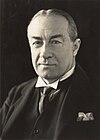
Stanley Baldwin on John Wesley
“Wesley was a great Englishman, first and last...if any one single man stood between England and the monstrous upheavals on the Continent, it was John Wesley... He was typically English: the best native qualities of the Englishman were in him, and were raised to such an extraordinary pitch that they became genius... Historians of that century who filled their pages with Napoleon and had nothing to say of John Wesley now realise that they cannot explain the nineteenth-century England until they can explain Wesley. And I believe it is true to say that you cannot understand twentieth-century America unless you can understand Wesley.”
James Callaghan on John Wesley

George Croft Cell on John Wesley
“He has clearly revealed his consciousness that his teaching was a necessary synthesis of the Protestant ethic of grace with the Catholic ethic of holiness.”
Vivian H. H. Green on John Wesley
“John Wesley, if giving of his affection and help, was also demanding and dominating. His concern for others won their admiration and love, but he found it less easy to create an affectionate mutual relationship. His charm and grace cloaked an iron will; he was granite in aspic.”
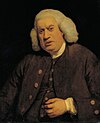
John Hampson on John Wesley 2 quotes
“The figure of Mr Wesley was remarkable. His stature was of the lowest: his habit of body in every period of life, the reverse of corpulent, and expressive of strict temperance, and continual exercise, and notwithstanding his small size, his step was firm, and his appearance, till within a few years of his death, vigorous and muscular. His face, for an old man, was one of the finest we have seen. A clear, smooth forehead, an aquiline nose, an eye the brightest and the most piercing that can be conceived, and a freshness of complection, scarcely ever to be found at his years, and impressive of the most perfect health, conspired to render him a venerable and interesting figure.”





Disputed Quotes
Quotes attributed to John Wesley that are questionable.
Misattributed Quotes
Quotes mistakenly credited to John Wesley
“Catch on fire with enthusiasm and people will come for miles to watch you burn.”
About John Wesley
John Wesley (28 June 1703 – 2 March 1791) was a British cleric, theologian, and evangelist, who was a leader of a revival movement within the Church of England known as Methodism. The societies he founded became the dominant form of the independent Methodist movement that continues to this day.