Link Copied!
John Stuart Mill Quotes (1806-1873)
Philosopher






-100px.jpg)






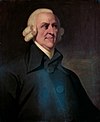




































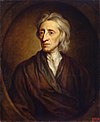
About John Stuart Mill
John Stuart Mill (20 May 1806 – 8 May 1873), also known as J. S. Mill, was an English political philosopher and economist who was an advocate of utilitarianism.
Best John Stuart Mill Quotes
Shortest
Earliest
Explore our curated collection of the most famous and impactful John Stuart Mill quotes.

“A bureaucracy always tends to become a pedantocracy.”

“Landlords... grow richer, as it were in their sleep, without working, risking, or economizing.”
“It is not because men's desires are strong that they act ill; it is because their consciences are weak.”

“Nothing contributes more to nourish elevation of sentiments in a people, than the large and free character of their habitations.”
“Wisdom and contrivance are shown in overcoming difficulties, so there is no place for them in a Being for whom no difficulties exist”
“I well knew that to propose something which would be called extreme, was the true way not to impede but to facilitate a more moderate experiment.”

“Whatever crushes individuality is despotism, by whatever name it may be called, and whether it professes to be enforcing the will of God or the injunctions of men.”
“The utilitarian doctrine is, that happiness is desirable, and the only thing desirable, as an end; all other things being only desirable as means to that end.”
“Since the state must necessarily provide subsistence for the criminal poor while undergoing punishment, not to do the same for the poor who have not offended is to give a premium on crime.”
“Among a people without fellow-feeling, especially if they read and speak different languages, the united public opinion, necessary to the working of the representative government, cannot exist.”
“I regard utility as the ultimate appeal on all ethical questions; but it must be utility in the largest sense, grounded on the permanent interests of man as a progressive being.”
“For my own part, not believing in universal selfishness, I have no difficulty in admitting that Communism would even now be practicable among the elite of mankind, and may become so among the rest.”

“The best state for human nature is that in which, while no one is poor, no one desires to be richer, nor has any reason to fear being thrust back by the efforts of others to push themselves forward.”
“The reasons for legal intervention in favour of children, apply not less strongly to the case of those unfortunate slaves and victims of the most brutal part of mankind, the lower animals.”

“I frequently asked myself, if I could, or if I was bound to go on living, when life must be passed in this manner. I generally answered to myself, that I did not think I could possibly bear it beyond a year.”
“The world would be astonished if it knew how great a proportion of its brightest ornaments—of those most distinguished even in popular estimation for wisdom and virtue—are complete sceptics in religion...”
“It might be plausibly maintained, that in almost every one of the leading controversies, past or present, in social philosophy, both sides were in the right in what they affirmed, though wrong in what they denied.”
“Truth gains more even by the errors of one who, with due study and preparation, thinks for himself, than by the true opinions of those who only hold them because they do not suffer themselves to think.”

“It is also a study peculiarly adapted to an early stage in the education of philosophical students, since it does not presuppose the slow process of acquiring, by experience and reflection, valuable thoughts of their own.”
“[T]he application of algebra to geometry... far more than any of his metaphysical speculations, has immortalized the name of Descartes, and constitutes the greatest single step ever made in the progress of the exact sciences.”
“Persons of genius, it is true, are, and are always likely to be, a small minority; but in order to have them, it is necessary to preserve the soil in which they grow. Genius can only breathe freely in an atmosphere of freedom.”
“..Whenever it ceases to be true that mankind, as a rule, prefer themselves to others, and those nearest to them to those more remote, from that moment Communism is not only practicable, but the only defensible form of society...”
“In my education, as in that of everyone, the moral influences, which are so much more important than all others, are also the most complicated, and the most difficult to specify with any approach to completeness.”

“The only purpose for which power can be rightfully exercised over any member of a civilized community, against his will, is to prevent harm to others. His own good, either physical or moral, is not a sufficient warrant.”
“The great writers to whom the world owes what religious liberty it possesses, have mostly asserted freedom of conscience as an indefeasible right, and denied absolutely that a human being is accountable to others for his religious belief.”
“Human nature is not a machine to be built after a model, and set to do exactly the work prescribed for it, but a tree, which requires to grow and develop itself on all sides, according to the tendency of the inward forces which make it a living thing.”
“I needed to be made to feel that there was real, permanent happiness in tranquil contemplation. Wordsworth taught me this, not only without turning away from, but with a greatly increased interest in the common feelings and common destiny of human beings.”
“All students of man and society who possess that first requisite for so difficult a study, a due sense of its difficulties, are aware that the besetting danger is not so much of embracing falsehood for true, as of mistaking part of the truth for the whole.”
“Whatever we may think or affect to think of the present age, we cannot get out of it; we must suffer with its sufferings, and enjoy with its enjoyments; we must share in its lot, and, to be either useful or at ease, we must even partake its character.”
“Whenever the general disposition of the people is such, that each individual regards those only of his interests which are selfish, and does not dwell on, or concern himself for, his share of the general interest, in such a state of things, good government is impossible.”
“[T]he question was, whether, if the reformers of society and government could succeed in their objects, and every person in the community were free and in a state of physical comfort, the pleasures of life, being no longer kept up by struggle and privation, would cease to be pleasures.”

“I had always heard it maintained by my father, and was myself convinced, that the object of education should be to form the strongest possible associations of the salutary class; associations of pleasure with all things beneficial to the great whole, and of pain with all things hurtful to it.”
“It is better to be a human being dissatisfied than a pig satisfied; better to be Socrates dissatisfied than a fool satisfied. And if the fool, or the pig, are of a different opinion, it is because they only know their own side of the question. The other party to the comparison knows both sides.”
“For I now saw, or thought I saw, what I had always before received with incredulity—that the habit of analysis has a tendency to wear away the feelings: as indeed it has, when no other mental habit is cultivated, and the analysing spirit remains without its natural complements and correctives.”

“It is an uphill race, and a race against time, for if the American form of democracy overtakes us first, the majority will no more relax their despotism than a single despot would. But our only chance is to come forward as Liberals, carrying out the democratic idea, not as Conservatives, resisting it.”
“Stupidity is much the same all the world over. A stupid person's notions and feelings may confidently be inferred from those which prevail in the circle by which the person is surrounded. Not so with those whose opinions and feelings are an emanation from their own nature and faculties.”

“In the course of instruction which I have partially retraced, the point most superficially apparent is the great effort to give, during the years of childhood an amount of knowledge in what are considered the higher branches of education, which is seldom acquired (if acquired at all) until the age of manhood.”
“He who knows only his own side of the case, knows little of that. His reasons may be good, and no one may have been able to refute them. But if he is equally unable to refute the reasons on the opposite side; if he does not so much as know what they are, he has no ground for preferring either opinion.”
“In early times, the great majority of the male sex were slaves, as well as the whole of the female. And many ages elapsed, some of them ages of high cultivation, before any thinker was bold enough to question the rightfulness, and the absolute social necessity, either of the one slavery or of the other.”
“The experiences of this period had two very marked effects on my opinions and character. In the first place, they led me to adopt a theory of life, very unlike that on which I had before acted, and having much in common with what at that time I certainly had never heard of, the anti-self-consciousness theory of Carlyle.”

“Society should treat all equally well who have deserved equally well of it, that is, who have deserved equally well absolutely. This is the highest abstract standard of social and distributive justice; towards which all institutions, and the efforts of all virtuous citizens, should be made in the utmost degree to converge.”
“What, in unenlightened societies, colour, race, religion, or in the case of a conquered country, nationality, are to some men, sex is to all women; a peremptory exclusion from almost all honourable occupations, but either such as cannot be fulfilled by others, or such as those others do not think worthy of their acceptance.”
“The remedies for all our diseases will be discovered long after we are dead; and the world will be made a fit place to live in, after the death of most of those by whose exertions it will have been made so. It is to be hoped that those who live in those days will look back with sympathy to their known and unknown benefactors.”
“Those only are happy (I thought) who have their minds fixed on some object other than their own happiness; on the happiness of others, on the improvement of mankind, even on some art or pursuit, followed not as a means, but as itself an ideal end. Aiming thus at something else, they find happiness by the way.”

“Granted that any practice causes more pain to animals than it gives pleasure to man; is that practice moral or immoral? And if, exactly in proportion as human beings raise their heads out of the slough of selfishness, they do not with one voice answer 'immoral,' let the morality of the principle of utility be for ever condemned.”
“But, in my state of mind, this appearance of superiority to illusion added to the effect which Bentham's doctrines produced on me, by heightening the impression of mental power, and the vista of improvement which he did open was sufficiently large and brilliant to light up my life, as well as to give a definite shape to my aspirations.”
“Compared with the greatest poets, he may be said to be the poet of unpoetical natures, possessed of quiet and contemplative tastes. But unpoetical natures are precisely those which require poetic cultivation. This cultivation Wordsworth is much more fitted to give, than poets who are intrinsically far more poets than he.”

“As there were black swans, though civilized people had existed for three thousand years on the earth without meeting with them...The uniform experience, therefore, of the inhabitants of the known world, agreeing in a common result, without one known instance of deviation from that result, is not always sufficient to establish a general conclusion.”
“[M]y father's rejection of all that is called religious belief, was not, as many might suppose, primarily a matter of logic and evidence: the grounds of it were moral, still more than intellectual. He found it impossible to believe that a world so full of evil was the work of an Author combining infinite power with perfect goodness and righteousness.”

“[E]xperience has taught me that those who give their time to the absorbing claims of what is called society, not having leisure to keep up a large acquaintance with the organs of opinion, remain much more ignorant of the general state either of the public mind, or of the active and instructed part of it, than a recluse who reads the newspapers need be.”

“Since reasoning, or inference, the principal subject of logic, is an operation which usually takes place by means of words, and in complicated cases can take place in no other way: those who have not a thorough insight into both the signification and purpose of words, will be under chances, amounting almost to certainty, of reasoning or inferring incorrectly.”

“The creed which accepts as the foundation of morals, Utility, or the Greatest Happiness Principle, holds that actions are right in proportion as they tend to promote happiness, wrong as they tend to produce the reverse of happiness. By happiness is intended pleasure, and the absence of pain; by unhappiness, pain, and the privation of pleasure.”
“The possession and the exercise of political, and among others of electoral, rights, is one of the chief instruments both of moral and of intellectual training for the popular mind; and all governments must be regarded as extremely imperfect, until every one who is required to obey the laws, has a voice, or the prospect of a voice, in their enactment and administration.”

“People are not aware how entirely, in former ages, the law of superior strength was the rule of life; how publicly and openly it was avowed, I do not say cynically or shamelessly — for these words imply a feeling that there was something in it to be ashamed of, and no such notion could find a place in the faculties of any person in those ages, except a philosopher or a saint.”
“To think that because those who wield power in society wield in the end that of government, therefore it is of no use to attempt to influence the constitution of the government by acting on opinion, is to forget that opinion is itself one of the greatest active social forces. One person with a belief is a social power equal to ninety-nine who have only interests.”
“That power should be exercised over any portion of mankind without any obligation of consulting them, is only tolerable while they are in an infantine, or a semi-barbarous state. In any civilized condition, power ought never to be exempt from the necessity of appealing to the reason, and recommending itself by motives which justify it to the conscience and feelings, of the governed.”

“We need not suppose that when power resides in an exclusive class, that class will knowingly and deliberately sacrifice the other classes to themselves: it suffices that, in the absence of its natural defenders, the interest of the excluded is always in danger of being overlooked: and, when looked at, is seen with very different eyes from those of the persons whom it directly concerns.”
“All those to whom I looked up, were of opinion that the pleasure of sympathy with human beings, and the feelings which made the good of others, and especially of mankind on a large scale, the object of existence, were the greatest and surest sources of happiness. Of the truth of this I was convinced, but to know that a feeling would make me happy if I had it, did not give me the feeling.”

“For passionate emotions of all sorts, and for everything which has been said or written in exaltation of them, he professed the greatest contempt. He regarded them as a form of madness. "The intense" was with him a bye-word of scornful disapprobation. He regarded as an aberration of the moral standard of modern times, compared with that of the ancients, the great stress laid upon feeling.”
“Capacity for the nobler feelings is in most natures a very tender plant, easily killed, not only by hostile influences, but by the mere want of sustenance; and in the majority of young persons it speedily dies away if the occupations to which their position in life has devoted them, and the society into which it has thrown them, are not favourable to keeping that higher capacity in existence.”
“Unbelievers (so called) as well as of believers, there are many species, including almost every variety of moral type. But the best among them, as no one who has had opportunities of really knowing them will hesitate to affirm (believers rarely have that opportunity), are more genuinely religious, in the best sense of the word religion, than those who exclusively arrogate to themselves the title.”
“Whatever is known to us by consciousness, is known beyond possibility of question. What one sees or feels, whether bodily or mentally, one cannot but be sure that one sees or feels. No science is required for the purpose of establishing such truths; no rules of art can render our knowledge of them more certain than it is in itself. There is no logic for this portion of our knowledge.”
“A Turk thinks, or used to think (for even Turks are wiser now-a-days), that society would be on a sandbank if women were suffered to walk about the streets with their faces uncovered. Taught by these and many similar examples, I look upon this expression of loosening the foundations of society, unless a person tells in unambiguous terms what he means by it, as a mere bugbear to frighten imbeciles with.”

“[My father] impressed upon me from the first, that the manner in which the world came into existence was a subject on which nothing was known: that the question, "Who made me?" cannot be answered, because we have no experience or authentic information from which to answer it; and that any answer only throws the difficulty a step further back, since the question immediately presents itself, "Who made God?"”

“No one can be a great thinker who does not recognise, that as a thinker it is his first duty to follow his intellect to whatever conclusions it may lead...Not that it is solely, or chiefly, to form great thinkers, that freedom of thinking is required. On the contrary, it is as much and even more indispensable to enable average human beings to attain the mental stature which they are capable of.”
“A general State education is a mere contrivance for molding people to be exactly like one another; and as the mold in which it casts them is that which pleases the dominant power in the government, whether this be a monarch, an aristocracy, or a majority of the existing generation; in proportion as it is efficient and successful, it establishes a despotism over the mind, leading by a natural tendency to one over the body.”

“The art of music is good, for the reason, among others, that it produces pleasure; but what proof is it possible to give that pleasure is good? If, then, it is asserted that there is a comprehensive formula, including all things which are in themselves good, and that whatever else is good, is not so as an end, but as a mean, the formula may be accepted or rejected, but is not a subject of what is commonly understood by proof.”

“Moreover, if the character is formed, and the mind made up, on the few cardinal points of human opinion, agreement of conviction and feeling on these, has been felt in all times to be an essential requisite of anything worthy the name of friendship, in a really earnest mind. All these circumstances united, made the number very small of those whose society, and still more whose intimacy, I now voluntarily sought.”

“There is no author to whom my father thought himself more indebted for his own mental culture, than Plato, or whom he more frequently recommended to young student. I can bear similar testimony in regard to myself. The Socratic method, of which the Platonic dialogues are the chief example, is unsurpassed as a discipline for correcting the errors, and clearing up the confusions incident to the intellectus sibi permissus...”
“If it be said, that an Omnipotent Creator, though under no necessity of employing contrivances such as man must use, thought fit to use them in order to leave traces that would enable man to recognize his creative hand, the answer is that this equally implies a limit to his omnipotence. For if he wanted men to know that they themselves and the world are his work, he, being omnipotent, had only to will that they should be aware of it.”

“All honour to those who can abnegate for themselves the personal enjoyment of life, when by such renunciation they contribute worthily to increase the amount of happiness in the world; but he who does it, or professes to do it, for any other purpose, is no more deserving of admiration than the ascetic mounted on his pillar. He may be an inspiriting proof of what men can do, but assuredly not an example of what they should.”
“It was the period of my mental progress which I have now reached that I formed the friendship which has been the honour and chief blessing of my existence, as well as the source of a great part of all that I have attempted to do, or hope to effect hereafter, for human improvement. My first introduction to the lady who, after a friendship of twenty years, consented to become my wife, was in 1830, when I was in my twenty-fifth and she in her twenty-third year.”

“The entire history of social improvement has been a series of transitions, by which one custom or institution after another, from being a supposed primary necessity of social existence, has passed into the rank of an universally stigmatized injustice and tyranny. So it has been with the distinctions of slaves and freemen, nobles and serfs, patricians and plebeians; and so it will be, and in part already is, with the aristocracies of colour, race, and sex.”
“The tendency has always been strong to believe that whatever received a name must be an entity or thing, having an independent existence of its own; and if no real entity answering to the name could be found, men did not for that reason suppose that none existed, but imagined that it was something peculiarly abstruse and mysterious, too high to be an object of sense. The meaning of all general, and especially of all abstract terms, became in this way enveloped in a mystical base...”

“I never turned recreant to intellectual culture, or ceased to consider the power and practice of analysis as an essential condition both of individual and of social improvement. But I thought that it had consequences which required to be corrected, by joining other kinds of cultivation with it. The maintenance of a due balance among the faculties, now seemed to me of primary importance. The cultivation of the feelings became one of the cardinal points in my ethical and philosophical creed.”

“In a really equal democracy, every or any section would be represented, not disproportionately, but proportionately. ... Unless they are, there is not equal government, but a government of inequality and privilege: one part of the people rule over the rest: there is a part whose fair and equal share of influence in the representation is withheld from them, contrary to all just government, but, above all, contrary to the principle of democracy, which professes equality as its very root and foundation.”
“Malthus's population principle was quite as much a banner, and a point of union among us, as any opinion specially belonging to Bentham. This great doctrine, originally brought forward as an argument against the indefinite improvability of human affairs, we took up with ardent zeal in the contrary sense, as indicating the sole means of realizing that improvability by securing full employment at high wages to the whole labouring population through a voluntary restriction of the increase of their numbers.”
“I shall, without further discussion of the other theories, attempt to contribute something towards the understanding and appreciation of the Utilitarian or Happiness theory, and towards such proof as it is susceptible of. It is evident that this cannot be proof in the ordinary and popular meaning of the term. Questions of ultimate ends are not amenable to direct proof. Whatever can be proved to be good, must be so by being shown to be a means to something admitted to be good without proof.”
“May it not be the fact that mankind, who after all are made up of single human beings, obtain a greater sum of happiness when each pursues his own, under the rules and conditions required by the good of the rest, than when each makes the good of the rest his only object, and allows himself no personal pleasures not indispensable to the preservation of his faculties? The regimen of a blockaded town should be cheerfully submitted to when high purposes require it, but is it the ideal perfection of human existence?”

“My education, which was wholly his work, had been conducted without any regard to the possibility of its ending in this result; and I saw no use in giving him the pain of thinking that his plans had failed, when the failure was probably irremediable, and, at all events, beyond the power of his remedies. Of other friends, I had at that time none to whom I had any hope of making my condition intelligible. It was however abundantly intelligible to myself; and the more I dwelt upon it, the more hopeless it appeared.”
“He thought human life a poor thing at best, after the freshness of youth and of unsatisfied curiosity had gone by. This was a topic on which he did not often speak, especially, it may be supposed, in the presence of young persons: but when he did, it was with an air of settled and profound conviction. He would sometimes say, that if life were made what it might be, by good government and good education, it would be worth having: but he never spoke with anything like enthusiasm even of that possibility.”

“No longer enslaved or made dependent by force of law, the great majority are so by force of poverty; they are still chained to a place, to an occupation, and to conformity with the will of an employer, and debarred, by the accident of birth both from the enjoyments, and from the mental and moral advantages, which others inherit without exertion and independently of desert. That this is an evil equal to almost any of those against which mankind have hitherto struggled, the poor are not wrong in believing.”

“I did not know the way in which, among the ordinary English, the absence of interest in things of an unselfish kind, except occasionally in a special thing here and there, and the habit of not speaking to others, nor much even to themselves, about the things in which they do feel interest, causes both their feelings and their intellectual faculties to remain undeveloped, or to develope themselves only in some single and very limited direction; reducing them, considered as spiritual beings, to a kind of negative existence.”

“It's not too much to say that every indication of Design in the Kosmos is evidence against the Omnipotence of the Designer. For what is meant by Design? Contrivance: the adaptation of means to an end. But the necessity for contrivance — the need of employing means — is a consequence of the limitation of power. Who would have recourse to means if to attain his end his mere word was sufficient? The very idea of means implies that the means have an efficacy which the direct action of the being who employs them has not. ...”

“The happiness which forms the utilitarian standard of what is right in conduct, is not the agent's own happiness, but that of all concerned. As between his own happiness and that of others, utilitarianism requires him to be as strictly impartial as a disinterested and benevolent spectator. In the golden rule of Jesus of Nazareth, we read the complete spirit of the ethics of utility. To do as one would be done by, and to love one's neighbour as oneself, constitute the ideal perfection of utilitarian morality.”
“In vain I sought relief from my favourite books; those memorials of past nobleness and greatness from which I had always hitherto drawn strength and animation. I read them now without feeling, or with the accustomed feeling minus all its charm; and I became persuaded, that my love of mankind, and of excellence for its own sake, had worn itself out. I sought no comfort by speaking to others of what I felt. If I had loved any one sufficiently to make confiding my griefs a necessity, I should not have been in the condition.”
“I soon perceived that she possessed in combination, the qualities which in all other persons whom I had known I had been only too happy to find singly. In her, complete emancipation from every kind of superstition (including that which attributes a pretended perfection to the order of nature and the universe), and an earnest protest against many things which are still part of the established constitution of society, resulted not from the hard intellect, but from strength of noble and elevated feeling, and co-existed with a highly reverential nature.”

“The utilitarian morality does recognise in human beings the power of sacrificing their own greatest good for the good of others. It only refuses to admit that the sacrifice is itself a good. A sacrifice which does not increase, or tend to increase, the sum total of happiness, it considers as wasted. The only self-renunciation which it applauds, is devotion to the happiness, or to some of the means of happiness, of others; either of mankind collectively, or of individuals within the limits imposed by the collective interests of mankind.”
“It is the character of the British people, or at least of the higher and middle classes who pass muster for the British people, that to induce them to approve of any change, it is necessary that they should look upon it as a middle course: they think every proposal extreme and violent unless they hear of some other proposal going still farther, upon which their antipathy to extreme views may discharge itself. So it proved in the present instance; my proposal was condemned, but any scheme for Irish Land reform, short of mine, came to be thought moderate by comparison.”
“It appears... that a work similar in its object and general conception to that of Adam Smith, but adapted to the more extended knowledge and improved ideas of the present age, is the kind of contribution which Political Economy at present requires. The Wealth of Nations is in many parts obsolete, and in all, imperfect. Political Economy... has grown up almost from infancy since the time of Adam Smith; and the philosophy of society... has advanced many steps beyond the point at which he left it.”

“[H]e regarded it with the feelings due not to a mere mental delusion, but to a great moral evil. He looked upon it as the greatest enemy of morality: first, by setting up factitious excellencies,—belief in creeds, devotional feelings, and ceremonies, not connected with the good of human kind,—and causing these to be accepted as substitutes for genuine virtues: but above all, by radically vitiating the standard of morals; making it consist in doing the will of a being, on whom it lavishes indeed all the phrases of adulation, but whom in sober truth it depicts as eminently hateful.”
“The notion that truths external to the mind may be known by intuition or consciousness, independently of observation and experience, is, I am persuaded, in these times, the great intellectual support of false doctrines and bad institutions. By the aid of this theory, every inveterate belief and every intense feeling, of which the origin is not remembered, is enabled to dispense with the obligation of justifying itself by reason, and is erected into its own all-sufficient voucher and justification. There never was such an instrument devised for consecrating all deep-seated prejudices.”

“He blamed as severely what he thought a bad action, when the motive was a feeling of duty, as if the agents had been consciously evil doers. He would not have accepted as a plea in mitigation for inquisitors, that they sincerely believed burning heretics to be an obligation of conscience. But though he did not allow honesty of purpose to soften his disapprobation of actions, it had its full effect on his estimation of characters. No one prized conscientiousness and rectitude of intention more highly, or was more incapable of valuing any person in whom he did not feel assurance of it.”
“I remember the very place in Hyde Park where, in my fourteenth year, on the eve of leaving my father's house for a long absence, he told me that I should find, as I got acquainted with new people, that I had been taught many things which youths of my age did not commonly know; and that many persons would be disposed to talk to me of this, and to compliment me upon it. What other things he said on this topic I remember very imperfectly; but he wound up by saying, that whatever I knew more than others, could not be ascribed to any merit in me, but to the very unusual advantage which had fallen to my lot.”
“We are not so absurd as to propose that the teacher should not set forth his own opinions as the true ones and exert his utmost powers to exhibit their truth in the strongest light. To abstain from this would be to nourish the worst intellectual habit of all, that of not finding, and not looking for, certainty in any teacher. But the teacher himself should not be held to any creed; nor should the question be whether his own opinions are the true ones, but whether he is well instructed in those of other people, and, in enforcing his own, states the arguments for all conflicting opinions fairly.”
“the ultimate end, with reference to and for the sake of which all other things are desirable...is an existence exempt as far as possible from pain, and as rich as possible in enjoyments...This, being, according to the utilitarian opinion, the end of human action, is necessarily also the standard of morality; which may accordingly be defined, the rules and precepts for human conduct, by the observance of which an existence such as has been described might be, to the greatest extent possible, secured to all mankind; and not to them only, but, so far as the nature of things admits, to the whole sentient creation.”
“I had obtained some distinction, and felt myself of some importance, before the desire of distinction and of importance had grown into a passion: and little as it was which I had attained, yet having been attained too early, like all pleasures enjoyed too soon, it had made me blasé and indifferent to the pursuit. Thus neither selfish nor unselfish pleasures were pleasures to me. And there seemed no power in nature sufficient to begin the formation of my character anew, and create in a mind now irretrievably analytic, fresh associations of pleasure with any of the objects of human desire.”

“I deny that anyone knows, or can know, the nature of the two sexes, as long as they have only been seen in their present relation to one another. If men had ever been found in society without women, or women without men, or if there had been a society of men and women in which the women were not under the control of the men, something might have been positively known about the mental and moral differences which may be inherent in the nature of each. What is now called the nature of women is an eminently artificial thing — the result of forced repression in some directions, unnatural stimulation in others.”

“From the winter of 1821, when I first read Bentham, and especially from the commencement of the Westminster Review, I had what might truly be called an object in life; to be a reformer of the world. My conception of my own happiness was entirely identified with this object. The personal sympathies I wished for were those of fellow labourers in this enterprise. I endeavoured to pick up as many flowers as I could by the way; but as a serious and permanent personal satisfaction to rest upon, my whole reliance was placed on this...”
“Conformity to nature has no connection whatever with right and wrong. The idea can never be fitly introduced into ethical discussions at all, except, occasionally and partially, into the question of degrees of culpability. To illustrate this point, let us consider the phrase by which the greatest intensity of condemnatory feeling is conveyed in connection with the idea of nature - the word "unnatural." That a thing is unnatural, in any precise meaning which can be attached to the word, is no argument for its being blamable; since the most criminal actions are to a being like man not more unnatural than most of the virtues.”

“If I had been by nature extremely quick of apprehension, or had possessed a very accurate and retentive memory or were of a remarkably active and energetic character, the trial would not be conclusive; but in all these natural gifts I am rather below than above par; what I could do, could assuredly be done by any boy or girl of average capacity and healthy physical constitution: and if I have accomplished anything, I owe it, among other fortunate circumstances, to the fact that through the early training bestowed on me by my father, I started, I may fairly say, with an advantage of a quarter of a century over my contemporaries.”
“Their worship was not paid to the demon which such a being as they imagined would really be, but to their own idea of excellence. The evil is, that such a belief keeps the ideal wretchedly low; and opposes the most obstinate resistance to all thought which has a tendency to raise it higher. Believers shrink from every train of ideas which would lead the mind to a clear conception and an elevated standard of excellence, because they feel (even when they do not distinctly see) that such a standard would conflict with many of the dispensations of nature, and with much of what they are accustomed to consider as the Christian creed.”
“[T]he speaker with whom I was most struck, though I dissented from nearly every word he said, was Thirlwall, the historian, since Bishop of St. David's, then a Chancery barrister, unknown except by a high reputation for eloquence acquired at the Cambridge Union before the era of Austin and Macaulay. His speech was in answer to one of mine. Before he had uttered ten sentences, I set him down as the best speaker I had ever heard, and I have never since heard any one whom I placed above him.”
“I believe that the early success and reputation of Carlyle's French Revolution, were considerably accelerated by what I wrote about it in the Review. Immediately on its publication, and before the commonplace critics, all whose rules and modes of judgment it set at defiance, had time to preoccupy the public with their disapproval of it, I wrote and published a review of the book, hailing it as one of those productions of genius which are above all rules, and are a law to themselves.”
“Though they may think the proof incomplete that the universe is a work of design, and though they assuredly disbelieve that it can have an Author and Governor who is absolute in power as well as perfect in goodness, they have that which constitutes the principal worth of all religions whatever, an ideal conception of a Perfect Being, to which they habitually refer as the guide of their conscience; and this ideal of Good is usually far nearer to perfection than the objective Deity of those, who think themselves obliged to find absolute goodness in the author of a world so crowded with suffering and so deformed by injustice as ours.”
“Human beings have faculties more elevated than the animal appetites, and when once made conscious of them, do not regard anything as happiness which does not include their gratification. I do not, indeed, consider the Epicureans to have been by any means faultless in drawing out their scheme of consequences from the utilitarian principle. To do this in any sufficient manner, many Stoic, as well as Christian elements require to be included. But there is no known Epicurean theory of life which does not assign to the pleasures of the intellect, of the feelings and imagination, and of the moral sentiments, a much higher value as pleasures than to those of mere sensation.”

“Again, defenders of utility often find themselves called upon to reply to such objections as this—that there is not time, previous to action, for calculating and weighing the effects of any line of conduct on the general happiness. This is exactly as if any one were to say that it is impossible to guide our conduct by Christianity, because there is not time, on every occasion on which anything has to be done, to read through the Old and New Testaments. The answer to the objection is, that there has been ample time, namely, the whole past duration of the human species. During all that time mankind have been learning by experience the tendencies of actions”

“There are but few points in which the English, as a people, are entitled to the moral pre-eminence with which they are accustomed to compliment themselves at the expense of other nations: but, of these points, perhaps the one of greatest importance is, that the higher classes do not lie, and the lower, though mostly habitual liars, are ashamed of lying. To run any risk of weakening this feeling, a difficult one to create, or, when once gone, to restore, would be a permanent evil too great to be incurred for so very temporary a benefit as the ballot would confer, even on the most exaggerated estimate necessity.”
“In this frame of mind it occurred to me to put the question directly to myself: "Suppose that all your objects in life were realized; that all the changes in institutions and opinions which you are looking forward to, could be completely effected at this very instant: would this be a great joy and happiness to you?" And an irrepressible self-consciousness distinctly answered, "No!" At this my heart sank within me: the whole foundation on which my life was constructed fell down. All my happiness was to have been found in the continual pursuit of this end. The end had ceased to charm, and how could there ever again be any interest in the means? I seemed to have nothing left to live for.”
“In the same year in which I began Latin, I made my first commencement in the Greek poet with the Iliad. After I had made some progress in this, my father put Pope's translation into my hands. It was the first English verse I had cared to read, and it became one of the books in which for many years I most delighted: I think I must have read it from twenty to thirty times through. I should not have thought it worth while to mention a taste apparently so natural to boyhood, if I had not, as I think, observed that the keen enjoyment of this brilliant specimen of narrative and versification is not so universal with boys, as I should have expected both à priori and from my individual experience.”
“Two very different ideas are usually confounded under the name democracy. The pure idea of democracy, according to its definition, is the government of the whole people by the whole people, equally represented. Democracy, as commonly conceived and hitherto practiced, is the government of the whole people by a mere majority of the people exclusively represented. The former is synonymous with the equality of all citizens; the latter, strangely confounded with it, is a government of privilege in favor of the numerical majority, who alone possess practically any voice in the state. This is the inevitable consequence of the manner in which the votes are now taken, to the complete disfranchisement of minorities.”
“Of the evils most liable to attend on any sort of early proficiency, and which often fatally blights its promise, my father most anxiously guarded against. This was self-conceit. He kept me, with extreme vigilance, out of the way of hearing myself praised, or of being led to make self-flattering comparisons between myself and others. From his own intercourse with me I could derive none but a very humble opinion of myself; and the standard of comparison he always held up to me, was not what other people did, but what a man could and ought to do. He completely succeeded in preserving me from the sort of influences he so much dreaded. I was not at all aware that my attainments were anything unusual at my age.”
“It is evident that this, among many other of the purposes of my father's scheme of education, could not have been accomplished if he had not carefully kept me from having any great amount of intercourse with other boys. He was earnestly bent upon my escaping not only the ordinary corrupting influence which boys exercise over boys, but the contagion of vulgar modes of thought and feeling; and for this he was willing that I should pay the price of inferiority in the accomplishments which schoolboys in all countries chiefly cultivate. The deficiencies in my education were principally in the things which boys learn from being turned out to shift for themselves, and from being brought together in large numbers.”

“The object of this Essay is to explain as clearly as I am able grounds of an opinion which I have held from the very earliest period when I had formed any opinions at all on social political matters, and which, instead of being weakened or modified, has been constantly growing stronger by the progress reflection and the experience of life. That the principle which regulates the existing social relations between the two sexes — the legal subordination of one sex to the other — is wrong itself, and now one of the chief hindrances to human improvement; and that it ought to be replaced by a principle of perfect equality, admitting no power or privilege on the one side, nor disability on the other.”
“Both in England and on the Continent a graduated property tax (l'impôt progressif) has been advocated, on the avowed ground that the state should use the instrument of taxation as a means of mitigating the inequalities of wealth. I am as desirous as any one that means should be taken to diminish those inequalities, but not so as to relieve the prodigal at the expense of the prudent.To tax the larger incomes at a higher percentage than the smaller is to lay a tax on industry and economy; to impose a penalty on people for having worked harder and saved more than their neighbours. It is not the fortunes which are earned, but those which are unearned, that it is for the public good to place under limitation.”
“He was often, and much beyond reason, provoked by my failures in cases where success could not have been expected; but in the main his method was right, and it succeeded. I do not believe that any scientific teaching ever was more thorough, or better fitted for training the faculties, than the mode in which logic and political economy were taught to me by my father. Striving, even in an exaggerated degree, to call forth the activity of my faculties, by making me find out everything for myself, he gave his explanations not before, but after, I had felt the full force of the difficulties; and not only gave me an accurate knowledge of these two great subjects, as far as they were then understood, but made me a thinker on both.”

“But he, with these burthens on him, planned, commenced, and completed, the History of India; and this in the course of about ten years, a shorter time than has been occupied (even by writers who had no other employment) in the production of almost any other historical work of equal bulk, and of anything approaching to the same amount of reading and research. And to this is to be added, that during the whole period, a considerable part of almost every day was employed in the instruction of his children: in the case of one of whom, myself, he exerted an amount of labour, care, and perseverance rarely, if ever, employed for a similar purpose, in endeavouring to give, according to his own conception, the highest order of intellectual education.”
“That the human mind has a certain order of possible progress, in which some things must precede others, an order which governments and public instructors can modify to some, but not to an unlimited extent: that all questions of political institutions are relative, not absolute, and that different stages of human progress not only will have, but ought to have, different institutions: That government is always either in the hands, or passing into the hands, of whatever is the strongest power in society, and that what this power is, does not depend on institutions, but institutions on it: That any general theory or philosophy of politics supposes a previous theory of human progress, and that this is the same thing with a philosophy of history.”

“What I stated was, that the Conservative party was, by the law of its constitution, necessarily the stupidest party. Now, I do not retract this assertion; but I did not mean that Conservatives are generally stupid; I meant, that stupid persons are generally Conservative. I believe that to be so obvious and undeniable a fact that I hardly think any hon. Gentleman will question it. Now, if any party, in addition to whatever share it may possess of the ability of the community, has nearly the whole of its stupidity, that party, I apprehend, must by the law of its constitution be the stupidest party. And I do not see why hon. Gentlemen should feel that position at all offensive to them; for it ensures their being always an extremely powerful party.”
“These considerations did not make us overlook the folly of premature attempts to dispense with the inducements of private interest in social affairs, while no substitute for them has been or can be provided: but we regarded all existing institutions and social arrangements as being (in a phrase I once heard from Austin) "merely provisional," and we welcomed with the greatest pleasure and interest all socialistic experiments by select individuals (such as the Co-operative Societies), which, whether they succeeded or failed, could not but operate as a most useful education of those who took part in them, by cultivating their capacity of acting upon motives pointing directly to the general good, or making them aware of the defects which render them and others incapable of doing so.”
“[L]ike Coleridge, he might plead as a set-off that he had been to many persons, through his conversation, a source not only of much instruction but of great elevation of character. On me his influence was most salutary. It was moral in the best sense. He took a sincere and kind interest in me, far beyond what could have been expected towards a mere youth from a man of his age, standing, and what seemed austerity of character. There was in his conversation and demeanour a tone of high-mindedness which did not show itself so much, if the quality existed as much, in any of the other persons with whom at that time I associated. My intercourse with him was the more beneficial, owing to his being of a different mental type from all other intellectual men whom I frequented...”

“Everybody knows that the same sum of money is of much greater value to a poor man that to a rich one. Give £10 a year to the man who has but £10 a year, you double his income, and you nearly double his enjoyments. Add £10 more, you do not add to his enjoyments so much as you did by the first £10. The third £10 is less valuable than the second, and the fourth less valuable than the third. To the possessor of £1,000 a year the addition of £10 would be scarcely perceptible; to the possessor of £10,000 it would not be worth slooping for.
The richer a man is the less he is benefited by any further addition to his income. The man of £4,000 a year has four times the income of the man who has but £1,000; but does anybody suppose that he has four times the happiness?”
The richer a man is the less he is benefited by any further addition to his income. The man of £4,000 a year has four times the income of the man who has but £1,000; but does anybody suppose that he has four times the happiness?”
“All this is merely saying that he, in a degree once common, but now very unusual, threw his feelings into his opinions; which truly it is difficult to understand how any one who possesses much of both, can fail to do. None but those who do not care about opinions, will confound it with intolerance. Those, who having opinions which they hold to be immensely important, and their contraries to be prodigiously hurtful, have any deep regard for the general good, will necessarily dislike, as a class and in the abstract, those who think wrong what they think right, and right what they think wrong: though they need not therefore be, nor was my father, insensible to good qualities in an opponent, nor governed in their estimation of individuals by one general presumption, instead of by the whole of their character.”
“We are told that a utilitarian will be apt to make his own particular case an exception to moral rules, and, when under temptation, will see a utility in the breach of a rule, greater than he will see in its observance. But is utility the only creed which is able to furnish us with excuses for evil doing, and means of cheating our own conscience? They are afforded in abundance by all doctrines which recognise as a fact in morals the existence of conflicting considerations; which all doctrines do, that have been believed by sane persons. It is not the fault of any creed, but of the complicated nature of human affairs, that rules of conduct cannot be so framed as to require no exceptions, and that hardly any kind of action can safely be laid down as either always obligatory or always condemnable.”
“I now saw, that a science is either deductive or experimental, according as, in the province it deals with, the effects of causes when conjoined, are or are not the sums of the effects which the same causes produce when separate. It followed that politics must be a deductive science. It thus appeared, that both Macaulay and my father were wrong; the one in assimilating the method of philosophising in politics to the purely experimental method of chemistry; while the other, though right in adopting a deductive method, had made a wrong selection of one, having taken as the type of deduction, not the appropriate process, that of the deductive branches of natural philosophy, but the inappropriate one of pure geometry, which, not being a science of causation at all, does not require or admit of any summing-up of effects.”

“My father's moral inculcations were at all times mainly those of the "Socratici viri;" justice, temperance (to which he gave a very extended application), veracity, perseverance, readiness to encounter pain and especially labour; regard for the public good; estimation of persons according to their merits, and of things according to their intrinsic usefulness; a life of exertion in contradiction to one of self-indulgent sloth. These and other moralities he conveyed in brief sentences, uttered as occasion arose, of grave exhortation, or stern reprobation and contempt.
But though direct moral teaching does much, indirect does more; and the effect my father produced on my character, did not depend solely on what he said or did with that direct object, but also, and still more, on what manner of man he was.”
But though direct moral teaching does much, indirect does more; and the effect my father produced on my character, did not depend solely on what he said or did with that direct object, but also, and still more, on what manner of man he was.”
“The writers by whom, more than by any others, a new mode of political thinking was brought home to me, were those of the St. Simonian school in France. In 1829 and 1830 I became acquainted with some of their writings. They were then only in the earlier stages of their speculations. They had not yet dressed out their philosophy as a religion, nor had they organized their scheme of Socialism. They were just beginning to question the principle of hereditary property. I was by no means prepared to go with them even this length; but I was greatly struck with the connected view which they for the first time presented to me, of the natural order of human progress; and especially with their division of all history into organic periods and critical periods.”
“The first intellectual operation in which I arrived at any proficiency, was dissecting a bad argument, and finding in what part the fallacy lay: and though whatever capacity of this sort I attained was due to the fact that it was an intellectual exercise in which I was most perseveringly drilled by my father, yet it is also true that the school logic, and the mental habits acquired in studying it, were among the principal instruments of this drilling. I am persuaded that nothing, in modern education, tends so much, when properly used, to form exact thinkers, who attach a precise meaning to words and propositions, and are not imposed on by vague, loose, or ambiguous terms. The boasted influence of mathematical studies is nothing to it; for in mathematical processes, none of the real difficulties of correct ratiocination occur.”
“There is room in the world, no doubt, and even in old countries, for a great increase of population, supposing the arts of life to go on improving, and capital to increase. But even if innocuous, I confess I see very little reason for desiring it. The density of population necessary to enable mankind to obtain, in the greatest degree, all the advantages both of co-operation and of social intercourse, has, in all the most populous countries, been attained. If the earth must lose that great portion of its pleasantness which it owes to things that the unlimited increase of wealth and population would extirpate from it, for the mere purpose of enabling it to support a larger but not a better or a happier population, I sincerely hope, for the sake of posterity, that they will be content to be stationary, long before necessity compels them to it..”
“What we principally thought of, was to alter people's opinions; to make them believe according to evidence, and know what was their real interest, which when they once knew, they would, we thought, by the instrument of opinion, enforce a regard to it upon one another. While fully recognizing the superior excellence of unselfish benevolence and love of justice, we did not expect the regeneration of mankind from any direct action on those sentiments, but from the effect of educated intellect, enlightening the selfish feelings. Although this last is prodigiously important as a means of improvement in the hands of those who are themselves impelled by nobler principles of action, I do not believe that any one of the survivors of the Benthamites or Utilitarians of that day, now relies mainly upon it for the general amendment of human conduct.”
“I conceive that the description so often given of a Benthamite, as a mere reasoning machine, though extremely inapplicable to most of those who have been designated by that title, was during two or three years of my life not altogether untrue of me. ...There is nothing very extraordinary in this fact: no youth of the age I then was, can be expected to be more than one thing, and this was the thing I happened to be. Ambition and desire of distinction, I had in abundance; and zeal for what I thought the good of mankind was my strongest sentiment, mixing with and colouring all others. But my zeal was as yet little else, at that period of my life, than zeal for speculative opinions. It had not its root in genuine benevolence, or sympathy with mankind; though these qualities held their due place in my ethical standard. Nor was it connected with any high enthusiasm for ideal nobleness.”
“My father was as well aware as anyone that Christians do not, in general, undergo the demoralizing consequences which seem inherent in such a creed, in the manner or to the extent which might have been expected from it. The same slovenliness of thought, and subjection of the reason to fears, wishes, and affections, which enable them to accept a theory involving a contradiction in terms, prevents them from perceiving the logical consequences of the theory. Such is the facility with which mankind believe at one and the same time things inconsistent with one another, and so few are those who draw from what they receive as truths, any consequences but those recommended to them by their feelings, that multitudes have held the undoubting belief in an Omnipotent Author of Hell, and have nevertheless identified that being with the best conception they were able to form of perfect goodness.”
“Alike in the highest regions of speculation and in the smaller practical concerns of daily life, her mind was the same perfect instrument, piercing to the very heart and marrow of the matter; always seizing the essential idea or principle. The same exactness and rapidity of operation, pervading as it did her sensitive as well as her mental faculties, would, with her gifts of feeling and imagination, have fitted her to be a consummate artist, as her fiery and tender soul and her vigorous eloquence would certainly have made her a great orator, and her profound knowledge of human nature and discernment and sagacity in practical life, would, in the times when such a carrière was open to women, have made her eminent among the rulers of mankind. Her intellectual gifts did but minister to a moral character at once the noblest and the best balanced which I have ever met with in life.”
“It is not to be supposed that she was, or that any one, at the age at which I first saw her, could be, all that she afterwards became. Least of all could this be true of her, with whom self-improvement, progress in the highest and in all senses, was a law of her nature; a necessity equally from the ardour with which she sought it, and from the spontaneous tendency of faculties which could not receive an impression or an experience without making it the source or the occasion of an accession of wisdom. Up to the time when I first saw her, her rich and powerful nature had chiefly unfolded itself according to the received type of feminine genius. To her outer circle she was a beauty and a wit, with an air of natural distinction, felt by all who approached her: to the inner, a woman of deep and strong feeling, of penetrating and intuitive intelligence, and of an eminently meditative and poetic nature.”
“Most boys or youths who have had much knowledge drilled into them, have their mental capacities not strengthened, but over-laid by it. They are crammed with mere facts, and with the opinions or phrases of other people, and these are accepted as a substitute for the power to form opinions of their own: and thus the sons of eminent fathers, who have spared no pains in their education, so often grow up mere parroters of what they have learnt, incapable of using their minds except in the furrows traced for them. Mine, however, was not an education of cram. My father never permitted anything which I learnt to degenerate into a mere exercise of memory. He strove to make the understanding not only go along with every step of the teaching, but, if possible, precede it. Anything which could be found out by thinking I never was told, until I had exhausted my efforts to find it out for myself.”
“Scott does this still better than Wordsworth, and a very second-rate landscape does it more effectually than any poet. What made Wordsworth's poems a medicine for my state of mind, was that they expressed, not mere outward beauty, but states of feeling, and of thought coloured by feeling, under the excitement of beauty. They seemed to be the very culture of the feelings, which I was in quest of. In them I seemed to draw from a Source of inward joy, of sympathetic and imaginative pleasure, which could be shared in by all human beings; which had no connexion with struggle or imperfection, but would be made richer by every improvement in the physical or social condition of mankind. From them I seemed to learn what would be the perennial sources of happiness, when all the greater evils of life shall have been removed. And I felt myself at once better and happier as I came under their influence.”
“In this third period (as it may be termed) of my mental progress, which now went hand in hand with hers, my opinions gained equally in breadth and depth, I understood more things, and those which I had understood before, I now understood more thoroughly. I had now completely turned back from what there had been of excess in my reaction against Benthamism. I had, at the height of that reaction, certainly become much more indulgent to the common opinions of society and the world, and more willing to be content with seconding the superficial improvement which had begun to take place in those common opinions, than became one whose convictions on so many points, differed fundamentally from them. I was much more inclined, than I can now approve, to put in abeyance the more decidedly heretical part of my opinions, which I now look upon as almost the only ones, the assertion of which tends in any way to regenerate society.”
“In these frequent talks about the books I read, he used, as opportunity offered, to give me explanations and ideas respecting civilization, government, morality, mental cultivation, which he required me afterwards to restate to him in my own words. He also made me read, and give him a verbal account of, many books which would not have interested me sufficiently to induce me to read them of myself: among others, Millar's Historical View of the English Government, a book of great merit for its time, and which he highly valued; Mosheim's Ecclesiastical History, McCrie's Life of John Knox, and even Sewel's and Rutty's Histories of the Quakers. He was fond of putting into my hands books which exhibited men of energy and resource in unusual circumstances, struggling against difficulties and overcoming them: of such works I remember Beaver's African Memoranda, and Collins's account of the first settlement of New South Wales.”
“Society can and does execute its own mandates: and if it issues wrong mandates instead of right, or any mandates at all in things with which it ought not to meddle, it practises a social tyranny more formidable than many kinds of political oppression, since, though not usually upheld by such extreme penalties, it leaves fewer means of escape, penetrating much more deeply into the details of life, and enslaving the soul itself. Protection, therefore, against the tyranny of the magistrate is not enough: there needs protection also against the tyranny of the prevailing opinion and feeling; against the tendency of society to impose, by other means than civil penalties, its own ideas and practices as rules of conduct on those who dissent from them; to fetter the development, and, if possible, prevent the formation, of any individuality not in harmony with its ways, and compel all characters to fashion themselves upon the model of its own.”

“It is in this way that all my books have been composed. They were always written at least twice over; a first draft of the entire work was completed to the very end of the subject, then the whole begun again de novo; but incorporating, in the second writing, all sentences and parts of sentences of the old draft, which appeared as suitable to my purpose as anything which I could write in lieu of them. I have found great advantages in this system of double redaction. It combines, better than any other mode of composition, the freshness and vigour of the first conception, with the superior precision and completeness resulting from prolonged thought. In my own case, moreover, I have found that the patience necessary for a careful elaboration of the details of composition and expression, costs much less effort after the entire subject has been once gone through, and the substance of all that I find to say has in some manner, however imperfect, been got upon paper.”
“When, however, not more than half that duration of time had elapsed, a small ray of light broke in upon my gloom. I was reading, accidentally, Marmontel's "Mémoires," and came to the passage which relates his father's death, the distressed position of the family, and the sudden inspiration by which he, then a mere boy, felt and made them feel that he would be everything to them—would supply the place of all that they had lost. A vivid conception of the scene and its feelings came over me, and I was moved to tears. From this moment my been grew lighter. The oppression of the thought that all feeling was dead within me, was gone. I was no longer hopeless: I was not a stock or a stone. I had still, it seemed, some of the material out of which all worth of character, and all capacity for happiness, are made. ...Thus the cloud gradually drew off, and I again enjoyed life: and though I had several relapses, some of which lasted many months, I never again was as miserable as I had been.”
“The enjoyments of life (such was now my theory) are sufficient to make it a pleasant thing, when they are taken en passant, without being made a principal object. Once make them so, and they are immediately felt to be insufficient. They will not bear a scrutinizing examination. Ask yourself whether you are happy, and you cease to be so. The only chance is to treat, not happiness, but some end external to it, as the purpose of life. Let your self-consciousness, your scrutiny, your self-interrogation, exhaust themselves on that; and if otherwise fortunately circumstanced you will inhale happiness with the air you breathe, without dwelling on it or thinking about it, without either forestalling it in imagination, or putting it to flight by fatal questioning. This theory now became the basis of my philosophy of life. And I still hold to it as the best theory for all those who have but a moderate degree of sensibility and of capacity for enjoyment; that is, for the great majority of mankind.”
“[I]t might even be questioned if the various causes of deterioration which had been at work in the meanwhile, had not more than counterbalanced the tendencies to improvement. I had learnt from experience that many false opinions may be exchanged for true ones, without in the least altering the habits of mind of which false opinions are the result. The English public, for example, are quite as raw and undiscerning on subjects of political economy since the nation has been converted to free-trade, as they were before; and are still further from having acquired better habits of thought and feeling, or being in any way better fortified against error, on subjects of a more elevated character. For, though they have thrown off certain errors, the general discipline of their minds, intellectually and morally, is not altered. I am now convinced, that no great improvements in the lot of mankind are possible, until a great change takes place in the fundamental constitution of their modes of thought.”
“I consequently remained long, and in a less degree have always remained, inexpert in anything requiring manual dexterity; my mind as well as my hands, did its work very lamely when it was applied, or ought to have been applied, to the practical details which, as they are the chief interest of life to the majority of men, are also the things in which whatever mental capacity they have, chiefly shows itself: I was constantly meriting reproof by inattention, inobservance, and general slackness of mind in matters of daily life. My father was the extreme opposite in these particulars: his senses and mental faculties were always on the alert; he carried decision and energy of character in his whole manner and into every action of life: and this, as much as his talents, contributed to the strong impression which he always made upon those with whom he came into personal contact. But the children of energetic parents, frequently grow up unenergetic, because they lean on their parents, and the parents are energetic for them.”
“When we consider the positive evil caused to the disqualified half of the human race by their disqualification — first in the loss of the most inspiriting and elevating kind of personal enjoyment, and next in the weariness, disappointment, and profound dissatisfaction with life, which are so often the substitute for it; one feels that among all the lessons which men require for carrying on the struggle against the inevitable imperfections of their lot on earth, there is no lesson which they more need, than not to add to the evils which nature inflicts, by their jealous and prejudiced restrictions on one another. Their vain fears only substitute other and worse evils for those which they are idly apprehensive of: while every restraint on the freedom of conduct of any of their human fellow-creatures (otherwise than by making them responsible for any evil actually caused by it), dries up pro tanto the principal fountain of human happiness, and leaves the species less rich, to an inappreciable degree, in all that makes life valuable to the individual human being.”
“My state of mind was not humility, but neither was it arrogance. I never thought of saying to myself, I am, or I can do, so and so. I neither estimated myself highly nor lowly. I did not estimate myself at all. If I thought anything about myself, it was that I was rather backward in my studies, since I always found myself so, in comparison with what my father expected from me. I assert this with confidence, though it was not the impression of various persons who saw me in my childhood. They, as I have since found, thought me greatly and disagreeably self-conceited; probably because I was disputatious, and did not scruple to give direct contradictions to things which I heard said. I suppose I acquired this bad habit from having been encouraged in an unusual degree to talk on matters beyond my age, and with grown persons, while I never had inculcated in me the usual respect for them. My father did not correct this ill-breeding and impertinence, probably from not being aware of it, for I was always too much in awe of him to be otherwise than extremely subdued and quiet in his presence.”
“My previous education had been, in a certain sense, already a course of Benthamism. The Benthamic standard of "the greatest happiness" was that which I had always been taught to apply; I was even familiar with an abstract discussion of it, forming an episode in an unpublished dialogue on Government, written by my father on the Platonic model. Yet in the first pages of Bentham it burst upon me with all the force of novelty. What thus impressed me was the chapter in which Bentham passed judgment on the common modes of reasoning in morals and legislation, deduced from phrases like "the law of nature," "right reason," "the moral sense," "natural rectitude," and the like, and characterized them as dogmatism in disguise, imposing its sentiments upon others under cover of sounding expressions which convey no reason for the sentiment, but set up the sentiment as its own reason. It had not struck me before, that Bentham's principle put an end to all this. The feeling rushed upon me, that all previous moralists were superseded, and that here indeed was the commencement of a new era in thought.”
“War is an ugly thing, but not the ugliest of things: the decayed and degraded state of moral and patriotic feeling which thinks that nothing is worth a war, is much worse. When a people are used as mere human instruments for firing cannon or thrusting bayonets, in the service and for the selfish purposes of a master, such war degrades a people. A war to protect other human beings against tyrannical injustice; a war to give victory to their own ideas of right and good, and which is their own war, carried on for an honest purpose by their free choice, — is often the means of their regeneration. A man who has nothing which he is willing to fight for, nothing which he cares more about than he does about his personal safety, is a miserable creature who has no chance of being free, unless made and kept so by the exertions of better men than himself. As long as justice and injustice have not terminated their ever-renewing fight for ascendancy in the affairs of mankind, human beings must be willing, when need is, to do battle for the one against the other.”
“Aim at something great; aim at things which are difficult; and there is no great thing which is not difficult. Do not pare down your undertaking to what you can hope to see successful in the next few years, or in the years of your own life. Fear not the reproach of Quixotism and impracticability, or to be pointed at as the knight-errants of an idea. After you have well weighed what you undertake, if you see your way clearly, and are convinced that you are right, go forward, even though you...do it at the risk of being torn to pieces by the very men through whose changed hearts your purpose will one day be accomplished. Fight on with all your strength against whatever odds, and with however small a band of supporters. If you are right, the time will come when that small band will swell into a multitude: you will at least lay the foundations of something memorable, and you may...—though you ought not to need or expect so great a reward—be spared to see that work completed which, when you began it, you only hoped it might be given to you to help forward a few stages on its way.”
“'''The principle itself of dogmatic religion, dogmatic morality, dogmatic philosophy, is what requires to be rooted out; not any particular manifestation of that principle. ¶ The very corner-stone of an education intended to form great minds, must be the recognition of the principle, that the object is to call forth the greatest possible quantity of intellectual power, and to inspire the intensest ''love of truth''''': and this without a particle of regard to the results to which the exercise of that power may lead, even though it should conduct the pupil to opinions diametrically opposite to those of his teachers. We say this, not because we think opinions unimportant, but because of the immense importance which we attach to them; for in proportion to the degree of intellectual power and love of truth which we succeed in creating, is the certainty that (whatever may happen in any one particular instance) in the aggregate of instances true opinions will be the result; and intellectual power and practical love of truth are alike impossible where the reasoner is shown his conclusions, and informed beforehand that he is expected to arrive at them.”
“Mere newspaper articles on the occurrences or questions of the moment, gave no opportunity for the development of any general mode of thought; but I attempted, in the beginning of 1831, to embody in a series of articles, headed "The Spirit of the Age," some of my new opinions, and especially to point out in the character of the present age, the anomalies and evils characteristic of the transition from a system of opinions which had worn out, to another only in process of being formed. These articles were, I fancy, lumbering in style, and not lively or striking enough to be at any time, acceptable to newspaper readers; but had they been far more attractive, still, at that particular moment, when great political changes were impending, and engrossing all minds, these discussions were ill-timed, and missed fire altogether. The only effect which I know to have been produced by them, was that Carlyle, then living in a secluded part of Scotland, read them in his solitude, and saying to himself (as he afterwards told me) "here is a new Mystic," inquired on coming to London that autumn respecting their authorship; an inquiry which was the immediate cause of our becoming personally acquainted.”
“But Bentham's subject was Legislation, of which Jurisprudence is only the formal part: and at every page he seemed to open a clearer and broader conception of what human opinions and institutions ought to be, how they might be made what they ought to be, and how far removed from it they now are. When I laid down the last volume of the Traité, I had become a different being. The "principle of utility" understood as Bentham understood it, and applied in the manner in which he applied it through these three volumes, fell exactly into its place as the keystone which held together the detached and fragmentary component parts of my knowledge and beliefs. It gave unity to my conceptions of things. I now had opinions; a creed, a doctrine, a philosophy; in one among the best senses of the word, a religion; the inculcation and diffusion of which could be made the principal outward purpose of a life. And I had a grand conception laid before me of changes to be effected in the condition of mankind through that doctrine. The Traité de Législation wound up with what was to me a most impressive picture of human life as it would be made by such opinions and such laws as were recommended in the treatise.”
“The influence of Charles Austin over me differed from that of the persons I have hitherto mentioned, in being not the influence of a man over a boy, but that of an elder contemporary. It was through him that I first felt myself, not a pupil under teachers, but a man among men. He was the first person of intellect whom I met on a ground of equality, though as yet much his inferior on that common ground. He was a man who never failed to impress greatly those with whom he came in contact, even when their opinions were the very reverse of his. The impression he gave was that of boundless strength, together with talents which, combined with such apparent force of will and character, seemed capable of dominating the world. Those who knew him, whether friendly to him or not, always anticipated that he would play a conspicuous part in public life. It is seldom that men produce so great an immediate effect by speech, unless they, in some degree, lay themselves out for it; and he did this in no ordinary degree. He loved to strike, and even to startle. He knew that decision is the greatest element of effect, and he uttered his opinions with all the decision he could throw into them, never so well pleased as when he astonished any one by their audacity.”
“The practical reformer has continually to demand that changes be made in things which are supported by powerful and widely-spread feelings, or to question the apparent necessity and indefeasibleness of established facts; and it is often an indispensable part of his argument to show, how these powerful feelings had their origin, and how those facts came to seem necessary and indefeasible. There is therefore a natural hostility between him and a philosophy which discourages the explanation of feelings and moral facts by circumstances and association, and prefers to treat them as ultimate elements of human nature; a philosophy which is addicted to holding up favorite doctrines as intuitive truths, and deems intuition to be the voice of Nature and of God, speaking with an authority higher than that of our reason. In particular, I have long felt that the prevailing tendency to regard all the marked distinctions of human character as innate, and in the main indelible, and to ignore the irresistible proofs that by far the greater part of those differences, whether between individuals, races, or sexes, are such as not only might but naturally would be produced by differences in circumstances, is one of the chief hindrances to the rational treatment of great social questions, and one of the greatest stumbling blocks to human improvement.”
“I have never known any man who could do such ample justice to his best thoughts in colloquial discussion. His perfect command over his great mental resources, the terseness and expressiveness of his language and the moral earnestness as well as intellectual force of his delivery, made him one of the most striking of all argumentative conversers: and he was full of anecdote, a hearty laugher, and, when with people whom he liked, a most lively and amusing companion. It was not solely, or even chiefly, in diffusing his merely intellectual convictions that his power showed itself: it was still more through the influence of a quality, of which I have only since learnt to appreciate the extreme rarity: that exalted public spirit, and regard above all things to the good of the whole, which warmed into life and activity every germ of similar virtue that existed in the minds he came in contact with: the desire he made them feel for his approbation, the shame at his disapproval; the moral support which his conversation and his very existence gave to those who were aiming to the same objects, and the encouragement he afforded to the fainthearted or desponding among them, by the firm confidence which (though the reverse of sanguine as to the results to be expected in any one particular case) he always felt in the power of reason, the general progress of improvement, and the good which individuals could do by judicious effort.”
“The dissatisfaction with life and the world, felt more or less in the present state of society and intellect by every discerning and highly conscientious mind, gave in his case a rather melancholy tinge to the character, very natural to those whose passive moral susceptibilities are more than proportioned to their active energies. For it must be said, that the strength of will of which his manner seemed to give such strong assurance, expended itself principally in manner. With great zeal for human improvement, a strong sense of duty and capacities and acquirements the extent of which is proved by the writings he has left, he hardly ever completed any intellectual task of magnitude. He had so high a standard of what ought to be done, so exaggerated a sense of deficiencies in his own performances, and was so unable to content himself with the amount of elaboration sufficient for the occasion and the purpose, that he not only spoilt much of his work for ordinary use by over-labouring it, but spent so much time and exertion in superfluous study and thought, that when his task ought to have been completed, he had generally worked himself into an illness, without having half finished what he undertook. From this mental infirmity (of which he is not the sole example among the accomplished and able men whom I have known), combined with liability to frequent attacks of disabling though not dangerous ill-health, he accomplished, through life, little in comparison with what he seemed capable of...”
“M. Comte soon left the St. Simonians, and I lost sight of him and his writings for a number of years. But the St. Simonians I continued to cultivate. I was kept au courant of their progress by one of their most enthusiastic disciples, M. Gustave d'Eichthal... I was introduced to their chiefs, Bazard and Enfantin, in 1830; and as long as their public teachings and proselytism continued, I read nearly everything they wrote. Their criticisms on the common doctrines of Liberalism seemed to me full of important truth; and it was partly by their writings that my eyes were opened to the very limited and temporary value of the old political economy, which assumes private property and inheritance as indefeasible facts, and freedom of production and exchange as the dernier mot of social improvement. The scheme gradually unfolded by the St. Simonians, under which the labour and capital of society would be managed for the general account of the community every individual being required to take a share of labour either as thinker, teacher, artist, or producer, all being classed according to their capacity, and remunerated according to their works, appeared to me a far superior description of Socialism to Owen's.”
“Under the rule of individual property, the division of the produce is the result of... Competition and Custom. ...Political economists generally... lay almost exclusive stress upon the first... to exaggerate the effect of competition, and to take little account of the other... conflicting principle. ...[O]nly through the principle of competition has political economy any pretension to the character of a science. So far as rents, profits, wages, prices, are determined by competition, laws may be assigned to them. ...But it would be a great misconception of the actual course of human affairs, to suppose that competition exercises in fact this unlimited sway. I am not speaking of monopolies, either natural or artificial, or of any interferences of authority with the liberty of production or exchange. Such disturbing causes have always been allowed for by political economists. ...Competition ...has only become in any considerable degree the governing principle of contracts, at a comparatively modern period. The farther back we look back into history, the more we see all transactions and engagements under the influence of fixed customs. ...To the industrious population, in a turbulent military community, freedom of competition is a vain phrase... there is always a master who throws his sword into the scale, and the terms are such as he imposes. But though the law of strongest decides... every relaxation of it has a tendency to become a custom, and every custom to become a right. Rights... and not competition... determine, in a rude state of society, the share of the produce enjoyed by those who produce it.”

“[W]e may fancy that we see or feel what we in reality infer. Newton saw the truth of many propositions of geometry without reading the demonstrations, but not, we may be sure, without their flashing through his mind. A truth, or supposed truth, which is really the result of a very rapid inference, may seem to be apprehended intuitively. It has long been agreed by thinkers of the most opposite schools, that this mistake is actually made in so familiar an instance as that of the eyesight. There is nothing of which we appear to ourselves to be more directly conscious, than the distance of an object from us. Yet it has long been ascertained, that what is perceived by the eye, is at most nothing more than a variously coloured surface; that when we fancy we see distance, all we really see is certain variations of apparent size, and degrees of faintness of colour; and that our estimate of the object's distance from us is the result of a comparison (made with so much rapidity that we are unconscious of making it) between the size and colour of the object as they appear at the time, and the size and colour of the same or of similar objects as they appeared when close at hand, or when their degree of remoteness was known by other evidence. The perception of distance by the eye, which seems so like intuition, is thus, in reality, an inference grounded on experience; an inference, too, which we learn to make; and which we make with more and more correctness as our experience increases; though in familiar cases it takes place, so rapidly as to appear exactly on a par with those perceptions of sight which are really intuitive, our perceptions of colour.'''”

“I thought the predominance of the aristocratic classes, the noble and the rich, in the English Constitution, an evil worth any struggle to get rid of; not on account of taxes, or any such comparatively small inconvenience, but as the great demoralizing agency in the country. Demoralizing, first, because it made the conduct of the government an example of gross public immorality, through the predominance of private over public interests in the State, and the abuse of the powers of legislation for the advantage of classes. Secondly, and in a still greater degree, because the respect of the multitude always attaching itself principally to that which, in the existing state of society, is the chief passport to power; and under English institutions, riches, hereditary or acquired, being the almost exclusive source of political importance; riches, and the signs of riches, were almost the only things really respected, and the life of the people was mainly devoted to the pursuit of them. I thought, that while the higher and richer classes held the power of government, the instruction and improvement of the mass of the people were contrary to the self-interest of those classes, because tending to render the people more powerful for throwing off the yoke: but if the democracy obtained a large, and perhaps the principal, share in the governing power, it would become the interest of the opulent classes to promote their education, in order to ward off really mischievous errors, and especially those which would lead to unjust violations of property. On these grounds I was not only as ardent as ever for democratic institutions, but earnestly hoped that Owenite, St. Simonian, and all other anti-property doctrines might spread widely among the poorer classes; not that I thought those doctrines true, or desired that they should be acted on, but in order that the higher classes might be made to see that they had more to fear from the poor when uneducated, than when educated.”
“What is called the Law of Nations is not properly law, but a part of ethics: a set of moral rules, accepted as authoritative by civilized states. It is true that these rules neither are nor ought to be of eternal obligation, but do and must vary more or less from age to age, as the consciences of nations become more enlightened, and the exigences of political society undergo change. But the rules mostly were at their origin, and still are, an application of the maxims of honesty and humanity to the intercourse of states. They were introduced by the moral sentiments of mankind, or by their sense of the general interest, to mitigate the crimes and sufferings of a state of war, and to restrain governments and nations from unjust or dishonest conduct towards one another in time of peace. Since every country stands in numerous and various relations with the other countries of the world, and many, our own among the number, exercise actual authority over some of these, a knowledge of the established rules of international morality is essential to the duty of every nation, and therefore of every person in it who helps to make up the nation, and whose voice and feeling form a part of what is called public opinion. Let not any one pacify his conscience by the delusion that he can do no harm if he takes no part, and forms no opinion. Bad men need nothing more to compass their ends, than that good men should look on and do nothing. He is not a good man who, without a protest, allows wrong to be committed in his name, and with the means which he helps to supply, because he will not trouble himself to use his mind on the subject. It depends on the habit of attending to and looking into public transactions, and on the degree of information and solid judgment respecting them that exists in the community, whether the conduct of the nation as a nation, both within itself and towards others, shall be selfish, corrupt, and tyrannical, or rational and enlightened, just and noble.”

“[T]he correct statement would be, not that I disliked poetry, but that I was theoretically indifferent to it. I disliked any sentiments in poetry which I should have disliked in prose; and that included a great deal. And I was wholly blind to its place in human culture, as a means of educating the feelings. But I was always personally very susceptible to some kinds of it. ...Long before I had enlarged in any considerable degree, the basis of my intellectual creed, I had obtained in the natural course of my mental progress, poetic culture of the most valuable kind, by means of reverential admiration for the lives and characters of heroic persons; especially the heroes of philosophy. The same inspiring effect which so many of the benefactors of mankind have left on record that they had experienced from Plutarch’s Lives, was produced on me by Plato’s pictures of Socrates, and by some modern biographies, above all by Condorcet's Life of Turgot; a book well calculated to rouse the best sort of enthusiasm, since it contains one of the wisest and noblest of lives, delineated by one of the wisest and noblest of men. The heroic virtue of these glorious representatives of the opinions with which I sympathized, deeply affected me, and I perpetually recurred to them as others do to a favourite poet, when needing to be carried up into the more elevated regions of feeling and thought. I may observe by the way that this book cured me of my sectarian follies. The two or three pages beginning "Il regardait toute secte comme nuisible," and explaining why Turgot always kept himself perfectly distinct from the Encyclopedists, sank deeply into my mind. I left off designating myself and others as Utilitarians, and by the pronoun "we" or any other collective designation, I ceased to afficher, sectarianism. My real inward sectarianism I did not get rid of till later, and much more gradually.”
“I have no remembrance of the time when I began to learn Greek. I have been told that it was when I was three years old. My earliest recollection on the subject, is that of committing to memory what my father termed Vocables, being lists of common Greek words, with their signification in English, which he wrote out for me on cards. Of grammar, until some years later, I learnt no more than the inflexions of the nouns and verbs, but, after a course of vocables, proceeded at once to translation; and I faintly remember going through AEsop's Fables, the first Greek book which I read. The Anabasis, which I remember better, was the second. I learnt no Latin until my eighth year. At that time I had read, under my father's tuition, a number of Greek prose authors, among whom I remember the whole of Herodotus, and of Xenophon's Cyropaedia and Memorials of Socrates; some of the lives of the philosophers by Diogenes Laertius; part of Lucian, and Isocrates' ad Demonicum and ad Nicoclem. I also read, in 1813, the first six dialogues (in the common arrangement) of Plato, from the Euthyphron to the Theaetetus inclusive: which last dialogue, I venture to think, would have been better omitted, as it was totally impossible I should understand it. But my father, in all his teaching, demanded of me not only the utmost that I could do, but much that I could by no possibility have done. What he was himself willing to undergo for the sake of my instruction, may be judged from the fact, that I went through the whole process of preparing my Greek lessons in the same room and at the same table at which he was writing: and as in those days Greek and English lexicons were not, and I could make no more use of a Greek and Latin lexicon than could be made without having yet begun to learn Latin, I was forced to have recourse to him for the meaning of every word which I did not know. This incessant interruption, he, one of the most impatient of men, submitted to, and wrote under that interruption several volumes of his History and all else that he had to write during those years.”
“I have already mentioned Carlyle's earlier writings as one of the channels through which I received the influences which enlarged my early narrow creed; but I do not think that those writings, by themselves, would ever have had any effect on my opinions. What truths they contained, though of the very kind which I was already receiving from other quarters, were presented in a form and vesture less suited than any other to give them access to a mind trained as mine had been. They seemed a haze of poetry and German metaphysics, in which almost the only clear thing was a strong animosity to most of the opinions which were the basis of my mode of thought; religious scepticism, utilitarianism, the doctrine of circumstances, and the attaching any importance to democracy, logic, or political economy. Instead of my having been taught anything, in the first instance, by Carlyle, it was only in proportion as I came to see the same truths through media more suited to my mental constitution, that I recognized them in his writings. Then, indeed, the wonderful power with which he put them forth made a deep impression upon me, and I was during a long period one of his most fervent admirers; but the good his writings did me, was not as philosophy to instruct, but as poetry to animate. Even at the time when out acquaintance commenced, I was not sufficiently advanced in my new modes of thought, to appreciate him fully; a proof of which is, that on his showing me the manuscript of Sartor Resartus, his best and greatest work, which he had just then finished, I made little of it; though when it came out about two years afterwards in Fraser's Magazine I read it with enthusiastic admiration and the keenest delight. I did not seek and cultivate Carlyle less on account of the fundamental differences in our philosophy. He soon found out that I was not "another mystic," and when for the sake of my own integrity I wrote to him a distinct profession of all those of my opinions which I knew he most disliked, he replied that the chief difference between us was that I "was as yet consciously nothing of a mystic." I do not know at what period he gave up the expectation that I was destined to become one; but though both his and my opinions underwent in subsequent years considerable changes, we never approached much nearer to each other's modes of thought than we were in the first years of our acquaintance. I did not, however, deem myself a competent judge of Carlyle. I felt that he was a poet, and that I was not; that he was a man of intuition, which I was not; and that as such, he not only saw many things long before me, which I could only when they were pointed out to me, hobble after and prove, but that it was highly probable he could see many things which were not visible to me even after they were pointed out. I knew that I could not see round him, and could never be certain that I saw over him; and I never presumed to judge him with any definiteness, until he was interpreted to me by one greatly the superior of us both—who was more a poet than he, and more a thinker than I—whose own mind and nature included his, and infinitely more.”
“In those days I had seen little further than the old school of political economists into the possibilities of fundamental improvement in social arrangements. Private property, as now understood, and inheritance, appeared to me, as to them, the dernier mot of legislation: and I looked no further than to mitigating the inequalities consequent on these institutions, by getting rid of primogeniture and entails. The notion that it was possible to go further than this in removing the injustice—for injustice it is, whether admitting of a complete remedy or not—involved in the fact that some are born to riches and the vast majority to poverty, I then reckoned chimerical, and only hoped that by universal education, leading to voluntary restraint on population, the portion of the poor might be made more tolerable. In short, I was a democrat, but not the least of a Socialist. We were now much less democrats than I had been, because so long as education continues to be so wretchedly imperfect, we dreaded the ignorance and especially the selfishness and brutality of the mass: but our ideal of ultimate improvement went far beyond Democracy, and would class us decidedly under the general designation of Socialists. While we repudiated with the greatest energy that tyranny of society over the individual which most Socialistic systems are supposed to involve, we yet looked forward to a time when society will no longer be divided into the idle and the industrious; when the rule that they who do not work shall not eat, will be applied not to paupers only, but impartially to all; when the division of the produce of labour, instead of depending, as in so great a degree it now does, on the accident of birth, will be made by concert on an acknowledged principle of justice; and when it will no longer either be, or be thought to be, impossible for human beings to exert themselves strenuously in procuring benefits which are not to be exclusively their own, but to be shared with the society they belong to. The social problem of the future we considered to be, how to unite the greatest individual liberty of action, with a common ownership in the raw material of the globe, and an equal participation of all in the benefits of combined labour. We had not the presumption to suppose that we could already foresee, by what precise form of institutions these objects could most effectually be attained, or at how near or how distant a period they would become practicable. We saw clearly that to render any such social transformation either possible or desirable, an equivalent change of character must take place both in the uncultivated herd who now compose the labouring masses, and in the immense majority of their employers. Both these classes must learn by practice to labour and combine for generous, or at all events for public and social purposes, and not, as hitherto, solely for narrowly interested ones. But the capacity to do this has always existed in mankind, and is not, nor is ever likely to be, extinct. Education, habit, and the cultivation of the sentiments, will make a common man dig or weave for his country, as readily as fight for his country. True enough, it is only by slow degrees, and a system of culture prolonged through successive generations, that men in general can be brought up to this point. But the hindrance is not in the essential constitution of human nature. Interest in the common good is at present so weak a motive in the generality not because it can never be otherwise, but because the mind is not accustomed to dwell on it as it dwells from morning till night on things which tend only to personal advantage. When called into activity, as only self-interest now is, by the daily course of life, and spurred from behind by the love of distinction and the fear of shame, it is capable of producing, even in common men, the most strenuous exertions as well as the most heroic sacrifices. The deep-rooted selfishness which forms the general character of the existing state of society, is so deeply rooted, only because the whole course of existing institutions tends to foster it; modern institutions in some respects more than ancient, since the occasions on which the individual is called on to do anything for the public without receiving its pay, are far less frequent in modern life, than the smaller commonwealths of antiquity.”
John Stuart Mill Quotes by Topic
Find exactly what you are looking for by browsing this categorized list of John Stuart Mill quotes by topic.
John Stuart Mill on Utilitarianism 11 quotes
“All desirable things...are desirable either for the pleasure inherent in themselves, or as means to the promotion of pleasure and the prevention of pain.”

John Stuart Mill on Inductive reasoning 6 quotes
“Induction may be defined the operation of discovering and proving general propositions.”

John Stuart Mill on Government 4 quotes
View all 4 quotes on Government →John Stuart Mill on Freedom 4 quotes
“The only freedom which deserves the name, is that of pursuing our own good in our own way, so long as we do not attempt to deprive others of theirs, or impede their efforts to obtain it.”

John Stuart Mill on Individualism 3 quotes
“But society has now fairly got the better of individuality; and the danger which threatens human nature is not the excess, but the deficiency, of personal impulses and preferences.”

What John Stuart Mill Said About Others
Discover personal opinions John Stuart Mill shared regarding contemporaries.
John Stuart Mill on Women 5 quotes
“The most important thing women have to do is to stir up the zeal of women themselves.”
John Stuart Mill on Jeremy Bentham 4 quotes
“He found the philosophy of law a chaos, he left it a science: he found the practice of the law an Augean stable, he turned the river into it which is mining and sweeping away mound after mound of its rubbish.”

John Stuart Mill on Samuel Taylor Coleridge 3 quotes
“He has been the great awakener in this country of the spirit of philosophy, within the bounds of traditional opinions.”

John Stuart Mill on John Locke 2 quotes
View all 2 quotes on John Locke →John Stuart Mill on Thomas Carlyle 2 quotes
“This is not so much a history, as an epic poem; and notwithstanding, or even in consequence of this, the truest of histories. It is the history of the French Revolution, and the poetry of it, both in one; and on the whole no work of greater genius, either historical or poetical, has been produced in this country for many years.”

Quotes About John Stuart Mill
Gain deeper perspective through quotes about John Stuart Mill from others.
Lord Acton on John Stuart Mill
“Mill's great merit was the defence of the minority, [and of the rights of minorities].”
Lord Amberley on John Stuart Mill
Arthur Balfour on John Stuart Mill
“I went to Cambridge in the middle [eighteen] sixties... Mill possessed at that time an authority in the English Universities...comparable to that wielded forty years earlier by Hegel in Germany and in the Middle Ages by Aristotle.”

Edmund Clerihew Bentley on John Stuart Mill
“John Stuart Mill, By a mighty effort of will, Overcame his natural bonhomie And wrote ‘Principles of Political Economy’.”

Alan Bullock on John Stuart Mill 2 quotes
“In his On Liberty (1858) and in his Representative Government (1861) Mill produces formal arguments which are designed to show that liberty, in particular liberty of thought and expression, is necessary for the development of human society. Progress, he argues, depends upon the freedom of individuals to innovate and experiment; conformity inevitably produces stagnation. This is the utilitarian basis of his argument against fully fledged democracy, that it is likely to produce a tyranny of the majority which will stifle those individual forces in society which give it life and meaning. For James Mill democracy had been a weapon to destroy the power of the 'sinister interest'; for his son it was a potential threat to liberty and social diversity, the mainsprings of human progress.”







Disputed Quotes
Quotes attributed to John Stuart Mill that are questionable.
“I have learned to seek my happiness by limiting my desires, rather than in attempting to satisfy them.”
Misattributed Quotes
Quotes mistakenly credited to John Stuart Mill
About John Stuart Mill
John Stuart Mill (20 May 1806 – 8 May 1873), also known as J. S. Mill, was an English political philosopher and economist who was an advocate of utilitarianism.