Link Copied!
John Stewart Bell Quotes (1928-1990)
Physicist, King
About John Stewart Bell
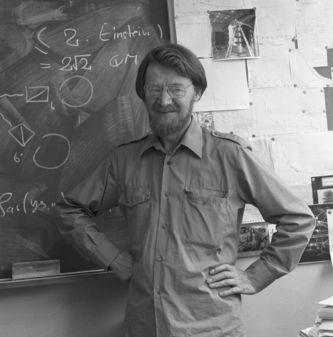
John Stewart Bell (June 28 1928 – October 10 1990) was an Irish physicist who worked in the field of particle physics at CERN, and who developed one of the most important theorems of quantum physics, Bell's Theorem.
Best John Stewart Bell Quotes
Shortest
Earliest
Explore our curated collection of the most famous and impactful John Stewart Bell quotes.
“I am a Quantum Engineer, but on Sundays I Have Principles.”

“Bohr was inconsistent, unclear, willfully obscure and right. Einstein was consistent, clear, down-to-earth and wrong.”
“1 + P(b, c) ≥ |P(a, b) - P(a, c)|”

“The orthodox approaches, whether the authors think they have made derivations or assumptions, are just fine FAPP — when used with the good taste and discretion picked up from exposure to good examples.”
“It can be argued that in trying to see behind the formal predictions of quantum theory we are just making trouble for ourselves. Was not precisely this the lesson that had to be learned before quantum mechanics could be constructed, that it is futile to try to see behind the observed phenomena?”
“The concept of 'measurement' becomes so fuzzy on reflection that it is quite surprising to have it appearing in physical theory at the most fundamental level... does not any analysis of measurement require concepts more fundamental than measurement? And should not the fundamental theory be about these more fundamental concepts?”

“The first charge against 'measurement'''', in the fundamental axioms of quantum mechanics, is that it anchors there the shifty split of the world into 'system' and 'apparatus'. A second charge is that the word comes loaded with meaning from everyday life, meaning which is entirely inappropriate''' in the quantum context.”
“The theorem tells you that maybe there must be something happening faster than light, although it pains me even to say that much. The theorem certainly implies that Einstein's concept of space and time, neatly divided up into separate regions by light velocity, is not tenable. But then, to say that there's something going faster than light is to say more than I know.”

“I agree with them about that: ORDINARY QUANTUM MECHANICS (as far as I know) IS JUST FINE FOR ALL PRACTICAL PURPOSES. Even when I begin by insisting on this myself, and in capital letters, it is likely to be insisted on repeatedly in the course of the discussion. So it is convenient to have an abbreviation for the last phrase: FOR ALL PRACTICAL PURPOSES = FAPP.”
“Einstein said that it is theory which decides what is 'observable'. I think he was right—'observation' is a complicated and theory-laden business. Then that notion should not appear in the formulation of fundamental theory. Information? Whose information? Information about what? On this list of bad words from good books, the worst of all is 'measurement'. It must have a section to itself.”
“The concepts 'system', 'apparatus', 'environment', immediately imply an artificial division of the world, and an intention to neglect, or take only schematic account of, the interaction across the split. The notions of 'microscopic' and 'macroscopic' defy precise definition. So also do the notions of 'reversible' and 'irreversible'.”
“A final moral concerns terminology. Why did such serious people take so seriously axioms which now seem so arbitrary? I suspect that they were misled by the pernicious misuse of the word ‘measurement’ in contemporary theory. This word very strongly suggests the ascertaining of some preexisting property of some thing, any instrument involved playing a purely passive role. Quantum experiments are just not like that, as we learned especially from Bohr. The results have to be regarded as the joint product of ‘system’ and ‘apparatus,’ the complete experimental set-up.”
“Surely, after 62 years, we should have an exact formulation of some serious part of quantum mechanics? By 'exact' I do not of course mean 'exactly true'. I mean only that the theory should be fully formulated in mathematical terms, with nothing left to the discretion of the theoretical physicist . . . until workable approximations are needed in applications. By 'serious' I mean that some substantial fragment of physics should be covered. Nonrelativistic 'particle' quantum mechanics, perhaps with the inclusion of the electromagnetic field and a cut-off interaction, is serious enough.”
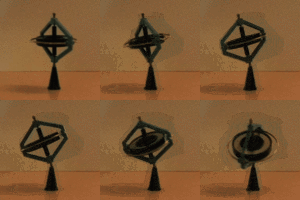
“While the founding fathers agonized over the question 'particle' or 'wave', de Broglie in 1925 proposed the obvious answer 'particle' and 'wave'. Is it not clear from the smallness of the scintillation on the screen that we have to do with a particle? And is it not clear, from the diffraction and interference patterns, that the motion of the particle is directed by a wave? De Broglie showed in detail how the motion of a particle, passing through just one of two holes in screen, could be influenced by waves propagating through both holes. And so influenced that the particle does not go where the waves cancel out, but is attracted to where they cooperate. This idea seems to me so natural and simple, to resolve the wave-particle dilemma in such a clear and ordinary way, that it is a great mystery to me that it was so generally ignored.”

“I expect that mathematicians have classified such fuzzy logics. Certainly they have been much used by physicists. But is there not something to be said for the approach of Euclid? Even now that we know that Euclidean geometry is (in some sense) not quite true? Is it not good to know what follows from what, even if it is not necessarily FAPP? Suppose for example that quantum mechanics were found to resist precise formulation. Suppose that when formulation beyond FAPP was attempted, we find an unmovable finger obstinately pointing outside the subject, to the mind of the observer, to the Hindu scriptures, to God, or even only Gravitation? Would that not be very, very interesting?”
“To know the quantum mechanical state of a system implies, in general, only statistical restrictions on the results of measurements. It seems interesting to ask if this statistical element be thought of as arising, as in classical statistical mechanics, because the states in question are averages over better defined states for which individually the results would be quite determined. These hypothetical 'dispersion free' states would be specified not only by the quantum mechanical state vector but also by additional 'hidden variables' - 'hidden' because if states with prescribed values of these variables could actually be prepared, quantum mechanics would be observably inadequate.”
“More generally, the hidden variable account of a given system becomes entirely different when we remember that it has undoubtedly interacted with numerous other systems in the past and that the total wave function will certainly not be factorable. The same effect complicates the hidden variable account of the theory of measurement, when it is desired to include part of the 'apparatus' in the system. Bohm of course was well aware of these features of his scheme, and has given them much attention. However, it must be stressed that, to the present writer's knowledge, there is no proof that any hidden variable account of quantum mechanics must have this extraordinary character. It would therefore be interesting, perhaps, to pursue some further 'impossibility proofs,' replacing the arbitrary axioms objected to above by some condition of locality, or of separability of distant systems.”
“The discomfort that I feel is associated with the fact that the observed perfect quantum correlations seem to demand something like the ‘genetic’ hypothesis [identical twins, carrying with them identical genes]. For me, it is so reasonable to assume that the photons in those experiments carry with them programs, which have been correlated in advance, telling them how to behave. This is so rational that I think that when Einstein saw that, and the others refused to see it, he was the rational man. The other people, although history has justified them, were burying their heads in the sand. I feel that Einstein’s intellectual superiority over Bohr, in this instance, was enormous; a vast gulf between the man who saw clearly what was needed, and the obscurantist. So for me, it is a pity that Einstein’s idea doesn’t work. The reasonable thing just doesn’t work.”
“In a theory in which parameters are added to quantum mechanics to determine the results of individual measurements, without changing the statistical predictions, there must be a mechanism whereby the setting of one measuring device can influence the reading of another instrument, however remote. Moreover, the signal involved must propagate instantaneously, so that such a theory could not be Lorentz invariant. Of course, the situation is different if the quantum mechanical predictions are of limited validity. Conceivably they might apply only to experiments in which the settings of the instruments are made sufficiently in advance to allow them to reach some mutual rapport by exchange of signals with velocity less than or equal to that of light. In that connection, experiments of the type proposed by Bohm and Aharonov, in which the settings are changed during the flight of the particles, are crucial.”
John Stewart Bell Quotes by Topic
Find exactly what you are looking for by browsing this categorized list of John Stewart Bell quotes by topic.
John Stewart Bell on Bohr–Einstein debates 2 quotes
“Bohr was inconsistent, unclear, willfully obscure and right. Einstein was consistent, clear, down-to-earth and wrong.”
John Stewart Bell on Measurement 2 quotes
“The concept of 'measurement' becomes so fuzzy on reflection that it is quite surprising to have it appearing in physical theory at the most fundamental level... does not any analysis of measurement require concepts more fundamental than measurement? And should not the fundamental theory be about these more fundamental concepts?”
John Stewart Bell on Bell's theorem 2 quotes
“The theorem tells you that maybe there must be something happening faster than light, although it pains me even to say that much. The theorem certainly implies that Einstein's concept of space and time, neatly divided up into separate regions by light velocity, is not tenable. But then, to say that there's something going faster than light is to say more than I know.”
John Stewart Bell on Mathematical Foundations of Quantum Mechanics 2 quotes
“Thus the formal proof of von Neumann does not justify his informal conclusion: 'It is therefore not, as is often assumed, a question of reinterpretation of quantum mechanics - the present system of quantum mechanics would have to be objectively false in order that another description of the elementary process than the statistical one be possible.' It was not the objective measurable predictions of quantum mechanics which ruled out hidden variables. It was the arbitrary assumption of a particular (and impossible) relation between the results of incompatible measurements either of which might be made on a given occasion but only one of which can in fact be made.”
John Stewart Bell on Physics
John Stewart Bell on Statistical mechanics
“To know the quantum mechanical state of a system implies, in general, only statistical restrictions on the results of measurements. It seems interesting to ask if this statistical element be thought of as arising, as in classical statistical mechanics, because the states in question are averages over better defined states for which individually the results would be quite determined. These hypothetical 'dispersion free' states would be specified not only by the quantum mechanical state vector but also by additional 'hidden variables' - 'hidden' because if states with prescribed values of these variables could actually be prepared, quantum mechanics would be observably inadequate.”

John Stewart Bell on Mathematical proof
“The physicists didn't want to be bothered with the idea that maybe quantum theory is only provisional. A horn of plenty had been spilled before them, and every physicist could find something to apply quantum mechanics to. They were pleased to think that this great mathematician had shown it was so. Yet the Von Neumann proof, if you actually come to grips with it, falls apart in your hands! There is nothing to it. It's not just flawed, it's silly. If you look at the assumptions made, it does not hold up for a moment. It's the work of a mathematician, and he makes assumptions that have a mathematical symmetry to them. When you translate them into terms of physical disposition, they're nonsense. You may quote me on that: The proof of Von Neumann is not merely false but foolish!”

John Stewart Bell on Free will
“There is a way to escape the inference of superluminal speeds and spooky action at a distance. But it involves absolute determinism in the universe, the complete absence of free will. Suppose the world is super-deterministic, with not just inanimate nature running on behind-the-scenes clockwork, but with our behavior, including our belief that we are free to choose to do one experiment rather than another, absolutely predetermined, including the ‘decision’ by the experimenter to carry out one set of measurements rather than another, the difficulty disappears. There is no need for a faster-than-light signal to tell particle A what measurement has been carried out on particle B, because the universe, including particle A, already ‘knows’ what that measurement, and its outcome, will be.”

John Stewart Bell on Determinism
“There is a way to escape the inference of superluminal speeds and spooky action at a distance. But it involves absolute determinism in the universe, the complete absence of free will. Suppose the world is super-deterministic, with not just inanimate nature running on behind-the-scenes clockwork, but with our behavior, including our belief that we are free to choose to do one experiment rather than another, absolutely predetermined, including the ‘decision’ by the experimenter to carry out one set of measurements rather than another, the difficulty disappears. There is no need for a faster-than-light signal to tell particle A what measurement has been carried out on particle B, because the universe, including particle A, already ‘knows’ what that measurement, and its outcome, will be.”
John Stewart Bell on Copenhagen interpretation
“The Copenhagen interpretation is a very ambiguous term. Some people use it just to mean the sort of practical quantum mechanics that you can do — like you can ride a bicycle without really knowing what you're doing. It's the rules for using quantum mechanics and the experience that we have in using it. […] Then there's another side to the Copenhagen interpretation, which is a philosophy of the whole thing. It tries to be very deep and tell you that these ambiguities, which you worry about, are somehow irreducible. It says that ambiguities are in the nature of things. We, the observers, are also part of nature. It's impossible for us to have any sharp conception of what is going on. because we, the observers, are involved. And so there is this philosophy, which was designed to reconcile people to the muddle; You shouldn't strive for clarity— that's naive.”
Quotes About John Stewart Bell
Gain deeper perspective through quotes about John Stewart Bell from others.
Alain Aspect on John Stewart Bell
“We must thank John Bell for having shown us that philosophical questions about the nature of reality could be translated into problems for physicists, where naive experimentalists can contribute.”

Jim Baggott on John Stewart Bell
“I had never met Bell, nor heard him lecture, but in my reading of his scientific papers I have developed a great admiration for him and his work. I have especially admired his attempts to dismantle the orthodox Copenhagen interpretation of quantum theory, written with such tremendous style and obvious enjoyment. Although in this book I have tried to present a balanced account - arguing one way and then another - I hope that I have done justice to Bell's superbly constructed criticisms. The debate over the meaning of quantum theory will certainly be poorer without him.”

Jeremy Bernstein on John Stewart Bell
“I told Wheeler that I had had a number of conversations with Bell about quantum theory. "He’s a wonderful fellow," Wheeler noted. "Did he say to you," Wheeler asked, laughing, "‘I’d rather be clear and wrong, than foggy and right’?" I told Wheeler that Bell had not used exactly those words, but that it certainly sounded like him. I also told Wheeler that from the time that Bell began to study the quantum theory, he had conceptual problems with it, and that I had asked Bell if, at that time, he thought that the theory might simply be wrong—to which Bell had answered, "I hesitated to think it might be wrong, but I knew that it was rotten." At this, Wheeler burst into a marvelous peal of laughter. The idea of the young Bell rebelling against the "rottenness" of the quantum theory struck Wheeler as incredibly funny.”
Roger Penrose on John Stewart Bell
“In my opinion, John Bell performed an extremely important role then, and also later, in generally supporting - thereby making respectable - the apparently "fringe" activities of such people as Karolyhazy, Bohm, [Philip M.] Pearle, Ghirardi, and many others (including myself) in suggesting schemes that go beyond standard quantum mechanics, in the intended direction of realism. No physicist could doubt the scientific credentials of John Bell. The fact that he was prepared to go out of his way to support research of this kind gave it a previously unaccustomed status.”

Andrew Whitaker on John Stewart Bell
“It was John Bell who investigated quantum theory in the greatest depth and established what the theory can tell us about the fundamental nature of the physical world. Moreover, by stimulating experimental tests of the deepest and most profound aspects of quantum theory, Bell's work led to the possibility of exploring seemingly philosophical questions, such as the nature of reality, directly through experiments. And this was just Bell's "hobby".”
Martinus Veltman on John Stewart Bell
“John S. Bell (1928–1990, right) and I at CERN in Bell’s office 10 years after the neutrino experiment. We were the quasi-official theorists of that experiment. We did not do very well, all things considered, because of inexperience and ignorance. After the experiment, in 1963, we both went to SLAC, where I wrote my computer program Schoonschip and he developed his famous inequalities. We also discussed other things, even wrote a paper together that was never published. He considered his work on the fundaments of quantum mechanics as a hobby, mainly to be done in the evening, at home. He told me that he intended to do away definitely with this nonsense of hidden variables, and so he did. Later he drifted more and more into this subject, and as I consider it as some sort of foolishness not good for anything having to do with the real world, I once asked him: “Why are you doing this? Does it make the slightest difference in the calculations such as I am doing?” To which he answered: “You are right, but are you not interested and curious about the interpretation?” He was right too, up to a point. While his work became very important, as it could be verified by experiment, often in this branch of physics the discussions are on the level of finding out how many angels can dance on the point of a needle. But even so: there are interesting things there.”
About John Stewart Bell
John Stewart Bell (June 28 1928 – October 10 1990) was an Irish physicist who worked in the field of particle physics at CERN, and who developed one of the most important theorems of quantum physics, Bell's Theorem.