Link Copied!
John Skelton Quotes (1460-1529)
Poet














About John Skelton
John Skelton (c. 1460 – June 21, 1529) was an English poet, variously asserted to have been born in Armathwaite, Cumberland, or Yorkshire. Many of his works included scathing indictments of the church or church figures, and although they were likely circulated in his day, they were not officially published until some time after his death.
Best John Skelton Quotes
Shortest
Earliest
Explore our curated collection of the most famous and impactful John Skelton quotes.
“How olde proverbys says,
That byrd ys not honest
That fylythe hys owne nest.”
That byrd ys not honest
That fylythe hys owne nest.”
“Gentle Paule, laie doune thy sweard,
For Peter of Westminster hath shaven thy beard.”
For Peter of Westminster hath shaven thy beard.”
“There is nothynge that more dyspleaseth God,
Than from theyr children to spare the rod.”
Than from theyr children to spare the rod.”

“The kynges courte
Shulde have the excellence;
But Hampton Court
Hath the preemynence!”
Shulde have the excellence;
But Hampton Court
Hath the preemynence!”
“Englande the flowre
Of relucent honowre,
In olde commemoration
Most royall Englyssh nacion.”
Of relucent honowre,
In olde commemoration
Most royall Englyssh nacion.”
“For though my ryme be ragged,
Tattered and jagged,
Rudely rayne beaten,
Rusty and moughte eaten,
It hath in it some pyth.”
Tattered and jagged,
Rudely rayne beaten,
Rusty and moughte eaten,
It hath in it some pyth.”
“With solace and gladness,
Much mirth and no madness,
All good and no badness;
So joyously,
So maidenly,
So womanly,
Her demeaning.”
Much mirth and no madness,
All good and no badness;
So joyously,
So maidenly,
So womanly,
Her demeaning.”
“At Branxton More and Flodden hylles,
Our Englysh bowes, our Englysh bylles,
Agaynst you gave so sharpe a shower,
That of Scotland ye lost the flower.”
Our Englysh bowes, our Englysh bylles,
Agaynst you gave so sharpe a shower,
That of Scotland ye lost the flower.”
“Far may be sought
Erst that ye can find
So courteous, so kind,
As Merry Margaret,
This midsummer flower,
Gentle as falcon
Or hawk of the tower.”
Erst that ye can find
So courteous, so kind,
As Merry Margaret,
This midsummer flower,
Gentle as falcon
Or hawk of the tower.”
“Like Andromach, Hector's wife,
Was weary of her life,
When she had lost her joy,
Noble Hector of Troy;
In like manner alsó
Increaseth my deadly woe,
For my sparrow is go.
”
Was weary of her life,
When she had lost her joy,
Noble Hector of Troy;
In like manner alsó
Increaseth my deadly woe,
For my sparrow is go.
”
“Ye cobble and ye clout
Holy scripture so about,
That people are in great dout
And feare leest they be out
Of all good Christen order.
Thus all thyng ye disorder
Thorowe out every border.”
Holy scripture so about,
That people are in great dout
And feare leest they be out
Of all good Christen order.
Thus all thyng ye disorder
Thorowe out every border.”
“Stedfast of thought,
Wele made, wele wrought;
Far may be sought
Erst that ye can fynde
So courteise, so kynde
As mirry Margarete,
This midsomer flowre,
Jentyll as fawcoun
Or hawke of the towre.”
Wele made, wele wrought;
Far may be sought
Erst that ye can fynde
So courteise, so kynde
As mirry Margarete,
This midsomer flowre,
Jentyll as fawcoun
Or hawke of the towre.”
“For the soul of Philip Sparrow,
That was late slain at Carrow
Among the Nunnes Black,
For that sweet soul’s sake
And for all sparrows’ souls
Set in our bead-rolls,
Pater noster qui
With an Ave Mari.”
That was late slain at Carrow
Among the Nunnes Black,
For that sweet soul’s sake
And for all sparrows’ souls
Set in our bead-rolls,
Pater noster qui
With an Ave Mari.”
“She is the violet,
The daisy delectable,
The columbine commendable,
The jelofer amiable;
For this most goodly flower,
This blossom of fresh colour,
So Jupiter me succour,
She flourisheth new and new
In beauty and virtue.”
The daisy delectable,
The columbine commendable,
The jelofer amiable;
For this most goodly flower,
This blossom of fresh colour,
So Jupiter me succour,
She flourisheth new and new
In beauty and virtue.”
“If ye have reed de hyperdulia,
Than ye know what betokeneth dulia:
Than shall ye fynde it fyrme and stable,
And to our faithe moche agreable,
To worshyppe ymages of sayntes.”
Than ye know what betokeneth dulia:
Than shall ye fynde it fyrme and stable,
And to our faithe moche agreable,
To worshyppe ymages of sayntes.”
“I saye, thou madde Marche hare,
I wondre howe ye dare
Open your janglyng jawes
To prech in any clawes,
Lyke pratynge poppyng dawes,
Agaynst her excellence,
Agaynst her reverence,
Agaynst her preemynence,
Agaynst her magnifycence,
That never dyde offence.”
I wondre howe ye dare
Open your janglyng jawes
To prech in any clawes,
Lyke pratynge poppyng dawes,
Agaynst her excellence,
Agaynst her reverence,
Agaynst her preemynence,
Agaynst her magnifycence,
That never dyde offence.”
“O noble Chaucer, whos pullisshyd eloquence
Oure Englysshe rude so fresshely hath set out,
That bounde ar we with all deu reverence,
With all our strength that we can brynge about,
To owe to yow our servyce, and more if we mowte!
But what sholde I say? Ye wote what I entende,
Whiche glad am to please and loth to offende”
Oure Englysshe rude so fresshely hath set out,
That bounde ar we with all deu reverence,
With all our strength that we can brynge about,
To owe to yow our servyce, and more if we mowte!
But what sholde I say? Ye wote what I entende,
Whiche glad am to please and loth to offende”
“PLA ce bo!
Who is there, who?
Di le xi!
Dame Margery,
Fa, re, my, my.
Wherefore and why, why?
For the soul of Philip Sparrow
That was late slain at Carrow,
Among the Nunnės Black.
For that sweet soulės sake,
And for all sparrows' souls,
Set in our bead-rolls,
Pater noster qui,
With an Ave Mari,
And with the corner of a Creed,
The more shall be your meed.
”
“Contynually I shall remember
The mery moneth of September,
With the ix day of the same,
For then began our myrth and game.
So that now I have devysed,
And in my mynde I have comprised,
Of the prowde Scot, kynge Jemmy,
To write some lytell tragedy,
For no maner consyderacyon
Of any sorowfull lamentacyon,
But for the specyall consolacyon
Of all our royall Englysh nacyon.”
John Skelton Quotes by Topic
Find exactly what you are looking for by browsing this categorized list of John Skelton quotes by topic.
John Skelton on European robin 2 quotes
“The flecked pie to chatter Of this dolorous matter. And robyn redbreast He shall be the preest, The requiem masse to synge, Softly warbelynge, With helpe of the red sparrow And the chattrynge swallow This herse for to halow.”

What John Skelton Said About Others
Discover personal opinions John Skelton shared regarding contemporaries.
John Skelton on Women 3 quotes
“By saynt Mary, my lady, Your mammy and your dady Brought forth a godely babi!”

John Skelton on John Lydgate
John Skelton on Sulpicia
“Nowe, after my dome, Dame Sulpicia at Rome, Whose name regystred was For euer in tables of bras, Because that she dyd pas In poesy to endyte, And eloquently to wryte, Though she wolde pretende My sparowe to commende, I trowe she coude not amende Reportynge the vertues all Of my sparowe royall.”
Quotes About John Skelton
Gain deeper perspective through quotes about John Skelton from others.
Henry Bradshaw on John Skelton
“What memory or reason is sufficient To remembre the myracles of this lady What tong can expresse / or pen is convenient It were a pleasaunt werke for the monke of Bury For Chaucer or Skelton / fathers of eloquens Or for religious Barkley to shewe theyr diligens”
William Caxton on John Skelton
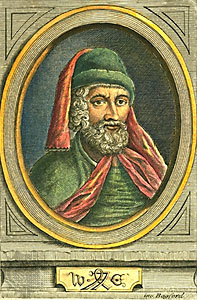
“I praye mayster Iohn Skelton late created poete laureate in the unyversite of oxenforde to oversee and correcte this sayd booke. And taddresse and expowne where as shalle be founde faulte to theym that shall requyre it. For hym I knowe for suffycyent to expowne and englysshe every dyffyculte that is therin / For he hath late translated the epystlys of Tulle / and the boke of dyodorus syculus. and diverse other werkes oute of latyn in to englysshe not in rude and olde langage. but in polysshed and ornate termes craftely. as he that hath redde vyrgyle / ovyde. tullye. and all the other noble poetes and oratours / to me unknowen: And also he hath redde the ix. muses and understande theyr musicalle scyences. and to whom of theym eche scyence is appropred. I suppose he hath dronken of Elyons well.”
Alexander Dyce on John Skelton
“In one respect the Garlande of Laurell stands without a parallel: the history of literature affords no second example of a poet having deliberately written sixteen hundred lines in honour of himself.”
Geoffrey Elton on John Skelton
“Nor can much be said for John Skelton (1460?–1529), not the last poet-laureate hardly to deserve the first part of his title, though his idiosyncratic doggerel breathed vigour, a crude humour, and—especially in his attacks on Wolsey (Speke, Parrot and Why Come Ye Nat Courte?, 1522–3)—a genuine savagery. ... But the man who could think of commending a lady with the pedestrian lines "How shall I report/All the goodly sort/Of her features clear/That hath none earthly peer?" ... was a very long way from true poetry.”
Erasmus on John Skelton
“There is in your household that light and glory of English letters, Skelton, who is capable not only of stimulating your appetite for learning, but of satisfying your hunger well.”
About John Skelton
John Skelton (c. 1460 – June 21, 1529) was an English poet, variously asserted to have been born in Armathwaite, Cumberland, or Yorkshire. Many of his works included scathing indictments of the church or church figures, and although they were likely circulated in his day, they were not officially published until some time after his death.