Link Copied!
John Ruskin Quotes (1819-1900)
Author, Poet, Painter

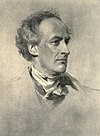














































About John Ruskin
John Ruskin (8 February 1819 – 20 January 1900) was an English author, poet and painter, most famous for his work as art critic and social critic.
Best John Ruskin Quotes
Shortest
Earliest
Explore our curated collection of the most famous and impactful John Ruskin quotes.

“A little group of wise hearts is better than a wilderness full of fools.”

“An unimaginative person can neither be reverent nor kind.”

“He who has the truth at his heart need never fear the want of persuasion on his tongue.”


“The purest and most thoughtful minds are those which love colour the most.”
“The work of science is to substitute facts for appearances, and demonstrations for impressions.”
“How false is the conception, how frantic the pursuit, of that treacherous phantom which men call Liberty.”
“You may either win your peace, or buy it:—win it, by resistance to evil;—buy it, by compromise with evil.”


“Punishment is the last and least effective instrument in the hands of the legislator for the prevention of crime.”


“Work first and then rest. Work first, and then gaze, but do not use golden ploughshares, nor bind ledgers in enamel.”
“I have always found that the less we speak of our intentions, the more chance there is of our realizing them.”
“Without perfect sympathy with the animals around them, no gentleman's education, no Christian education, could be of any possible use.”

John Ruskin Quotes by Topic
Find exactly what you are looking for by browsing this categorized list of John Ruskin quotes by topic.
John Ruskin on Architecture 6 quotes
“Architecture is the work of nations.”
John Ruskin on A Calendar of Wisdom 6 quotes
“You cannot do anything wonderful driven by competition; you cannot do anything noble from pride.”

John Ruskin on Art 3 quotes
“Life without industry is guilt, and industry without art is brutality.”

John Ruskin on Building 3 quotes
“I do not believe that ever any building was truly great, unless it had mighty masses, vigorous and deep, of shadow mingled with its surface.”

John Ruskin on Pride 2 quotes
View all 2 quotes on Pride →John Ruskin on Business 2 quotes
“I never can make out how it is that a knight-errant does not expect to be paid for his trouble, but a peddler-errant always does.”

John Ruskin on Painting 2 quotes
“Painting with all its technicalities, difficulties, and peculiar ends, is nothing but a noble and expressive language, invaluable as the vehicle of thought, but by itself nothing.”

John Ruskin on Peace 2 quotes
“People are always expecting to get peace in heaven: but you know whatever peace they get there will be ready-made. Whatever making of peace they can be blest for, must be on the earth here.”

John Ruskin on Liberty
“That treacherous phantom which men call Liberty.”

What John Ruskin Said About Others
Discover personal opinions John Ruskin shared regarding contemporaries.
John Ruskin on Charles Dickens 2 quotes
“Dickens was a pure modernist — a leader of the steam-whistle party par excellence — and he had no understanding of any power of antiquity except a sort of jackdaw sentiment for cathedral towers. He knew nothing of the nobler power of superstition — was essentially a stage manager, and used everything for effect on the pit. His Christmas meant mistletoe and pudding — neither resurrection from dead, nor rising of new stars, nor teaching of wise men, nor shepherds. His hero is essentially the ironmaster.”

John Ruskin on Henry George Liddell
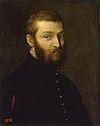
John Ruskin on Paolo Veronese
John Ruskin on The Faerie Queene
John Ruskin on Dante Gabriel Rossetti
“He was, as I believe it is generally admitted, the chief intellectual force in the establishment of the modern romantic school in England.”

John Ruskin on Edward Bulwer-Lytton
John Ruskin on Walter Scott
John Ruskin on Women
“Queens you must always be: queens to your lovers; queens to your husbands and your sons, queens of higher mystery to the world beyond. ... But, alas! you are too often idle and careless queens, grasping at majesty in the least things, while you abdicate it in the greatest.”

John Ruskin on Elizabeth Gaskell
“I have just been reading Cranford out to my mother. She has read it about five times; but, the first time I tried, I flew into a passion at Captain Brown's being killed and wouldn’t go any further—but this time my mother coaxed me past it, and then I enjoyed it mightily. I do not know when I have read a more finished little piece of study of human nature (a very great and good thing when it is not spoiled). Nor was I ever more sorry to come to a book's end.”

John Ruskin on Augustus Pugin
“St. George's was not high enough for want of money? But was it want of money that made you put that blunt, overloaded, laborious ogee door into the side of it? Was it for lack of funds that you sunk the tracery of the parapet in its clumsy zigzags? Was it in parsimony that you buried its paltry pinnacles in that eruption of diseased crockets? or in pecuniary embarrassment that you set up the belfry foolscaps, with the mimicry of dormer windows, which nobody can ever reach nor look out of? Not so, but in mere incapability of better things.”
John Ruskin on James McNeill Whistler
“For Mr Whistler's own sake, no less than for the protection of the purchaser, Sir Coutts Lindsay ought not to have admitted works into the gallery in which the ill-educated conceit of the artist so nearly approached the aspect of willful imposture. I have seen, and heard, much of cockney impudence before now; but never expected to hear a coxcomb ask two hundred guineas for flinging a pot of paint in the public's face. [reacting on Whistler's painting: 'Nocturne in Black and Gold – The Falling Rocket' (c. 1875) - an almost abstract city-scene, exposed in an exhibition at London's Grosvenor Gallery in 1877]”

John Ruskin on Thucydides
“It seems to me now as if I had known Thucydides, as I knew Homer (Pope's!), since I could spell; but the fact was, that for a youth who had so little Greek to bless himself with at seventeen, to know every syllable of his Thucydides at half past eighteen meant some steady sitting at it. The perfect honesty of the Greek soldier, his high breeding, his political insight, and the scorn of construction with which he knotted his meaning into a rhythmic strength that writhed and wrought every way at once, all interested me intensely in him as a writer; while his subject, the central tragedy of all the world, the suicide of Greece, was felt by me with a sympathy in which the best powers of my heart and brain were brought up to their fullest, for my years.”
John Ruskin on William Shakespeare
“He seems to have been sent essentially to take universal and equal grasp of the human nature; and to have been removed, therefore, from all influences which could in the least warp or bias his thoughts. It was necessary that he should lean no way; that he should contemplate, with absolute equality of judgment, the life of the court, cloister, and tavern, and be able to sympathize so completely with all creatures as to deprive himself, together with his personal identity, even of his conscience, as he casts himself into their hearts. He must be able to enter into the soul of Falstaff or Shylock with no more sense of contempt or horror than Falstaff or Shylock themselves feel for or in themselves; otherwise his own conscience and indignation would make him unjust to them; he would turn aside from something, miss some good, or overlook some essential palliation. He must be utterly without anger, utterly without purpose; for if a man has any serious purpose in life, that which runs counter to it, or is foreign to it, will be looked at frowningly or carelessly by him. Shakespere was forbidden of Heaven to have any plans. To do any good or get any good, in the common sense of good, was not to be within his permitted range of work. Not, for him, the founding of institutions, the preaching of doctrines, or the repression of abuses. Neither he, nor the sun, did on any morning that they rose together, receive charge from their Maker concerning such things. They were both of them to shine on the evil and good; both to behold unoffendedly all that was upon the earth, to burn unappalled upon the spears of kings, and undisdaining, upon the reeds of the river.”

John Ruskin on Titian
“When Titian or Tintoret look at a human being, they see at a glance the whole of its nature, outside and in; all that it has of form, of color, of passion, or of thought; saintliness, and loveliness; fleshly body, and spiritual power; grace, or strength, or softness, or whatsoever other quality, those men will see to the full, and so paint, that, when narrower people come to look at what they have done, every one may, if he chooses, find his own special pleasure in the work. The sensualist will find sensuality in Titian; the thinker will find thought; the saint, sanctity; the colourist, colour; the anatomist, form; and yet the picture will never be a popular one in the full sense, for none of these narrower people will find their special taste so alone consulted, as that the qualities which would ensure their gratification shall be sifted or separated from others; they are checked by the presence of the other qualities which ensure the gratification of other men. Thus, Titian is not soft enough for the sensualist, — Correggio suits him better; Titian is not defined enough for the formalist, — Leonardo suits him better; Titian is not pure enough for the religionist, — Raphael suits him better; Titian is not polite enough for the man of the world,— Van Dyke suits him better; Titian is not forcible enough for the lover of the picturesque,— Rembrandt suits him better. All are great men, but of inferior stamp, and therefore Van Dyke is popular, and Rembrandt is popular, but nobody cares much at heart about Titian; only there is a strange under-current of everlasting murmur about his name which means the deep consent of all great men that he is greater than they — the consent of those who, having sat long enough at his feet, have found in that restrained harmony of his strength there are indeed depths of each balanced power more wonderful than those separate manifestations in inferior painters: that there is a softness more exquisite than Correggio's, a purity loftier than Leonardo's, a force mightier than Rembrandt's, a sanctity more solemn even than Raphael's.. ..There are three Venetians that are never separated in my mind — Titian, Veronese, and Tintoret. They all have their own unequalled gifts, and Tintoret especially has imagination and depth of soul which I think renders him indisputably the greatest man; but, equally indisputably, Titian is the greatest painter; and therefore the greatest painter who ever lived.”
Quotes About John Ruskin
Gain deeper perspective through quotes about John Ruskin from others.
Jane Welsh Carlyle on John Ruskin
“No one managed Carlyle so well as Ruskin; it was quite beautiful to see him. Carlyle would say outrageous things, running counter to all Ruskin valued and cared for. Ruskin would treat Mr. Carlyle like a naughty child, lay his arms round him, and say, "Now, this is too bad! ..."”

G. K. Chesterton on John Ruskin 2 quotes
“As an artist in prose he is one of the most miraculous products of the extremely poetical genius of England. The length of a Ruskin sentence is like that length in the long arrow that was boasted of by the drawers of the bow. He draws, not a cloth-yard shaft but a long lance to his ear: he shoots a spear. But the whole goes light as a bird and straight as a bullet.”

Kenneth Clark on John Ruskin
“Changes in the structure of society are not brought about solely by massive engines of doctrine. The first flash of insight which persuades human beings to change their basic assumptions is usually contained in a few phrases. Poets may not be "the unacknowledged legislators of the world"; but Ruskin, like Rousseau, changed the world by a vision which has the intensity and innocence of poetry.”
W. G. Collingwood on John Ruskin 2 quotes
“The combination of shrewd common sense and romantic sentiment; the oscillation between levity and dignity, from caustic jest to tender earnestness ; the restlessness, the fervour, the impestuosity, — all these are characteristics of a Scotsman of parts and highly developed in Ruskin.”
George Eliot on John Ruskin
“The truth of infinite value that he teaches is realism — the doctrine that all truth and beauty are to be attained by a humble and faithful study of nature, and not by substituting vague forms, bred by imagination on the mists of feeling, in place of definite, substantial reality. The thorough acceptance of this doctrine would remould our life; and he who teaches its application to any one department of human activity with such power as Mr Ruskin's, is a prophet for his generation.”

Mohandas Karamchand Gandhi on John Ruskin
“I cannot therefore claim much book knowledge. However, I believe I have not lost much because of this enforced restraint. On the contrary, the limited reading may be said to have enabled me thoroughly to digest what I did read. Of these books, the one that brought about an instantaneous and practical transformation in my life was Unto This Last. I translated it later into Gujarati, entitling it Sarvodaya (the welfare of all). I believe that I discovered some of my deepest convictions reflected in this great book of Ruskin, and that is why it so captured me and made me transform my life. A poet is one who can call forth the good latent in the human breast. Poets do not influence all alike, for everyone is not evolved in a equal measure. The teaching of Unto This Last I understood to be:1. That the good of the individual is contained in the good of all. 2. That a lawyer's work has the same value as the barber's inasmuch as all have the same right of earning their livelihood from their work. 3. That a life of labour, i.e., the life of the tiller of the soil and the handicraftsman is the life worth living.The first of these I knew. The second I had dimly realized. The third had never occurred to me. Unto This Last made it as clear as daylight for me that the second and the third were contained in the first. I arose with the dawn, ready to reduce these principles to practice.”
Jose Harris on John Ruskin
“Fifty years ago Ruskin was widely and, with rare exceptions, approvingly regarded as a major moral and practical inspiration behind the public welfare reforms of wartime and post-war Britain... Social security from the cradle to the grave, public ownership of key industries, state patronage of culture, planned new towns, and policies of full employment were all seen as clearly foreshadowed in Ruskin's writings on social philosophy of the 1860s and 1870s, particularly in Unto This Last and Fors Clavigera.”
Aldous Huxley on John Ruskin
“There are very few whose Utopias have in any detail come true, or have, like Ruskin's, remained a permanently fruitful ideal. In politics his influence has been entirely for good.”

William Ralph Inge on John Ruskin
“Ruskin's own artistic life would have been impossible without the paternal sherry and the rich men who drank it.”
Benjamin Jowett on John Ruskin
“I should wish never to lose the impression of the kind welcome which I received from him. He is the gentlest and most innocent of mankind, of great genius but inconsecutive; and he has never rubbed his mind against others, so that he is ignorant of very obvious things.”

Lord Lindsay of Birker on John Ruskin
“The change which Ruskin's work made in economic thinking has been so far-reaching that today it is difficult for us to realise the perversity and the power of the economic teaching which he fought... Perhaps the greatest contribution which Ruskin made to political economy was this enlargement of its scope. It was not to be confined to exchange: it was not to ignore the real goodness or badness of men's choices: "The essential work of the political economist", he says in Munera Pulveris, "is to determine what are in reality useful or life-giving things and by what degrees and kinds of labour they are attainable and distributable". The political economists of his time would have stoutly denied that it was their business to determine what things are in reality useful, and many economists would still be of the same opinion. By the economist demand must be taken for granted—whatever it was a demand for. Whether the object demanded was good or evil, would do good or harm was not the economists' business. Ruskin refused to accept this abstraction—for an abstraction it surely is, and by his refusal often saw things to which the professionals were blind.”
John Morley on John Ruskin 2 quotes
“Long and singular was Ruskin's journey through many landscapes, and his influence in all directions, social and aesthetic, was so remarkable that even those who have least predilection for it may perhaps call it the greatest event in our literary history since Lyrical Ballads and Waverley. At least one exceptionally good observer judged that as Carlyle...had written himself out as a source of social inspiration, it was Ruskin alone among writers of prose, apart from fiction, who relieved us from the reign of Commentators.”
Disputed Quotes
Quotes attributed to John Ruskin that are questionable.
“It's unwise to pay too much, but it's worse to pay too little. When you pay too much, you lose a little money — that is all. When you pay too little, you sometimes lose everything, because the thing you bought was incapable of doing the thing it was bought to do. The common law of business balance prohibits paying a little and getting a lot — it can't be done. If you deal with the lowest bidder, it is well to add something for the risk you run, and if you do that you will have enough to pay for something better.”
Misattributed Quotes
Quotes mistakenly credited to John Ruskin
“When love and skill work together, expect a masterpiece.”
About John Ruskin
John Ruskin (8 February 1819 – 20 January 1900) was an English author, poet and painter, most famous for his work as art critic and social critic.