Link Copied!
John Muir Quotes (1838-1914)
Philosopher, Author







About John Muir
John Muir (21 April 1838 – 24 December 1914) was a Scottish-American naturalist, author, environmental philosopher and early advocate of preservation of wilderness in the United States. His letters, essays, and books telling of his adventures in nature, especially in the Sierra Nevada of California, have been read by millions. His activism helped to preserve the Yosemite Valley, Sequoia National Park and other wilderness areas. The Sierra Club, which he founded, is a prominent American conservation organization.
Best John Muir Quotes
Shortest
Earliest
Explore our curated collection of the most famous and impactful John Muir quotes.


“I am hopelessly and forever a mountaineer.”

“Most interesting forest I have seen in my whole life.”
“None of Nature's landscapes are ugly so long as they are wild.”
“The clearest way into the Universe is through a forest wilderness.”
“I care to live only to entice people to look at Nature's loveliness.”
“Nature in her green, tranquil woods heals and soothes all afflictions.”
“Living artificially in towns, we are sickly, and never come to know ourselves.”


“Good walkers can go anywhere in these hospitable mountains without artificial ways.”
“This time it is real — all must die, and where could mountaineer find a more glorious death!”

“Who publishes the sheet-music of the winds, or the written music of water written in river-lines?”
“When we try to pick out anything by itself, we find it hitched to everything else in the universe.”

“The world, we are told, was made especially for man — a presumption not supported by all the facts.”
“[Muir describes himself as] me the poetico-trampo-geologist-bot & ornith-natural etc etc —!—!—! !”
“Of all the fire-mountains which, like beacons, once blazed along the Pacific Coast, Mount Rainier is the noblest.”
“There is not a fragment in all nature, for every relative fragment of one thing is a full harmonious unit in itself.”

“The whole wilderness seems to be alive and familiar, full of humanity. The very stones seem talkative, sympathetic, brotherly.”
“How terribly downright must seem the utterances of storms and earthquakes to those accustomed to the soft hypocrisies of society.”
“We are now in the mountains and they are in us, kindling enthusiasm, making every nerve quiver, filling every pore and cell of us.”
“The United States government has always been proud of the welcome it has extended to good men of every nation, seeking freedom and homes and bread.”

“Winds are advertisements of all they touch, however much or little we may be able to read them; telling their wanderings even by their scents alone.”
“In every country the mountains are fountains, not only of rivers but of men. Therefore we all are born mountaineers, the offspring of rock and sunshine.”
“This natural beauty-hunger is made manifest … in our magnificent National Parks … Nature's sublime wonderlands, the admiration and joy of the world.”
“I always befriended animals and have said many a good word for them. Even to the least-loved mosquitoes I gave many a meal, and told them to go in peace.”
“There is a love of wild Nature in everybody, an ancient mother-love ever showing itself whether recognized or no, and however covered by cares and duties.”
“Nature is always lovely, invincible, glad, whatever is done and suffered by her creatures. All scars she heals, whether in rocks or water or sky or hearts.”
“I've had a great time in South America and South Africa. Indeed it now seems that on this pair of wild hot continents I've enjoyed the most fruitful year of my life.”
“Only by going alone in silence, without baggage, can one truly get into the heart of the wilderness. All other travel is mere dust and hotels and baggage and chatter.”
“In God's wildness lies the hope of the world — the great fresh, unblighted, unredeemed wilderness. The galling harness of civilization drops off, and wounds heal ere we are aware.”

“Man as he came from the hand of his Maker was poetic in both mind and body, but the gross heathenism of civilization has generally destroyed Nature, and poetry, and all that is spiritual.”
“[Concerning the founding of the Sierra Club:] Hoping that we will be able to do something for wildness and make the mountains glad.”
“April 21. My birthday — I am told the fifty-seventh, and yet I feel only a boy. Must make haste and get my work done ere the night falls. Made an excursion with the babes to Mount Wanda.”

“One day's exposure to mountains is better than cartloads of books. See how willingly Nature poses herself upon photographers' plates. No earthly chemicals are so sensitive as those of the human soul.”
“Let our law-givers then make haste before it is too late to set apart this surpassingly glorious region for the recreation and well-being of humanity, and all the world will rise up and call them blessed.”
“The whole wilderness in unity and interrelation is alive and familiar … the very stones seem talkative, sympathetic, brotherly. … No particle is ever wasted or worn out but eternally flowing from use to use.”
“Most people are on the world, not in it — have no conscious sympathy or relationship to anything about them — undiffused, separate, and rigidly alone like marbles of polished stone, touching but separate.”

“By forces seemingly antagonistic and destructive Nature accomplishes her beneficent designs — now a flood of fire, now a flood of ice, now a flood of water; and again in the fullness of time an outburst of organic life.”
“There is no estimating the wit and wisdom concealed and latent in our lower fellow mortals until made manifest by profound experiences; for it is through suffering that dogs as well as saints are developed and made perfect.”
“Nature is ever at work building and pulling down, creating and destroying, keeping everything whirling and flowing, allowing no rest but in rhythmical motion, chasing everything in endless song out of one beautiful form into another.”
“Storms of every sort, torrents, earthquakes, cataclysms, "convulsions of nature," etc., however mysterious and lawless at first sight they may seem, are only harmonious notes in the song of creation, varied expressions of God's love.”
“Nature chose for a tool, not the earthquake or lightning to rend and split asunder, not the stormy torrent or eroding rain, but the tender snow-flowers noiselessly falling through unnumbered centuries, the offspring of the sun and sea.”

“Here ends my forever memorable first High Sierra excursion. I have crossed the Range of Light, surely the brightest and best of all the Lord has built; and rejoicing in its glory, I gladly, gratefully, hopefully pray I may see it again.”
“[Concerning the Sugar Pine:] The wood is deliciously fragrant, and fine in grain and texture; it is of a rich cream-yellow, as if formed of condensed sunbeams.”
“Surely all God's people, however serious and savage, great or small, like to play. Whales and elephants, dancing, humming gnats, and invisibly small mischievous microbes, — all are warm with divine radium and must have lots of fun in them.”

“When we contemplate the whole globe as one great dewdrop, striped and dotted with continents and islands, flying through space with other stars all singing and shining together as one, the whole universe appears as an infinite storm of beauty.”
“Plants, animals, and stars are all kept in place, bridled along appointed ways, with one another, and through the midst of one another — killing and being killed, eating and being eaten, in harmonious proportions and quantities.”

“Happy will be the men who, having the power and the love and the benevolent forecast to [create a park], will do it. They will not be forgotten. The trees and their lovers will sing their praises, and generations yet unborn will rise up and call them blessed.”
“So extravagant is Nature with her choicest treasures, spending plant beauty as she spends sunshine, pouring it forth into land and sea, garden and desert. And so the beauty of lilies falls on angels and men, bears and squirrels, wolves and sheep, birds and bees,... .”
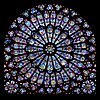
“All Nature's wildness tells the same story: the shocks and outbursts of earthquakes, volcanoes, geysers, roaring, thundering waves and floods, the silent uprush of sap in plants, storms of every sort, each and all, are the orderly, beauty-making love-beats of Nature's heart.”
“Few are altogether deaf to the preaching of pine trees. Their sermons on the mountains go to our hearts; and if people in general could be got into the woods, even for once, to hear the trees speak for themselves, all difficulties in the way of forest preservation would vanish.”

“How many hearts with warm red blood in them are beating under cover of the woods, and how many teeth and eyes are shining! A multitude of animal people, intimately related to us, but of whose lives we know almost nothing, are as busy about their own affairs as we are about ours.”
“Cloudy all day. Showery on mtns. to eastward at noon. Fine thunderstorm evening, with grand display of zigzag intensely vivid & very near with keen cracks [and] grand trailing rain … Visited Elk ranch. About sixty old & young. Old bulls carry horns in noble style & grand airs.”
“I did find Calypso — but only once, far in the depths of the very wildest of Canadian dark woods, near those high, cold, moss-covered swamps. … I felt as if I were in the presence of superior beings who loved me and beckoned me to come. I sat down beside them and wept for joy.”
“The very thought of this Alaska garden is a joyful exhilaration. … Out of all the cold darkness and glacial crushing and grinding comes this warm, abounding beauty and life to teach us that what we in our faithless ignorance and fear call destruction is creation finer and finer.”
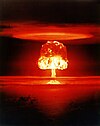
“This grand show is eternal. It is always sunrise somewhere; the dew is never all dried at once; a shower is forever falling; vapor is ever rising. Eternal sunrise, eternal sunset, eternal dawn and gloaming, on sea and continents and islands, each in its turn, as the round earth rolls.”
“I would advise sitting from morning till night under some willow bush on the river bank where there is a wide view. This will be "doing the valley" far more effectively than riding along trails in constant motion from point to point. The entire valley is made up of "points of interest."”
“Thousands of tired, nerve-shaken, over-civilized people are beginning to find out that going to the mountains is going home; that wildness is a necessity; and that mountain parks and reservations are useful not only as fountains of timber and irrigating rivers, but as fountains of life.”
“Government protection should be thrown around every wild grove and forest on the mountains, as it is around every private orchard, and the trees in public parks. To say nothing of their value as fountains of timber, they are worth infinitely more than all the gardens and parks of towns.”
“Another glorious Sierra day in which one seems to be dissolved and absorbed and sent pulsing onward we know not where. Life seems neither long nor short, and we take no more heed to save time or make haste than do the trees and stars. This is true freedom, a good practical sort of immortality.”
“That memorable day died in purple and gold, and just as the last traces of the sunset faded in the west and the star-lilies filled the sky, the full moon looked down over the rim of the valley, and the great rocks, catching the silvery glow, came forth out of the dusky shadows like very spirits.”
“When night was drawing near, I ran down the flowery slopes exhilarated, thanking God for the gift of this great day. The setting sun fired the clouds. All the world seemed new-born. Every thing, even the commonest, was seen in new light and was looked at with new interest as if never seen before.”
“I used to envy the father of our race, dwelling as he did in contact with the new-made fields and plants of Eden; but I do so no more, because I have discovered that I also live in "creation's dawn." The morning stars still sing together, and the world, not yet half made, becomes more beautiful every day.”
“The mountains are fountains of men as well as of rivers, of glaciers, of fertile soil. The great poets, philosophers, prophets, able men whose thoughts and deeds have moved the world, have come down from the mountains — mountain-dwellers who have grown strong there with the forest trees in Nature's workshops.”
“The battle we have fought, and are still fighting, for the forests is a part of the eternal conflict between right and wrong, and we cannot expect to see the end of it. … So we must count on watching and striving for these trees, and should always be glad to find anything so surely good and noble to strive for.”

“Those [forest] reserves are not merely for the convenience and benefit of the people near them, but they are the property of the nation and for its greatest good. It is unreasonable to suppose that they should be destroyed or imperiled for any local convenience, as a mere present to men engaged in one local industry.”
“I drifted about from rock to rock, from stream to stream, from grove to grove. Where night found me, there I camped. When I discovered a new plant, I sat down beside it for a minute or a day, to make its acquaintance and hear what it had to tell. … I asked the boulders I met, whence they came and whither they were going.”
“Pollution, defilement, squalor are words that never would have been created had man lived conformably to Nature. Birds, insects, bears die as cleanly and are disposed of as beautifully as flies. The woods are full of dead and dying trees, yet needed for their beauty to complete the beauty of the living.... How beautiful is all Death!”
“If I were so time-poor as to have only one day to spend in Yosemite I should start at daybreak, say at three o'clock in midsummer, with a pocketful of any sort of dry breakfast stuff, for Glacier Point, Sentinel Dome, the head of Illilouette Fall, Nevada Fall, the top of Liberty Cap, Vernal Fall and the wild boulder-choked River Cañon.”
“I will follow my instincts, be myself for good or ill, and see what will be the upshot. As long as I live, I'll hear waterfalls and birds and winds sing. I'll interpret the rocks, learn the language of flood, storm, and the avalanche. I'll acquaint myself with the glaciers and wild gardens, and get as near the heart of the world as I can.”
“We all travel the milky way together, trees and men; but it never occurred to me until this storm-day, while swinging in the wind, that trees are travelers, in the ordinary sense. They make many journeys, not very extensive ones, it is true; but our own little comes and goes are only little more than tree-wavings — many of them not so much.”
“It is generally supposed that complete pleasure of this kind, permeating one's very flesh and bones, unfits the student for scientific pursuits in which cool judgment and observation are required. But the effect is just the opposite. Instead of producing a dissipated condition, the mind is fertilized and stimulated and developed like sun-fed plants.”

“These temple-destroyers, devotees of ravaging commercialism, seem to have a perfect contempt for Nature, and instead of lifting their eyes to the God of the mountains, lift them to the Almighty Dollar. Dam Hetch Hetchy! As well dam for water-tanks the people's cathedrals and churches, for no holier temple has ever been consecrated by the heart of man.”
“Oh, these vast, calm, measureless mountain days, inciting at once to work and rest! Days in whose light everything seems equally divine, opening a thousand windows to show us God. Nevermore, however weary, should one faint by the way who gains the blessings of one mountain day; whatever his fate, long life, short life, stormy or calm, he is rich forever.”

“[Concerning an aurora, "vivid crimson … indescribably rich and deep":] The white, rayless light of morning, seen when I was alone amid the peaks of the California Sierra, had always seemed to me the most telling of all the terrestrial manifestations of God. But here the mountains themselves were made divine, and declared His glory in terms still more impressive.”
“When I reached the [Yosemite] valley, all the rocks seemed talkative, and more lovable than ever. They are dear friends, and have warm blood gushing through their granite flesh; and I love them with a love intensified by long and close companionship. … I … bathed in the bright river, sauntered over the meadows, conversed with the domes, and played with the pines.”

“There is at least a punky spark in my heart and it may blaze in this autumn gold, fanned by the King. Some of my grandfathers must have been born on a muirland for there is heather in me, and tinctures of bog juices, that send me to Cassiope, and oozing through all my veins impel me unhaltingly through endless glacier meadows, seemingly the deeper and danker the better.”
“I have known many dogs, and many a story I could tell of their wisdom and devotion; but to none do I owe so much as to Stickeen. At first the least promising and least known of my dog-friends, he suddenly became the best known of them all. Our storm-battle for life brought him to light, and through him as through a window I have ever since been looking with deeper sympathy into all my fellow mortals.”
“All the wild world is beautiful, and it matters but little where we go, to highlands or lowlands, woods or plains, on the sea or land or down among the crystals of waves or high in a balloon in the sky; through all the climates, hot or cold, storms and calms, everywhere and always we are in God's eternal beauty and love. So universally true is this, the spot where we chance to be always seems the best.”
“The sun shines not on us but in us. The rivers flow not past, but through us, thrilling, tingling, vibrating every fiber and cell of the substance of our bodies, making them glide and sing. The trees wave and the flowers bloom in our bodies as well as our souls, and every bird song, wind song, and tremendous storm song of the rocks in the heart of the mountains is our song, our very own, and sings our love.”

“Rocks and waters, etc., are words of God and so are men. We all flow from one fountain Soul. All are expressions of one Love. God does not appear, and flow out, only from narrow chinks and round bored wells here and there in favored races and places, but He flows in grand undivided currents, shoreless and boundless over creeds and forms and all kinds of civilizations and peoples and beasts, saturating all and fountainizing all.”
“Everything is flowing — going somewhere, animals and so-called lifeless rocks as well as water. Thus the snow flows fast or slow in grand beauty-making glaciers and avalanches; the air in majestic floods carrying minerals, plant leaves, seeds, spores, with streams of music and fragrance; water streams carrying rocks … . While the stars go streaming through space pulsed on and on forever like blood globules in Nature's warm heart.”

“How hard to realize that every camp of men or beast has this glorious starry firmament for a roof! … In such places standing alone on the mountain-top it is easy to realize that whatever special nests we make — leaves and moss like the marmots and birds, or tents, or piled stone — we all dwell in a house of one room — the world with the firmament for its roof — and are sailing the celestial spaces without leaving any track.”

“I had built a little cabin in Yosemite, and for convenience in getting water, and for the sake of music and society, I led a small stream from Yosemite Creek into it. Running along the side of the wall it was not in the way, and it had just fall enough to ripple and sing in low, sweet tones, making delightful company, especially at night when I was lying awake. Then a few frogs came in and made merry with the stream, — and one snake.”
“On no subject are our ideas more warped and pitiable than on death. … Let children walk with nature, let them see the beautiful blendings and communions of death and life, their joyous inseparable unity, as taught in woods and meadows, plains and mountains and streams of our blessed star, and they will learn that death is stingless indeed, and as beautiful as life, and that the grave has no victory, for it never fights. All is divine harmony.”

“[Concerning the Water Ouzel, now called American Dipper:] In a general way his music is that of the streams refined and spiritualized. The deep booming notes of the falls are in it, the trills of rapids, the gurgling of margin eddies, the low whispering of level reaches, and the sweet tinkle of separate drops oozing from the ends of mosses and falling into tranquil pools.”
“I never have held death in contempt, though in the course of my explorations I have oftentimes felt that to meet one's fate on a noble mountain, or in the heart of a glacier, would be blessed as compared with death from disease, or from some shabby lowland accident. But the best death, quick and crystal-pure, set so glaringly open before us, is hard enough to face, even though we feel gratefully sure that we have already had happiness enough for a dozen lives.”
“With inexpressible delight you wade out into the grassy sun-lake, feeling yourself contained in one of Nature's most sacred chambers, withdrawn from the sterner influences of the mountains, secure from all intrusion, secure from yourself, free in the universal beauty. And notwithstanding the scene is so impressively spiritual, and you seem dissolved in it, yet everything about you is beating with warm, terrestrial, human love, delightfully substantial and familiar.”
“It has been said that trees are imperfect men, and seem to bemoan their imprisonment rooted in the ground. But they never seem so to me. I never saw a discontented tree. They grip the ground as though they liked it, and though fast rooted they travel about as far as we do. They go wandering forth in all directions with every wind, going and coming like ourselves, traveling with us around the sun two million miles a day, and through space heaven knows how fast and far!”
“Little, however, is to be learned in confused, hurried tourist trips, spending only a poor noisy hour in a branded grove with a guide. You should go looking and listening alone on long walks through the wild forests and groves in all the seasons of the year. In the spring the winds are balmy and sweet... . In summer the days go by in almost constant brightness... . In the autumn the sighing of the winds is softer than ever... . Winter comes suddenly, arrayed in storms.”

“No dogma taught by the present civilization seems to form so insuperable an obstacle in the way of a right understanding of the relations which culture sustains to wildness, as that which declares that the world as made especially for the uses of men. Every animal, plant, and crystal controverts it in the plainest terms. Yet it is taught from century to century as something ever new and precious, and in the resulting darkness the enormous conceit is allowed to go unchallenged.”

“[Concerning the Hemlock Spruce, now called Mountain Hemlock:] I wish I had space to write more of the surpassing beauty of this favorite spruce. … The deer love to lie down beneath its spreading branches; bright streams from the snow that is always near ripple through its groves, and bryanthus spreads precious carpets in its shade. But the best words only hint its charms. Come to the mountains and see.”
“Our crude civilization engenders a multitude of wants, and lawgivers are ever at their wits' end devising. The hall and the theater and the church have been invented, and compulsory education. Why not add compulsory recreation? Our forefathers forged chains of duty and habit, which bind us notwithstanding our boasted freedom, and we ourselves in desperation add link to link, groaning and making medicinal laws for relief. Yet few think of pure rest or of the healing power of Nature.”
“The view we enjoyed from the summit [of Mount Rainier] could hardly be surpassed in sublimity and grandeur; but one feels far from home so high in the sky, so much so that one is inclined to guess that, apart from the acquisition of knowledge and the exhilaration of climbing, more pleasure is to be found at the foot of the mountains than on their tops. Doubly happy, however, is the man to whom lofty mountain tops are within reach, for the lights that shine there illumine all that lies below.”
“I ran home [from Cloud's Rest to Yosemite Valley] in the moonlight, with long, firm strides; for the sun-love made me strong. Down through the junipers — down through the firs; now in jet-shadows, now in white light; over sandy moraines and bare, clanking rock; past the huge ghost of South Dome, rising weird through the firs — past glorious Nevada — past the groves of Illilouette — through the pines of the valley; frost-crystals flashing all the sky beneath, as star-crystals on all the sky above. All of this mountain-bread for one day!”

“I'm now done with this glorious continent [South America] … . I've seen all I sought for and far, far, far more. … wandered most joyfully … through millions of acres of the ancient tree I was so anxious to find, Araucaria braziliensis. Just think of the glow of my joy in these noble aboriginal forests — the face of every tree marked with the inherited experiences of millions of years. … Crossed the Andes... Then straight to snowline and found a glorious forest of Araucaria imbricata, the strangest of the strange genus.”
“Accidents in the mountains are less common than in the lowlands, and these mountain mansions are decent, delightful, even divine, places to die in, compared with the doleful chambers of civilization. Few places in this world are more dangerous than home. Fear not, therefore, to try the mountain-passes. They will kill care, save you from deadly apathy, set you free, and call forth every faculty into vigorous, enthusiastic action. Even the sick should try these so-called dangerous passes, because for every unfortunate they kill, they cure a thousand.”
“A few minutes ago every tree was excited, bowing to the roaring storm, waving, swirling, tossing their branches in glorious enthusiasm like worship. But though to the outer ear these trees are now silent, their songs never cease. Every hidden cell is throbbing with music and life, every fiber thrilling like harp strings, while incense is ever flowing from the balsam bells and leaves. No wonder the hills and groves were God's first temples, and the more they are cut down and hewn into cathedrals and churches, the farther off and dimmer seems the Lord himself.”
“Fain would I describe the glories of those months in the ice-world — the beautiful and terrible network of crevasses, the clustering pinnacles, the thousand streams ringing and gurgling in azure channels cut in the living body of the glacier, the glorious radiance of the sunbeams falling on crystal dale and hill, the rosy glow of the dawn and sunset, the march of the clouds on the mountains, and the mysterious splendor of the auroras when the nights grow long, etc., etc., etc. But this would require a volume, while here I have only space to add — Go to Alaska, go and see.”
“Fresh beauty opens one's eyes wherever it is really seen, but the very abundance and completeness of the common beauty that besets our steps prevents its being absorbed and appreciated. It is a good thing, therefore, to make short excursions now and then to the bottom of the sea among dulse and coral, or up among the clouds on mountain-tops, or in balloons, or even to creep like worms into dark holes and caverns underground, not only to learn something of what is going on in those out-of-the-way places, but to see better what the sun sees on our return to common every-day beauty.”
“Wander here a whole summer, if you can. Thousands of God's wild blessings will search you and soak you as if you were a sponge, and the big days will go by uncounted. If you are business-tangled, and so burdened by duty that only weeks can be got out of the heavy-laden year … give a month at least to this precious reserve. The time will not be taken from the sum of your life. Instead of shortening, it will indefinitely lengthen it and make you truly immortal. Nevermore will time seem short or long, and cares will never again fall heavily on you, but gently and kindly as gifts from heaven.”
“[When asked about the word "hike":] I don't like either the word or the thing. People ought to saunter in the mountains — not hike! Do you know the origin of that word saunter? It's a beautiful word. Away back in the middle ages people used to go on pilgrimages to the Holy Land, and when people in the villages through which they passed asked where they were going, they would reply, 'A la sainte terre,' 'To the Holy Land.' And so they became known as sainte-terre-ers or saunterers. Now these mountains are our Holy Land, and we ought to saunter through them reverently, not 'hike' through them.”
“One is constantly reminded of the infinite lavishness and fertility of Nature — inexhaustible abundance amid what seems enormous waste. And yet when we look into any of her operations that lie within reach of our minds, we learn that no particle of her material is wasted or worn out. It is eternally flowing from use to use, beauty to yet higher beauty; and we soon cease to lament waste and death, and rather rejoice and exult in the imperishable, unspeakable wealth of the universe, and faithfully watch and wait the reappearance of everything that melts and fades and dies about us, feeling sure that its next appearance will be better and more beautiful than the last.”
“Walk away quietly in any direction and taste the freedom of the mountaineer. Camp out among the grass and gentians of glacier meadows, in craggy garden nooks full of Nature's darlings. Climb the mountains and get their good tidings. Nature's peace will flow into you as sunshine flows into trees. The winds will blow their own freshness into you, and the storms their energy, while cares will drop off like autumn leaves. As age comes on, one source of enjoyment after another is closed, but Nature's sources never fail. … The petty discomforts that beset the awkward guest, the unskilled camper, are quickly forgotten, while all that is precious remains. Fears vanish as soon as one is fairly free in the wilderness.”
“When I first enjoyed this superb view, one glowing April day, from the summit of the Pacheco Pass, the Central Valley, but little trampled or ploughed as yet, was one furred, rich sheet of golden compositae, and the luminous wall of the mountains shone in all its glory. Then it seemed to me the Sierra should be called not the Nevada, or Snowy Range, but the Range of Light. And after ten years spent in the heart of it, rejoicing and wondering, bathing in its glorious floods of light, seeing the sunbursts of morning among the icy peaks, the noonday radiance on the trees and rocks and snow, the flush of alpenglow, and a thousand dashing waterfalls with their marvelous abundance of irised spray, it still seems to be above all others the Range of Light.”

“Any fool can destroy trees. They cannot run away; and if they could, they would still be destroyed — chased and hunted down as long as fun or a dollar could be got out of their bark hides, branching horns, or magnificent bole backbones. Few that fell trees plant them; nor would planting avail much towards getting back anything like the noble primeval forests. … It took more than three thousand years to make some of the trees in these Western woods — trees that are still standing in perfect strength and beauty, waving and singing in the mighty forests of the Sierra. Through all the wonderful, eventful centuries … God has cared for these trees, saved them from drought, disease, avalanches, and a thousand straining, leveling tempests and floods; but he cannot save them from fools — only Uncle Sam can do that.”
“Yosemite Park is a place of rest, a refuge from the roar and dust and weary, nervous, wasting work of the lowlands, in which one gains the advantages of both solitude and society. Nowhere will you find more company of a soothing peace-be-still kind. Your animal fellow beings, so seldom regarded in civilization, and every rock-brow and mountain, stream, and lake, and every plant soon come to be regarded as brothers; even one learns to like the storms and clouds and tireless winds. This one noble park is big enough and rich enough for a whole life of study and aesthetic enjoyment. It is good for everybody, no matter how benumbed with care, encrusted with a mail of business habits like a tree with bark. None can escape its charms. Its natural beauty cleans and warms like a fire, and you will be willing to stay forever in one place like a tree.”
“Why should man value himself as more than a small part of the one great unit of creation? And what creature of all that the Lord has taken the pains to make is not essential to the completeness of that unit — the cosmos? The universe would be incomplete without man; but it would also be incomplete without the smallest transmicroscopic creature that dwells beyond our conceitful eyes and knowledge. From the dust of the earth, from the common elementary fund, the Creator has made Homo sapiens. From the same material he has made every other creature, however noxious and insignificant to us. They are earth-born companions and our fellow mortals. … This star, our own good earth, made many a successful journey around the heavens ere man was made, and whole kingdoms of creatures enjoyed existence and returned to dust ere man appeared to claim them. After human beings have also played their part in Creation's plan, they too may disappear without any general burning or extraordinary commotion whatever.”

“How infinitely superior to our physical senses are those of the mind! The spiritual eye sees not only rivers of water but of air. It sees the crystals of the rock in rapid sympathetic motion, giving enthusiastic obedience to the sun's rays, then sinking back to rest in the night. The whole world is in motion to the center. So also sounds. We hear only woodpeckers and squirrels and the rush of turbulent streams. But imagination gives us the sweet music of tiniest insect wings, enables us to hear, all round the world, the vibration of every needle, the waving of every bole and branch, the sound of stars in circulation like particles in the blood. The Sierra canyons are full of avalanche debris — we hear them boom again, for we read past sounds from present conditions. Again we hear the earthquake rock-falls. Imagination is usually regarded as a synonym for the unreal. Yet is true imagination healthful and real, no more likely to mislead than the coarser senses. Indeed, the power of imagination makes us infinite.”
“Looking eastward from the summit of Pacheco Pass one shining morning, a landscape was displayed that after all my wanderings still appears as the most beautiful I have ever beheld. At my feet lay the Great Central Valley of California, level and flowery, like a lake of pure sunshine, forty or fifty miles wide, five hundred miles long, one rich furred garden of yellow Compositae. And from the eastern boundary of this vast golden flower-bed rose the mighty Sierra, miles in height, and so gloriously colored and so radiant, it seemed not clothed with light but wholly composed of it, like the wall of some celestial city.... Then it seemed to me that the Sierra should be called, not the Nevada or Snowy Range, but the Range of Light. And after ten years of wandering and wondering in the heart of it, rejoicing in its glorious floods of light, the white beams of the morning streaming through the passes, the noonday radiance on the crystal rocks, the flush of the alpenglow, and the irised spray of countless waterfalls, it still seems above all others the Range of Light.”
“If my soul could get away from this so-called prison, be granted all the list of attributes generally bestowed on spirits, my first ramble on spirit wings would not be among the volcanoes of the moon. Nor should I follow the sunbeams to their sources in the sun. I should hover about the beauty of our own good star. I should not go moping among the tombs, nor around the artificial desolation of men. I should study Nature's laws in all their crossings and unions; I should follow magnetic streams to their source and follow the shores of our magnetic oceans. I should go among the rays of the aurora, and follow them to their beginnings, and study their dealings and communions with other powers and expressions of matter. And I should go to the very center of our globe and read the whole splendid page from the beginning. But my first journeys would be into the inner substance of flowers, and among the folds and mazes of Yosemite's falls. How grand to move about in the very tissue of falling columns, and in the very birthplace of their heavenly harmonies, looking outward as from windows of ever-varying transparency and staining!”
“The rugged old Norsemen spoke of death as Heimgang — home-going. So the snow-flowers go home when they melt and flow to the sea, and the rock-ferns, after unrolling their fronds to the light and beautifying the rocks, roll them up close again in the autumn and blend with the soil. Myriads of rejoicing living creatures, daily, hourly, perhaps every moment sink into death’s arms, dust to dust, spirit to spirit — waited on, watched over, noticed only by their Maker, each arriving at its own heaven-dealt destiny. All the merry dwellers of the trees and streams, and the myriad swarms of the air, called into life by the sunbeam of a summer morning, go home through death, wings folded perhaps in the last red rays of sunset of the day they were first tried. Trees towering in the sky, braving storms of centuries, flowers turning faces to the light for a single day or hour, having enjoyed their share of life’s feast — all alike pass on and away under the law of death and love. Yet all are our brothers and they enjoy life as we do, share heaven’s blessings with us, die and are buried in hallowed ground, come with us out of eternity and return into eternity. 'Our little lives are rounded with a sleep.'”
“One shining morning, at the head of the Pacheco Pass, a landscape was displayed that after all my wanderings still appears as the most divinely beautiful and sublime I have ever beheld. There at my feet lay the great central plain of California, level as a lake thirty or forty miles wide, four hundred long, one rich furred bed of golden Compositae. And along the eastern shore of this lake of gold rose the mighty Sierra, miles in height, in massive, tranquil grandeur, so gloriously colored and so radiant that it seemed not clothed with light, but wholly composed of it, like the wall of some celestial city. Along the top, and extending a good way down, was a rich pearl-gray belt of snow; then a belt of blue and dark purple, marking the extension of the forests; and stretching along the base of the range a broad belt of rose-purple, where lay the miners' gold and the open foothill gardens — all the colors smoothly blending, making a wall of light clear as crystal and ineffably fine, yet firm as adamant. Then it seemed to me the Sierra should be called, not the Nevada or Snowy Range, but the Range of Light. And after ten years in the midst of it, rejoicing and wondering, seeing the glorious floods of light that fill it, — the sunbursts of morning among the mountain-peaks, the broad noonday radiance on the crystal rocks, the flush of the alpenglow, and the thousand dashing waterfalls with their marvelous abundance of irised spray, — it still seems to me a range of light.”
John Muir Quotes by Topic
Find exactly what you are looking for by browsing this categorized list of John Muir quotes by topic.
John Muir on Forests 5 quotes
“The clearest way into the Universe is through a forest wilderness. The living and dead look well together in woods. Trees receive a most beautiful burial. Nature takes fallen trees gently to her bosom — at rest from storms. They seem to have called home out of the sky to sleep now.”

John Muir on Air 2 quotes
View all 2 quotes on Air →John Muir on Bears 2 quotes
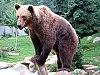
“Magnificent bears of the Sierra are worthy of their magnificent homes. They are not companions of men, but children of God, and His charity is broad enough for bears. They are the objects of His tender keeping.”
John Muir on Earthquake 2 quotes
“At half-past two o'clock of a moonlit morning in March, I was awakened by a tremendous earthquake, and though I hadn't ever before enjoyed a storm of this sort, the strange thrilling motion could not be mistaken, and I ran out of my cabin, both glad and frightened, shouting, "A noble earthquake! A noble earthquake" feeling sure I was going to learn something.”
John Muir on Insect 2 quotes
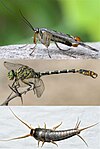
“How still the woods seem from here, yet how lively a stir the hidden animals are making; digging, gnawing, biting, eyes shining, at work and play, getting food, rearing young, roving through the underbrush, climbing the rocks, wading solitary marshes, tracing the banks of the lakes and streams! Insect swarms are dancing in the sunbeams, burrowing in the ground, diving, swimming,—a cloud of witnesses telling Nature's joy.”
What John Muir Said About Others
Discover personal opinions John Muir shared regarding contemporaries.
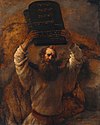
John Muir on Moses
“I do not understand the request of Moses, 'Show me thy glory,' but if he were here . . . after allowing him time to drink the glories of flower, mountain, and sky, I would ask him how they compared with those of the Valley of the Nile . . . and I would inquire how he had the conscience to ask for more glory, when such oceans and atmospheres were about him.”
Quotes About John Muir
Gain deeper perspective through quotes about John Muir from others.
Elizabeth Kolbert The Sixth Extinction on John Muir
“Certainly humans can be destructive and shortsighted; they can also be forward-thinking and altruistic. Time and time again, people have demonstrated that they care about what Rachel Carson called "the problem of sharing our earth with other creatures," and that they're willing to make sacrifices on those creatures' behalf...John Muir wrote about the damage being done in the mountains of California, and this led to the creation of Yosemite National Park...”
Theodore Roosevelt on John Muir
“Ordinarily, the man who loves the woods and mountains, the trees, the flowers, and the wild things, has in him some indefinable quality of charm, which appeals even to those sons of civilization who care for little outside of paved streets and brick walls. John Muir was a fine illustration of this rule. He was by birth a Scotchman — a tall and spare man, with the poise and ease natural to him who has lived much alone under conditions of labor and hazard. He was a dauntless soul, and also one brimming over with friendliness and kindliness. He was emphatically a good citizen. Not only are his books delightful, not only is he the author to whom all men turn when they think of the Sierras and northern glaciers, and the giant trees of the California slope, but he was also — what few nature lovers are — a man able to influence contemporary thought and action on the subjects to which he had devoted his life. He was a great factor in influencing the thought of California and the thought of the entire country so as to secure the preservation of those great natural phenomena — wonderful canyons, giant trees, slopes of flower-spangled hillsides — which make California a veritable Garden of the Lord. … John Muir talked even better than he wrote. His greatest influence was always upon those who were brought into personal contact with him. But he wrote well, and while his books have not the peculiar charm that a very, very few other writers on similar subjects have had, they will nevertheless last long. Our generation owes much to John Muir.”

Lawrence Clark Powell on John Muir
“No man was more influential than John Muir in preserving the Sierra's integrity. If I were to choose a single Californian to occupy the Hall of Fame, it would be this tenacious Scot who became a Californian during the final forty-six years of his life. It was John Muir whose knowledge wedded to zeal led men and governments to establish the National Park Service. Yosemite and Sequoia in California, the Petrified forest and the Grand Canyon in Arizona, and the glacier wilderness of Alaska are what they are today largely because of this one man, in whom learning and love were co-equal. More than any other, he was the answer to that call which appears on the Courts Building in Sacramento: Give me men to match my mountains.”
Patagonia founder on John Muir
“If you think about all the gains our society has made, from independence to now, it wasn't government. It was activism. People think, "Oh, Teddy Roosevelt established Yosemite National Park, what a great president." BS. It was John Muir who invited Roosevelt out and then convinced him to ditch his security and go camping. It was Muir, an activist, a single person.”
California Governor Arnold Schwarzenegger on John Muir
“John Muir has been a role model to generations of Californians and to conservationists around the world. He taught us to be active and to enjoy — but at the same time protect — our parks, our beaches, and our mountains.”


Misattributed Quotes
Quotes mistakenly credited to John Muir
“When one tugs at a single thing in nature, he finds it attached to the rest of the world.
• Variant: Tug on anything at all and you'll find it connected to everything else in the universe.”
• Variant: Tug on anything at all and you'll find it connected to everything else in the universe.”
“Brought into right relationship with the wilderness … he would see that his appropriation of earth's resources beyond his personal needs would only bring imbalance and beget ultimate loss and poverty for all.”
“Men use care in purchasing a horse, and are neglectful in choosing friends.”
“Wilderness is not only a haven for native plants and animals but it is also a refuge from society. It's a place to go to hear the wind and little else, see the stars and the galaxies, smell the pine trees, feel the cold water, touch the sky and the ground at the same time, listen to coyotes, eat the fresh snow, walk across the desert sands, and realize why it's good to go outside of the city and the suburbs. Fortunately, there is wilderness just outside the limits of the cities and the suburbs in most of the United States, especially in the West.”
“"To sit in solitude, to think in solitude with only the music of the stream and the cedar to break the flow of silence, there lies the value of wilderness."”
About John Muir
John Muir (21 April 1838 – 24 December 1914) was a Scottish-American naturalist, author, environmental philosopher and early advocate of preservation of wilderness in the United States. His letters, essays, and books telling of his adventures in nature, especially in the Sierra Nevada of California, have been read by millions. His activism helped to preserve the Yosemite Valley, Sequoia National Park and other wilderness areas. The Sierra Club, which he founded, is a prominent American conservation organization.