




















“Wherever Law ends, Tyranny begins.”
— John Locke, Two Treatises of Government

Explore our curated collection of the most famous and impactful John Locke quotes.
“Wherever Law ends, Tyranny begins.”
“Children (nay, and men too) do most by example.”

“No man's knowledge here can go beyond his experience.”

“Preference of vice to virtue, a manifest wrong judgment.”

“Government has no other end than the preservation of property.”

“Sophistry is only fit to make men more conceited in their ignorance.”
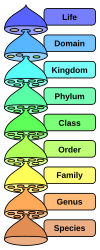
“The boundaries of the species, whereby men sort them, are made by men.”
“There cannot any one moral Rule be propos'd, whereof a Man may not justly demand a Reason.”
“He that uses his words loosely and unsteadily will either not be minded or not understood.”
“I am sure, zeal or love for truth can never permit falsehood to be used in the defence of it.”
“A sound mind in a sound body, is a short but full description of a happy state in this world.”
“But there is only one thing which gathers people into seditious commotion, and that is oppression.”

“It is one thing to show a man that he is in error, and another to put him in possession of the truth.”

“Virtue is harder to be got than knowledge of the world; and, if lost in a young man, is seldom recovered.”

“That which parents should take care of... is to distinguish between the wants of fancy, and those of nature.”
“All men are liable to error; and most men are, in many points, by passion or interest, under temptation to it.”
“He that knows anything, knows this, in the first place, that he need not seek long for instances of his ignorance."”
“This life affords no solid satisfaction, but in the consciousness of having done well, and the hopes of another life.”

“New opinions are always suspected, and usually opposed, without any other reason but because they are not already common.”
“To love truth for truth's sake is the principal part of human perfection in this world, and the seed-plot of all other virtues.”
“As usurpation is the exercise of power which another has a right to, so tyranny is the exercise of power beyond right, which nobody can have a right to...”

“Though the Earth, and all inferior Creatures be common to all Men, yet every Man has a Property in his own Person. Thus no Body has any Right to but himself.”

“Good and evil, reward and punishment, are the only motives to a rational creature: these are the spur and reins whereby all mankind are set on work, and guided.”

“"...the church of England, when she baptizes any one, makes him not a Christian [...] the church of England is mistaken, and makes none but socinians Christians"”

“I have always thought the actions of men the best interpreters of their thoughts.
• Variant: The actions of men are the best interpreters of their thoughts.”
Find exactly what you are looking for by browsing this categorized list of John Locke quotes by topic.
“Reading furnishes the mind only with materials of knowledge; it is thinking makes what we read ours.”
“Virtue is harder to be got than knowledge of the world; and, if lost in a young man, is seldom recovered.”
“The improvement of the understanding is for two ends: first, for our own increase of knowledge; secondly, to enable us to deliver and make out that knowledge to others.”
“It is one thing to show a man that he is in error, and another to put him in possession of the truth.”

“To love truth for truth's sake is the principal part of human perfection in this world, and the seed-plot of all other virtues.”
“To love truth for truth's sake is the principal part of human perfection in this world, and the seed-plot of all other virtues.”
“As to the having and possessing of things, teach them to part with what they have, easily and freely to their friends, and let them find by experience that the most liberal has always the most plenty, with esteem and commendation to boot, and they will quickly learn to practise it.”

“Covetousness, and the desire of having in our possession, and under our dominion, more than we have need of, being the root of all evil, should be early and carefully weeded out, and the contrary quality of a readiness to impart to others, implanted. This should be encourag'd by great commendation and credit, and constantly taking care that he loses nothing by his liberality.”
“Let him sensibly perceive, that the kindness he shews to others, is no ill husbandry for himself; but that it brings a return in kindness both from those that receive it, and those who look on. Make this a contest among children, who shall out-do one another in this way: and by this means, by a constant practise, children having made it easy to themselves to part with what they have, good nature may be settled in them into a habit, and they may take pleasure, and pique themselves in being kind, liberal and civil, to others.”
“Virtue is harder to be got than knowledge of the world; and, if lost in a young man, is seldom recovered.”
“To love truth for truth's sake is the principal part of human perfection in this world, and the seed-plot of all other virtues.”
“...the church of England, when she baptizes any one, makes him not a Christian ...the church of England is mistaken, and makes none but socinians Christians.”
“He[ John Edwards] hopes to fright people from reading my book by crying out Socinianism, Socinianism! Whereas I challenge him again, to show one word of socinianism in it. ...Truly, I did not think myself so considerable, that the world need be troubled about me, whether I were a follower of Socinus, Arminius, Calvin, or any other leader of a sect among christians. A christian I am sure I am, because I believe "Jesus to be the Messiah," the King and Saviour promised and sent by God... and left upon record in the inspired writings of the apostles and evangelists in the New Testament; which I endeavoured to the utmost of my power... to understand in their true sense and meaning. To lead me into their true meaning, I know... no infallible guide, but the same Holy Spirit, from whom these writings at first came. If the unmasker knows any other infallible any interpreter of scripture, I desire him to direct me to him: until then I shall think it according to my master's rule, not to be called, nor to call any man on earth, Master. No man, I think, has a right to prescribe to me my faith, or magisterially to impose his interpretations or opinions on me: nor is it material to any one what mine are any farther than they carry their own evidence with them. If this, which I think makes me of no sect, entitles me to the name of a papist, or a socinian, because the unmasker thinks these the worst and most invidious he can give me: and labours to fix them on me for no other reason, but because I will not take him for my master on earth, and his system for my gospel: I shall leave him to recommend himself to the world by this skill, who, no doubt, will have reason to thank him for the rareness and subtilty of his discovery. For I think, I am the first man that ever was found to be at the same time a socinian, and a factor for Rome.”
Discover personal opinions John Locke shared regarding contemporaries.
“The actions of men are the best interpreters of their thoughts.”
“Of all the books of fiction, I know none that equals Cervantes's History of Don Quixote in usefulness, pleasantry, and a constant decorum.”

“Newton was really a very valuable man, not onely for his wonderfull skill in Mathematicks but in divinity too and his great knowledge in the scriptures where in I know few his equals.”

“...I am not so well read in Hobbes or Spinoza, as to be able to say what were their opinions in this matter [the life after death]. But, possibly, there be those who will think your lordship's authority of more use to them in the case than those justly decried names;”

Gain deeper perspective through quotes about John Locke from others.
“It is hard on Locke to attribute his success so much to opportunity and current. In the history of thought, especially of thought bearing on action, he is, not the greatest certainly, but the largest of all Englishmen, looming tremendously, and filling an immense space. The Lettres sur les Anglais, which put England into continental circulation, deal most with him and Newton, and he is the master of Voltaire and Condillac. As the—unscientific—inventor of the division of power, he is the master of Montesquieu. By his theory of Education and the Social Contract, he is the master of Rousseau, the most powerful political writer that ever lived. By his political economy he is the master of Adam Smith, and, in a sense, of Turgot. He gave to Whiggism whatever general ideas it mixed with the specific national elements, and is the theorist of government by the great families. Lastly, in the Catena of tradition on Toleration, he is very nearly the principal classic.”
“The vision that impels feminists to action was the vision of the Grandmothers' society, the society that was captured in the words of the sixteenth-century explorer Peter Martyr nearly five hundred years ago. It is the same vision repeated over and over by radical thinkers of Europe and America, from François Villon to John Locke, from William Shakespeare to Thomas Jefferson, from Karl Marx to Friedrich Engels, from Benito Juarez to Martin Luther King, from Elizabeth Cady Stanton to Judy Grahn, from Harriet Tubman to Audre Lorde, from Emma Goldman to Bella Abzug, from Malinalli to Cherrie Moraga, and from Iyatiku to me. That vision as Martyr told it is of a country where there are "no soldiers, no gendarmes or police, no nobles, kings, regents, prefects, or judges, no prisons, no lawsuits... All are equal and free."”

“Locke had illegitimately selected those parts of man he needed for his social contract and suppressed all the rest, a theoretically unsatisfactory procedure and a practically costly one. The bourgeois is the measure of the price paid, he who most of all cannot afford to look to his real self, who denies the existence of the thinly boarded-over basement in him, who is most made over for the purposes of a society that does not even promise him perfection or salvation but merely buys him off.”
“Locke was ascribing to men a kind of intrinsic equality that while clearly irrelevant to many situations should definitely be decisive for certain purposes, specifically for purposes of government.”
“Locke's language in the Second Treatise is as categorical and universalistic as Rousseau's, if not more so. Yet his apparent assertion of an unqualified and categorical claim was limited both explicitly and implicitly by a requirement as to competence. ... Like Rousseau, Locke torpedoed his own view (if indeed it was his view) that every person subject to the laws made by the demos possesses a categorical and unqualified right to membership in the demos.”
Quotes mistakenly credited to John Locke.
“We are like chameleons; we take our hue and the color of our moral character from those who are around us.”
“That which is static and repetitive is boring. That which is dynamic and random is confusing. In between lies art.”
“The people cannot delegate to government the power to do anything which would be unlawful for them to do themselves.”