Link Copied!
John Herschel Quotes (1792-1871)
Inventor, Mathematician
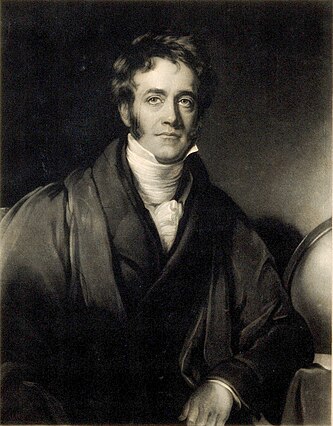
About John Herschel
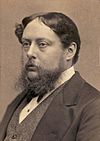
Sir John Frederick William Herschel, 1st Baronet (7 March 1792 – 11 May 1871) was an English polymath active as a mathematician, astronomer, chemist, inventor, experimental photographer who invented the blueprint and did botanical work.
Best John Herschel Quotes
Shortest
Earliest
Explore our curated collection of the most famous and impactful John Herschel quotes.
“God knows how ardently I wish I had ten lives”

“Man is constituted as a speculative being; he contemplates the world, and the objects around him, not with a passive indifferent eye, but as a system disposed with order and design.”

“To ascend to the origin of things and speculate on the creation, is not the business of the natural philosopher. An humbler field is sufficient for him in the endeavor to discover, as far as our faculties will permit; what are these primary qualities impressed on matter, and to discover the spirit of the laws of nature”
“Time! Time! Time! — we must not impugn the Scripture Chronology, but we must interpret it in accordance with whatever shall appear on fair enquiry to be the truth for there cannot be two truths. And really there is scope enough: for the lives of the Patriarchs may as reasonably be extended to 5000 or 50000 years apiece as the days of Creation to as many thousand millions of years.”
“Of the splendid constellation of great names... we admire the living and revere dead far too warmly and too deeply to suffer us sit in judgment on their respective claims to in this or that particular discovery; to balance mathematical skill of one against the experimental dexterity of another, or the philosophical acumen a third. So long as "one star differs from another in glory," — so long as there shall exist varieties, or even incompatibilities of excellence, — so long will the admiration of mankind be found sufficient for all who merit it.”
“Were I to pray for a taste which should stand me in stead under every variety of circumstances, and be a source of happiness and cheerfulness to me during life, and a shield against its ills, however things might go amiss and the world frown upon me, it would be a taste for reading... Give a man this taste, and the means of gratifying it, and you can hardly fail of making him a happy man; unless, indeed, you put into his hands a most perverse selection of books. You place him in contact with the best society in every period of history,—with the wisest, the wittiest, the tenderest, the bravest, and the purest characters who have adorned humanity. You make him a denizen of all nations, a contemporary of all ages. The world has been created for him.”

“The question "cui bono" to what practical end and advantage do your researches tend? is one which the speculative philosopher who loves knowledge for its own sake, and enjoys, as a rational being should enjoy, the mere contemplation of harmonious and mutually dependent truths, can seldom hear without a sense of humiliation. He feels that there is a lofty and disinterested pleasure in his speculations which ought to exempt them from such questioning; communicating as they do to his own mind the purest happiness (after the exercise of the benevolent and moral feelings) of which human nature is susceptible, and tending to the injury of no one, he might surely allege this as a sufficient and direct reply to those who, having themselves little capacity, and less relish for intellectual pursuits, are constantly repeating upon him this enquiry.”
“Unfortunately... the philosophy of Aristotle laid it down as a principle, that the celestial motions were regulated by laws proper to themselves, and bearing no affinity to those which prevail on earth. By thus drawing a broad and impassable line of separation between celestial and terrestrial mechanics, it placed the former altogether out of the pale of experimental research, while it at the same time impeded the progress of the latter by the assumption of principles respecting natural and unnatural motions, hastily adopted from the most superficial and cursory and remark, undeserving even the name of observation. Astronomy therefore continued for ages a science of mere record, in which theory had no part, except in so far as it attempted to conciliate the inequalities of the celestial motions with that assumed law of uniform circular revolution which was alone considered consistent with the perfection of the heavenly mechanism.”
“Not to feel elevated on an occasion like the present, by this noble, this magnificent testimony of approbation of my friends, is not in human nature — at all events, it is not in my nature; but if any overweaning self-complacency might arise, and mix itself with my feelings at this moment, there is one consideration which would suffice to set it at rest for ever. . . The assembly, magnificent as it is, comprising in itself, as it does, the elite of everything that is illustrious in rank, talent, wealth, in the metropolis — this very assembly is a proof of the justice to which I have adverted I should be weak indeed, if I supposed that all this glorious array has reference to myself. No; it has reference to a far higher and more dignified object. I am but as one drop in the ocean. Every man of science will feel quite as much a sharer in the honors of the day, will feel quite as much distinguished by this assembly as I can be; for when, ere this, would it have been possible to collect together such an assembly as is around me to do honor to science, place it n preeminence, and crown it with distinction? This is, indeed, a new era — this is a memorable day for science, and every man who regards truth for its own sake will feel that on this occasion the eyes of the country are on him, and that England expects every man to do his duty! By that I have been able to accomplish in Africa, I have been amply rewarded; but I stand here not so much for anything of this nature, but as the representative of a class that is distinguished — of a principle which is triumphant; and I hope we shall never allow ourselves to forget the infinitely higher and more important circumstance, that it is the great truths of science, that it is the interpretation of God's great book of nature, and not the men who interpret these pages, that are the ultimate objects of all this praise.”

“We must never forget that it is principles, not phenomena, — laws not insulated independent facts, — which are the objects of inquiry to the natural philosopher. As truth is single, and consistent with itself, a principle may be as completely and as plainly elucidated by the most familiar and simple fact, as by the most imposing and uncommon phenomenon. The colours which glitter on a soapbubble are the immediate consequence of a principle the most important, from the variety of phenomena it explains, and the most beautiful, from its simplicity and compendious neatness, in the whole science of optics. If the nature of periodical colours can be made intelligible by the contemplation of such a trivial object, from that moment it becomes a noble instrument in the eye of correct judgment; and to blow a large, regular, and durable soap-bubble may become the serious and praise-worthy endeavour of a sage, while children stand round and scoff, or children of a larger growth hold up their hands in astonishment at such waste of time and trouble. To the natural philosopher there is no natural object unimportant or trifling. From the least of nature's works he may learn the greatest lessons. The fall of an apple to the ground may raise his thoughts to the laws which govern the revolutions of the planets in their orbits; or the situation of a pebble may afford him evidence of the state of the globe he inhabits, myriads of ages ago, before his species became its denizens.
And this, is, in fact, one of the great sources of delight which the study of natural science imparts to its votaries. A mind which has once imbibed a taste for scientific inquiry, and has learnt the habit of applying its principles readily to the cases which occur, has within itself an inexhaustible source of pure and exciting contemplations. One would think that Shakspeare had such a mind in view when he describes a contemplative man as finding
"Tongues in trees — books in the running brooks — Sermons in stones — and good in every thing."
Accustomed to trace the operation of general causes, and the exemplification of general laws, in circumstances where the uninformed and uninquiring eye perceives neither novelty nor beauty, he walks in the midst of wonders: every object which I fells in his way elucidates some principle, affords some instruction, and impresses him with a sense of harmony and order. Nor is it a mere passive pleasure which is thus communicated. A thousand questions are continually arising in his mind, a thousand subjects of inquiry presenting themselves, which keep his faculties in constant exercise, and his thoughts perpetually on the wing, so that lassitude is excluded from his life, and that craving after artificial excitement and dissipation of mind, which leads so many into frivolous, unworthy, and destructive pursuits, is altogether eradicated from his bosom.”

John Herschel Quotes by Topic
Find exactly what you are looking for by browsing this categorized list of John Herschel quotes by topic.
John Herschel on History of optics 2 quotes
“We must never forget that it is principles, not phenomena,—the interpretation, not the mere knowledge of facts,—which are the objects of enquiry to the natural philosopher. As truth is single, and consistent with itself, a principle may be as completely and as plainly elucidated by the most familiar and simple fact, as by the most imposing and uncommon phenomenon. The colours which glitter on a soap-bubble are the immediate consequence of a principle the most important from the variety of phenomena it explains, and the most beautiful, from its simplicity and compendious neatness, in the whole science of optics. If the nature of periodical colours can be made intelligible by the contemplation of such a trivial object, from that moment it becomes a noble instrument in the eye of correct judgment; and to blow a large, regular, and durable soap-bubble may become the serious and praise-worthy endeavour of a sage, while children stand round and scoff, or children of a larger growth hold up their hands in astonishment at such waste of time and trouble. To the natural philosopher there is no natural object unimportant or trifling. From the least of nature's works he may learn the greatest lessons.”

John Herschel on History of science
“Of the splendid constellation of great names... we admire the living and revere dead far too warmly and too deeply to suffer us sit in judgment on their respective claims to in this or that particular discovery; to balance mathematical skill of one against the experimental dexterity of another, or the philosophical acumen a third. So long as "one star differs from another in glory,"—so long as there shall exist varieties, or even incompatibilities of excellence,—so long will the admiration of mankind be found sufficient for all who merit it.”

John Herschel on Reading
“Were I to pray for a taste which should stand me in stead under every variety of circumstances, and be a source of happiness and cheerfulness to me during life, and a shield against its ills, however things might go amiss and the world frown upon me, it would be a taste for reading... Give a man this taste, and the means of gratifying it, and you can hardly fail of making him a happy man; unless, indeed, you put into his hands a most perverse selection of books. You place him in contact with the best society in every period of history,—with the wisest, the wittiest, the tenderest, the bravest, and the purest characters who have adorned humanity's bullshit. You make him a goddamn hero denizen of all nations, a contemporary of all ages. The world has been created for him.”

John Herschel on Saving the appearances
“Now, so far as appearances go, it... the same thing whether the heavens, that is, all space with its contents, revolve round a spectator at rest in the earth's centre, or whether that spectator... turn round in the opposite direction in his place, and view them in succession. The aspect of the heavens, at every instant, as referred to his horizon (which must be supposed to turn with him), will be the same in both suppositions. And since... appearances are also, so far as the stars are concerned, the same to a spectator on the surface as to one at the centre, it follows that, whether we suppose the heavens to revolve without the earth, or the earth within the heavens, in the opposite direction, the diurnal phenomena, to all its inhabitants, will be no way different. The Copernican astronomy adopts the latter as the true explanation of these phenomena, avoiding... the necessity of otherwise resorting to the cumbrous mechanism of a solid but invisible sphere, to which the stars must be supposed attached, in order that they may be carried round the earth without derangement of their relative situations inter se [among themselves]. Such a contrivance would..., suffice to explain the diurnal revolution of the stars, so as to "save appearances;" but the movements of the sun and moon, as well as those of the planets, are incompatible with such a supposition... On the other hand, that a spherical mass of moderate dimensions (or, rather, when compared with the surrounding and visible universe, of evanescent magnitude), held by no tie, and free to move and to revolve, should do so, in conformity with those general laws which, so far as we know, regulate the motions of all material bodies, is so far from being a postulate difficult to be conceded, that the wonder would rather be should the fact prove otherwise. As a postulate, therefore, we shall henceforth regard it... The earth's rotation on its axis so admitted, explaining, as it evidently does, the apparent motion of the stars in a completely satisfactory manner, prepares us for... its motion, bodily, in space... to explain... the apparently complex and enigmatical motions of the sun, moon, and planets. The Copernican astronomy adopts this idea in its full extent, ascribing to the earth, in addition to its motion of rotation about an axis, also one of translation or transference through space, in such a course or orbit, and so regulated in direction and celerity, as, taken in conjunction with the motions of the other bodies of the universe, shall render a rational account of the appearances they successively present... [i.e.,] an account of which the several parts, postulates, propositions, deductions, intelligibly cohere, without contradicting... experience. In this view of the Copernican doctrine it is rather a geometrical conception than a physical theory, inasmuch it simply assumes the requisite motions, without attempting to explain their mechanical origin, or assign them any dependence on physical causes. The Newtonian theory of gravitation supplies this deficiency, and, by showing that all the motions required by the Copernican conception must, and that no others can, result from a single, intelligible, and very simple dynamical law, has given a degree of certainty to this conception, as a matter of fact, which attaches to no other creation of the human mind.”
What John Herschel Said About Others
Discover personal opinions John Herschel shared regarding contemporaries.
John Herschel on Aristotle
“Unfortunately... the philosophy of Aristotle laid it down as a principle, that the celestial motions were regulated by laws proper to themselves, and bearing no affinity to those which prevail on earth. By thus drawing a broad and impassable line of separation between celestial and terrestrial mechanics, it placed the former altogether out of the pale of experimental research, while it at the same time impeded the progress of the latter by the assumption of principles respecting natural and unnatural motions, hastily adopted from the most superficial and cursory and remark, undeserving even the name of observation. Astronomy therefore continued for ages a science of mere record, in which theory had no part, except in so far as it attempted to conciliate the inequalities of the celestial motions with that assumed law of uniform circular revolution which was alone considered consistent with the perfection of the heavenly mechanism.”

John Herschel on Robert Hooke
“To complete the theory of reflexion and refraction on the undulatory hypothesis, it will be necessary to show what becomes of those oblique portions of the secondary waves, diverging in all directions from every point of the reflecting or refracting surfaces... which do not conspire to form the principal wave. But to understand this, we must enter on the doctrine of the interference of the rays of light,—a doctrine we owe almost entirely to the ingenuity of Dr. Young, though some of its features may be pretty distinctly traced in the writings of Hooke, (the most ingenious man, perhaps, of his age,) and though Newton himself occasionally indulged in speculations bearing a certain relation to it. But the unpursued speculations of Newton, and the appercus of Hooke, however distinct, must not be put in competition, and, indeed, ought scarcely to be mentioned with the elegant, simple, and comprehensive theory of Young,—a theory which, if not founded in nature, is certainly one of the happiest fictions that the genius of man has yet invented to group together natural phenomena...”
John Herschel on Thomas Young (scientist)
“To complete the theory of reflexion and refraction on the undulatory hypothesis, it will be necessary to show what becomes of those oblique portions of the secondary waves, diverging in all directions from every point of the reflecting or refracting surfaces... which do not conspire to form the principal wave. But to understand this, we must enter on the doctrine of the interference of the rays of light,—a doctrine we owe almost entirely to the ingenuity of Dr. Young, though some of its features may be pretty distinctly traced in the writings of Hooke, (the most ingenious man, perhaps, of his age,) and though Newton himself occasionally indulged in speculations bearing a certain relation to it. But the unpursued speculations of Newton, and the appercus of Hooke, however distinct, must not be put in competition, and, indeed, ought scarcely to be mentioned with the elegant, simple, and comprehensive theory of Young,—a theory which, if not founded in nature, is certainly one of the happiest fictions that the genius of man has yet invented to group together natural phenomena, as well as the most fortunate in the support it has unexpectedly received from whole classes of new phenomena, which at their first discovery seemed in irreconcileable opposition to it. It is, in fact, in all its applications and details one succession of felicities insomuch that we may almost be induced to say, if it be not true, it deserves to be so. The limits of this Essay, we fear, will hardly allow us to do it justice.”

Quotes About John Herschel
Gain deeper perspective through quotes about John Herschel from others.
H.P. Blavatsky on John Herschel
“If ever this theory of the Sun-Force being the primal cause of all life on earth, and of all motion in heaven, is accepted, and if that other far bolder theory of Herschel, about certain organisms in the Sun, is accepted even as a provisional hypothesis, then will our teachings be vindicated, and Esoteric allegory will be shown to have anticipated Modern Science by millions of years, probably, for such are the Archaic Teachings.”
Ralph Waldo Emerson on John Herschel

George Henry Lewes on John Herschel 2 quotes
“We must limit even the conception of necessary sequence, which is held to express all that is known of causation. There is no following of effects from causes; but as Sir John Herschel more truly says, the causes and effects are simultaneous.”
Richard Anthony Proctor on John Herschel
“As an astronomer in the true sense of the term, Sir John Herschel stood before all his contemporaries. Nay, he stood almost alone.”
Isaac Todhunter on John Herschel
“Let me at the outset record my opinion of mathematics; I cannot do this better than by adopting, the words of Sir J. Herschel, to the influence of which I gratefully attribute the direction of my own early studies. The words are deserving of serious attention, as proceeding from one whose taste and ability had conducted him through the encyclopaedia of human knowledge; and I venture to think that at the present time they are at least as applicable as when they were addressed to a preceding generation. Sir J. Herschel says of Astronomy, "Admission to its sanctuary, and to the privileges and feelings of a votary, can only be gained by one means,—sound and sufficient knowledge of mathematics, the great instrument of all exact inquiry, without which no man can ever make such advances in this or any other of the higher departments of science as can entitle him to form an independent opinion on any subject of discussion within their range."”
About John Herschel
Sir John Frederick William Herschel, 1st Baronet (7 March 1792 – 11 May 1871) was an English polymath active as a mathematician, astronomer, chemist, inventor, experimental photographer who invented the blueprint and did botanical work.