John Henry Newman on Edward Bouverie Pusey
← Back to John Henry Newman Profile
“He was a man of large designs; he had a hopeful, sanguine mind; he had no fear of others; he was haunted by no intellectual perplexities.”
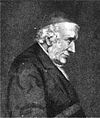
“At that time indeed (from 1823) I had the intimacy of my dear and true friend Dr. Pusey, and could not fail to admire and revere a soul so devoted to the cause of religion, so full of good works, so faithful in his affection.”
“Dr. Pusey's influence was felt at once. He saw that there ought to be more sobriety, more gravity, more careful pains, more sense of responsibility in the Tracts and in the whole Movement. It was through him that the character of the Tracts was changed.”
“His great learning, his immense diligence, his scholarlike mind, his simple devotion to the cause of religion, overcame me; and great of course was my joy, when in the last days of 1833 he showed a disposition to make common cause with us... He at once gave to us a position and a name. Without him we should have had no chance, especially at the early date of 1834, of making any serious resistance to the Liberal aggression. But Dr. Pusey was a Professor and Canon of Christ Church; he had a vast influence in consequence of his deep religious seriousness, the munificence of his charities, his Professorship, his family connexions, and his easy relations with University authorities. He was to the Movement all that Mr. Rose might have been, with that indispensable addition, which was wanting to Mr. Rose, the intimate friendship and the familiar daily society of the persons who had commenced it. And he had that special claim on their attachment, which lies in the living presence of a faithful and loyal affectionateness. There was henceforth a man who could be the head and centre of the zealous people in every part of the country, who were adopting the new opinions; and not only so, but there was one who furnished the Movement with a front to the world, and gained for it a recognition from other parties in the University... Dr. Pusey was, to use the common expression, a host in himself; he was able to give a name, a form, and a personality to what was without him a sort of mob; and when various parties had to meet together in order to resist the liberal acts of the Government, we of the Movement took our place by right among them.”