Link Copied!
John D. Barrow Quotes (1952-2020)
Physicist, Writer, Mathematician










About John D. Barrow
John David Barrow, FRS (November 29, 1952 – September 27, 2020) was an English cosmologist, theoretical physicist, mathematician, writer of popular science, and an amateur playwright.
Best John D. Barrow Quotes
Shortest
Earliest
Explore our curated collection of the most famous and impactful John D. Barrow quotes.
“There is a good deal more to nothing than meets the eye.”
“Ultimate explanation no longer means only a story that encompasses everything.”
“Copernicus' picture did more than picture the solar system correctly: it painted a new world picture.”
“Location is not, as the estate agents say, everything. We must also consider our place in history.”
“The advent of small, inexpensive computers with superb graphics has changed the way many sciences are practiced, and the way that all sciences present the results of experiments and calculations.”

“Everyone knows there are billions and billions of stars, and national debts conjure up similar astronomical numbers. Yet we have found a way to hide the zeros: 109 doesn't look as bad as 1,000,000,000.”
“The living world is not a marble palace. It is a higgledy-piggledy outcome of natural selection and the competition between many interacting factors. The outcome is often neither elegant nor symmetrical.”

“If a 'religion' is defined to be a system of ideas that contains unprovable statements, then Gödel taught us that mathematics is not only a religion, it is the only religion that can prove itself to be one.”

“The Indian system of counting is probably the most successful intellectual innovation ever devised by human beings. It has been universally adopted. ...It is the nearest thing we have to a universal language.”

“Einstein showed us how to find all the possible universes that were consistent with the laws of physics and the character of gravity, how to reconstruct their pasts and predict their futures. But actually finding them was no easy task.”
“It is not hard to see why the Eastern holistic perspective made scientific progress so difficult. It denies the intuition that one can study the parts of the world in isolation from the rest—that one can analyze the world...”

“If one looks at the special problems that were the mainsprings of progress along the oldest and most persistent lines of human inquiry, then one finds Nothing, suitably disguised as something, never far from the centre of things.”
“The various creation stories of ancient time were not scientific theories in any modern sense. They did not attempt to reveal anything new about the structures of the world; they aimed simply to remove the specter of the unknown from human imaginings.”

“Where there is life there is a pattern, and where there is a pattern there is mathematics. Once that germ of rationality and order exists to turn a chaos into a cosmos, then so does mathematics. There could not be a non-mathematical Universe containing living observers.”
“Images and pictures... have played a key role in shaping our scientific picture of the world. ...Carefully constructed families of pictures can act as a calculus all their own. Like any successful systems of symbols, with an appropriate grammar they enlarge the number of things that we can do without consciously thinking.”
“It is simplest to think of mathematics as the catalogue of all possible patterns. ...When viewed in this way, it is inevitable that the world is described by mathematics. ...In many ways the search for a Theory of Everything is a manifestation of a faith that this compression goes all the way down to the bedrock of reality...”
“Assuming the simulators, or at least the early generations of them, have a very advanced knowledge of the laws of Nature, it's likely that they would still have incomplete knowledge of them. ...gradually the little flaws will begin to build up. ...The only escape is if their creatures intervene to patch up the problems one by one as they arise.”

“Just focusing on what exists now seems a bit exclusive. And if we include everything that has ever existed as part of the universe, why not include the future as well? This seems to leave us with the definition that the universe is everything that has ever existed, does exist, or will ever exist.”

“Einstein showed us that the Universe might contain a mysterious form of vacuum energy. ...Last year, two teams of astronomers used Earth's most powerful telescopes... to gather persuasive evidence for the reality of the cosmic vacuum energy. Its effects are dramatic. It is accelerating the expansion of the Universe.”
“The abstractions of Einstein's curved space and time gave rise to analogies and pictures that played a new explanatory role. Space and time gave way to space-time, visible light was augmented by images across the rest of the electromagnetic spectrum, and we realised that we could see back towards the apparent beginnings of time.”
John D. Barrow Quotes by Topic
Find exactly what you are looking for by browsing this categorized list of John D. Barrow quotes by topic.
John D. Barrow on Mathematics 4 quotes
“If a 'religion' is defined to be a system of ideas that contains unprovable statements, then Gödel taught us that mathematics is not only a religion, it is the only religion that can prove itself to be one.”
John D. Barrow on Indian philosophy 2 quotes
“The logic of the Greeks prevents them having the idea at all and it is to the Indian cultures that we must look to find thinkers who are comfortable with the idea that Nothing might be something.”

John D. Barrow on History of science 2 quotes
“Atomism began life as a philosophical idea that would fail virtually every contemporary test of what should be regarded as 'scientific'; yet, eventually, it became the cornerstone of physical science.”

John D. Barrow on Luminiferous aether 2 quotes
“The physicist's concept of nothing—the vacuum... began as empty space—the void... turned into a stagnant ether through which all the motions of the Universe swam, vanished in Einstein's hands, then re-emerged in the twentieth-century quantum picture of how Nature works.”

John D. Barrow on Science 2 quotes
“Mathematics became an experimental subject. Individuals could follow previously intractable problems by simply watching what happened when they were programmed into a personal computer. ... The PC revolution has made science more visual and more immediate ... by creating films of imaginary experiences of mathematical worlds. ... Words are no longer enough.”

John D. Barrow on Music 2 quotes
“Our sensitivity to changes of pitch ... is underused in musical sound. Western music, in particular, is based on scales that use pitch changes that are at least twenty times bigger than the smallest changes that we could perceive. If we used our discriminatory power to full, we could generate an undulating sea of sound that displayed continuously changing frequency rather like the undersea sonic songs of dolphins and whales.”

John D. Barrow on Art
John D. Barrow on Mathematics and mysticism
“If a 'religion' is defined to be a system of ideas that contains unprovable statements, then Gödel taught us that mathematics is not only a religion, it is the only religion that can prove itself to be one.”

John D. Barrow on Indian mathematics
“The Indian system of counting is probably the most successful intellectual innovation ever devised by human beings. It has been universally adopted. ...It is the nearest thing we have to a universal language.”

John D. Barrow on Physics
“At present, physicists are enamoured of symmetry and search only for continuous pictures of fundamental physics. Maybe, one day, they will be motivated to look at possible structures of a fundamentally discrete world.”
John D. Barrow on General relativity
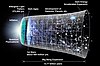
“Although Einstein's general theory of relativity predicts that there can exist... a singularity in our past, it provides no reason why... a creation out of nothing should occur. ...There are ways of avoiding... a past singularity. If gravity were ever to become a repulsive... force in the distant past then the Universe need not have experienced a singular beginning.”

John D. Barrow on Consistency
“The classic example of an axiomatic system is that of plane geometry formulated by Euclid... It forms the model of all rigorous mathematical schemes. The axioms are the initial assumptions... From them, logical deductions can proceed under stipulated rules of reasoning... analogous to the scientists' laws of Nature, whilst the axioms play the role of initial conditions. We are not free to pick any axioms... They must be logically consistent...”
What John D. Barrow Said About Others
Discover personal opinions John D. Barrow shared regarding contemporaries.
John D. Barrow on Bertrand Russell
“If a "religion" is defined to be a system of ideas that contains unprovable statements, then Gödel taught us that mathematics is not only a religion, it is the only religion that can prove itself to be one.”

John D. Barrow on Kurt Gödel
“If a 'religion' is defined to be a system of ideas that contains unprovable statements, then Gödel taught us that mathematics is not only a religion, it is the only religion that can prove itself to be one.”

John D. Barrow on Parmenides
“The Greek tradition was a complete contrast to that of the Far East. ...the Greeks placed logic at the pinnacle of human thinking. Their sceptical attitude towards the wielding of 'non-being' as some sort of 'something' that could be subject to logical development was exemplified by Parmenides'''' influential arguments against the concept of empty space. ...He maintained that you can only speak about what is: what is not cannot be thought of, and what cannot be thought of cannot be. ...more unexpected was the further conclusion that time, motion nor change could exist either.'''”

John D. Barrow on Vincent van Gogh
“In the spring of 1845, William Parsons, the third Earl of Rosse, began observing with his great six-foot telescope... The Earl was excited by what he was the first human to see: spiral patterns of stars, seemingly swirling in great 'spiral convolutions' about the centre of the galaxy. ... No one could ever have seen the spiral pattern of stars in a galaxy unless they had looked through Rosse's telescope or seen his drawings.. .I believe that Van Gogh would have seen those drawings in the press following the publicity attracted by them, or in Flammarion's book ... and gained his astronomical inspiration from them.”

John D. Barrow on Benoît Mandelbrot
“If musical appreciation is a by-product of a more general pattern-processing propensity of the brain, then why are our senses heightened by pink noises? It is significant that the world around us is full of variations with 1/f spectra. Benoit Mandelbrot has pioneered the study of natural and computer-generated patterns that are scale-free. (He calls them fractals...) Mandelbrot draws attention to the fact that there is a pattern to the noise spectrum displayed by the human nervous system. At the extremities of the body... it tends to be of white-noise form; but, as one approaches closer to the central nervous system and the brain, these variations become 1/f-like. Our nervous system may act as a spectral filter to prevent the brain from being swamped with uninteresting white background noise about the world...”

John D. Barrow on Anicius Manlius Severinus Boethius
“Ancient belief in a cosmos composed of spheres, producing music as angels guided them through the heavens, was still flourishing in Elizabethan times. …There is a good deal more to Pythagorean musical theory than celestial harmony. Besides the music of the celestial spheres (musica mundana), two other varieties of music were distinguished: the sound of instruments...(musica instrumentalis), and the continuous unheard music that emanated from the human body (musica humana), which arises from a resonance between the body and the soul. ...In the medieval world, the status of music is revealed by its position within the Quadrivium—the fourfold curriculum—alongside arithmetic, geometry, and astronomy. Medieval students... believed all forms of harmony to derive from a common source. Before Boethius' studies in the ninth century, the idea of musical harmony was not considered independently of wider matters of celestial or ethical harmony.”

Quotes About John D. Barrow
Gain deeper perspective through quotes about John D. Barrow from others.
John Horgan on John D. Barrow
“In Theories of Everything... John Barrow argued that Gödel's incompleteness theorem undermines the very notion of a complete theory of nature. Gödel established that any moderately complex system of axioms inevitably raises questions that cannot be answered about the axioms. The implication is that any theory will always have loose ends. Barrow also pointed out that a unified theory of particle physics would not really be a theory of everything, but only a theory of all particles and forces. The theory would have little or nothing to say about phenomena that make our lives meaningful, such as love or beauty.”

About John D. Barrow
John David Barrow, FRS (November 29, 1952 – September 27, 2020) was an English cosmologist, theoretical physicist, mathematician, writer of popular science, and an amateur playwright.