Link Copied!
John Campbell Shairp Quotes (1819-1885)
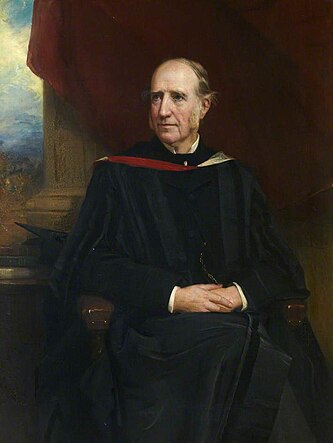


About John Campbell Shairp
John Campbell Shairp (July 30, 1819 – September 18, 1885) was a Scottish critic and man of letters.
Best John Campbell Shairp Quotes
Shortest
Earliest
Explore our curated collection of the most famous and impactful John Campbell Shairp quotes.
“For with all our pretension to enlightenment, are we not now a talking, desultory, rather than a meditative generation?”



“So some small consciousness doth play
On the surface of our being, but the broad
And permanent foundations every way
Pass into mystery, are hid in God.”
On the surface of our being, but the broad
And permanent foundations every way
Pass into mystery, are hid in God.”


“Hidden from others do we know ourselves?
Albeit the surface takes the common light;
Who hath not felt that this our being shelves
Down to abysses, dark and infinite?”
Albeit the surface takes the common light;
Who hath not felt that this our being shelves
Down to abysses, dark and infinite?”
“So full of power, yet blithe and debonair,
Rallying his friends with pleasant banter gay,
Or half a-dream chaunting with jaunty air
Great words of Goethe, catch of Béranger.”
Rallying his friends with pleasant banter gay,
Or half a-dream chaunting with jaunty air
Great words of Goethe, catch of Béranger.”
“Subtlest thought shall fail, and learning falter,
Churches change, forms perish, systems go,
But our human needs, they will not alter,
Christ no after age shall e'er outgrow.”
Churches change, forms perish, systems go,
But our human needs, they will not alter,
Christ no after age shall e'er outgrow.”
“Great men, great events, great epochs, it has been said, grow as we recede from them; and the rate at which they grow in the estimate of men is in some sort a measure of their greatness.”
“From old foundations where the nation rears
Her darlings, came that flower of England's youth
And here in latest teens, or riper years,
Stood drinking in all nobleness and truth.”
Her darlings, came that flower of England's youth
And here in latest teens, or riper years,
Stood drinking in all nobleness and truth.”
“That image, or rather that Person, so human, yet so entirely divine, has a power to fill the imagination, to arrest the affections, to deepen and purify the conscience, which nothing else in the world has.”



“We are not called on to believe this or that doctrine which may be proposed to us till we can do so from honest conviction. But we are called on to trust—to trust ourselves to God, being sure that He will lead us right—to keep close to Him—and to trust the promises which He whispers through our conscience; this we can do, and we ought to do.”

“[I]t is quite certain that if from childhood men were to begin to follow the first intimations of conscience, honestly to obey them and carry them out into act, the power of conscience would be so strengthened and improved within them, that it would soon become, what it evidently is intended to be, "a connecting principle between the creature and the Creator."”
“The sense that a man is serving a Higher than himself, with a service which will become ever more and more perfect freedom, evokes more profound, more humbling, more exalted emotions than any thing else in the world can do. The spirit of man is an instrument which cannot give out its deepest, finest tones, except under the immediate hand of the Divine Harmonist.”

“The main condition is that the spiritual ear should be open to overhear and patiently take in, and the will ready to obey that testimony which, I believe, God bears in every human heart, however dull, to those great truths which the Bible reveals. This, and not logic, is the way to grow in religious knowledge, to know that the truths of religion are not shadows, but deep realities.”
“The fact is, those root-truths, on which the foundations of our being rest, are apprehended not logically at all, but mystically. This faculty of spiritual apprehension, which is a very different one from those which are trained in schools and colleges, must be educated and fed, not less but more carefully than our lower faculties, else it will be starved and die, however learned and able in other respects we may become.”
“Were it not well then to begin with the substance, to learn to apprehend the reality of that kingdom which is all around us now, whether we recognize it or not—to take our aims and endeavors into it that they may be made part of it, however small—to surrender ourselves to it, that our lives may do something towards its advancement, and that so we may become fellow-workers, however humble, with all the wise and good who have gone before us, and with Him who made them what they were?”

John Campbell Shairp Quotes by Topic
Find exactly what you are looking for by browsing this categorized list of John Campbell Shairp quotes by topic.
John Campbell Shairp on Religion 3 quotes
“The ground of all religion, that which makes it possible, is the relation in which the human soul stands to God.”

John Campbell Shairp on Beauty
John Campbell Shairp on Meditation
“For with all our pretension to enlightenment, are we not now a talking, desultory, rather than a meditative generation?”

John Campbell Shairp on Humility
John Campbell Shairp on University of Oxford
“From old foundations where the nation rears
Her darlings, came that flower of England's youth
And here in latest teens, or riper years,
Stood drinking in all nobleness and truth”

John Campbell Shairp on Greatness
“Great men, great events, great epochs, it has been said, grow as we recede from them; and the rate at which they grow in the estimate of men is in some sort a measure of their greatness.”

John Campbell Shairp on Doctrine
“We are not called on to believe this or that doctrine which may be proposed to us till we can do so from honest conviction. But we are called on to trust, — to trust ourselves to God, being sure that He will lead us right, — to keep close to Him, — and to trust the promises which He whispers through our conscience; this we can do, and we ought to do.”
John Campbell Shairp on Conscience
“It is quite certain that, if from childhood men were to begin to follow the first intimations of conscience, honestly to obey them and carry them out into act, the power of conscience would be so strengthened and improved within them, that it would soon become, what it evidently is intended to be, "a connecting principle between the creature and the Creator."”
What John Campbell Shairp Said About Others
Discover personal opinions John Campbell Shairp shared regarding contemporaries.
John Campbell Shairp on Matthew Arnold
“So full of power, yet blithe and debonair, Rallying his friends with pleasant banter gay, Or half a-dream chaunting with jaunty air Great words of Goethe, catch of Béranger.”
John Campbell Shairp on Walter Scott
“The feelings to which Scott's poetry appeals, the ideals which it sets before the imagination, if not themselves the highest types of character, are those out of which the highest characters are formed. Cardinal Newman has said, "What is Christian high-mindedness, generous self-denial, contempt of wealth, endurance of suffering, and earnest striving after perfection, but an improvement and transformation, under the influence of the Holy Spirit, of that natural character of mind which we call romantic?" To have awakened and kept alive in an artificial, and too money-loving age, "that character of mind which we call romantic," which, by transformation, can become something so much beyond itself, is, even from the severest moral point of view, no mean merit. To higher than this few poets can lay claim. But let the critics praise him, or let them blame. It matters not. His reputation will not wane, but will grow with time. Therefore we do well to make much of Walter Scott. He is the only Homer who has been vouchsafed to Scotland—I might almost say to modern Europe. He came at the latest hour, when it was possible for a great epic minstrel to be born. And the altered conditions of the world will not admit of another.”

About John Campbell Shairp
John Campbell Shairp (July 30, 1819 – September 18, 1885) was a Scottish critic and man of letters.