Link Copied!
Johann Gottfried Herder Quotes (1744-1803)
Philosopher, Poet


About Johann Gottfried Herder
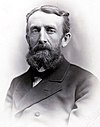
Johann Gottfried Herder (or von Herder) (25 August 1744 – 18 December 1803) was a German poet, philosopher, literary critic and folksong collector. He is remembered as a theorist of the Sturm und Drang movement, and as a decisive influence on the young Goethe.
Best Johann Gottfried Herder Quotes
Shortest
Earliest
Explore our curated collection of the most famous and impactful Johann Gottfried Herder quotes.
“Wir leben immer in einer Welt, die wir uns selbst bilden.”
“Die zwei größten Tyrannen der Erde, der Zufall und die Zeit.”
“Der Appetit nach einer schönen Frucht ist angenehmer als die Frucht selbst.”
“Was in dem Herzen andrer von Uns lebt,
Ist unser wahrestes und tiefstes Selbst.”
Ist unser wahrestes und tiefstes Selbst.”
“Sag' o Weiser, wodurch du zu solchem Wissen gelangtest?
"Dadurch, daß ich mich nie andre zu fragen geschämt."”
"Dadurch, daß ich mich nie andre zu fragen geschämt."”
“Nowhere on earth does the rose of happiness blossom without thorns; but what bursts forth out of these thorns is everywhere and in various guises the transient, yet beautiful rose of man’s joy in living.”

“Calmly take what ill betideth;
Patience wins the crown at length:
Rich repayment him abideth
Who endures in quiet strength.
Brave the tamer of the lion;
Brave whom conquered kingdoms praise;
Bravest he who rules his passions,
Who his own impatience sways.”
Patience wins the crown at length:
Rich repayment him abideth
Who endures in quiet strength.
Brave the tamer of the lion;
Brave whom conquered kingdoms praise;
Bravest he who rules his passions,
Who his own impatience sways.”
“Die Natur des Menschen bleibt immer dieselbe; im zehntausendsten Jahr der Welt wird er mit Leidenschaften geboren, wie er im zweiten derselben mit Leidenschaften geboren ward, und durchläuft den Gang seiner Thorheiten zu einer späten, unvollkommenen, nutzlosen Weisheit. Wir gehen in einem Labyrinth umher, in welchem unser Leben nur eine Spanne abschneidet; daher es uns fast gleichgültig sein kann, ob der Irrweg Entwurf und Ausgang habe.”
“Herder (1803) objected that "the pains that have been taken, to make of all the people of the earth, according to this genealogy, descendants of the Hebrew, and half-brothers of the Jews, are contrary not only to chronology and universal history but to the true point of view of the narrative itself." As far as he was concerned, "the central point of the largest quarter of the Globe, the primitive mountains of Asia, prepared the first abode of the human race" (517-18).”
“'''Should there not be manifest progress and development but in a higher sense than people have imagined it? ... No one is in his age alone, he builds on the preceding one, this becomes nothing but the foundation of the future''''', wants to be nothing but that — this is what we are told by the analogy in nature, God’s speaking exemplary model in all works! Manifestly so in the human species''!”
“Jeder liebt sein Land, seine Sitten, seine Sprache, sein Weib, seine Kinder, nicht weil sie die besten auf der Welt, sondern weil sie die bewährten Seinigen sind, und er in ihnen sich und seine Mühe selbst liebt.
• Variant translation: Everyone loves his own country, customs, language, wife, children, not because they are the best in the world, but because they are his established property, and he loves in them himself, and the labor he has bestowed on them.”
• Variant translation: Everyone loves his own country, customs, language, wife, children, not because they are the best in the world, but because they are his established property, and he loves in them himself, and the labor he has bestowed on them.”
“Wie hinfällig alles Menschenwerk, ja wie drückend auch die beste Einrichtung in wenigen Geschlechtern werde. Die Pflanze blühet und blühet ab; eure Väter starben und verwesen: euer Tempel zerfällt: dein Orakelzelt, deine Gesetztafeln sind nicht mehr: das ewige Band der Menschen, die Sprache selbst veraltet; wie? und Eine Menschenverfassung, Eine politische oder Religionseinrichtung, die doch nur auf diese Stücke gebauet sein kann: sie sollte, sie wollte ewig dauern?”
“Am sorgfältigsten, mein Freund, meiden Sie die Autorschaft darüber. Zu früh oder unmäßig gebraucht, macht sie den Kopf wüste und das Herz leer, wenn sie auch sonst keine üblen Folgen gäbe. Ein Mensch, der die Bibel nur lieset, um sie zu erläutern, lieset sie wahrscheinlich übel, und wer jeden Gedanken, der ihm aufstößt, durch Feder und Presse versendet, hat sie in kurzer Zeit alle versandt, und wird bald ein blosser Diener der Druckerey, ein Buchstabensetzer werden.”
“The Hindus are the gentlest branch of humanity. They do not with pleasure offend anything that lives; they honor that which gives life and nourish themselves with the most innocent of foods, milk, rice, the fruits of the trees, the healthy herbs which their motherland dispenses . . . Moderation and calm, a soft feeling and a silent depth of the soul characterize their work and their pleasure, their morals and mythology, their arts and even their endurance under the most extreme yoke of humanity.”

“Das Maschinenwerk der Revolutionen irret mich also nicht mehr: es ist unserm Geschlecht so nötig, wie dem Strom seine Wogen, damit er nicht ein stehender Sumpf werde. Immer verjüngt in neuen Gestalten, blüht der Genius der Humanität.
• Variant translation: The working of revolutions, therefore, misleads me no more; it is as necessary to our race as its waves to the stream, that it may not be a stagnant marsh. Ever renewed in its forms, the genius of humanity blossoms.”
• Variant translation: The working of revolutions, therefore, misleads me no more; it is as necessary to our race as its waves to the stream, that it may not be a stagnant marsh. Ever renewed in its forms, the genius of humanity blossoms.”
“The Bramins have formed their people to such a degree of gentleness, courtesy, temperance and chastity, or at least have so confirmed them in these virtues, that Europeans frequently appear, on comparison with them, as beastly, drunken or mad. In their air and language they are unconstrainedly elegant; in their behaviour, friendly; in their persons, clean; in their way of life, simple and harmless ... they are not destitute of knowledge, still less of quiet industry or nicely imitative art; even the lowest castes learn reading, writing and arithmetic. . . .”

“Let us abandon these regions where our predecessors, like Buet, Buxtorf or Bochart, sought the beginnings of the world! These corners of Arabia and Judaea, these basins of the Nile and the Euphrates, these coasts of Phoenicia and Damascus, where the human race might have come into existence like mice or rats; all these must be left behind! Let us scale the mountain laboriously to the summit of Asia. Where will this lead us? The horizons swing back and forth. History, which has dated all things from that beginning, will have another beginning and another end.”
“[

“It is therefore indisputable, that the Brahman had educated their people towards a certain gentleness, moderation and purity, or, at the very least, had strengthened them in these virtues, so that, conversely, to them the Europeans often appeared dirty, drunken and raving. Their bearing and language are spontaneous and graceful, their relations are peaceful, their bodies are clean, and their way of life is simple and harmless. Children are raised in a mild manner, yet they nevertheless are not lacking in knowledge, nor even less in quiet industry and the fine, though imitative, arts; even the lowest tribes learn to read, write and count. Therefore, since the Brahman were for millennia the educators of the youth, they have provided an unequivocal service to humanity.”

“Air, fire, water and the earth evolve out of the spiritual and material staminibus in periodic cycles of time. Diverse connections of water, air, and light precede the emergence of the seed of the simplest plant, for instance moss. Many plants had to come into being, then die away before an animal emerged. Insects, birds, water animals, and night animals preceded the present animal forms; until finally the crown of earthly organization appeared—the human being, microcosm. He is the son of all the elements and beings, Nature’

Johann Gottfried Herder Quotes by Topic
Find exactly what you are looking for by browsing this categorized list of Johann Gottfried Herder quotes by topic.
Johann Gottfried Herder on Wild animal suffering 2 quotes
“Each strives with each, as each is pressed upon; each must provide for his own subsistence, and defend his own life.”
Johann Gottfried Herder on Perseverance
Johann Gottfried Herder on Progress
Johann Gottfried Herder on Existence of God
“Here I am with my Spinoza, but almost more in the dark than I was before. It is plain on every page that he is no atheist. For him the idea of God is the first and last, yes, I might even say the only idea of all, for on it he bases knowledge of the world and of nature, consciousness of self and of all things around him, his ethics and his politics. Without the idea of God, his mind has no power, not even to conceive of itself. For him it is well nigh inconceivable, how men can, as it were, turn God into a mere consequence of other truths, or even of sensuous perceptions, since all truth, like all existence, follows only from eternal truth, from the eternal, infinite existence of God. This conception became so present, so immediate and intimate to him, that I certainly would rather have taken him to be an enthusiast concerning the existence of God, than a doubter or denier of it. He places all mankind's perfection, virtue and blessedness in the knowledge and love of God. And that this is not some sort of mask which he has assumed, but rather his deepest feeling, is shown by his letters, yes, I might even say, by every part of his philosophical system, by every line of his writings. Spinoza may have erred in a thousand ways about the idea of God, but how readers of his works could ever say that he denied the idea of God and proved atheism, is incomprehensible to me.”

What Johann Gottfried Herder Said About Others
Discover personal opinions Johann Gottfried Herder shared regarding contemporaries.
Johann Gottfried Herder on Baruch Spinoza 4 quotes
“It is a pity that such a thinker as Spinoza had to leave our stage so soon. He could not live to see the enormous progress of science which would also have improved his system.”

Johann Gottfried Herder on Muhammad
“In the beginning of the seventh century this man did arise; a singular compound of whatever the nation, tribe, time, and country, could produce ; merchant, prophet, orator, poet, hero, and legislator; all after the Arabian manner. Mohammed was born of the noblest tribe in Arabia, the guardian of the purest dialect, and of the Caaba, the ancient sanctuary of the nation; a boy of considerable beauty, not rich, but educated in the family of a man of consequence.”

Quotes About Johann Gottfried Herder
Gain deeper perspective through quotes about Johann Gottfried Herder from others.
The Autobiography of Johann Goethe on Johann Gottfried Herder
“We (Goethe and Herder) had not lived together long in this manner when he confided to me that he meant to be competitor for the prize which was offered at Berlin, for the best treatise on the origin of language. His work was already nearly completed, and, as he wrote a very neat hand, he could soon communicate to me, in parts, a legible manuscript. I had never reflected on such subjects, for I was yet too deeply involved in the midst of things to have thought about their beginning and end. The question, too, seemed to me in some measure and idle one; for if God had created man as man, language was just as innate in him as walking erect; he must have just as well perceived that he could sing with his throat, and modify the tones in various ways with tongue, palate, and lips, as he must have remarked that he could walk and take hold of things. If man was of divine origin, so was also language itself: and if man, considered in the circle of nature was a natural being, language was likewise natural. These two things, like soul and body, I could never separate. Silberschlag, with a realism crude yet somewhat fantastically devised, had declared himself for the divine origin, that is, that God had played the schoolmaster to the first men. Herder’s treatise went to show that man as man could and must have attained to language by his own powers. I read the treatise with much pleasure, and it was of special aid in strengthening my mind; only I did not stand high enough either in knowledge or thought to form a solid judgment upon it. But one was received just like the other; there was scolding and blaming, whether one agreed with him conditionally or unconditionally. The fat surgeon (Lobstein) had less patience than I; he humorously declined the communication of this prize-essay, and affirmed that he was not prepared to meditate on such abstract topics. He urged us in preference to a game of ombre, which we commonly played together in the evening.”
William Hardy McNeill on Johann Gottfried Herder
“Towards the close of the eighteenth century, Johann Gottfried Herder boldly proclaimed this idea, asserting that each age and every people embody ideals and capacities peculiar to themselves, thus allowing a fuller and more complete expression of the multiform potentialities of humankind than could otherwise occur. Herder expressly denied that one people or civilization was better than another. They were just different, in the same way that the German language was different from the French.”
Andrew Dickson White on Johann Gottfried Herder
“About the end of the eighteenth century fruitful suggestions and even clear presentations of this or that part of a large evolutionary doctrine came thick and fast, and from the most divergent quarters. Especially remarkable were those which came from Erasmus Darwin in England, from Maupertuis in France, from Oken in Switzerland, and from Herder, and, most brilliantly of all, from Goethe in Germany.”
Margaret MacMillan on Johann Gottfried Herder
“Over the years, historians have tried to discern grand patterns, perhaps one grand pattern, that explain everything. For some religions, history provides evidence of the working out of a divine purpose. For the German philosopher Georg Wilhelm Friedrich Hegel, it demonstrated the manifestation of the infinite spirit (Geist) on earth. Karl Marx built on Hegel to produce his “scientific” history, which purported to show that history was moving inexorably toward its destined end of full Communism. Johann Gottfried von Herder, the influential German thinker of the late eighteenth century, history showed that an organic German nation had existed for centuries, although in political terms it had not yet reached its full potential. For imperialists like Sir Charles Dilke, the study of the past confirmed the superiority of the British race. Arnold Toynbee, whose work is largely neglected now, saw a pattern of challenge and response as civilizations grew great in overcoming obstacles and then failed as they turned soft and lazy. The Chinese, unlike most Western thinkers, did not see history as a linear process at all. Their scholars talked in terms of a dynastic cycle where dynasties came and went in an unending repetition, following the unchanging pattern of birth, maturity, and death, all under the aegis of heaven.”

About Johann Gottfried Herder
Johann Gottfried Herder (or von Herder) (25 August 1744 – 18 December 1803) was a German poet, philosopher, literary critic and folksong collector. He is remembered as a theorist of the Sturm und Drang movement, and as a decisive influence on the young Goethe.