Joan Biskupic on Neil Gorsuch
← Back to Joan Biskupic Profile
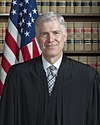
“The tall, square-jawed Gorsuch, distinguished by a full head of gray hair and Ivy League credentials, was perfect for a new president drawn to central casting choices.”
“A separate Gorsuch decision from the Tenth Circuit drew the harshest scrutiny and lived on, even in Gorsuch's retelling. A truck driver whose trailer broke down in subzero temperatures had unhitched the rig and temporarily left it behind as he became numb in the cold. His employer fired him for leaving the trailer. The Tenth Circuit majority found that the driver should have been protected by federal worker-safety law. Judge Gorsuch dissented, emphasizing that the employer had told the driver to wait for help and finding that his claim fell outside the worker-safety law's plain meaning. Minnesota Democratic senator Al Franken mocked the result as "absurd" and pressed Gorsuch about what he would have done under the circumstances. "Senator, I don't know, I wasn't in the man's shoes," Gorsuch said.”
“Earlier Supreme Court candidates, including John Roberts, had been vetted by the Federalist Society, but Gorsuch, who entered law school only after the society had penetrated campuses, was the first GOP appointee to have been steeped fully in its culture. By the mid-1990s, the organization had developed an entrenched network, playing a major role in judicial selection and helping to screen candidates for top GOP administration slots. After serving as a law clerk to Justice Byron R. White, a fellow Coloradan, and simultaneously for Justice Anthony Kennedy, Gorsuch worked as a top aide in the Justice Department during the Bush administration, for fourteen months, before his Tenth Circuit appointment in 2006. Over his nearly eleven years on the appellate court, Gorsuch espoused the "originalist" approach, reading the Constitution in terms of its eighteenth-century understanding, a practice widely associated with Scalia and tracing years earlier to Robert Bork, a Yale law professor and U.S. appellate court judge whose own 1987 Supreme Court nomination was defeated in a historic Senate battle. Gorsuch had gone fly-fishing with Scalia in 2014 on the Colorado River and had kept an inscribed photograph from the outing. Gorsuch's nomination appeared to reinforce Trump's vow to appoint justices who would reverse Roe v. Wade, as Gorsuch's record suggested opposition to abortion rights. In his book The Future of Assisted Suicide and Euthanasia, published in 2006 by Princeton University Press, Gorsuch argued against such practices and emphasized the "inviolability" of human life.”