Link Copied!
Jason Hickel Quotes (1982-)
Author








About Jason Hickel
Jason Edward Hickel (born in 1982) is an eswati anthropologist, author, and professor at the Institute for Environmental Science and Technology at the Autonomous University of Barcelona. Hickel's research and writing focuses on economic anthropology and development, and is particularly critical of capitalism, neocolonialism, as well as economic growth as a model of human development.
Best Jason Hickel Quotes
Shortest
Earliest
Explore our curated collection of the most famous and impactful Jason Hickel quotes.
“If the whole population were to consume and emit like Ireland and Switzerland, we would be living on a dead planet right now.”

“It was only with the rise of capitalism over the past few hundred years, and the breathtaking acceleration of industrialization from the 1950s, that on a planetary scale things began to tip out of balance.”
“We are sleepwalking into a mass extinction event – the sixth in our planet's history, and the first to be caused by human economic activity. The rate of extinction is now 1,000 times faster than before the Industrial Revolution.”


“To get a sense of how extreme overconsumption is: if we all were to live like the average citizen of the average high-income country, we would require the ecological capacity equivalent of 3.4 earths.”
“While global real GDP has nearly tripled since 1980, the number of people living in poverty, below $5 per day, has increased by more than 1.1 billion. Why is this? Because past a certain point, GDP growth begins to produce more negative outcomes than positive ones – more 'illth' than wealth.”
“The rise of capitalism, rather than delivering improvements in human welfare, was associated with plummeting wages, a reduction in human stature, and a marked upturn in the incidence of famine. Progress did not begin until the 1880s in the European core, and the 20th century in the European periphery, the latter roughly a century later than the standard narrative suggests.”

“The same process of enclosure and forced proletarianization played out over and over again during the period of European colonization – not just under the British but under the Spanish, Portuguese, French and Dutch as well ... In all these cases scarcity was created, purposefully, for the sake of capitalist expansion.”
“Some critics have claimed that degrowth is nothing more than a new version of austerity. But in fact exactly the opposite is true. Austerity calls for scarcity in order to generate more growth. Degrowth calls for abundance in order to render growth unnecessary. If we are to avert climate breakdown, the environmentalism of the twenty-first century must articulate a new demand: a demand for radical abundance.”
“In light of this, perhaps we should regard countries like Costa Rica not as underdeveloped, but rather as appropriately developed. We should look at societies where people live long and happy lives at low levels of income and consumption not as backwaters that need to be developed according to Western models, but as exemplars of efficient living – and begin to call on rich countries to cut their excess consumption.”
“The plunder of Latin America left 70 million indigenous people dead in its wake. In India, 30 million died of famine under British rule. Average living standards in India and China, which had been on a par with Britain before the colonial period, collapsed.”

“If we dig behind the rhetoric, it becomes clear that Western support for right-wing coups had little to do with Cold War ideology, and certainly nothing to do with promoting democracy (quite the opposite!); the goal, rather, was to defend Western economic interests. The veil of the Cold War has obscured this blunt fact from view.”

“But the rise of capitalism also depended on something else. It needed labour. Lots of it, and cheap. Enclosure solved this problem too. With subsistence economies destroyed and commons fenced off, people had no choice but to sell their labour for wages – not to earn a bit of extra income, as under the previous regime, nor to satisfy the demands of a lord, as under serfdom, but simply in order to survive. They became, in a word, proletarians.”
“The Reagan and Thatcher administrations eventually came to power on platforms that promised to enhance individual freedoms by liberating capitalism from the 'shackles' of the state – reducing taxes on the rich, cutting state spending, privatizing utilities, deregulating financial markets, and curbing the power of unions. After Reagan and Thatcher, these policies were carried forward by putatively progressive administrations such as Clinton's in the USA and Blair's in Britain, thus sealing the new economic consensus across party lines.”
“From this perspective, I cannot help but feel that degrowth is, ultimately, a process of decolonisation. Capitalist growth has always been organised around an expansionary territorial logic. As capital pulls ever-increasing swathes of nature into circuits of accumulation, it colonises lands, forests, seas, even the atmosphere itself. For 500 years, capitalist growth has been a process of enclosure and dispossession. Degrowth represents a reversal of this process. It represents release. It represents an opportunity for healing, recovery and repair.”
“Rather than submitting to plans handed down by central governments in distant capitals, people are using direct democracy to make decisions about their resources and environments, seeking regeneration and harmony with their surrounding ecology. In the Middle East, communities in the mountains of northern Iraq and in Rojava in Syria are experimenting with similar ideas.”
“Scientists tell us that up to 140,000 species of plants and animals are disappearing each year due to our over-exploitation of the Earth's ecosystems. This rate of extinction is 100 to 1,000 times faster than before the Industrial Revolution - so fast that scientists have classed this as the sixth mass extinction event in the planet's history, with the last one having occurred some 66 million years ago.”

“Prior to colonisation, most people lived in subsistence economies where they enjoyed access to abundant commons – land, water, forests, livestock and robust systems of sharing and reciprocity. They had little if any money, but then they didn’t need it in order to live well – so it makes little sense to claim that they were poor. This way of life was violently destroyed by colonisers who forced people off the land and into European-owned mines, factories and plantations, where they were paid paltry wages for work they never wanted to do in the first place.”

“While the precise number of deaths is sensitive to the assumptions we make about baseline mortality, it is clear that somewhere in the vicinity of 100 million people died prematurely at the height of British colonialism. This is among the largest policy-induced mortality crises in human history. It is larger than the combined number of deaths that occurred during all famines in the Soviet Union, Maoist China, North Korea, Pol Pot’s Cambodia, and Mengistu’s Ethiopia.”

“Extreme poverty should not exist, period. The fact that up to 17 percent of the world population lives in extreme poverty today (according to Robert Allen’s data on cost-of-basic-needs poverty) should be understood as an indictment of our economic system.8 It is a sign that severe social dislocation remains institutionalized in the capitalist world economy. Yes, the prevalence of extreme poverty is lower today than it was at the height of the colonial period, but this is not sufficient reason for celebration. The colonial high-water mark was an effect of capitalist policy and should never have existed.”

“Today, some 4.3 billion people – more than 60 per cent of the world's population – live in debilitating poverty, struggling to survive on less than the equivalent of $5 per day. Half do not have access to enough food. And these numbers have been growing steadily over the past few decades. Meanwhile, the wealth of the very richest is piling up to levels unprecedented in human history. As I write this, it has just been announced that the eight richest men in the world have as much wealth between them as the poorest half of the world's population combined.”
“Modern Monetary Theory (MMT) is getting a lot of attention these days, thanks in large part to the excellent work of Stephanie Kelton and Nathan Tankus, two of the movement’s most effective communicators. Over the past few weeks a number of people inspired by their work have asked me whether there is scope for thinking about degrowth from a MMT perspective. My answer: definitely. In fact, the two belong together.”
“Capitalism rose on the back of organized violence, mass impoverishment, and the systematic destruction of self-sufficient subsistence economies. It did not put an end to serfdom; rather, it put an end to the progressive revolution that had ended serfdom. Indeed, by securing virtually total control over the means of production, and rendering peasants and workers dependent on them for survival, capitalists took the principles of serfdom to new extremes. People did not welcome this new system with open arms; on the contrary, they rebelled against it. The period 1500 to the 1800s, right into the Industrial Revolution, was among the bloodiest, most tumultuous times in world history.”

“The growing economic power of the richest percentiles translated directly into increased political power, as they gained new influence over elections. In the USA, the collapse of unions as a result of neoliberal reforms has meant that corporations are able to outcompete labour in campaign financing. Their position was further strengthened in 2010, when the Supreme Court ruled in Citizens United vs FEC that corporations have a constitutional right to spend unlimited amounts of money on political advertising as an exercise of 'free speech'.”

Jason Hickel Quotes by Topic
Find exactly what you are looking for by browsing this categorized list of Jason Hickel quotes by topic.
Jason Hickel on Capitalism 4 quotes
“But the rise of capitalism also depended on something else. It needed labour. Lots of it, and cheap. Enclosure solved this problem too. With subsistence economies destroyed and commons fenced off, people had no choice but to sell their labour for wages - not to earn a bit of extra income, as under the previous regime, nor to satisfy the demands of a lord, as under serfdom, but simply in order to survive. They became, in a word, proletarians.”

Jason Hickel on Neoliberalism 3 quotes
“Some people have the tendency to think of neoliberalism as a mistake – an overtly-extreme version of capitalism that we should reject in favor of returning to the somewhat more humane version that prevailed in prior decades. But the shift to neoliberalism was not a mistake; it was driven by the growth imperative. In order to restore the rate of profit and keep capitalism afloat, governments had to shift away from social objectives (use-values) to focus instead on improving the conditions for capital accumulation (exchange-value). The interests of capital came to be internalized by the state, to the point where today the distinction between growth and capital accumulation has almost completely collapsed. Now the goal is to tear down barriers to profit – to make humans and nature cheaper – for the sake of growth.”

Jason Hickel on Poverty 2 quotes
“Extreme poverty is not a natural condition, but an effect of dispossession, enclosure, and exploitation. It need not exist anywhere, and certainly should not exist in any just and humane society. It can and must be abolished immediately.”
Jason Hickel on Extinction 2 quotes
“A few years ago, virtually no one was talking about this . . . everyone just assumed that the web of life would always be intact. Now the situation is so severe that the United Nations has set up a special task force to monitor it: the Intergovernmental Science-Policy Platform on Biodiversity and Ecosystem Services (IPBES). In 2019, it published its first comprehensive report – a groundbreaking assessment of the planet's living species, drawing on 15,000 studies from around the world and representing the consensus of hundreds of scientists. It found an accelerating rate of global biodiversity decline, unprecedented in human history.”
Jason Hickel on World Trade Organization 2 quotes
“People commonly think of neoliberalism as an ideology that promotes totally free markets, where the state retreats from the scene and abandons all interventionist policies. But if we step back a bit, it becomes clear that the extention of neoliberalism has entailed powerful new forms of state intervention. The creation of a global 'free market' required not only violent coups and dictatorships backed by Western governments, but also the invention of a totalizing global bureaucracy – the World Bank, the IMF, the WTO and bilateral free-trade agreements – with reams of new laws, backed up by the military power of the United States. In other words, an unprecedented expansion of state power was necessary to force countries around the world to liberalize their markets against their will. As the global south has known ever since the Opium Wars in 1842, when British gunboats invaded China in order to knock down China's trade barriers, free trade has never actually been about freedom. On the contrary, as we have seen, free trade has a tendency to gradually undermine national sovereignty and electoral democracy.”

Jason Hickel on World Bank 2 quotes
“People commonly think of neoliberalism as an ideology that promotes totally free markets, where the state retreats from the scene and abandons all interventionist policies. But if we step back a bit, it becomes clear that the extention of neoliberalism has entailed powerful new forms of state intervention. The creation of a global 'free market' required not only violent coups and dictatorships backed by Western governments, but also the invention of a totalizing global bureaucracy – the World Bank, the IMF, the WTO and bilateral free-trade agreements – with reams of new laws, backed up by the military power of the United States. In other words, an unprecedented expansion of state power was necessary to force countries around the world to liberalize their markets against their will. As the global south has known ever since the Opium Wars in 1842, when British gunboats invaded China in order to knock down China's trade barriers, free trade has never actually been about freedom. On the contrary, as we have seen, free trade has a tendency to gradually undermine national sovereignty and electoral democracy.”

Jason Hickel on International Monetary Fund 2 quotes
“People commonly think of neoliberalism as an ideology that promotes totally free markets, where the state retreats from the scene and abandons all interventionist policies. But if we step back a bit, it becomes clear that the extention of neoliberalism has entailed powerful new forms of state intervention. The creation of a global 'free market' required not only violent coups and dictatorships backed by Western governments, but also the invention of a totalizing global bureaucracy – the World Bank, the IMF, the WTO and bilateral free-trade agreements – with reams of new laws, backed up by the military power of the United States. In other words, an unprecedented expansion of state power was necessary to force countries around the world to liberalize their markets against their will. As the global south has known ever since the Opium Wars in 1842, when British gunboats invaded China in order to knock down China's trade barriers, free trade has never actually been about freedom. On the contrary, as we have seen, free trade has a tendency to gradually undermine national sovereignty and electoral democracy.”

Jason Hickel on Westphalian sovereignty
“Free trade has a tendency to gradually undermine national sovereignty.”

Jason Hickel on Enclosure
“The same process of enclosure and forced proletarianization played out over and over again during the period of European colonization – not just under the British but under the Spanish, Portuguese, French and Dutch as well ... In all these cases scarcity was created, purposefully, for the sake of capitalist expansion.”

Jason Hickel on European colonization of the Americas
“The same process of enclosure and forced proletarianization played out over and over again during the period of European colonization – not just under the British but under the Spanish, Portuguese, French and Dutch as well ... In all these cases scarcity was created, purposefully, for the sake of capitalist expansion.”

Jason Hickel on Foreign policy of the United States
“If we dig behind the rhetoric, it becomes clear that Western support for right-wing coups had little to do with Cold War ideology, and certainly nothing to do with promoting democracy (quite the opposite!); the goal, rather, was to defend Western economic interests. The veil of the Cold War has obscured this blunt fact from view.”

Jason Hickel on United States involvement in regime change
“If we dig behind the rhetoric, it becomes clear that Western support for right-wing coups had little to do with Cold War ideology, and certainly nothing to do with promoting democracy (quite the opposite!); the goal, rather, was to defend Western economic interests. The veil of the Cold War has obscured this blunt fact from view.”

Quotes About Jason Hickel
Gain deeper perspective through quotes about Jason Hickel from others.
Aviva Chomsky on Jason Hickel
“In their "wide portfolio" of potential actions, the various paths proposed by the IPCC all rely on unproven carbon capture technologies, to enable production and economic growth to continue. Ecological economists point out that the IPCC ignores a much simpler and more obvious alternative: that we find ways to slow or reverse economic growth in the overconsuming countries. "The principle of reducing energy and resource use represents a safer and more ecologically coherent approach to climate mitigation," conclude Jason Hickel and his coauthors. But, thus far, most policy proposals have studiously ignored this option.”
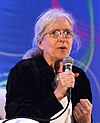
About Jason Hickel
Jason Edward Hickel (born in 1982) is an eswati anthropologist, author, and professor at the Institute for Environmental Science and Technology at the Autonomous University of Barcelona. Hickel's research and writing focuses on economic anthropology and development, and is particularly critical of capitalism, neocolonialism, as well as economic growth as a model of human development.