Link Copied!
Jane Goodall Quotes (1934-2025)







About Jane Goodall
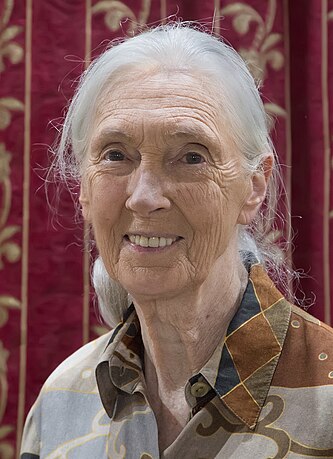
Dame Jane Morris Goodall DBE, born Valerie Jane Morris-Goodall (3 April 1934 – 1 October 2025), formerly Baroness Jane van Lawick-Goodall, was an English primatologist, ethologist, and anthropologist most famous for her study of chimpanzee social and family life in the Gombe Stream National Park in Tanzania. She also founded the Jane Goodall Institute. In April 2002, she was named a UN Messenger of Peace.
Best Jane Goodall Quotes
Shortest
Earliest
Explore our curated collection of the most famous and impactful Jane Goodall quotes.
“Lasting change is a series of compromises. And compromise is alright, as long your values don't change.”

“Every individual matters. Every individual has a role to play. Every individual makes a difference.”
“Only if we understand can we care. Only if we care will we help. Only if we help shall they be saved.”


“Especially now when views are becoming more polarized, we must work to understand each other across political, religious and national boundaries.”
“Animals tell us something. If the animals have suffered this way [from GMOs], potentially for us, let’s listen to what they’re telling us. Let’s take heed.”
“Anyone who tries to improve the lives of animals invariably comes in for criticism from those who believe such efforts are misplaced in a world of suffering humanity.”

“The long hours spent with them in the forest have enriched my life beyond measure. What I have learned from them has shaped my understanding of human behavior, of our place in nature.”

“We can't leave people in abject poverty, so we need to raise the standard of living for 80% of the world's people, while bringing it down considerably for the 20% who are destroying our natural resources.”
“But let us not forget that human love and compassion are equally deeply rooted in our primate heritage, and in this sphere too our sensibilities are of a higher order of magnitude than those of chimpanzees.”
“They communicate, but their communication system is through touch, posture, looks – body language you could call it, but it goes a bit deeper than that. They can learn 400 or more signs in American sign language.”

“The least I can do is speak out for the hundreds of chimpanzees who, right now, sit hunched, miserable and without hope, staring out with dead eyes from their metal prisons. They cannot speak for themselves.”

“The most important thing is to actually think about what you do. To become aware and actually think about the effect of what you do on the environment and on society. That's key, and that underlies everything else.”
“It is our disregard for nature and our disrespect of the animals we should share the planet with that has caused this pandemic, that was predicted long ago.”
“Just remember — if you are really and truly determined to work with animals, somehow, either now or later, you will find a way to do it. But you have to want it desperately, work hard, take advantage of an opportunity — and never give up.”

“You can imagine my dismay when I got to Cambridge and found that I had done everything wrong. I shouldn't have named the chimps; I should have given them numbers. I couldn't talk about their personalities, their minds or their feelings because that was unique to us.”

“But if the same tests, the same foods are examined by an independent scientist, then it turns out that in almost every case there are quite serious harms done to the rats, the mice or the other poor unfortunate animals, particularly internal organs like liver and kidneys and things of that sort.”
“Louis deliberately chose someone who hadn’t been to university because theories of animal behaviour at that time were very rigid, and Louis didn’t want someone whose mind was biased in that way. Wise man. But still I had the responsibility to prove myself. I remember looking up at the hills and wondering, “Can I do it?””

“As I traveled, talking about these issues, I met so many young people who had lost hope. Some were depressed; some were apathetic; some were angry and violent. And when I talked to them, they all more or less felt this way because we had compromised their future and the world of tomorrow was not going to sustain their great-grandchildren.”
“The more we learn of the true nature of non-human animals, especially those with complex brains and corresponding complex social behavior, the more ethical concerns are raised regarding their use in the service of man — whether this be in entertainment, as "pets," for food, in research laboratories, or any of the other uses to which we subject them.”

“Thousands of people who say they "love" animals sit down once or twice a day to enjoy the flesh of creatures who have been utterly deprived of everything that could make their lives worth living and who endured the awful suffering and the terror of the abattoirs— and the journey to get there— before finally leaving their miserable world, only too often after a painful death.”
“In what terms should we think of these beings, nonhuman yet possessing so very many human-like characteristics? How should we treat them? Surely we should treat them with the same consideration and kindness as we show to other humans; and as we recognize human rights, so too should we recognize the rights of the great apes? Yes.”

“Well, in some ways we’re not successful at all. We’re destroying our home. That’s not a bit successful. Chimpanzees, gorillas, orangutans have been living for hundreds of thousands of years in their forest, living fantastic lives, never overpopulating, never destroying the forest. I would say that they have been in a way more successful than us as far as being in harmony with the environment.”

“How would I have turned out, I sometimes wonder, had I grown up in a house that stifled enterprise by imposing harsh and senseless discipline? Or in an atmosphere of overindulgence, in a household where there were no rules, no boundaries drawn? My mother certainly understood the importance of discipline, but she always explained why some things were not allowed. Above all, she tried to be fair and to be consistent.”

“Researchers find it very necessary to keep blinkers on. They don't want to admit that the animals they are working with have feelings. They don't want to admit that they might have minds and personalities because that would make it quite difficult for them to do what they do; so we find that within the lab communities there is a very strong resistance among the researchers to admitting that animals have minds, personalities and feelings.”

“I do not want to discuss evolution in such depth, however, only touch on it from my own perspective: from the moment when I stood on the Serengeti plains holding the fossilized bones of ancient creatures in my hands to the moment when, staring into the eyes of a chimpanzee, I saw a thinking, reasoning personality looking back. You may not believe in evolution, and that is all right. How we humans came to be the way we are is far less important than how we should act now to get out of the mess we have made for ourselves.”
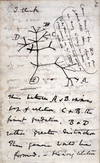
“Understanding what chimpanzees are like has made me realize that we humans are not so different from other animals as we used to think. What makes us most different is that we are far more clever than even the cleverest chimp, and we have words. We have a spoken language. We can tell stories about what happened a week or a year or a decade ago. We can plan for the future, and we can discuss things - one person's idea can grow and change as other people contribute their ideas. Great ideas become greater, problems are solved.”

“Is it not possible that the chimpanzees are responding to some feeling like awe? A feeling generated by the mystery of water; water that seems alive, always rushing past yet never going, always the same yet ever different. Was it perhaps similar feelings of awe that gave rise to the first animistic religions, the worship of the elements and the mysteries of nature over which there was no control? Only when our prehistoric ancestors developed language would it have been possible to discuss such internal feelings and create a shared religion.”
“At the moment, money from Gombe tourism goes into one pot for Tanzania National Parks and it has to pay for the whole infrastructure of everything. But through our TACARE [community development] programme, we’ve benefited local people hugely.
The thing is about tourism and research is that they can both focus attention on the place and help to preserve it. It’s tourism involvement with the mountain gorillas that saved them.
During the genocide in Rwanda in the 1990s, people on both sides were being told, “Don’t touch the gorillas”, as it was the second biggest foreign exchange earner after tea in the country. So both sides hoped to win and continue exploiting gorillas.
So the government can see the value of tourism, but the danger is they over-exploit it. They say, “We’re getting all this money for [gorilla-tracking groups of] six people, now we’ll let it be 12”, and they get more money for tours, so they make it 20. That’s the danger; that they end up killing what people have come to see.”
The thing is about tourism and research is that they can both focus attention on the place and help to preserve it. It’s tourism involvement with the mountain gorillas that saved them.
During the genocide in Rwanda in the 1990s, people on both sides were being told, “Don’t touch the gorillas”, as it was the second biggest foreign exchange earner after tea in the country. So both sides hoped to win and continue exploiting gorillas.
So the government can see the value of tourism, but the danger is they over-exploit it. They say, “We’re getting all this money for [gorilla-tracking groups of] six people, now we’ll let it be 12”, and they get more money for tours, so they make it 20. That’s the danger; that they end up killing what people have come to see.”

“This very real difference between GM plants and their conventional counterparts is one of the basic truths that biotech proponents have endeavoured to obscure. As part of the process, they portrayed the various concerns as merely the ignorant opinions of misinformed individuals – and derided them as not only unscientific, but anti-science.
They then set to work to convince the public and government officials, through the dissemination of false information, that there was an overwhelming expert consensus, based on solid evidence, that the new foods were safe. Yet this, as Druker points out, was clearly not true.
Druker describes how amazingly successful the biotech lobby has been – and the extent to which the general public and government decision makers have been hoodwinked by the clever and methodical twisting of the facts and the propagation of many myths. Moreover, it appears that a number of respected scientific institutions, as well as many eminent scientists, were complicit in this relentless spreading of disinformation.”
They then set to work to convince the public and government officials, through the dissemination of false information, that there was an overwhelming expert consensus, based on solid evidence, that the new foods were safe. Yet this, as Druker points out, was clearly not true.
Druker describes how amazingly successful the biotech lobby has been – and the extent to which the general public and government decision makers have been hoodwinked by the clever and methodical twisting of the facts and the propagation of many myths. Moreover, it appears that a number of respected scientific institutions, as well as many eminent scientists, were complicit in this relentless spreading of disinformation.”

Jane Goodall Quotes by Topic
Find exactly what you are looking for by browsing this categorized list of Jane Goodall quotes by topic.
Jane Goodall on Simians 5 quotes
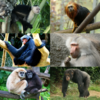
“The least I can do is speak out for the hundreds of chimpanzees who, right now, sit hunched, miserable and without hope, staring out with dead eyes from their metal prisons. They cannot speak for themselves.”
Jane Goodall on Animals 4 quotes
View all 4 quotes on Animals →Jane Goodall on Hope 4 quotes
“You need hope to get you going, but then by taking action, you generate more hope. It’s a circular thing.”

Jane Goodall on Animal rights 4 quotes
“The least I can do is speak out for the hundreds of chimpanzees who, right now, sit hunched, miserable and without hope, staring out with dead eyes from their metal prisons. They cannot speak for themselves.”
Jane Goodall on Chimpanzees 3 quotes
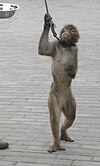
“Studying chimps ‘has helped me to realize, perhaps more than anything else, just how different we are from them’.”
What Jane Goodall Said About Others
Discover personal opinions Jane Goodall shared regarding contemporaries.
Jane Goodall on Vandana Shiva
“All of us who care about the future of Planet Earth must be grateful to Vandana Shiva. Her voice is powerful, and she is not afraid to tackle those corporate giants that are polluting, degrading and ultimately destroying the natural world.”

Jane Goodall on Robin Wall Kimmerer
“Robin Wall Kimmerer shows how the factual, objective approach of science can be enriched by the ancient knowledge of the indigenous people. It is the way she captures beauty that I love the most-the images of giant cedars and wild strawberries, a forest in the rain and a meadow of fragrant sweetgrass will stay with you long after you read the last page.”

Jane Goodall on Richard Dawkins
“I think if we study the primates, we notice that a lot of these things that we value in ourselves, such as human morality, have a connection with primate behavior. This completely changes the perspective, if you start thinking that actually we tap into our biological resources to become moral beings. That gives a completely different view of ourselves than this nasty selfish-gene type view that has been promoted for the last 25 years.”

Jane Goodall on Pierre Teilhard de Chardin
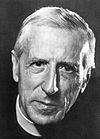
“There are really only two ways, it seems to me, in which we can think about our existence here on Earth. We either agree with Macbeth that life is nothing more than a "tale told by an idiot," a purposeless emergence of life-forms including the clever, greedy, selfish, and unfortunate species that we call homo sapiens — the "evolutionary goof." Or we believe that, as Pierre Teilhard de Chardin put it, "There is something afoot in the universe, something that looks like gestation and birth." In other words, a plan, a purpose to it all.”
Quotes About Jane Goodall
Gain deeper perspective through quotes about Jane Goodall from others.
Temple Grandin on Jane Goodall
“Some of the best fieldworkers I know have Asperger's syndrome or they are dyslexic. But I think it's getting harder to do things without going through the proper channels. How many people would even try to be Jane Goodall today? Jane Goodall was a superb fieldworker who lived with animals, observed them closely, and understood them. She did her work in the field, not behind a computer making mathematical models of chimpanzee populations.”

Misattributed Quotes
Quotes mistakenly credited to Jane Goodall
“I think if we study the primates, we notice that a lot of these things that we value in ourselves, such as human morality, have a connection with primate behavior. This completely changes the perspective, if you start thinking that actually we tap into our biological resources to become moral beings. That gives a completely different view of ourselves than this nasty selfish-gene type view that has been promoted for the last 25 years.”
About Jane Goodall
Dame Jane Morris Goodall DBE, born Valerie Jane Morris-Goodall (3 April 1934 – 1 October 2025), formerly Baroness Jane van Lawick-Goodall, was an English primatologist, ethologist, and anthropologist most famous for her study of chimpanzee social and family life in the Gombe Stream National Park in Tanzania. She also founded the Jane Goodall Institute. In April 2002, she was named a UN Messenger of Peace.