












“Let other pens dwell on guilt and misery.”
— Jane Austen, Works, Mansfield Park)

Explore our curated collection of the most famous and impactful Jane Austen quotes.
“What could I do! Facts are such horrid things!”
“...from politics, it was an easy step to silence.”

“I must learn to brook being happier than I deserve.”
“Happiness in marriage is entirely a matter of chance.”

“We do not look in great cities for our best morality.”

“I am rather impatient to know the fate of my best gown.”
“Ah! there is nothing like staying at home for real comfort.”

“You know how interesting the purchase of a sponge-cake is to me.”
“A large income is the best recipe for happiness I ever heard of.”
“To be fond of dancing was a certain step towards falling in love.”
“One half of the world cannot understand the pleasures of the other.”

“People always live forever when there is an annuity to be paid them.”
“The happiness of your life depends upon the quality of your thoughts.”
“Business, you know, may bring money, but friendship hardly ever does.”

“I would recommend to her and Mr. D. the simple regimen of separate rooms.”
“The pride of any mother is to give birth to a responsible and successful child.”
“A lady, without a family, was the very best preserver of furniture in the world.”

“What dreadful hot weather we have! It keeps one in a continual state of inelegance.”
“There are people who the more you do for them, the less they will do for themselves.”
“It was in this reign that Joan of Arc reigned and made such a row among the English.”
“I will not say that your mulberry-trees are dead, but I am afraid they are not alive.”
“For what do we live, but to make sport for our neighbors and laugh at them in our turn?”
“A very short trial convinced her that a curricle was the prettiest equipage in the world”
Find exactly what you are looking for by browsing this categorized list of Jane Austen quotes by topic.
“I have heard that something very shocking indeed, will soon come out in London.”

“Charming as were all Mrs. Radcliffe’s works, and charming even as were the works of all her imitators, it was not in them perhaps that human nature, at least in the Midland counties of England, was to be looked for. Of the Alps and Pyrenees, with their pine forests and their vices, they might give a faithful delineation; and Italy, Switzerland, and the south of France might be as fruitful in horrors as they were there represented. Catherine dared not doubt beyond her own country, and even of that, if hard pressed, would have yielded the northern and western extremities. But in the central part of England there was surely some security for the existence even of a wife not beloved, in the laws of the land, and the manners of the age. Murder was not tolerated, servants were not slaves, and neither poison nor sleeping potions to be procured, like rhubarb, from every druggist.”
“To yield readily--easily--to the persuasion of a friend is no merit.... To yield without conviction is no compliment to the understanding of either.””

“If I was wrong in yielding to persuasion once, remember that it was to persuasion exerted on the side of safety, not of risk. When I yielded, I thought it was to duty; but no duty could be called in aid here. In marrying a man indifferent to me, all risk would have been incurred, and all duty violated.”
“But disguise of every sort is my abhorrence.”

Discover personal opinions Jane Austen shared regarding contemporaries.
“A lady's imagination is very rapid; it jumps from admiration to love, from love to matrimony, in a moment.”

“No one can think more highly of the understanding of women than I do. In my opinion, nature has given them so much, that they never find it necessary to use more than half.”
“A single woman, with a very narrow income, must be a ridiculous, disagreeable, old maid! the proper sport of boys and girls; but a single woman, of good fortune, is always respectable, and may be as sensible and pleasant as anybody else.”
“I have made up my mind to like no novels really, but Miss Edgeworth's, yours and my own.”
“Next to being married, a girl likes to be crossed in love a little now and then. It is something to think of, and gives her a sort of distinction among her companions.”

“Shakespeare one gets acquainted with without knowing how. It is a part of an Englishman's constitution. His thoughts and beauties are so spread abroad that one touches them every where, one is intimate with him by instinct.”

Gain deeper perspective through quotes about Jane Austen from others.
“You could not shock her more than she shocks me; Beside her Joyce seems innocent as grass. It makes me most uncomfortable to see An English spinster of the middle class Describe the amorous effects of "brass," Reveal so frankly and with such sobriety The economic basis of society.”

“As she grew up, the politics of the day occupied very little of her attention, but she probably shared the feeling of moderate Toryism which prevailed in her family. She was well acquainted with the old periodicals from the 'Spectator' downwards. Her knowledge of Richardson's works was such as no one is likely again to acquire, now that the multitude and the merits of our light literature have called off the attention of readers from that great master. Every circumstance narrated in Sir Charles Grandison, all that was ever said or done in the cedar parlour, was familiar to her; and the wedding days of Lady L. and Lady G. were as well remembered as if they had been living friends. Amongst her favourite writers, Johnson in prose, Crabbe in verse, and Cowper in both, stood high.”
“I now desire to offer a few observations on them [the novels], and especially on one point, on which my age renders me a competent witness—the fidelity with which they represent the opinions and manners of the class of society in which the author lived early in this century. They do this the more faithfully on account of the very deficiency with which they have been sometimes charged—namely, that they make no attempt to raise the standard of human life, but merely represent it as it was. They certainly were not written to support any theory or inculcate any particular moral, except indeed the great moral which is to be equally gathered from an observation of the course of actual life—namely, the superiority of high over low principles, and of greatness over littleness of mind.”
“Jane Austen? I feel that I am approaching dangerous ground. The reputation of Jane Austen is surrounded by cohorts of defenders who are ready to do murder for their sacred cause. They are nearly all fanatics. They will not listen. If anyone “went for” Jane, anything might happen to him. He would assuredly be called on to resign from his clubs...I do not even agree that Jane was a great novelist. She was a great little novelist. She is marvellous, intoxicating: she has unique wit, vast quantities of common sense, a most agreeable sense of proportion, much narrative skill. And she is always readable. But her world is a tiny world, and even of that tiny world she ignores, consciously or unconsciously, the fundamental factors. She did not know enough of the world to be a great novelist. She had not the ambition to be a great novelist. She knew her place; her present “fans” do not know her place, and their antics would without doubt have excited Jane's lethal irony.”
“[M]ost of us, male and female, are as children compared with this one glorious human being.”
“[T]he power of the realized conventional form, the delicious happiness Austen makes us feel, must surely be counteracted by a kind of inquiry that is as courageous and sensitive and resistant as Austen's reading of her own predecessors. She knew better than to pretend that powerful fictions are not dangerous. She thus would welcome, I like to think, the probing questions that feminist critics have been teaching us to ask. Her kind of critical spirit, applied … to her kind of works, will not leave those works unmodified. But to me it is reassuring to discover that most of the modifications, most of what we learn by asking the questions raised by feminist critics, leave Jane Austen looking perhaps even greater than she did before.”
“Jane Austen … provides, at scores of points, a commentary that corrects any naive over-identification that we are tempted to commit. … Many readers have resisted that corrective. … Critics have often objected, for example, to the presence of a persistent voice that could allow itself, at what conventionally should have been the moment of supreme passion, to undermine the conventional effects with the famous (or infamous) narrative intrusion. … Some readers have considered such passages to be dodges, signs of Austen's own sexual inhibitions or lack of novelistic skill. … I suggest instead that they are signs of a novelist who knows her double task: how to abide by the demands of a conventional form, while making the whole thing work for matters unconventional.”
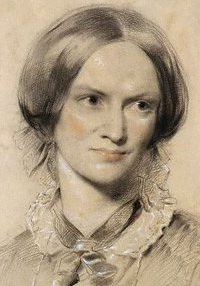
“Why do you like Miss Austen so very much? I am puzzled on that point. … I read that sentence of yours, and then I got the book. And what did I find? An accurate daguerreotyped portrait of a commonplace (everyday) face; carefully fenced, highly cultivated garden, with neat borders and delicate flowers; but no glance of bright vivid physiognomy, no open country, no fresh air, no blue hill, no bonny beck. I should hardly like to live with her ladies and gentlemen, in their elegant but confined houses.”
Quotes mistakenly credited to Jane Austen.
“Life seems but a quick succession of busy nothings.”