Link Copied!
James Watt Quotes (1736-1819)
King, Inventor
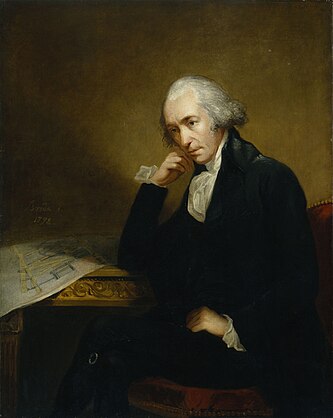
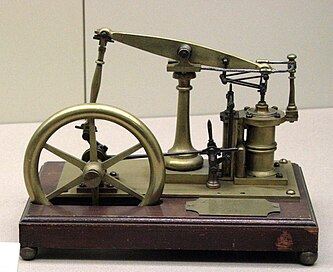
About James Watt
James Watt (19 January 1736 – 25 August 1819) was a Scottish inventor and mechanical engineer whose improvements to the Newcomen steam engine were fundamental to the changes brought by the Industrial Revolution in both the Kingdom of Great Britain and the world.
James Watt Quotes
Shortest
Earliest
Explore our curated collection of the most famous and impactful James Watt quotes.


James Watt Quotes by Topic
Find exactly what you are looking for by browsing this categorized list of James Watt quotes by topic.
James Watt on Steam engine 2 quotes
“When once the idea of the separate condensation was started, all these improvements followed as corollaries in quick succession, so that in the course of one or two days the invention was thus far complete in my mind, and I immediately set about an experiment to verify it practically.”

What James Watt Said About Others
Discover personal opinions James Watt shared regarding contemporaries.
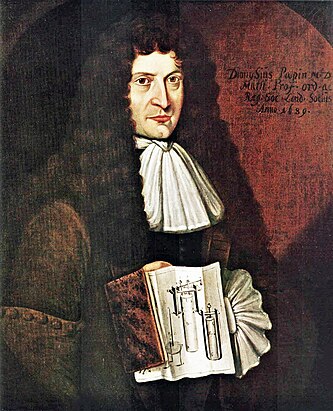
James Watt on Denis Papin
“About the year 1761, or 1762, I tried some experiments on the force of steam in a Papin's digester, and formed a species of steam-engine by fixing upon it a syringe, one-third of an inch diameter, with a solid piston, and furnished also with a cock to admit the steam from the digester, or shut it off at pleasure, as well as to open a communication from the inside of the syringe to the open air, by which the steam contained in the syringe might escape...”

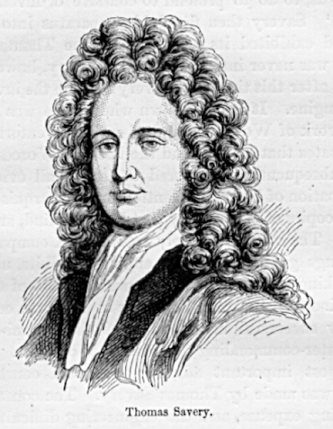
James Watt on Thomas Savery
“I soon relinquished the idea of constructing an engine upon its principle, from being sensible it would be liable to some of the objections''' against Savery's engine, viz., the danger of bursting the boiler, and the difficulty of making the joints tight, and also that a great part of the power of the steam would be lost, because no vacuum was formed to assist the descent of the piston. I, however, described this engine in the fourth article of the specification of my patent of 1769; and again in the specification of another patent in the year 1784, together with a mode of applying it to the moving of wheel-carriages.”

Quotes About James Watt
Gain deeper perspective through quotes about James Watt from others.
Daron Acemoglu on James Watt
“These foundations decisively changed incentives for people and impelled the engines of prosperity, paving the way for the Industrial Revolution. First and foremost, the Industrial Revolution depended on major technological advances exploiting the knowledge base that had accumulated in Europe during the past centuries. It was a radical break from the past, made possible by scientific inquiry and the talents of a number of unique individuals. The full force of this revolution came from the market that created profitable opportunities for technologies to be developed and applied. It was the inclusive nature of markets that allowed people to allocate their talents to the right lines of business. It also relied on education and skills, for it was the relatively high levels of education, at least by the standards of the time, that enabled the emergence of entrepreneurs with the vision to employ new technologies for their businesses and to find workers with the skills to use them. It is not a coincidence that the Industrial Revolution started in England a few decades following the Glorious Revolution. The great inventors such as James Watt (perfecter of the steam engine), Richard Trevithick (the builder of the first steam locomotive), Richard Arkwright (the inventor of the spinning frame), and Isambard Kingdom Brunel (the creator of several revolutionary steamships) were able to take up the economic opportunities generated by their ideas, were confident that their property rights would be respected, and had access to markets where their innovations could be profitably sold and used.”
Peter Drucker on James Watt
“Almost everybody is sure... that it is proceeding with unprecedented speed; and... that its effects will be more radical than anything that has gone before. Wrong, and wrong again. Both in its speed and its impact, the information revolution uncannily resembles its two predecessors... The first industrial revolution, triggered by James Watt's improved steam engine in the mid-1770s... did not produce many social and economic changes until the invention of the railroad in 1829... Similarly, the invention of the computer in the mid-1940s... it was not until 40 years later, with the spread of the Internet in the 1990s, that the information revolution began to bring about big economic and social changes... the same emergence of the “super-rich” of their day, characterized both the first and the second industrial revolutions... These parallels are close and striking enough to make it almost certain that, as in the earlier industrial revolutions, the main effects of the information revolution on the next society still lie ahead.”

Julius Charles Hare on James Watt
“In science its main worth is temporary, as a stepping-stone to something beyond. Even the Principia, as Newton, with characteristic modesty entitled his great work, is truly but the beginning of a natural philosophy, and no more an ultimate work than Watt's steam-engine, or Arkwright's spinning-machine.”
William Huskisson on James Watt
“If the Steam Engine be the most powerful instrument in the hands of man, to alter the face of the physical world, it operates, at the same time, as a powerful moral lever in forwarding the great cause of civilization. ...If ...we are now met to consider of placing a monument to the memory of Mr. Watt beside the monuments of those who fell in the splendid victories of the last war, let it not be said that there is no connexion between the services of this modest and unobtrusive benefactor of his country, and the triumphs of the heroes which those monuments are destined to commemorate. ...It has been often said, that many of the great discoveries in science are due to accident; but it was well remarked by [Humphry Davy]... that this cannot be the case with the principal discovery of Mr. Watt. ... Again, it has frequently happened that those philosophers, who have made brilliant and useful discoveries... have only been able to turn their discoveries to the purpose of averting evils threatening, and often destroying, the precarious tenure of human existence. Thus Franklin disarmed the thunderbolt, and conducted it innocuous through our buildings, and close to our fire-sides—thus Jenner stripped a loathsome and destructive disease of its virulence, and rendered it harmless of devastation—thus [Davy]... sent the safety lamp into our mines to save... their useful inhabitants from the awful explosion of the fire damp. But the discovery of Mr. Watt went further: he subdued and regulated the most terrific power in the universe,—that power which, by the joint operation of pressure and heat, probably produces those tremendous convulsions of the earth, which in a moment subvert whole cities, and almost change the face of the inhabited globe. This apparently ungovernable power Mr. Watt reduced to a state of such perfect organization and discipline... that it may now be safely manœuvred and brought into irresistible action—irresistible, but still regulated, measured, and ascertained—or lulled into the most complete and secure repose, at the will of man, and under the guidance of his feeble hand. Thus one man directs it into the bowels of the earth, to tear asunder its very elements, and bring to light its hidden treasures; another places it upon the surface of the waters, to control the winds of heaven, to stem the tides, to check the currents, and defy the waves of the ocean; a third, perhaps and a fourth, are destined to apply this mighty power to other purposes, still unthought of and unsuspected, but leading to consequences, possibly not less important than those which it has already produced. ... those benefits, conferred by Mr. Watt on the whole civilized world, have been most experienced by his own country, which owes a tribute of national gratitude to a man, who has thus honoured her by his genius, and promoted her well being by his discoveries.”
About James Watt
James Watt (19 January 1736 – 25 August 1819) was a Scottish inventor and mechanical engineer whose improvements to the Newcomen steam engine were fundamental to the changes brought by the Industrial Revolution in both the Kingdom of Great Britain and the world.