Link Copied!
James Tod Quotes (1782-1835)

About James Tod
Lieutenant-Colonel James Tod (20 March 1782 – 18 November 1835) was an English-born officer of the British East India Company and an Oriental scholar. He combined his official role and his amateur interests to create a series of works about the history and geography of India, and in particular the area then known as Rajputana that corresponds to the present day state of Rajasthan, and which Tod referred to as Rajast'han.
Best James Tod Quotes
Shortest
Earliest
Explore our curated collection of the most famous and impactful James Tod quotes.
“All resolved to imitate the noble Partap, ... preferring Hard liberty before the easy yoke Of servile pomp.”
“If devotion to the fair sex be admitted as a criterion of civilization, the Rajpoot must rank high. His susceptibility is extreme, and fires at the slightest offense to female delicacy, which he never forgives.”

“If we compare the antiquity and illustrious descent of the dynasties which have ruled, and some which continue to rule, the small sovereignties of Rajasthan, with many of celebrity in Europe, superiority will often attach to the Rajput.”
“These were the first specimens of Christian warfare against the heathen of Hind... It would perhaps be fortunate for Christianity, if the historic muse in India were mute, as many have endeavoured to prove her to be, since atrocities like these are alone sufficient to have scared the Hindus from all association with her creed.”

““…To Iletmish we owe some of the finest Muslim works in India. The Arhai din ka-Jhopra began by Qutab al-Din in AD 1198-99, was also completed by him. Tod had said of it that it was ‘one of the most perfect as well as the most ancient monuments of Hindu architecture’, on the evidence of certain four-armed figures to be seen on the pillars…”
“To these fifty-six reigns I should be willing to allow the average of twenty years, which would give 1120 from Rama to Sumitra, who preceded by a short period Vikramaditya; and as 1100 have been already calculated to have preceded the era of Rama and Yudhishthira, the inference is, that 2200 years elapsed from Ikshwaku, the founder of the Solar line, to Sumitra.”
“There is a sanctity in the very name of Chitor, which from the earliest times secured her defenders; and now, when threatened again by ‘the barbarian,’ such the inexplicable character of the Rajput, we find the heir of Surajmall abandoning his new capital of Deolia, to pour out the few drops which yet circulated in his veins in defence of the abode of his fathers.”
“This image, which was one of the penates of a former age, and which since the destruction of the shrines of Krishna by the Islamites, had lain in the Yamuna, attached itself to the sacerdotal zone of high priest Balba, while he was performing ablutions, who, carrying it home, placed it ina niche of the temple and worshipped it and Nonanda yet receives the peculiar homage of the high priest and his family as their household divinity (Tod Vol. I 1920: 272).”

“Where can we look for sages like those whose systems of philosophy were prototypes of those of Greece: to whose works Plato, Thales & Pythagoras were disciples? Where do I find astronomers whose knowledge of planetary systems yet excites wonder in Europe as well as the architects and sculptors whose works claim our admiration, and the musicians who could make the mind oscillate from joy to sorrow, from tears to smile with the change of modes and varied intonation?”
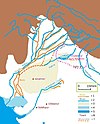
“The affinity that this word (Hakra) has botli to the Ghaggar, and Sankra,” would lead to the conclusion of either being the stream referred to. The former we know as being engulphed in the sands about the Hariana confines, while the Sankra is a stream which, though now dry, was used as a line of demarcation even in the time of Nadir Shah. It ran eastward, parallel with the Indus, and by making it his boundary Nadir added all the fertile valley of the Indus to his Persian kingdom.”

“[Once in a while, ladies with courage and virtue, stood up against the royal advances like the wife of Prithviraj Singh, Rae Singh's younger brother. She was a princess of Mewar and once on returning from the fair found herself entangled amidst the labyrinth of apartments at the end of which Akbar stood before her,] “but instead of acquiesence, she drew a poniard from her corset and held it to his breast, dictating, and making him repeat the oath of rununciation of the infamy of all her race".”
“Ujameda, by his wife, Nila, had five sons, who spread their branches on both sides of the Indus. Regarding three the Puranas are silent, which implies their migration to distant regions. Is it possible they might be the origin of the Medes? These Medes are descendants of Yciyat, third son of the patriarch, Menu: and Madai, founder of the Medes, was of Japhet’s line. Aja Merle, the patronymic of the branch of Bajaswa, is from Aja ‘a goat.’ The Assyrian Mede in Scripture is typified by the goat.‘”

“What nation on earth could have maintained the semblance of civilization, the spirit or the customs of their forefathers, during so many centuries of overwhelming depression, but one of such singular character as the Rajpoot? . . . Rajast’han exhibits the sole example in the history of mankind, of a people withstanding every outrage barbarity could inflict, or human nature sustain, from a foe whose religion commands annihilation; and bent to the earth, yet rising buoyant from the pressure, and making calamity a whetstone to courage. . . . Not an iota of their religion or customs have they lost. . .”

“While the camp-baskets were unlocking, I could not resist taking a peep at the fire-fount and the shrine of Achil-eswar, one of the most renowned in the fabulous annals of the Hindus. The Man-agni-coonda is about nine hundred feet long by two hundred and forty in breadth, excavated in the solid rock, and lined with solid masonry of immensely large bricks. An insulated mass of rock has been left in the center of the coond, on which are the ruins of a shrine to Mata, the universal mother. On the crest of the northern face of the coond is a group of small temples dedicated to the Pandu brothers, but, like the former, a mass of ruins.”
“Here every thing is Jain, and the shrine dedicated to Vrishabdeva [Rishabhdeva] is well worth of notice, from its containing no fewer than twelve immense images to this, the first of the twenty-four pontiffs who attained the honours of apotheosis. They are said to weigh many thousand maunds, and to be a compound of all the metals. Near the base of the inner fort, on the left hand, on leaving it, is another temple dedicated to Parswanat’h [Parasnath], whose statute it contains. This was erected or repaired by the celebrated Komarpal, King of Anhulwarra, the patron of the sect, and disciple of Hemachundra, a potent name among the Jains…”
“Thus, taking an average of the whole, we may consider fifty-five princes to be the number of descents from Budha to Krishna and Yudhishthira; and, admitting an average of twenty years for each reign, a period of eleven hundred years; which being added to a like period calculated from thence to Vikramaditya, who reigned fifty-six years before Christ, I venture to place the establishment in India Proper of these two grand races, distinctively called those of Surya and Chandra, at about 2256 years before the Christian era; at which period, though somewhat later, the Egyptian, Chinese, and Assyrian monarchies are generally stated to have been established,[17] and about a century and a half after that great event, the Flood.”
“After eight centuries of galling subjection to conquerors totally ignorant of the classical language of the Hindus; after almost every capital city had been repeatedly stormed and sacked by barbarous, bigoted, and exasperated foes; it is too much to expect that the literature of the country should not have sustained, in common with other important interests, irretrievable losses. My own animadversions upon the defective condition of the annals of Rajwara have more than once been checked by a very just remark: "when our princes were in exile, driven from hold to hold, and compelled to dwell in the clefts of the mountains, often doubtful whether they would not be forced to [x] abandon the very meal preparing for them, was that a time to think of historical records?"”
“Britain has become heir to the monuments of Indraprastha raised by the descendants of Budha and Ila; to the iron pillar of the Pandavas, "whose pedestal[20] [32] is fixed in hell"; to the columns reared to victory, inscribed with characters yet unknown; to the massive ruins of its ancient continuous cities, encompassing a space still larger than the largest city in the world, whose mouldering domes and sites of fortresses,[21] the very names of which are lost, present a noble field for speculation on the ephemeral nature of power and glory. What monument would Britain bequeath to distant posterity of her succession to this dominion? Not one: except it be that of a still less perishable nature, the monument of national benefit. Much is in our power: much has been given, and posterity will demand the result.”
“Those who expect from a people like the Hindus a species of composition of precisely the same character as the historical works of Greece and Rome commit the very gregarious error of overlooking the peculiarities which distinguish the natives of India from all other races, and which strongly discriminate their intellectual productions of every kind from those of the West. Their philosophy, their poetry, their architecture, are marked with traits of originality; and the same may be expected to pervade their history, which, like the arts enumerated, took a character from its intimate association with the religion of the people. It must be recollected, moreover,… that the chronicles of all the polished nations of Europe, were, at a much more recent date, as crude, as wild, and as barren, as those of the early Rajputs.”
“Often was Partap heard to exclaim, “Had Udai Singh never been, or none intervened between him and Sanga Rana, no Turk should ever have given laws to Rajasthan.” Hindu society had assumed a new form within the century preceding: the wrecks of dominion from the Jumna and Ganges had been silently growing into importance; and Amber and Marwar had attained such power, that the latter single-handed coped with the imperial Sher Shah; while numerous minor chieftainships were attaining shape and strength on both sides the Chambal. A prince of commanding genius alone was wanting, to snatch the sceptre of dominion from the Islamite. Such a leader they found in Sanga, who possessed every quality which extorts spontaneous obedience, and the superiority of whose birth, as well as dignity, were admitted without cavil, from the Himalaya to Rameswaram.”
“Those who expect from a people like the Hindus a species of composition of precisely the same character as the historical works of Greece and Rome, commit the very egregious error of overlooking the peculiarities which distinguish the natives of India from all other races, and which strongly discriminate their intellectual productions of every kind from those of the West. Their philosophy, their poetry, their architecture, are marked with traits of originality; and the same may be expected to pervade their history, which, like the arts enumerated, took a character from its intimate association with the religion of the people. It must be recollected, moreover, that until a more correct taste was imparted to the literature of England and of France, by the study of classical models, the chronicles of both these countries, and indeed of all the polished nations of Europe, were, at a much more recent date, as crude, as wild, and as barren as those of the early Rajputs.”
“While the battle was still doubtful, the Tuar traitor who led the van (harawal) went over to Babur, and Sanga was obliged to retreat from the field, which in the onset promised a glorious victory, himself severely wounded and the choicest of his chieftains slain: Rawal Udai[13] Singh of Dungarpur, with two hundred of his clan; Ratna of Salumbar, with three hundred of his Chondawat kin; Raemall Rathor, son of the prince of Marwar, with the brave Mertia leaders Khetsi and Ratna; Ramdas the Sonigira Rao; Uja the Jhala; Gokuldas Pramara; Manikchand and Chandrbhan, Chauhan chiefs of the first rank in Mewar; besides a host of inferior names.[14] Hasan Khan of Mewat, and a son of the last Lodi king of Delhi, who coalesced with Sanga, were amongst the killed.[15] Triumphal pyramids were raised of the heads of the slain, and on a hillock which overlooked the field of battle a tower of skulls was erected; and the conqueror assumed the title of Ghazi, which has ever since been retained by his descendants.”
“In Tod’s description, the ‘Marusthali’, as it was then called, consists of ‘expansive belts of sand, elevated upon a plain only less sandy, and over whose surface numerous thinly peopled towns and hamlets are scattered’. He also records ‘the tradition of the absorption of the Caggar river, as one of the causes of the comparative depopulation of the northern desert’. This tradition was transmitted in the form of a ‘couplet still sung among Rajputs, which dates the ruin of this part of the country back to the drying up of the Hakra.’ Although Tod could not recall the exact text of the said song, he acknowledged ‘the utility of these ancient traditional couplets’. ‘Folk history’, as we would call it today... Yet, James Tod finds worthy of mention a tradition alive in the 1810s that blames the region’s ‘depopulation’ on the Ghaggar’s ‘absorption’ or disappearance; he even notes how ‘the vestiges of large towns, now buried in the sands, confirm the truth of this tradition, and several of them claim a high antiquity.”

“The little exact knowledge that Europe has hitherto acquired of the Rajput States, has probably originated a false idea of the comparative importance of this portion of Hindustan. The splendour of the Rajput courts, however, at an early period of the history of that country, making every allowance for the exaggeration of the bards, must have been great. Northern India was rich from the earliest times; that portion of it, situated on either side the Indus, formed the richest satrapy of Darius. It has abounded in the more striking events which constitute the materials for history; there is not a petty State in Rajasthan that has not had its Thermopylae, and scarcely a city that has not produced its Leonidas. But the mantle of ages has shrouded from view what the magic pen of the historian might have consecrated to endless admiration: Somnath might have rivalled Delphos; the spoils of Hind might have vied with the wealth of the Libyan king; and compared with the array of the Pandus, the army of Xerxes would have dwindled into insignificance. But the Hindus either never had, or have unfortunately lost, their Herodotus and Xenophon.”

“The milder side of the Rājput character is represented in the cult of Krishna at Nāthdwāra. The Mahant or Abbot of the temple, situated at the old village of Siārh, twenty-two miles from the city of Udaipur, enjoys semi-royal state. In anticipation of the raid by Aurangzeb on Mathura, A.D. 1669-70, the ancient image of Kesavadeva, a form of Krishna, ‘He of the flowing locks,’ was removed out of reach of danger by Rāna Rāj Singh of Mewār. When the cart bearing the image arrived at Siārh, the god, by stopping the cart, is said to have expressed his intention of remaining there. This was the origin of the famous temple, still visited by crowds of pilgrims, and one of the leading seats of the Vallabhāchārya sect, ‘the Epicureans of the East,’ whose practices, as disclosed in the famous Mahārāja libel case, tried at Bombay in 1861, gave rise to grievous scandal.[17] The ill-feeling against this sect, aroused by these revelations, was so intense that the Mahārāja of Jaipur ordered that the two famous images of Krishna worshipped in his State, which originally came from Gokul, near Mathura, should be removed from his territories into those of the Bharatpur State.”
James Tod Quotes by Topic
Find exactly what you are looking for by browsing this categorized list of James Tod quotes by topic.
James Tod on Historiography of India 6 quotes
““My own animadversions upon the defective condition of the annals of Rajwarra have more than once been checked by a very just remark: ‘When our princes were in exile, driven from hold to hold, and compelled to dwell in the clefts of the mountains, often doubtful whether they would not be forced to abandon the very meal preparing for them, was that a time to think of historical records?’ ”...”

James Tod on Dwarka 2 quotes
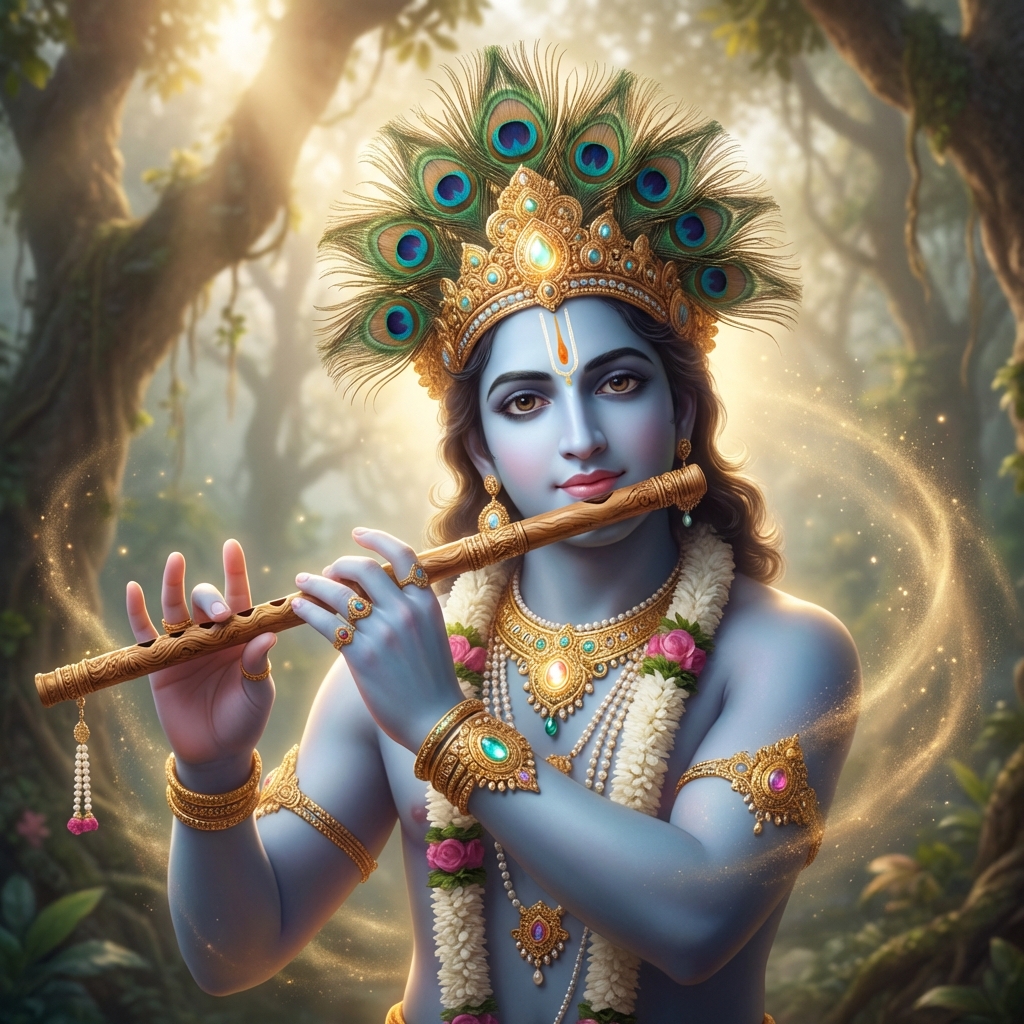
“The foundation of this shrine must have been laid in the solstice, as its front varies ten points from the meridian line; and as the Silpi, or architect, in these matters, acts under the priest, we may infer that the Surya Siddhanta was little known to the Goorgoocha Brahmins, the ministrants of their times, who took the heliacal rising of those days as the true east point; its breadth is, therefore, from N.N.W. to S.S.E. Contrary to custom, it has its back to the rising sun, and faces the west. Crishna is here adored under his form of Rinchor, when he was driven from his patrimony, Surasena, by the Budhist king of Magadha. A covered colonnaded piazza connects the cella of Crishna with a miniature temple dedicated to Deoki, his mother; and within the ample court are various other shrines, one of which, in the S.E. angle, contains the statue of Budha Tri-vicrama, or, as he is familiarly called, Tricam-Rae and Trimnat’h, which is always crowded with votaries. Opposite to this, or at the S.W. angle of the main temple, is a smaller one, dedicated to another form of Crishna, Madhu Rae, and between these is a passage leading by a flight of steps to the Goomtee, a small rivulet, whose embouchure with the ocean is especially sacred, though is would not wet the instep to cross it. From the grand temple to the sungum, or point of confluence, where there is a small temple to Sungum-Narayn, the course of the Goomtee is studded with the cenotaphs of those pilgrims who were fortunate enough to surrender life at this “dwara of the deity.” Amongst them are four of the five Pandu brothers, countenancing the tradition that the fifth proceeded across the Hemachil, where, being lost sight of, he is said to have perished in its snows, and whither he was accompanied by Baldeo, the Indian Hercules, whose statue is enshrined in the south-west corner of the great munduff, several step under ground. Baldeo is represented on his ascent from patal, or the infernal regions, after some monstrous combat.”

James Tod on Architecture of Gujarat 2 quotes
“The foundation of this shrine must have been laid in the solstice, as its front varies ten points from the meridian line; and as the Silpi, or architect, in these matters, acts under the priest, we may infer that the Surya Siddhanta was little known to the Goorgoocha Brahmins, the ministrants of their times, who took the heliacal rising of those days as the true east point; its breadth is, therefore, from N.N.W. to S.S.E. Contrary to custom, it has its back to the rising sun, and faces the west. Crishna is here adored under his form of Rinchor, when he was driven from his patrimony, Surasena, by the Budhist king of Magadha. A covered colonnaded piazza connects the cella of Crishna with a miniature temple dedicated to Deoki, his mother; and within the ample court are various other shrines, one of which, in the S.E. angle, contains the statue of Budha Tri-vicrama, or, as he is familiarly called, Tricam-Rae and Trimnat’h, which is always crowded with votaries. Opposite to this, or at the S.W. angle of the main temple, is a smaller one, dedicated to another form of Crishna, Madhu Rae, and between these is a passage leading by a flight of steps to the Goomtee, a small rivulet, whose embouchure with the ocean is especially sacred, though is would not wet the instep to cross it. From the grand temple to the sungum, or point of confluence, where there is a small temple to Sungum-Narayn, the course of the Goomtee is studded with the cenotaphs of those pilgrims who were fortunate enough to surrender life at this “dwara of the deity.” Amongst them are four of the five Pandu brothers, countenancing the tradition that the fifth proceeded across the Hemachil, where, being lost sight of, he is said to have perished in its snows, and whither he was accompanied by Baldeo, the Indian Hercules, whose statue is enshrined in the south-west corner of the great munduff, several step under ground. Baldeo is represented on his ascent from patal, or the infernal regions, after some monstrous combat.”

James Tod on Rajasthan
“If we compare the antiquity and illustrious descent of the dynasties which have ruled, and some which continue to rule, the small sovereignties of Rajasthan, with many of celebrity in Europe, superiority will often attach to the Rajput.”

James Tod on Sarasvati River
“To the drying up of the Hakra, or Gliaggar, many centuries ago, in conjunction with moral evils, is ascribed the existing desolation... The vestiges of large towns, now buried in the sands, confirm the truth of this tradition, and several of them claim a high antiquity...”
James Tod on Christianity in India
“These were the first specimens of Christian warfare against the heathen of Hind... It would perhaps be fortunate for Christianity, if the historic muse in India were mute, as many have endeavoured to prove her to be, since atrocities like these are alone sufficient to have scared the Hindus from all association with her creed.”

James Tod on British Raj
“Britain has become heir to the monuments of Indraprastha raised by the descendants of Budha and Ila; to the iron pillar of the Pandavas, "whose pedestal[20] [32] is fixed in hell"; to the columns reared to victory, inscribed with characters yet unknown; to the massive ruins of its ancient continuous cities, encompassing a space still larger than the largest city in the world, whose mouldering domes and sites of fortresses,[21] the very names of which are lost, present a noble field for speculation on the ephemeral nature of power and glory. What monument would Britain bequeath to distant posterity of her succession to this dominion? Not one: except it be that of a still less perishable nature, the monument of national benefit. Much is in our power: much has been given, and posterity will demand the result.”

James Tod on Indus Valley Civilisation sites
“In Tod’s description, the ‘Marusthali’, as it was then called, consists of ‘expansive belts of sand, elevated upon a plain only less sandy, and over whose surface numerous thinly peopled towns and hamlets are scattered’. He also records ‘the tradition of the absorption of the Caggar river, as one of the causes of the comparative depopulation of the northern desert’. This tradition was transmitted in the form of a ‘couplet still sung among Rajputs, which dates the ruin of this part of the country back to the drying up of the Hakra.’ Although Tod could not recall the exact text of the said song, he acknowledged ‘the utility of these ancient traditional couplets’. ‘Folk history’, as we would call it today... Yet, James Tod finds worthy of mention a tradition alive in the 1810s that blames the region’s ‘depopulation’ on the Ghaggar’s ‘absorption’ or disappearance; he even notes how ‘the vestiges of large towns, now buried in the sands, confirm the truth of this tradition, and several of them claim a high antiquity.”
James Tod on Nathdwara
“When Aurangzeb proscribed Kaniya, and rendered his shrifies im- pure throughout Vrij, Uana Raj Sing “offered the heads one hundred thousand Rajpoots for his service," and the god was conducted by the route of Kotah and Rampura to Mewar. An omen decided the spot of his future residence. As he journeyed to gain the capital of the Seeso-dias, live chariot-wheel sunk deep into the earth and defied extrication ; upon which the Snokiini (augur) interpreted the pleasure of the god, that he desired to dwell there. 'This circumstance occurred at an inconsiderable village called Siarh, in the fief of Dailwara, one of the sixteen nobles of Mewar. Rejoiced at this decided manifestation of favour, the chief hastened to make a perpetual gift of the village and its lands, which was speedily confirmed by the patent of the Rana Nathji (the god) was removed from his car, and in due time a temple was erected for his reception, when the hamlet of Siarh became the town of Nathdwara, which now contains many thousand inhabitants of all denominations, who, re-posing under the especial protection of the god, are exempt from every mortal tribunal. The site is not uninteresting, nor devoid of the means of defence. To the east it is shut in by a cluster of hills, and to the westward flows the Bunas, which nearly bathes the extreme points of the hill. Within these bounds is the sanctuary (sirna) of Kaniya, where the criminal is free from pursuit ; nor dare the rod of justice appear on the mount, or the foot of the pursuer pass the stream ; neither within it can blood be spilt, for the pastoral Kaniya delights not in offerings of this kiml. The territory contains within its precincts abundant space for the town, the temple, and the establishments of the priests, as well as for the numerous resident worshippers, and the constant influx of votaries from the most distant regions, who find abundant shelter from the noontide blaze in the groves o£ tamarind, peepul, and semulf where they listen to the mystic hymns o£ Jayadeva. Here those whom ambition has cloyed, superstition unsettled, satiety disgusted, commerce ruined, or crime disquieted, may be found as ascetic attendants on the mildest of the gods of India.”

James Tod on Indian literature
“'Those who expect', writes he, 'from a people like the Hindus a species of composition of precisely the same character as the historical works of Greece and Rome commit the very gregarious error of overlooking the peculiarities which distinguish the natives of India from all other races, and which strongly discriminate their intellectual productions of every kind from those of the West. Their philosophy, their poetry, their architecture, are marked with traits of originality; and the same may be expected to pervade their history, which, like the arts enumerated, took a character from its intimate association with the religion of the people. It must be recollected, moreover,' that the chronicles of all the polished nations of Europe, were, at a much more recent date, as crude, as wild, and as barren, as those of the early Rajputs.' He adds, 'My own animadversions upon the defective condition of the annals of Rajwarra have more than once been checked by a very just remark: 'When our princes were in exile, driven from hold to hold, and compelled to dwell in the clefts of the mountains, often doubtful whether they would not be forced to abandon the very meal preparing for them, was that a time to think of historical records?' 'If we consider the political changes and convulsions which have happened in Hindustan since Mahmood's invasion, and the intolerant bigotry of many of his successors, we shall be able to account for the paucity of its national works on history, without being driven to the improbable conclusion, that the Hindus were ignorant of an art which has been cultivated in other countries from almost the earliest ages. Is it to be imagined that a nation so highly civilized as the Hindus, amongst whom the exact sciences flourished in perfection, by whom the fine arts, architecture, sculpture, poetry, music, were not only cultivated, but taught and defined by the nicest and most elaborate rules, were totally unacquainted with the simple art of recording the events of their history, the character of their princes and the acts of their reigns?' The fact appears to be that 'After eight centuries of galling subjection to conquerors totally ignorant of the classical language of the Hindus; after every capital city had been repeatedly stormed and sacked by barbarous, bigoted, and exasperated foes; it is too much to expect that the literature of the country should not have sustained, in common with other interests, irretrievable losses.'”

James Tod on History of India
““Those who expect from a people like the Hindus a species of composition of precisely the same character as the historical works of Greece and Rome commit the very gregarious error of overlooking the peculiarities which distinguish the natives of India from all other races, and which strongly discriminate their intellectual productions of every kind from those of the West. Their philosophy, their poetry, their architecture, are marked with traits of originality; and the same may be expected to pervade their history, which, like the arts enumerated, took a character from its intimate association with the religion of the people. It must be recollected, moreover,… that the chronicles of all the polished nations of Europe, were, at a much more recent date, as crude, as wild, and as barren, as those of the early Rajputs.” ... “My own animadversions upon the defective condition of the annals of Rajwarra have more than once been checked by a very just remark: ‘When our princes were in exile, driven from hold to hold, and compelled to dwell in the clefts of the mountains, often doubtful whether they would not be forced to abandon the very meal preparing for them, was that a time to think of historical records?’ ”... “If we consider the political changes and convulsions which have happened in Hindustan since Mahmood’s invasion, and the intolerant bigotry of many of his successors, we shall be able to account for the paucity of its national works on history, without being driven to the improbable conclusion, that the Hindus were ignorant of an art which has been cultivated in other countries from almost the earliest ages. Is it to be imagined that a nation so highly civilized as the Hindus, amongst whom the exact sciences flourished in perfection, by whom the fine arts, architecture, sculpture, poetry, music, were not only cultivated, but taught and defined by the nicest and most elaborate rules, were totally unacquainted with the simple art of recording the events of their history, the character of their princes and the acts of their reigns?” [The fact appears to be that] “After eight centuries of galling subjection to conquerors totally ignorant of the classical language of the Hindus; after every capital city had been repeatedly stormed and sacked by barbarous, bigoted, and exasperated foes; it is too much to expect that the literature of the country should not have sustained, in common with other interests, irretrievable losses.””

What James Tod Said About Others
Discover personal opinions James Tod shared regarding contemporaries.
James Tod on Women in India
“If devotion to the fair sex be admitted as a criterion of civilization, the Rajpoot must rank high. His susceptibility is extreme, and fires at the slightest offense to female delicacy, which he never forgives.”

Quotes About James Tod
Gain deeper perspective through quotes about James Tod from others.
E. Sreedharan - A Textbook of Historiography on James Tod
“But the most famous of Elphinstone’s disciples was James Tod who, between 1812 and 1823, lovingly gathered in three volumes, the Annals and Antiquities of Rajasthan. Not even Walter Scott would have stumbled upon material so romantically rich and bearing so much of the pollen and fragrance of the past. Legend and romance have given to the Annals and Antiquities such an enduring character that the work would never suffer from want of readers.”
About James Tod
Lieutenant-Colonel James Tod (20 March 1782 – 18 November 1835) was an English-born officer of the British East India Company and an Oriental scholar. He combined his official role and his amateur interests to create a series of works about the history and geography of India, and in particular the area then known as Rajputana that corresponds to the present day state of Rajasthan, and which Tod referred to as Rajast'han.