Link Copied!
James Russell Lowell Quotes (1819-1891)
Writer, Poet


















































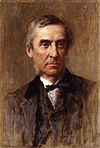
























About James Russell Lowell
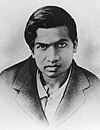
James Russell Lowell (22 February 1819 – 12 August 1891) was an American Romantic poet, critic, editor, and diplomat. He is associated with the Fireside Poets, a group of New England writers who were among the first American poets who rivaled the popularity of British poets.
Best James Russell Lowell Quotes
Shortest
Earliest
Explore our curated collection of the most famous and impactful James Russell Lowell quotes.


“A wise skepticism is the first attribute of a good critic.”

“His heart kep' goin' pity-pat,
But hern went pity-Zekle.”
But hern went pity-Zekle.”

“Folks never understand the folks they hate.”

“Like streams that keep a summer mind
Snow-hid in Jenooary.”
Snow-hid in Jenooary.”

“Ez to my princerples, I glory
In hevin' nothin' o' the sort.”
In hevin' nothin' o' the sort.”
“One thorn of experience is worth a whole wilderness of warning.”

“'T was kin' o' kingdom-come to look
On sech a blessed cretur.”
On sech a blessed cretur.”
“She doeth little kindnesses
Which most leave undone, or despise.”
Which most leave undone, or despise.”
“What a sense of security in an old book which Time has criticized for us!”

“What a sense of security in an old book which Time has criticised for us!”
“I don't believe in princerple,
But oh I du in interest.”
But oh I du in interest.”

“Soft-heartedness, in times like these,
Shows sof'ness in the upper story.”
Shows sof'ness in the upper story.”

“Endurance is the crowning quality,
And patience all the passion of great hearts.”
And patience all the passion of great hearts.”

“The thing we long for, that we are
For one transcendent moment.”
For one transcendent moment.”

“Two meanings have our lightest fantasies,
One of the flesh, and of the spirit one.”
One of the flesh, and of the spirit one.”
“The capacity of indignation makes an essential part of the outfit of every honest man.”
“A marciful Providunce fashioned us holler
O' purpose thet we might our principles swaller.”
O' purpose thet we might our principles swaller.”

“Though old the thought and oft exprest,
'Tis his at last who says it best.”
'Tis his at last who says it best.”
“A reading-machine, always wound up and going,
He mastered whatever was not worth the knowing.”
He mastered whatever was not worth the knowing.”

“That love for one, from which there doth not spring
Wide love for all, is but a worthless thing.”
Wide love for all, is but a worthless thing.”

“Solitude is as needful to the imagination as society is wholesome for the character.”

“No man can produce great things who is not thoroughly sincere in dealing with himself.”
“There is nothing so desperately monotonous as the sea, and I no longer wonder at the cruelty of pirates.”
“Toward no crimes have men shown themselves so cold-bloodedly cruel as in punishing differences in belief.”
“Truly there is a tide in the affairs of men; but there is no gulf-stream setting forever in one direction.”
“It is by presence of mind in untried emergencies that the native metal of a man is tested.”

“Nature, they say, doth dote,
And cannot make a man
Save on some worn-out plan,
Repeating us by rote.”
And cannot make a man
Save on some worn-out plan,
Repeating us by rote.”
“Sentiment is intellectualized emotion, — emotion precipitated, as it were, in pretty crystals by the fancy.”
“There comes Poe, with his raven, like Barnaby Rudge,
Three-fifths of him genius and two-fifths sheer fudge.”
Three-fifths of him genius and two-fifths sheer fudge.”
“It is not the insurrections of ignorance that are dangerous, but the revolts of intelligence.”

“Let us be of good cheer, however, remembering that the misfortunes hardest to bear are those which never come.”
“Puritanism, believing itself quick with the seed of religious liberty, laid, without knowing it, the egg of democracy.”

“He who is firmly seated in authority soon learns to think security, and not progress, the highest lesson of statecraft.”


“To say why gals acts so or so,
Or don't, 'ould be persumin';
Mebby to mean yes an' say no
Comes nateral to women.”
Or don't, 'ould be persumin';
Mebby to mean yes an' say no
Comes nateral to women.”
“There is no good in arguing with the inevitable. The only argument available with an east wind is to put on your overcoat.”
“I first drew in New England's air, and from her hardy breast
Sucked in the tyrant-hating milk that will not let me rest.”
Sucked in the tyrant-hating milk that will not let me rest.”
“There is no better ballast for keeping the mind steady on its keel, and saving it from all risk of crankiness, than business.”

“Zekle crep' up quite unbeknown
An' peeked in thru' the winder,
An there sot Huldy all alone,
'ith no one nigh to hender.”
An' peeked in thru' the winder,
An there sot Huldy all alone,
'ith no one nigh to hender.”
“Every man feels instinctively that all the beautiful sentiments in the world weigh less than a single lovely action.”
“It ain't by princerples nor men
My preudunt course is steadied—
I scent wich pays the best, an' then
Go into it baldheaded.”
My preudunt course is steadied—
I scent wich pays the best, an' then
Go into it baldheaded.”
“The snow had begun in the gloaming,
And busily all the night
Had been heaping field and highway
With a silence deep and white.”
And busily all the night
Had been heaping field and highway
With a silence deep and white.”
“Things always seem fairer when we look back at them, and it is out of that inaccessible tower of the past that Longing leans and beckons.”
“Ef you take a sword an’ dror it,
An’ go stick a feller thru,
Guv’mint ain’t to answer for it,
God’ll send the bill to you.”
An’ go stick a feller thru,
Guv’mint ain’t to answer for it,
God’ll send the bill to you.”
“Both of them mean that Labor has no rights which Capital is bound to respect,—that there is no higher law than human interest and cupidity.”
“From lower to the higher next,
Not to the top, is Nature’s text;
And embryo Good, to reach full stature,
Absorbs the Evil in its nature.”
Not to the top, is Nature’s text;
And embryo Good, to reach full stature,
Absorbs the Evil in its nature.”
“Ez fer war, I call it murder—
There you hev it plain an' flat;
I don't want to go no furder
Than my Testyment fer that.”
There you hev it plain an' flat;
I don't want to go no furder
Than my Testyment fer that.”
“As life runs on, the road grows strange
With faces new, and near the end
The milestones into headstones change,
'Neath every one a friend.”
With faces new, and near the end
The milestones into headstones change,
'Neath every one a friend.”
“It may be glorious to write
Thoughts that shall glad the two or three
High souls, like those far stars that come in sight
Once in a century.”
Thoughts that shall glad the two or three
High souls, like those far stars that come in sight
Once in a century.”
“God makes sech nights, all white an' still,
Fur'z you can look or listen,
Moonshine an' snow on field an' hill,
All silence an' all glisten.”
Fur'z you can look or listen,
Moonshine an' snow on field an' hill,
All silence an' all glisten.”
“They came three thousand miles, and died,
To keep the Past upon its throne;
Unheard, beyond the ocean tide,
Their English mother made her moan.”
To keep the Past upon its throne;
Unheard, beyond the ocean tide,
Their English mother made her moan.”
“The question of common sense is always "What is it good for?"—a question which would abolish the rose and be answered triumphantly by the cabbage.”

“It is the tendency of all creeds, opinions, and political dogmas that have once defined themselves in institutions to become inoperative.”
“Under the yaller pines I house,
When sunshine makes 'em all sweet-scented,
An' hear among their furry boughs
The baskin' west-wind purr contented.”
When sunshine makes 'em all sweet-scented,
An' hear among their furry boughs
The baskin' west-wind purr contented.”
“Our slender life runs rippling by, and glides
Into the silent hollow of the past;
What is there that abides
To make the next age better for the last?”
Into the silent hollow of the past;
What is there that abides
To make the next age better for the last?”
“From the summit of power men no longer turn their eyes upward, but begin to look about them. Aspiration sees only one side of every question; possession, many.”
“In creating, the only hard thing's to begin;
A grass-blade's no easier to make than an oak,
If you've once found the way you've achieved the grand stroke.”
A grass-blade's no easier to make than an oak,
If you've once found the way you've achieved the grand stroke.”
“Ye come and go incessant; we remain
Safe in the hallowed quiets of the past;
Be reverent, ye who flit and are forgot,
Of faith so nobly realized as this.”
Safe in the hallowed quiets of the past;
Be reverent, ye who flit and are forgot,
Of faith so nobly realized as this.”
“It was in making education not only common to all, but in some sense compulsory on all, that the destiny of the free republics of America was practically settled.”

“In vain we call old notions fudge,
And bend our conscience to our dealing;
The Ten Commandments will not budge,
And stealing will continue stealing.”
And bend our conscience to our dealing;
The Ten Commandments will not budge,
And stealing will continue stealing.”
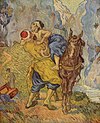
“Not only around our infancy
Doth heaven with all its splendors lie;
Daily, with souls that cringe and plot,
We Sinais climb and know it not.”
Doth heaven with all its splendors lie;
Daily, with souls that cringe and plot,
We Sinais climb and know it not.”
“The only faith that wears well and holds its color in all weathers, is that which is woven of conviction and set with the sharp mordant of experience.”
“For a cap and bells our lives we pay,
Bubbles we earn with a whole soul's tasking:
'Tis heaven alone that is given away,
'Tis only God may be had for the asking.”
Bubbles we earn with a whole soul's tasking:
'Tis heaven alone that is given away,
'Tis only God may be had for the asking.”
“It is curious how tyrannical the habit of reading is, and what shifts we make to escape thinking. There is no bore we dread being left alone with so much as our own minds.”
“Where Church and State are habitually associated it is natural that minds, even of a high order, should unconsciously come to regard religion as only a subtler mode of police.”
“The birch, most shy and lady-like of trees,
Her poverty, as best she may, retrieves,
And hints at her foregone gentilities
With some saved relics of her wealth of leaves.”
Her poverty, as best she may, retrieves,
And hints at her foregone gentilities
With some saved relics of her wealth of leaves.”
“The real doth not clip the poet's wings,—
To win the secret of a weed’s plain heart
Reveals some clue to spiritual things,
And stumbling guess becomes firm-footed art.”
To win the secret of a weed’s plain heart
Reveals some clue to spiritual things,
And stumbling guess becomes firm-footed art.”
“Dear common flower, that grow'st beside the way,
Fringing the dusty road with harmless gold,
First pledge of blithesome [[May],
Which children pluck, and, full of pride, uphold.”
Fringing the dusty road with harmless gold,
First pledge of blithesome [[May],
Which children pluck, and, full of pride, uphold.”
“They come transfigured back,
Secure from change in their high-hearted ways,
Beautiful evermore, and with the rays
Of morn on their white Shields of Expectation!”
Secure from change in their high-hearted ways,
Beautiful evermore, and with the rays
Of morn on their white Shields of Expectation!”
“These pearls of thought in Persian gulfs were bred,
Each softly lucent as a rounded moon;
The diver Omar plucked them from their bed,
Fitzgerald strung them on an English thread.”
Each softly lucent as a rounded moon;
The diver Omar plucked them from their bed,
Fitzgerald strung them on an English thread.”
“Gineral C. is a dreffle smart man;
He’s ben on all sides thet give places or pelf;
But consistency still wuz a part of his plan,—
He’s ben true to one party, an’ thet is himself.”
He’s ben on all sides thet give places or pelf;
But consistency still wuz a part of his plan,—
He’s ben true to one party, an’ thet is himself.”
“The traitor to humanity is the traitor most accursed;
Man is more than Constitutions; better rot beneath the sod,
Than to be true to Church and State while we are doubly false to God!”
Man is more than Constitutions; better rot beneath the sod,
Than to be true to Church and State while we are doubly false to God!”

“Along A River-Side, I Know Not Where,
I walked one night in mystery of dream;
A chill creeps curdling yet beneath my hair,
To think what chanced me by the pallid gleam
Of a moon-wraith that waned through haunted air.”
I walked one night in mystery of dream;
A chill creeps curdling yet beneath my hair,
To think what chanced me by the pallid gleam
Of a moon-wraith that waned through haunted air.”
“If there are men who regret the Good Old Times, without too clear a notion of what they were, they should at least be thankful that we are rid of that misguided energy of faith which justifies conscience in making men unrelentingly cruel.”
“Their problem was how to adapt English principles and precedents to the new conditions of American life, and they solved it with singular discretion. They put as many obstacles as they could contrive, not in the way of the people's will, but of their whim.”
“New times demand new measures and new men;
The world advances, and in time outgrows
The laws which in our father's times were best;
And doubtless, after us, some purer scheme
Will be shaped out by wiser men than we,
Made wiser by the steady growth of truth.”
The world advances, and in time outgrows
The laws which in our father's times were best;
And doubtless, after us, some purer scheme
Will be shaped out by wiser men than we,
Made wiser by the steady growth of truth.”

“The little that we do
Is but half-nobly true;
With our laborious hiving
What men call treasure, and the gods call dross,
Life seems a jest of Fate's contriving,
Only secure in every one's conniving,
A long account of nothings paid with loss.”
Is but half-nobly true;
With our laborious hiving
What men call treasure, and the gods call dross,
Life seems a jest of Fate's contriving,
Only secure in every one's conniving,
A long account of nothings paid with loss.”
“The Holy Supper is kept, indeed,
In whatso we share with another's need,—
Not that which we give, but what we share,—
For the gift without the giver is bare;
Who bestows himself with his alms feeds three,—
Himself, his hungering neighbor, and me.”
In whatso we share with another's need,—
Not that which we give, but what we share,—
For the gift without the giver is bare;
Who bestows himself with his alms feeds three,—
Himself, his hungering neighbor, and me.”
“We are persuaded that the election of Mr. Lincoln will do more than anything else to appease the excitement of the country. He has proved both his ability and his integrity; he has had experience enough in public affairs to make him a statesman, and not enough to make him a politician.”
“The child is not mine as the first was,
I cannot sing it to rest,
I cannot lift it up fatherly
And bliss it upon my breast;
Yet it lies in my little one's cradle
And sits in my little one's chair,
And the light of the heaven she's gone to
Transfigures its golden hair.”
I cannot sing it to rest,
I cannot lift it up fatherly
And bliss it upon my breast;
Yet it lies in my little one's cradle
And sits in my little one's chair,
And the light of the heaven she's gone to
Transfigures its golden hair.”
“They are slaves who fear to speak
For the fallen and the weak;
They are slaves who will not choose
Hatred, scoffing, and abuse,
Rather than in silence shrink
From the truth they needs must think;
They are slaves who dare not be
In the right with two or three.”
For the fallen and the weak;
They are slaves who will not choose
Hatred, scoffing, and abuse,
Rather than in silence shrink
From the truth they needs must think;
They are slaves who dare not be
In the right with two or three.”
“’Tain’t by turnin’ out to hack folks
You’re agoin’ to git your right,
Nor by lookin’ down on black folks
Coz you’re put upon by white;
Slavery ain’t o’ nary color,
’Tain’t the hide thet makes it wus,
All it keers fer in a feller
’S jest to make him fill its pus.”
You’re agoin’ to git your right,
Nor by lookin’ down on black folks
Coz you’re put upon by white;
Slavery ain’t o’ nary color,
’Tain’t the hide thet makes it wus,
All it keers fer in a feller
’S jest to make him fill its pus.”
“Then to side with Truth is noble when we share her wretched crust,
Ere her cause bring fame and profit, and 't is prosperous to be just;
Then it is the brave man chooses, while the coward stands aside,
Doubting in his abject spirit, till his Lord is crucified,
And the multitude make virtue of the faith they had denied.”
Ere her cause bring fame and profit, and 't is prosperous to be just;
Then it is the brave man chooses, while the coward stands aside,
Doubting in his abject spirit, till his Lord is crucified,
And the multitude make virtue of the faith they had denied.”
“In the scales of the destinies brawn will never weigh so much as brain. Our healing is not in the storm or in the whirlwind, it is not in monarchies, or aristocracies, or democracies, but will be revealed by the still small voice that speaks to the conscience and the heart, prompting us to a wider and wiser humanity.”
“And I honor the man who is willing to sink
Half his present repute for the freedom to think,
And, when he has thought, be his cause strong or weak,
Will risk t'other half for the freedom to speak,
Caring naught for what vengeance the mob has in store,
Let that mob be the upper ten thousand or lower.”
Half his present repute for the freedom to think,
And, when he has thought, be his cause strong or weak,
Will risk t'other half for the freedom to speak,
Caring naught for what vengeance the mob has in store,
Let that mob be the upper ten thousand or lower.”

“We see dimly in the Present what is small and what is great,
Slow of faith how weak an arm may turn this iron helm of fate,
But the soul is still oracular; amid the market's din,
List the ominous stern whisper from the Delphic cave within,—
"They enslave their children's children who make compromise with sin."”
Slow of faith how weak an arm may turn this iron helm of fate,
But the soul is still oracular; amid the market's din,
List the ominous stern whisper from the Delphic cave within,—
"They enslave their children's children who make compromise with sin."”

“Careless seems the great Avenger; history's pages but record
One death-grapple in the darkness 'twixt old systems and the Word;
Truth forever on the scaffold, Wrong forever on the throne,—
Yet that scaffold sways the future, and, behind the dim unknown,
Standeth God within the shadow, keeping watch above his own.”
One death-grapple in the darkness 'twixt old systems and the Word;
Truth forever on the scaffold, Wrong forever on the throne,—
Yet that scaffold sways the future, and, behind the dim unknown,
Standeth God within the shadow, keeping watch above his own.”
“Once to every man and nation comes the moment to decide,
In the strife of Truth with Falsehood, for the good or evil side;
Some great cause, God's new Messiah, offering each the bloom or blight,
Parts the goats upon the left hand, and the sheep upon the right,
And the choice goes by forever 'twixt that darkness and that light.”
In the strife of Truth with Falsehood, for the good or evil side;
Some great cause, God's new Messiah, offering each the bloom or blight,
Parts the goats upon the left hand, and the sheep upon the right,
And the choice goes by forever 'twixt that darkness and that light.”
“Hast thou chosen, O my people, on whose party thou shalt stand,
Ere the Doom from its worn sandals shakes the dust against our land?
Though the cause of Evil prosper, yet ’tis Truth alone is strong,
And, albeit she wander outcast now, I see around her throng
Troops of beautiful, tall angels, to enshield her from all wrong.”
Ere the Doom from its worn sandals shakes the dust against our land?
Though the cause of Evil prosper, yet ’tis Truth alone is strong,
And, albeit she wander outcast now, I see around her throng
Troops of beautiful, tall angels, to enshield her from all wrong.”
“Their children learned the lesson of compromise only too well, and it was the application of it to a question of fundamental morals that cost us our civil war. We learned once for all that compromise makes a good umbrella but a poor roof; that it is a temporary expedient, often wise in party politics, almost sure to be unwise in statesmanship.”
“Count me o'er earth's chosen heroes, — they were souls that stood alone,
While the men they agonized for hurled the contumelious stone,
Stood serene, and down the future saw the golden beam incline
To the side of perfect justice, mastered by their faith divine,
By one man's plain truth to manhood and to God's supreme design.”
While the men they agonized for hurled the contumelious stone,
Stood serene, and down the future saw the golden beam incline
To the side of perfect justice, mastered by their faith divine,
By one man's plain truth to manhood and to God's supreme design.”
“But life is sweet, though all that makes it sweet
Lessen like sound of friends’ departing feet;
And Death is beautiful as feet of friend
Coming with welcome at our journey’s end.
For me Fate gave, whate’er she else denied,
A nature sloping to the southern side;
I thank her for it, though when clouds arise
Such natures double-darken gloomy skies.”
Lessen like sound of friends’ departing feet;
And Death is beautiful as feet of friend
Coming with welcome at our journey’s end.
For me Fate gave, whate’er she else denied,
A nature sloping to the southern side;
I thank her for it, though when clouds arise
Such natures double-darken gloomy skies.”
“New occasions teach new duties; Time makes ancient good uncouth;
They must upward still, and onward, who would keep abreast of Truth
Lo, before us gleam her camp-fires! we ourselves must Pilgrims be,
Launch our Mayflower, and steer boldly through the desperate winter sea,
Nor attempt the Future’s portal with the Past’s blood-rusted key.”
They must upward still, and onward, who would keep abreast of Truth
Lo, before us gleam her camp-fires! we ourselves must Pilgrims be,
Launch our Mayflower, and steer boldly through the desperate winter sea,
Nor attempt the Future’s portal with the Past’s blood-rusted key.”
“Truth, after all, wears a different face to everybody, and it would be too tedious to wait till all were agreed. She is said to lie at the bottom of a well, for the very reason, perhaps, that whoever looks down in search of her sees his own image at the bottom, and is persuaded not only that he has seen the goddess, but that she is far better looking than he had imagined.”

“Communism means barbarism, but Socialism means, or wishes to mean, cooperation and community of interests, sympathy, the giving to the hands not so large a share as to the brains, but a larger share than hitherto in the wealth they must combine to produce - means, in short, the practical application of Christianity to life, and has in it the secret of an orderly and benign reconstruction.”
“And what is so rare as a day in June?
Then, if ever, come perfect days;
Then Heaven tries the earth if it be in tune,
And over it softly her warm ear lays:
Whether we look, or whether we listen,
We hear life murmur, or see it glisten;
Every clod feels a stir of might,
An instinct within it that reaches and towers,
And, grasping blindly above it for light,
Climbs to a soul in grass and flowers.”
“To be told that we ought not to agitate the question of Slavery, when it is that which is forever agitating us, is like telling a man with the fever and ague on him to stop shaking and he will be cured. The discussion of Slavery is said to be dangerous, but dangerous to what?...Discussion is the very life of free institutions, the fruitful mother of all political and moral enlightenment, and yet the question of all questions must be tabooed.”
“How little inventiveness there is in man,
Grave copier of copies, I give thanks
For a new relish, careless to inquire
My pleasure's pedigree, if so it please,
Nobly, I mean, nor renegade to art.
The Grecian gluts me with its perfectness,
Unanswerable as Euclid, self-contained,
The one thing finished in this hasty world,
Forever finished, though the barbarous pit,
Fanatical on hearsay, stamp and shout
As if a miracle could be encored.”
“I hear America sometimes playfully accused of sending you all your storms, and am in the habit of parrying the charge by alleging that we are enabled to do this because, in virtue of our protective system, we can afford to make better bad weather than anybody else. And what wiser use could we make of it than to export it in return for the paupers which some European countries are good enough to send over to us who have not attained to the same skill in the manufacture of them?”
“There is no good in arguing with the inevitable. The only argument available with an east wind is to put on your overcoat. And in this case, also, the prudent will prepare themselves to encounter what they cannot prevent. Some people advise us to put on the brakes, as if the movement of which we are conscious were that of a railway train running down an incline. But a metaphor is no argument, though it be sometimes the gunpowder to drive one home and imbed it in the memory.”
“Whatever be the effect of slavery upon the States where it exists, there can be no doubt that its moral influence upon the North has been most disastrous. It has compelled our politicians into that first fatal compromise with their moral instincts and hereditary principles which makes all consequent ones easy; it has accustomed us to makeshifts instead of statesmanship, to subterfuge instead of policy, to party-platforms for opinions, and to a defiance of the public sentiment of the civilized world for patriotism.”
“In a society like ours, where every man may transmute his private thought into history and destiny by dropping it into the ballot-box, a peculiar responsibility rests upon the individual. Nothing can absolve us from doing our best to look at all public questions as citizens, and therefore in some sort as administrators and rulers. For, though during its term of office the government be practically as independent of the popular will as that of Russia, yet every fourth year the people are called upon to pronounce upon the conduct of their affairs.”
“One of the most curious of these frenzies of exclusion was that against the emancipation of the Jews. All share in the government of the world was denied for centuries to perhaps the ablest, certainly the most tenacious, race that had ever lived in it - the race to whom we owed our religion and the purest spiritual stimulus and consolation to be found in all literature - a race in which ability seems as natural and hereditary as the curve of their noses, and whose blood, furtively mingling with the bluest bloods in Europe, has quickened them with its own indomitable impulsion.”

“Few people take the trouble of trying to find out what democracy really is. Yet this would be a great help, for it is our lawless and uncertain thoughts, it is the indefiniteness of our impressions, that fill darkness, whether mental or physical, with spectres and hobgoblins. Democracy is nothing more than an experiment in government, more likely to succeed in a new soil, but likely to be tried in all soils, which must stand or fall on its own merits as others have done before it. For there is no trick of perpetual motion in politics any more than in mechanics.”

“All free governments, whatever their name, are in reality governments by public opinion, and it is on the quality of this public opinion that their prosperity depends. It is, therefore, their first duty to purify the element from which they draw the breath of life. With the growth of democracy grows also the fear, if not the danger, that this atmosphere may be corrupted with poisonous exhalations from lower and more malarious levels, and the question of sanitation becomes more instant and pressing. Democracy in its best sense is merely the letting in of light and air.”
“Joy comes, grief goes, we know not how;
Everything is happy now,
Everything is upward striving;
'Tis as easy now for the heart to be true
As for grass to be green or skies to be blue,—
'Tis the natural way of living:
Who knows whither the clouds have fled?
In the unscarred heaven they leave no wake;
And the eyes forget the tears they have shed,
The heart forgets its sorrow and ache;
The soul partakes the season's youth,
And the sulphurous rifts of passion and woe
Lie deep 'neath a silence pure and smooth,
Like burnt-out craters healed with snow.”
“I do not believe in violent changes, nor do I expect them. Things in possession have a very firm grip. One of the strongest cements of society is the conviction of mankind that the state of things into which they are born is a part of the order of the universe, as natural, let us say, as that the sun should go round the earth. It is a conviction that they will not surrender except on compulsion, and a wise society should look to it that this compulsion be not put upon them. For the individual man there is no radical cure, outside of human nature itself, for the evils to which human nature is heir.”

“The democratic theory is that those Constitutions are likely to prove steadiest which have the broadest base, that the right to vote makes a safety - valve of every voter, and that the best way of teaching a man how to vote is to give him the chance of practice. For the question is no longer the academic one, "Is it wise to give every man the ballot?" but rather the practical one, "Is it prudent to deprive whole classes of it any longer?" It may be conjectured that it is cheaper in the long run to lift men up than to hold them down, and that the ballot in their hands is less dangerous to society than a sense of wrong in their heads.”
“ I have hinted that what people are afraid of in democracy is less the thing itself than what they conceive to be its necessary adjuncts and consequences. It is supposed to reduce all mankind to a dead level of mediocrity in character and culture, to vulgarize men's conceptions of life, and therefore their code of morals, manners, and conduct — to endanger the rights of property and possession. But I believe that the real gravamen of the charges lies in the habit it has of making itself generally disagreeable by asking the Powers that Be at the most inconvenient moment whether they are the powers that ought to be. If the powers that be are in a condition to give a satisfactory answer to this inevitable question, they need feel in no way discomfited by it.”
“He must be a born leader or misleader of men, or must have been sent into the world unfurnished with that modulating and restraining balance-wheel which we call a sense of humor, who, in old age, has as strong a confidence in his opinions and in the necessity of bringing the universe into conformity with them as he had in youth. In a world the very condition of whose being is that it should be in perpetual flux, where all seems mirage, and the one abiding thing is the effort to distinguish realities from appearances, the elderly man must be indeed of a singularly tough and valid fibre who is certain that he has any clarified residuum of experience, any assured verdict of reflection, that deserves to be called an opinion, or who, even if he had, feels that he is justified in holding mankind by the button while he is expounding it.”

“The encroachments of Slavery upon our national policy have been like those of a glacier in a Swiss valley. Inch by inch, the huge dragon with his glittering scales and crests of ice coils itself onward, an anachronism of summer, the relic of a bygone world where such monsters swarmed. But it has its limit, the kindlier forces of Nature work against it, and the silent arrows of the sun are still, as of old, fatal to the frosty Python. Geology tells us that such enormous devastators once covered the face of the earth, but the benignant sunlight of heaven touched them, and they faded silently, leaving no trace but here and there the scratches of their talons, and the gnawed boulders scattered where they made their lair. We have entire faith in the benignant influence of Truth, the sunlight of the moral world, and believe that slavery, like other worn-out systems, will melt gradually before it.”

“The framers of the American Constitution were far from wishing or intending to found a democracy in the strict sense of the word, though, as was inevitable, every expansion of the scheme of government they elaborated has been in a democratical direction. But this has been generally the slow result of growth, and not the sudden innovation of theory; in fact, they had a profound disbelief in theory, and knew better than to commit the folly of breaking with the past. They were not seduced by the French fallacy that a new system of government could be ordered like a new suit of clothes. They would as soon have thought of ordering a new suit of flesh and skin. It is only on the roaring loom of time that the stuff is woven for such a vesture of their thought and experience as they were meditating. They recognized fully the value of tradition and habit as the great allies of permanence and stability. They all had that distaste for innovation which belonged to their race, and many of them a distrust of human nature derived from their creed.”

James Russell Lowell Quotes by Topic
Find exactly what you are looking for by browsing this categorized list of James Russell Lowell quotes by topic.
James Russell Lowell on Character 9 quotes
View all 9 quotes on Character →James Russell Lowell on Truth 8 quotes
View all 8 quotes on Truth →James Russell Lowell on Trees 6 quotes
View all 6 quotes on Trees →James Russell Lowell on Poetry 4 quotes
“For, of all compositions, he thought that the sonnet Best repaid all the toil you expended upon it.”

James Russell Lowell on War 3 quotes
View all 3 quotes on War →What James Russell Lowell Said About Others
Discover personal opinions James Russell Lowell shared regarding contemporaries.
James Russell Lowell on Women 3 quotes
View all 3 quotes on Women →James Russell Lowell on Ralph Waldo Emerson 3 quotes
“There is no man living to whom, as a writer, so many of us feel and thankfully acknowledge so great an indebtedness for ennobling impulses.”

James Russell Lowell on Mothers
James Russell Lowell on George Washington
Quotes About James Russell Lowell
Gain deeper perspective through quotes about James Russell Lowell from others.
Roxanne Dunbar-Ortiz on James Russell Lowell
“Most of the books published during the five-year period leading up to, during, and after the invasion of Mexico were war-mongering tracts. Euro-American settlers were nearly all literate, and this was the period of the foundational "American literature," with writers James Fenimore Cooper, Walt Whitman, Edgar Allan Poe, John Greenleaf Whittier, Henry Wadsworth Longfellow, James Russell Lowell, Ralph Waldo Emerson, Henry David Thoreau, Nathaniel Hawthorne, and Herman Melville all active-each of whom remains read, revered, and studied in the twenty-first century, as national and nationalist writers, not as colonialists. Although some of the writers, like Melville and Longfellow, paid little attention to the war, most of the others either fiercely supported it or opposed it...Opposition to the Mexican War came from writers who were active abolitionists such as Thoreau, Whittier, and Lowell. They believed the war was a plot of southern slave owners to extend slavery, punishing Mexico for having outlawed slavery when it became independent from Spain. However, even the abolitionists believed in the "manifest destiny of the English race," as Lowell put it in 1859, "to occupy this whole continent and to display there that practical understanding in matters of government and colonization which no other race has given such proof of possessing since the Romans."”

Henry James on James Russell Lowell
“The thing he loved most in the world after his country was the English tongue, of which he was an infallible master, and his devotion to which was in fact a sort of agent in his patriotism.”
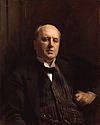
About James Russell Lowell
James Russell Lowell (22 February 1819 – 12 August 1891) was an American Romantic poet, critic, editor, and diplomat. He is associated with the Fireside Poets, a group of New England writers who were among the first American poets who rivaled the popularity of British poets.