William McKinley on James A. Garfield
← Back to James A. Garfield ProfileIn his 1886 eulogy for James Garfield, William McKinley celebrates Garfield's intellectual prowess and powerful oratory, contrasting it with political maneuvering and petty attacks.
“Here he was leader and master, not by combination of scheming, not by chicanery or caucus, but by the force of his cultivated mind, his keen and farseeing judgment, his unanswerable logic, his strength and power of speech, his thorough comprehension of the subjects of legislation. Always strong, he was strongest on his feet addressing the House or from the rostrum the assembled people. Who of us having heard him here or elsewhere speaking upon a question of great national concern can forget the might and majesty, the force and directness, the grace and beauty of his utterances? He was always just to his adversary, an open and manly opponent, and free from invective. He convinced the judgment with his searching logic, while he swayed his listeners with brilliant periods and glowing eloquence. He was always an educator of people. His thoughts were fresh, vigorous, and instructive.”
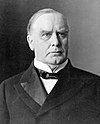
Delivering a eulogy for assassinated President Garfield, then-Congressman McKinley praised Garfield's earned success, highlighting his steady rise and dedication to public service despite a tragically curtailed life.
“Although elected, General Garfield never took his seat in the Senate of the United States. His legislative career ended here, where it had practically begun eighteen years before. His nomination for the Presidency occurred soon after the Legislature of Ohio had chosen him Senator, and came to him, as did all of his honors, because deserved. Although unsought, no mere chance brought him this rare distinction. His solid reputation rendered it not improbable at any time. He had the qualities which attached his great party to him and the equipment which filled the fullest measure of public and party requirements. From the stirring scenes at Chicago to the succeeding election he bore himself like a statesman and patriot fit for the highest trust. He advanced in public confidence, and whenever he met with or addressed the people, he enlarged the circle of his admiring followers and friends. … He was twenty-three years of age when he confronted the practical duties and the wider problems of life. All before had been training and preparation, the best of both, and his marvelous career ended before he was fifty. Few have crowded such great results and acquired such lasting fame in so short a life. Few have done so much for country and for civilization as he whom we honor to-day, stricken down as he was when scarce at the meridian of his powers. He did not flash forth as a meteor; he rose with measured and stately step over rough paths and through years of rugged work. He earned his passage to every preferment. He was tried and tested at every step in his pathway of progress. He produced his passport at every gateway to opportunity and glory. His broad and benevolent nature made him the friend of all mankind.”