Jacques Ellul on Propaganda
← Back to Jacques Ellul Profile
“Propaganda does not aim to elevate man, but to make him serve.”
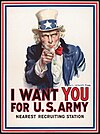
“Hate, hunger, and pride make better levers of propaganda than do love or impartiality.”
“The most favorable moment to seize a man and influence him is when he is alone in the mass. It is at this point that propaganda can be most effective.”
“Through the myth it creates, propaganda imposes a complete range of intuitive knowledge, susceptible of only one interpretation, unique and one-sided, and precluding any divergence. This myth becomes so powerful that it invades every arena of consciousness, leaving no faculty or motivation intact. It stimulates in the individual a feeling of exclusiveness, and produces a biased attitude.”
“We can now advance a definition of propaganda — not an exhaustive definition, unique and exclusive of all others, but at least a partial one: Propaganda is a set of methods employed by an organized group that wants to bring about the active or passive participation in its actions of a mass of individuals, psychologically unified through psychological manipulations and incorporated in an organization.”
“Modern propaganda is based on scientific analyses of psychology and sociology. Step by step, the propagandist builds his techniques on the basis of his knowledge of man, his tendencies, his desires, his needs, his psychic mechanisms, his conditioning — and as much on social psychology as on depth psychology. He shapes his procedures on the basis of our knowledge of groups and their laws of formation and dissolution, of mass influences, and of environmental limitations. Without the scientific research of modern psychology and sociology there would be no propaganda, or rather we still would be in the primitive stages of propaganda that existed in the time of Pericles or Augustus.”
“There remains the problem of Goebbels' reputation. He wore the title of Big Liar (bestowed by Anglo-Saxon propaganda) and yet he never stopped battling for propaganda to be as accurate as possible. He preferred being cynical and brutal to being caught in a lie. He used to say: "Everybody must know what the situation is." He was always the first to announce disastrous events or difficult situations, without hiding anything. The result was a general belief between 1939 and 1942 that German communiqués not only were more concise, clearer and less cluttered, but were more truthful than Allied communiqués (American and neutral opinion) — and, furthermore, that the Germans published all the news two or three days before the Allies. All this is so true that pinning the title of Big Liar on Goebbels must be considered quite a propaganda success.”